Restaurant de l'Hôtel de Ville
- 01CuisineModern French Gastronomic
- 02CityOllon, Switzerland
- 03RecognitionOne Michelin Star
Breton seafood, Ollon stone, seasonal pastry
- 1 Michelin Star · Michelin Guide
- Michelin 1 Star · 2026
The hand before the room
The bread comes from Audrey Feutren-Halgand’s pastry bench before service settles. Grégory Halgand, executive chef at Restaurant de l'Hôtel de Ville in Ollon, works the pass with the same product-led discipline that brought the house its Michelin star in 2023. The couple took over the village building in April 2022, after years spent moving through French and Swiss kitchens with different pressures on the hand. They met in 2004 at Relais Bernard Loiseau in Burgundy, then continued through Patrick Jeffroy’s in Carantec before Grégory worked at Jean-Luc Rabanel’s in Arles. Paris followed, with time at Georges V and Tour d’Argent, before Switzerland became the longer station. In 2015, he arrived at Chalet Royalp Hotel and Spa in Villars, where he earned a Michelin star and began putting down roots in the Ollon commune. Audrey’s work sits beside his rather than behind it: house-made bread, seasonal pastry, and desserts that keep fruit legible through texture instead of weight. Their shared method suits this address, where the village house asks for refinement without theatre.
Sea products in a mountain village
The kitchen’s most particular gesture is the way Grégory brings Breton sourcing into a Swiss village table. Ocean products arrive through contacts formed before Ollon, then meet local Swiss produce and Alpine plants in a seasonal French register. The result is not a coastal restaurant transplanted inland; it is a dining room where fish bisque, red beetroot, blackberries, wild garlic pesto, apricots, coconut mousse, and regional vegetables are handled with a clear sense of place. The gastronomique menu can move through a Menu Découverte, while the brasserie and terrace keep a simpler seasonal line. In the main salle à manger, asparagus with grapefruit and pistachio shows the kitchen’s preferred pressure: acidity, fat, and green bitterness held in proportion. Brittany lobster with red beetroot and blackberries brings the sea into a darker register, with bisque doing the structural work. Audrey’s apricot medley, stewed, jellied, and grilled with coconut mousse, gives the sweet station its own discipline. The wine program stays close to Chablais and Ollon, with pairings shaped around regional bottles rather than spectacle.
Stone, sound, and service
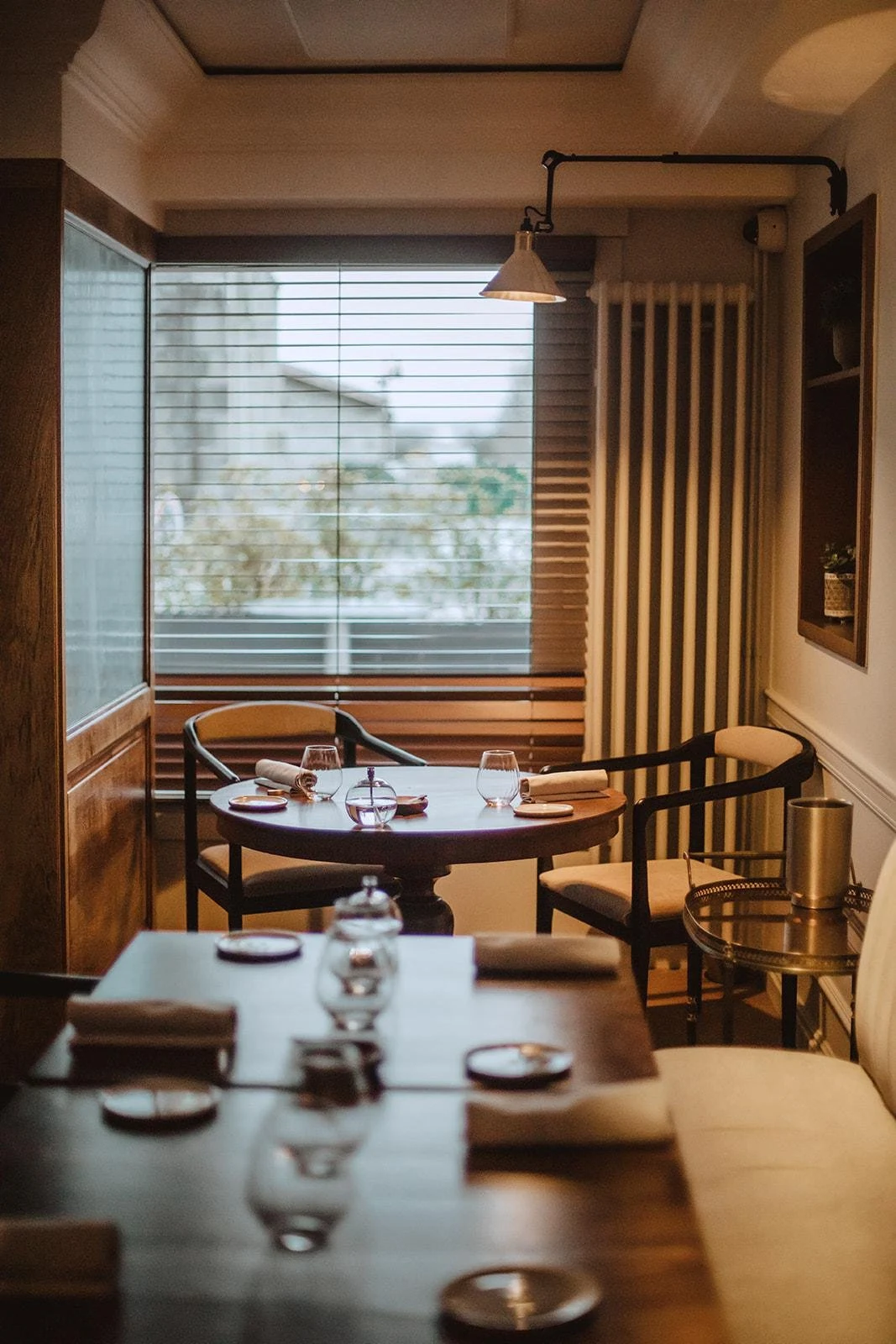
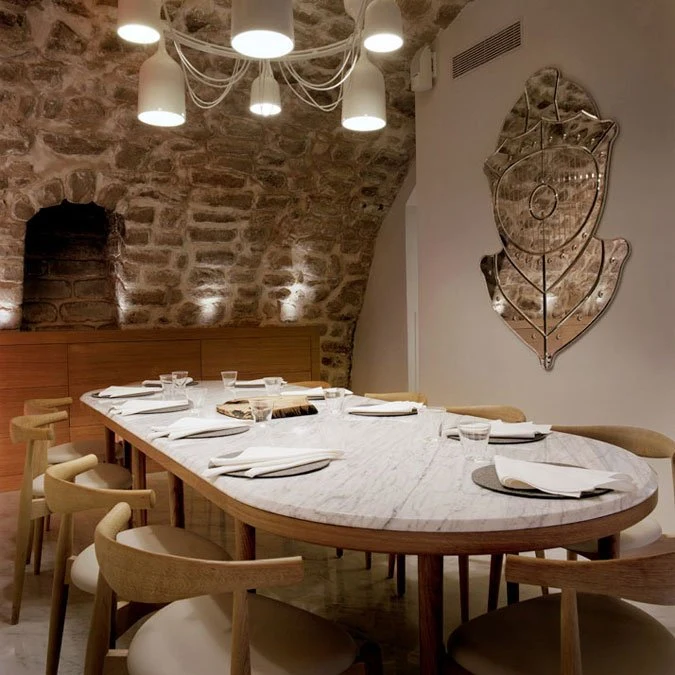
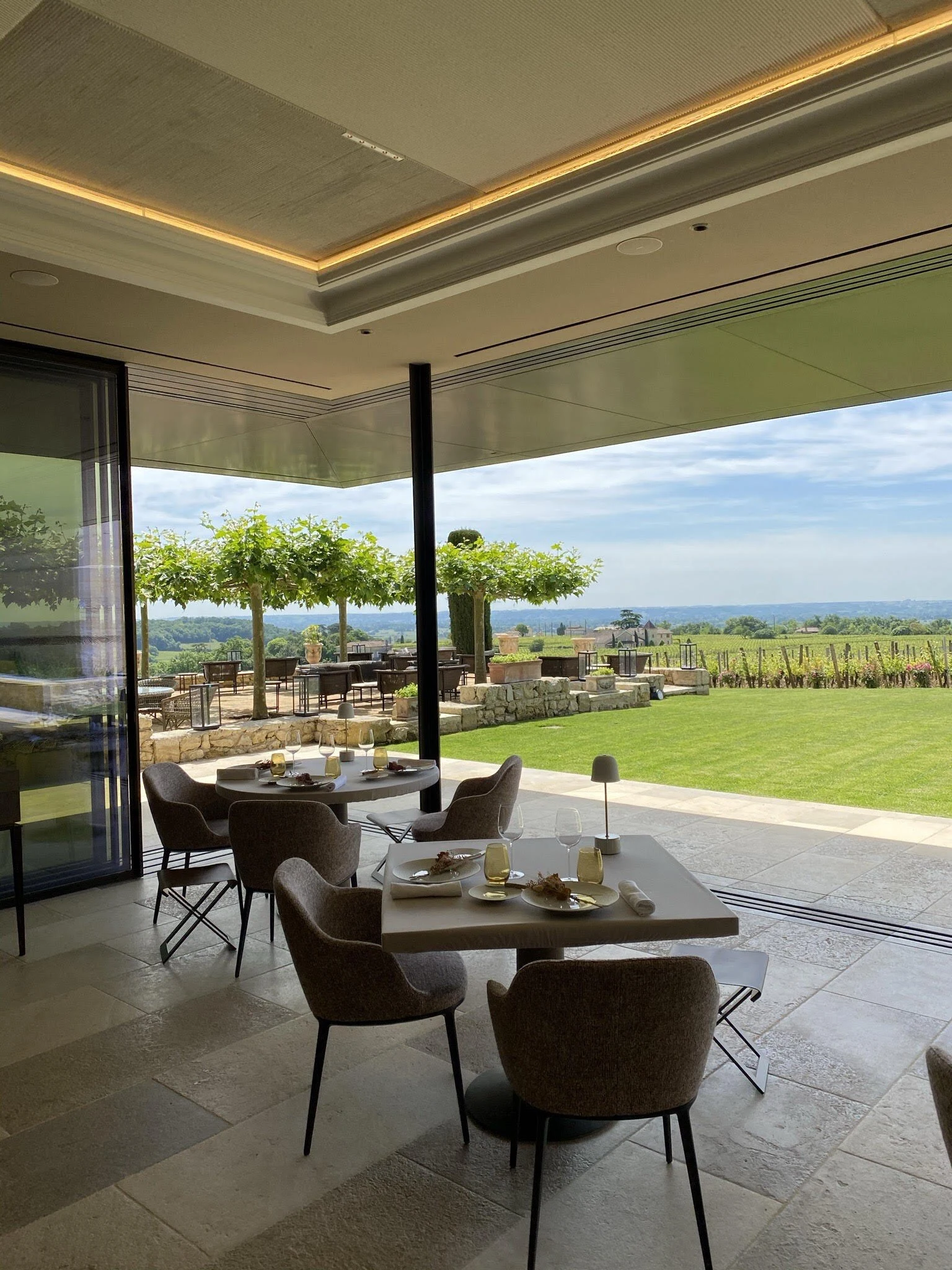
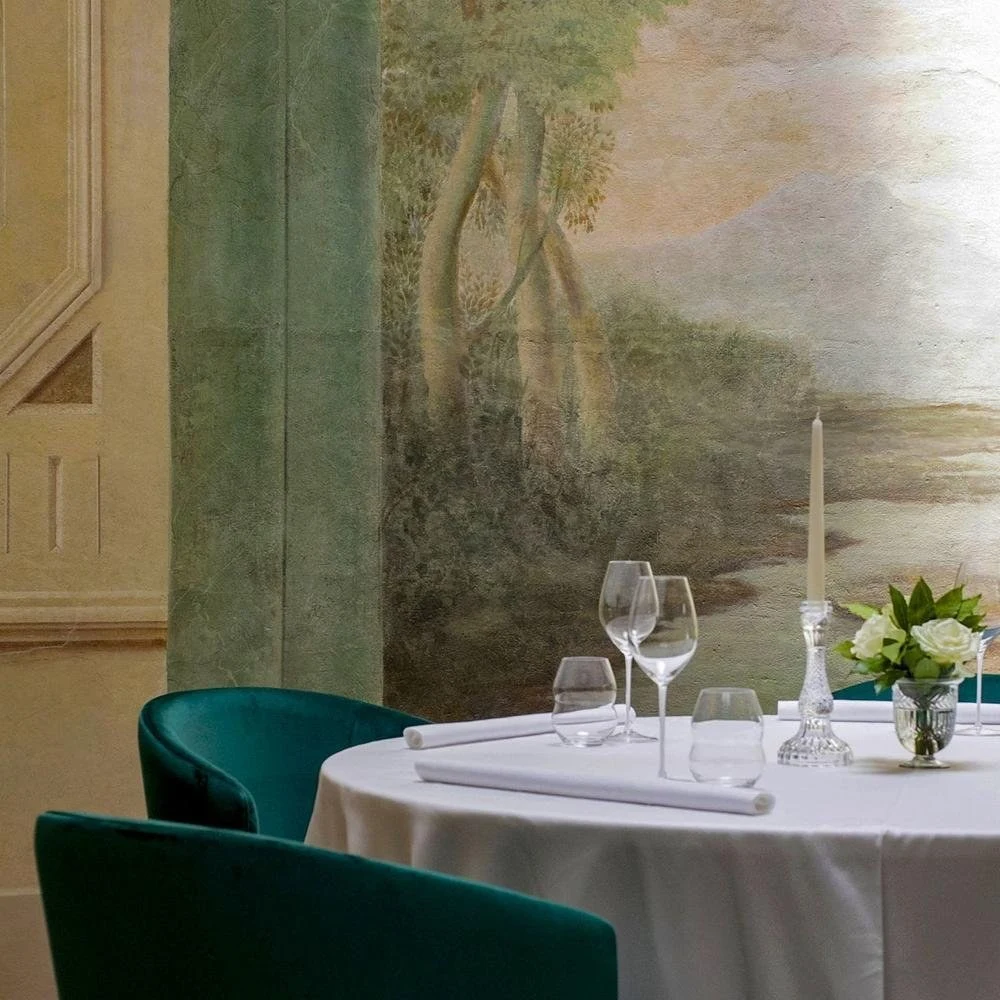
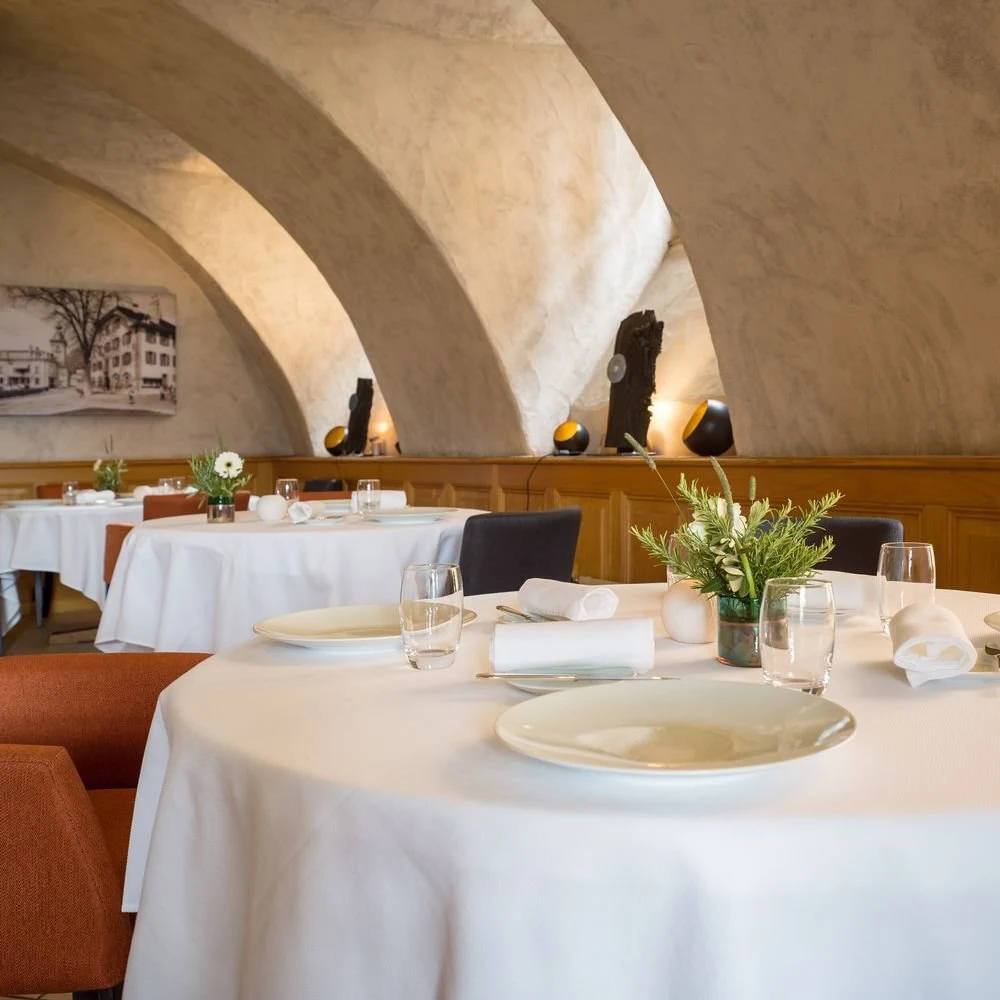
The room keeps its cool. Vaulted stone ceilings hold the dining room in a subdued register, and the soundproofing lets the pass work without turning the meal into kitchen theatre. Artwork softens the old structure, but the building still reads as a village house with memory in its walls. Local history places the town house in 1781-1782, when it served civic and hospitality purposes, with first-floor arcades once used for fairground benches. Today the café, lounge, terrace, and gastronomique room divide that inheritance into different rhythms. In summer, the patio looks toward the Dents du Midi; inside, the main room is quieter, more measured, suited to tasting menu pacing and formal service. Nothing decorative does that work. The old stone steadies the meal.
What stays in motion
The house’s recent recognition belongs to this address: one Michelin star in 2023 and Gault et Millau Romandie Discovery of the Year 2024 for the Halgands’ work in Ollon. That matters because the restaurant is still young in its present form, and because its strongest argument is made through repetition rather than announcement. The craft is what holds: Audrey Feutren-Halgand’s apricots, Grégory Halgand’s lobster bisque, and the vaulted room beneath the Dents du Midi.
Questions
Frequently asked
Who runs Restaurant de l'Hôtel de Ville in Ollon?
Grégory Halgand and Audrey Feutren-Halgand run the restaurant. Grégory is the executive chef, and Audrey leads the bread and pastry work.
What kind of cooking does the restaurant do?
The kitchen works in a modern French gastronomic register, with Breton seafood, Swiss produce, and Alpine plants. The menu can move through a Menu Découverte, and there is also a brasserie and terrace with a simpler seasonal line.
What are some of the dishes the restaurant is known for?
Named dishes include asparagus with grapefruit and pistachio, Brittany lobster with red beetroot and blackberries, medley of apricots with coconut mousse, and rack of lamb with wild garlic pesto.
What recognition does Restaurant de l'Hôtel de Ville hold?
The restaurant has one Michelin star, which it received in 2023. It was also named Gault et Millau Romandie Discovery of the Year for 2024.
What should a booking know before visiting?
Reservation is essential, and the dress code is smart casual. The restaurant is in Ollon village center at Place de l'Hôtel-de-Ville 3, with street parking available.
The field
How it compares
| Place | Awards | Cuisine | Notes |
|---|---|---|---|
| Restaurant de l'Hôtel de Ville | Michelin 1 Star | Modern French Gastronomic | Ollon village center, $$$ |
| L'Auberge de Lucinges | Michelin 1 Star | Modern French Gastronomic | Lucinges |
| Laurie Raphaël | Michelin 1 Star | Modern French Gastronomic | Quebec City |
| Le Sergent Recruteur | Michelin 1 Star | Modern French Gastronomic | Paris |
| Les Belles Perdrix de Troplong Mondot | Michelin 1 Star | Modern French Gastronomic | Saint-Émilion |
| Michel Kayser - Restaurant Alexandre | Michelin 2 Stars | Modern French Gastronomic | Garons |
| Philippe Fauchet | Michelin 1 Star | Modern French Gastronomic | Saint-Georges-sur-Meuse |
Similar places
Modern French Gastronomic
L'Auberge de Lucinges
Lucinges, France
★
Modern French Gastronomic
Laurie Raphaël
Quebec City, Canada
★
Modern French Gastronomic
Le Sergent Recruteur
Paris, France
★
Modern French Gastronomic
Les Belles Perdrix de Troplong Mondot
Saint-Émilion, France
★
Modern French Gastronomic
Michel Kayser - Restaurant Alexandre
Garons, France
★★
Modern French Gastronomic
Philippe Fauchet
Saint-Georges-sur-Meuse, Belgium
★