Rung Rueng Noodles
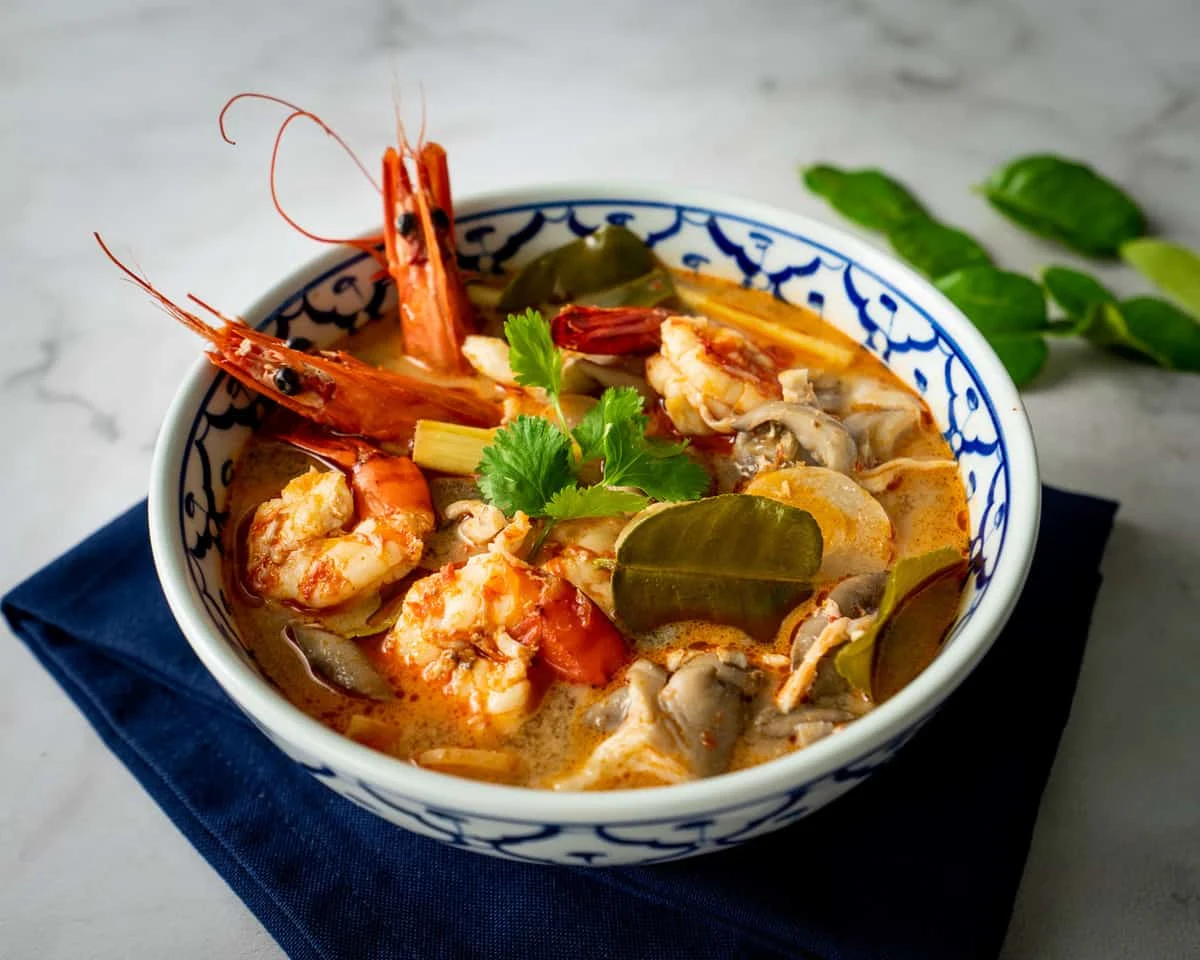
- 01CuisineThai Tom Yum Pork Noodles
- 02CityBangkok, Thailand
From the people index
Recommended by
One trusted voice points here.
Sukhumvit's Noodle Culture, Grounded on Soi 26
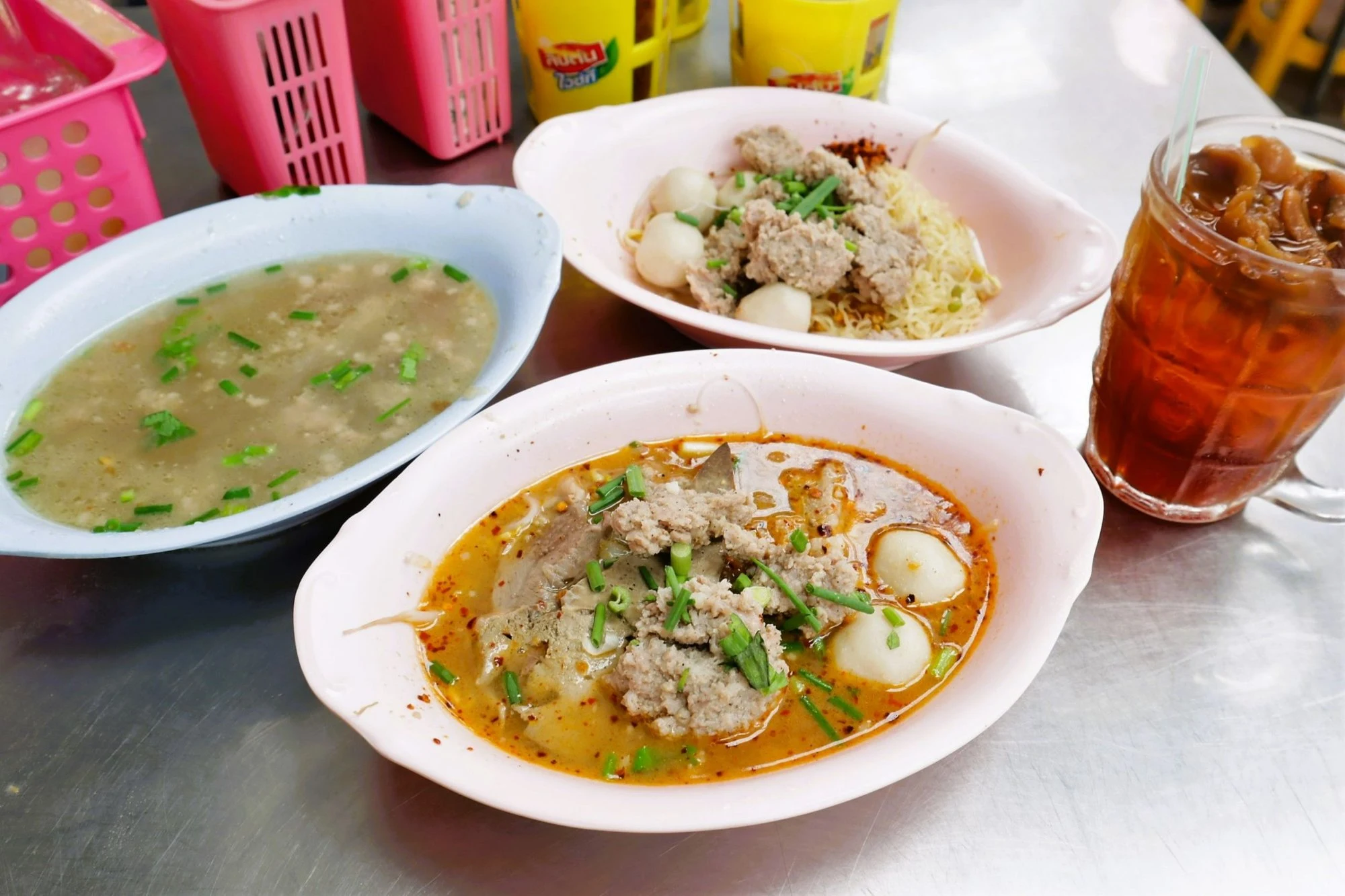
Bangkok's noodle canon runs deep. It runs from the boat noodle stalls of the old klongs, where concentrated broth is built from blood and bone, to the lighter, herb-forward bowls of the northeast, and into the Chinese-influenced bami shops that colonised the city's business districts decades ago. Rung Rueng Noodles on Sukhumvit 26 reflects that layered history. The address, 10/3 Sukhumvit 26 in Khlong Tan, Khlong Toei, puts it within reach of Phrom Phong BTS.
Sukhumvit 26 is not the tourist circuit. It sits adjacent to the Embassy Row zone and close enough to Emporium and EmQuartier to attract a lunchtime crowd from both office workers and shoppers, but the soi itself operates at a lower register than the main boulevard. Noodle shops in this bracket, neighbourhood-facing, repeat-customer operations, tend to thrive or disappear on the quality of a very small number of dishes done consistently well over time. Rung Rueng's presence on the soi places it in that category.
The Sunday email
Read about the people behind restaurants like Rung Rueng Noodles in the Sunday email.
Every Sunday we send a lead story and up to four more about the chefs, winemakers, sommeliers and hoteliers behind the restaurants, bars, wineries and hotels we cover.
Recent stories
Free. One email a week, and you can unsubscribe from any issue.
The Craft Behind the Bowl
Bangkok's approach to noodles has always involved a kind of quiet technical discipline that doesn't announce itself. The editorial angle relevant here is one that applies across Thai street food at this level: indigenous ingredients, many of them sourced from specific regional producers or wet market relationships built over years, prepared using methods that have absorbed external influence, Chinese broth construction, for instance, or the Hainanese approach to poaching, without discarding their Thai foundation. The result, when the kitchen has its formula dialled in, is a bowl that tastes simultaneously familiar and difficult to replicate at home. That intersection of imported technique and local product is what separates the institutions from the forgettable.
Across Bangkok's noodle scene, the operators who last are usually those who control their ingredient sourcing with the same attention a fine-dining kitchen would apply to its suppliers. Pork-based broths depend on the quality of bones and the ratio of collagen to lean meat. Herb additions, coriander, spring onion, sometimes sawtooth herb, arrive from wet market relationships rather than wholesale distributors, and the difference registers in the bowl. Rung Rueng's position as a neighbourhood regular suggests this kind of operational consistency is present, even if the specifics of its sourcing relationships are not documented in the public record.
Where Rung Rueng Sits in Bangkok's Eating Hierarchy
Bangkok's dining infrastructure has two essentially separate tracks. One runs through the tasting-menu and fine-dining circuit: operations like Sorn, which holds Michelin stars for its Southern Thai focus, or Baan Tepa in its contemporary Thai register. On the international end, restaurants such as Sühring, Côte by Mauro Colagreco, and Gaa have positioned Bangkok as a city capable of hosting serious destination-dining programs that import technique from elsewhere and apply it to local conditions. Those operations occupy the ฿฿฿฿ bracket and draw reservation-led clientele.
Rung Rueng Noodles operates in an entirely different economy. This is the track where value is measured not in tasting courses or wine pairings but in the quality of a single bowl delivered quickly, at a price that allows daily visits. That economy sustains a larger portion of Bangkok's actual food culture than the Michelin tier. It is also the tier where out-of-city comparisons begin to matter: the discipline required to produce a consistently good bowl of noodles in Bangkok is not categorically different from what drives respected noodle operations elsewhere in Thailand, from Loet Rot in Chiang Mai to neighbourhood standbys in Pattaya like Krua Laew Tae R-Rom.
For readers coming from the tasting-menu end of the Bangkok spectrum, or from international reference points like Le Bernardin or Atomix in New York, a venue like Rung Rueng represents something worth understanding on its own terms: the technical demands are different, not lesser. Broth clarity, noodle texture, and the balance of toppings across a very short menu are the measures here. See also Hoy Tord Chao Lay for another example of Bangkok-area street food operating with this kind of focused, single-dish discipline.
Questions
Frequently asked
How expensive is Rung Rueng Noodles?
Rung Rueng Noodles is listed at a price level of $.
Where is Rung Rueng Noodles and what does it serve?
Rung Rueng Noodles is in Klong Toei Khwaeng, Bangkok, serving Thai Tom Yum Pork Noodles.
The field
How it compares
| Place | Cuisine | Notes | Awards |
|---|---|---|---|
| Rung Rueng Noodles | Thai Tom Yum Pork Noodles | Klong Toei Khwaeng, $ | · |
| Baan Tepa | Creative Thai Fine Dining | Bangkok | Michelin 2 Stars, 50 Best |
| Gaa | Modern Indian Fine Dining with Thai Influences | Bangkok | Michelin 2 Stars, 50 Best |
| Gaggan Anand | Progressive Indian | Bangkok | Michelin 1 Star, 50 Best |
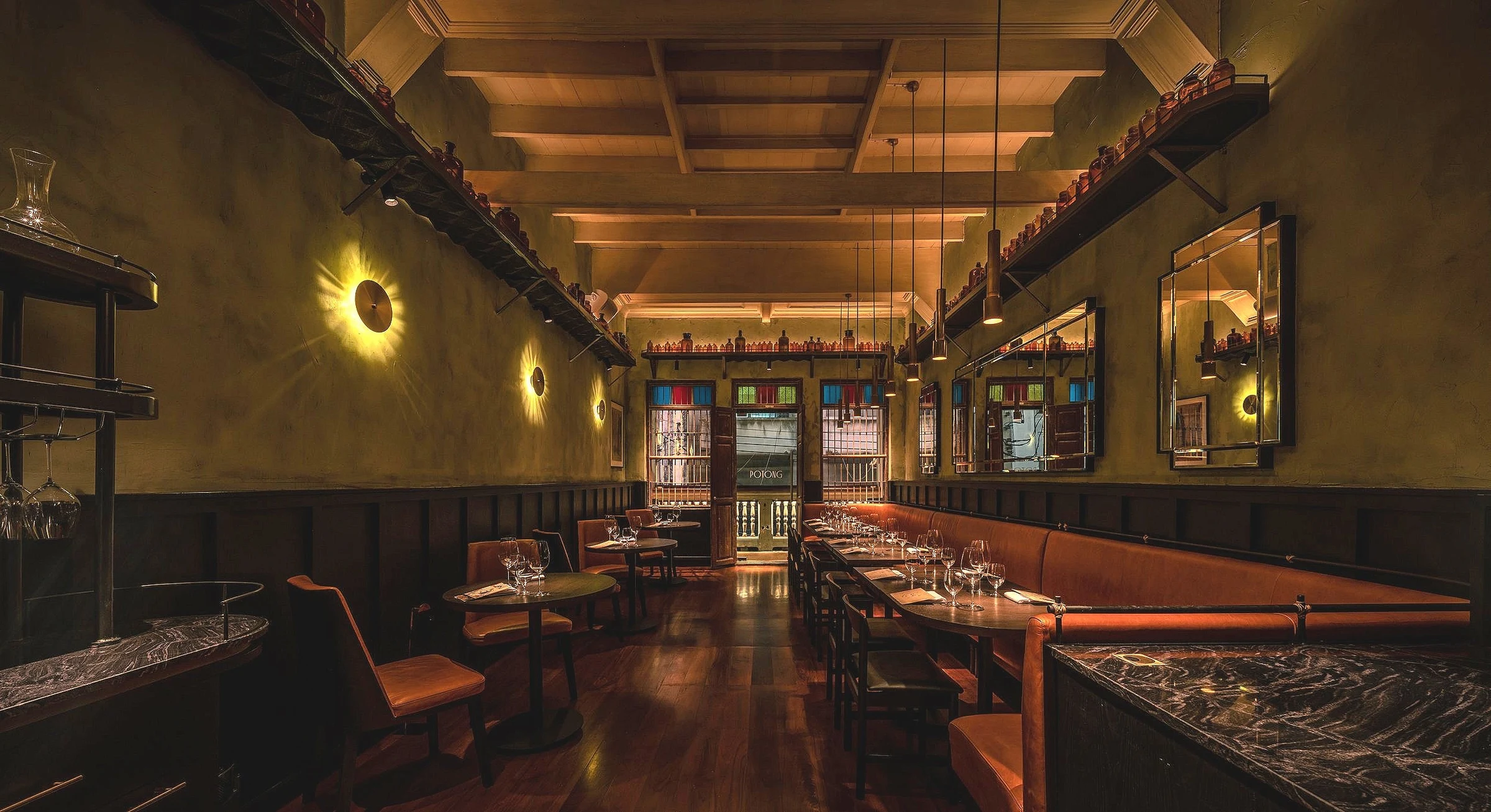
| Potong | Progressive Thai-Chinese Fine Dining | Bangkok | Michelin 1 Star, 50 Best |
| Sorn | Fine Southern Thai | Bangkok | Michelin 3 Stars, 50 Best |
| Sühring | Modern German Fine Dining | Bangkok | Michelin 3 Stars, 50 Best |
Similar places
Creative Thai Fine Dining
Baan Tepa
Bangkok, Thailand
★★ · 50 Best
Modern Indian Fine Dining with Thai Influences
Gaa
Bangkok, Thailand
★★ · 50 Best
Progressive Indian
Gaggan Anand
Bangkok, Thailand
★ · 50 Best
Progressive Thai-Chinese Fine Dining
Potong
Bangkok, Thailand
★ · 50 Best
Fine Southern Thai
Sorn
Bangkok, Thailand
★★★ · 50 Best
Modern German Fine Dining
Sühring
Bangkok, Thailand
★★★ · 50 Best
The Sunday email
Read about the people behind restaurants like Rung Rueng Noodles in the Sunday email.
Every Sunday we send a lead story and up to four more about the chefs, winemakers, sommeliers and hoteliers behind the restaurants, bars, wineries and hotels we cover.
Recent stories
Free. One email a week, and you can unsubscribe from any issue.