Sabina Sabe
- 01CityOaxaca, Mexico
- 02Recognition50 Best Bars
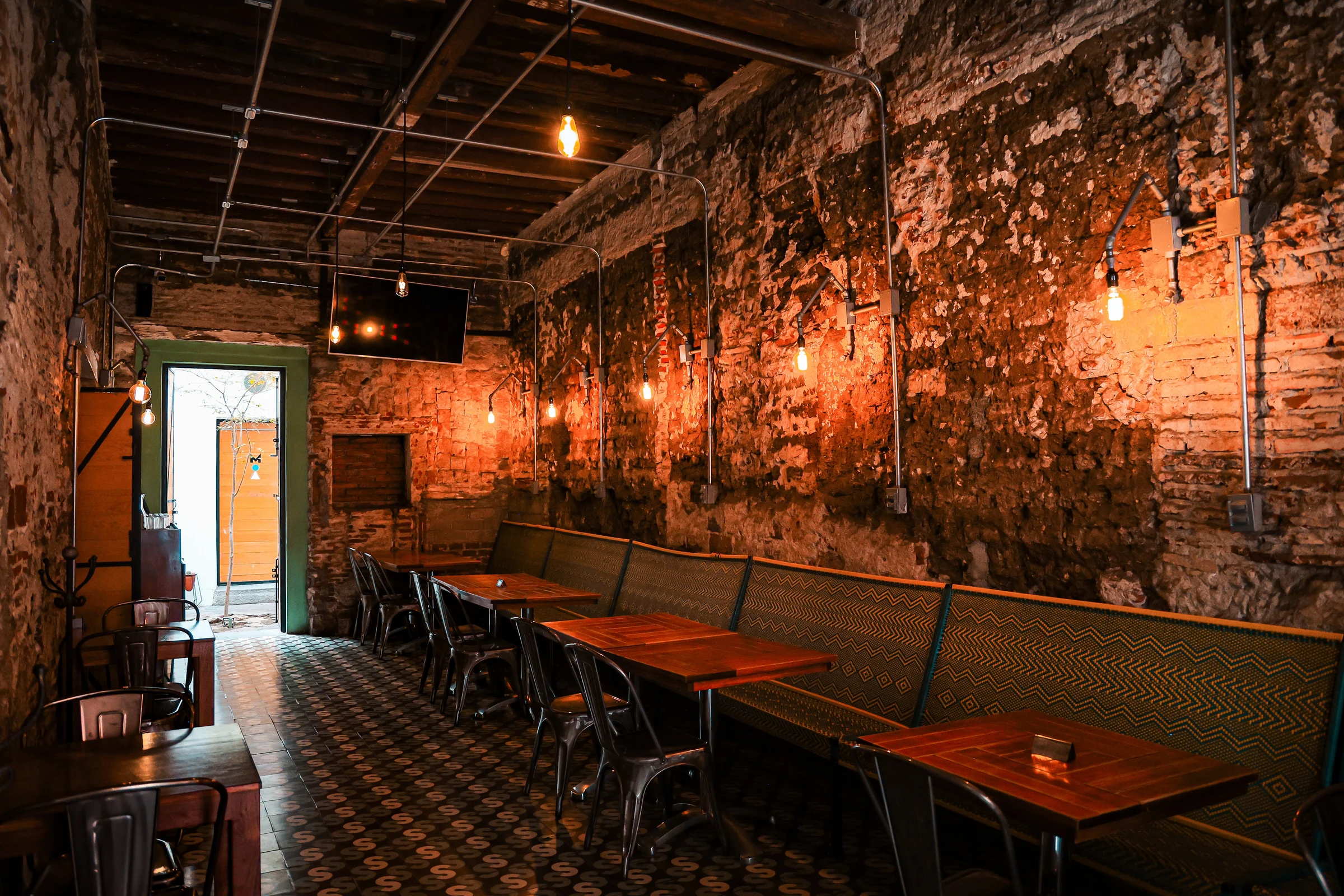
Where Oaxacan Mezcal Culture Meets Technical Bartending
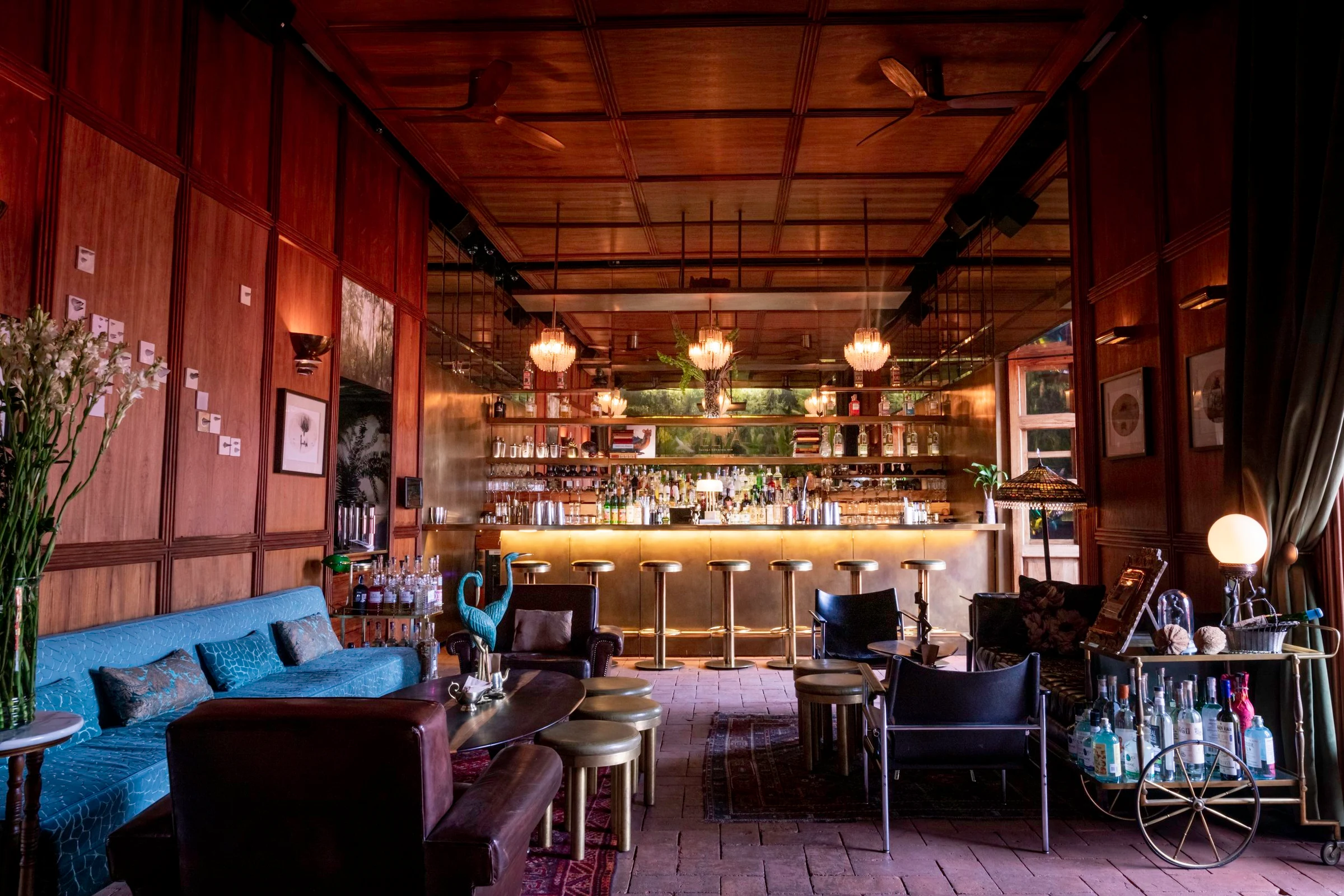
Centro Histórico's streets are built for slow movement. The colonial facades of Oaxaca de Juárez absorb foot traffic without rushing it, and the neighbourhood around 5 de Mayo operates at the same tempo. Arriving at Sabina Sabe, on that street in the heart of the old city, the context matters: this is a bar operating inside a city where the base spirit, mezcal, is not a category but a geography, a social practice, and in many cases a family trade stretching back generations. That material is what any serious Oaxacan bar programme works from. What separates those that simply pour it from those that interpret it is technique, editorial intent, and repetition of excellence over time.
Sabina Sabe has demonstrated all three. The bar ranked 20th in North America in 2022 and 54th in 2025. For a bar in a mid-sized Mexican city competing against the full weight of Mexico City's cocktail infrastructure, that trajectory is worth pausing on. For a bar in a mid-sized Mexican city competing against the full weight of Mexico City's cocktail infrastructure, that trajectory is worth pausing on.
The Sunday email
Read about the people behind bars like Sabina Sabe in the Sunday email.
Every Sunday we send a lead story and up to four more about the chefs, winemakers, sommeliers and hoteliers behind the restaurants, bars, wineries and hotels we cover.
Recent stories
Free. One email a week, and you can unsubscribe from any issue.
The Cocktail Programme: Indigenous Ingredients as Technical Material
Oaxaca's bar scene has followed a pattern seen in other spirit-producing regions globally: the most interesting programmes stop treating the local spirit as an endpoint and start using it as a base for genuine technique. The shift from "mezcal poured straight" to "mezcal as architecture" is where Sabina Sabe sits. The city's surrounding landscape provides ingredients that few bar programmes outside Mexico can access in meaningful form: endemic chiles, heirloom corn derivatives, regional herbs, and fermented preparations rooted in pre-Hispanic tradition. When these enter a cocktail at this calibre, the result is neither folkloric performance nor fusion novelty. It is specific.
Comparable programmes elsewhere in Mexico have followed similar logic. Baltra Bar in Mexico City works through precision and restraint on a metropolitan scale. Bekeb in San Miguel de Allende grounds its programme in Bajío terroir. El Gallo Altanero in Guadalajara applies technique to western Mexican spirit traditions. Sabina Sabe's distinction is that it draws from one of the densest ingredient vocabularies in the country while maintaining enough formal discipline to sustain four consecutive years of international recognition.
Within Oaxaca itself, the bar's nearest peer in terms of approach is Selva, which operates from a similarly ingredient-forward position. The two represent the city's upper tier of bar programming, and together they account for most of Oaxaca's visibility on international lists. Boulenc in Oaxaca City offers an adjacent perspective, rooted more in natural wine and fermentation, and serves as a useful complement for an evening that moves between venues.
Mezcal's Role in the Programme
Understanding what makes a bar like this function requires understanding what mezcal actually is in Oaxaca. Unlike tequila, which is industrially produced at scale from a single agave variety, Oaxacan mezcal encompasses dozens of agave species, multiple production methods, and village-level traditions that vary significantly across the Sierra Juárez, Cañada, and Valles Centrales regions. The spirit that arrives at a bar like Sabina Sabe is not a commodity input but a raw material with embedded provenance. A well-designed cocktail programme in this context does something with that complexity rather than flattening it.
The international bar community has recognised this. Programmes in Tulum, like Arca, and in Playa del Carmen, like Zapote Bar, have built visibility on similar ingredient-forward tropical frameworks. The Oaxacan version of this approach carries different weight because the source material is available at origin. Proximity to producers, direct relationships with palenques, and access to endemic botanicals that do not survive long-distance supply chains are advantages that city-centre bars in Guadalajara or Mexico City cannot replicate.
Further north, Aruba Day Drink in Tijuana and La Capilla in Tequila each operate from their own spirit-geography logic. What they share with Sabina Sabe is an understanding that the most durable bar programmes are rooted in place, not in trend cycles. That rooting is what the international ranking committees appear to be responding to.
Context Within North American Bar Culture
North America's leading bar lists have, over the past decade, diversified away from the cocktail-as-theatre model that dominated the mid-2010s. Technical rigour matters more than narrative spectacle, and sourcing transparency has moved from marketing angle to genuine differentiator. In that environment, bars with defensible local material and formal technique have risen faster than those built on concept alone.
Sabina Sabe's ranking history reflects this. Reaching 20th in North America in 2022 placed it ahead of most of Mexico City's large-format programmes at the time, a significant position given that city's scale and infrastructure advantage. The shift to 54th in 2025 likely reflects both a competitive field that expands annually and the natural fluctuation of panel-based rankings. Across all three cycles, the bar has remained in the conversation, which for a Centro Histórico bar in Oaxaca is the more meaningful fact.
For reference, Bar Leather Apron in Honolulu has followed a parallel trajectory of holding regional ranking credibility over multiple years in a city not typically considered a cocktail capital. The comparison is structural, not stylistic. Both bars prove that sustained recognition outside major metropolitan centres requires programming depth that withstands annual scrutiny.
Questions
Frequently asked
What recognition does Sabina Sabe hold?
Sabina Sabe holds a place on a 50 Best list.
How expensive is Sabina Sabe?
Sabina Sabe is listed at a price level of $$.
The field
How it compares
| Place | Awards | Notes | Cuisine |
|---|---|---|---|
| Sabina Sabe | 50 Best | 2006700010204, $$ | · |
| Attaboy | 50 Best | New York City | · |
| Baba au Rum | 50 Best | Athens | other |
| Kwant | 50 Best | London | · |
| La Mezcalería de Oaxaca | · | Oaxaca | · |
| Selva | 50 Best | Oaxaca | · |
| Thunderbolt | 50 Best | Los Angeles | · |
Similar places

The Sunday email
Read about the people behind bars like Sabina Sabe in the Sunday email.
Every Sunday we send a lead story and up to four more about the chefs, winemakers, sommeliers and hoteliers behind the restaurants, bars, wineries and hotels we cover.
Recent stories
Free. One email a week, and you can unsubscribe from any issue.