Chef in Residence
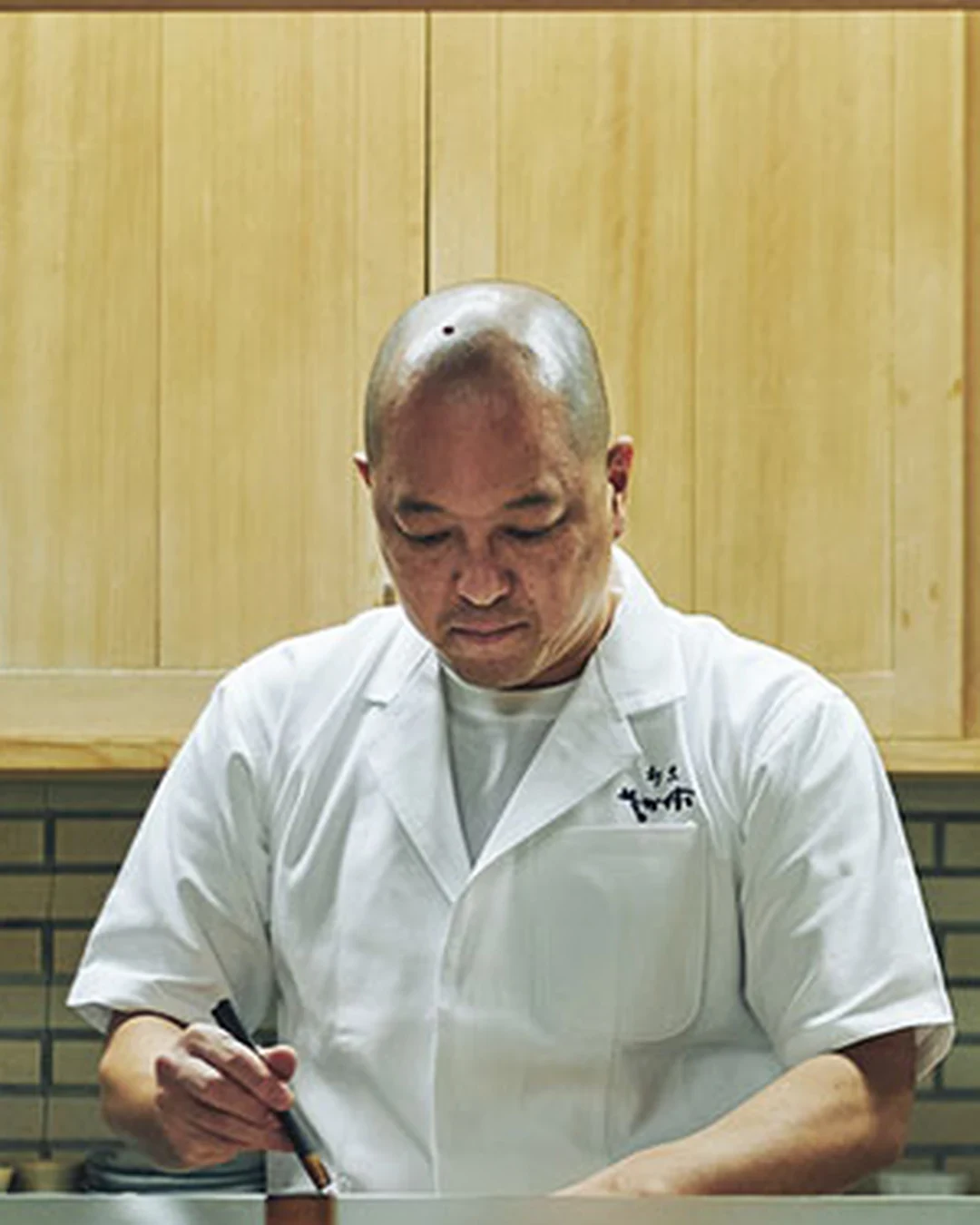
Ryuta Sakamoto
Chef

Sakamoto sits in Kyoto's Higashiyama Ward, offering Kyoto cuisine under chef Ryuta Sakamoto across tight lunch and dinner sittings. Ranked among Japan's top restaurants by Opinionated About Dining in both 2024 and 2025, it operates with the controlled pacing and seasonal discipline that defines the city's dining tradition. A Google rating of 4.6 across 104 reviews signals consistent delivery rather than occasion-driven spikes.
<h2>Where Higashiyama Sets the Table</h2><p>The eastern slopes of Kyoto have always carried a particular weight. Higashiyama Ward, bordered by temple paths and stone-paved lanes, is where the city's more deliberate side survives. Restaurants here do not compete for foot traffic or Instagram adjacency; they depend on the kind of attention a visitor brings after walking past Chion-in or tracing the Philosopher's Path south. Sakamoto, at address 79 Sueyoshicho, occupies that context rather than fighting against it. What you encounter is a room calibrated to the unhurried.</p><p>Kyoto cuisine, distinct from the performance register of formal kaiseki, carries its own logic. The emphasis falls on restraint, seasonal alignment, and a vocabulary of dashi, pickles, tofu, and river fish developed over centuries of feeding the imperial court and its attendant institutions. Sakamoto positions itself within that tradition, not as a historical exhibit but as a working kitchen applying those standards to the present moment.</p><h2>The Architecture of the Meal</h2><p>The dining ritual at a Kyoto cuisine restaurant is as much about pacing as it is about ingredient sourcing. Where the kaiseki format at a place like <a href="https://www.enprimeurclub.com/restaurants/gion-sasaki-kyoto-restaurant">Gion Sasaki</a> or <a href="https://www.enprimeurclub.com/restaurants/kikunoi-honten-kyoto-restaurant">Kikunoi Honten</a> follows a codified sequence, sakizuke, hassun, yakimono, shokuji, Kyoto cuisine in the broader sense can breathe more freely within that inherited structure. Each course exists to punctuate, not overwhelm. Textural contrast is deliberate: the give of yudofu against something grilled, the clean acidity of pickled vegetables pulling a richer preparation back into focus.</p><p>The lunch and dinner sittings at Sakamoto are both short in window: one hour for lunch, three hours across the evening period. Arriving at the opening of a sitting, rather than mid-service, gives the table the full arc the kitchen intends, from lighter preparations through to the composed rice course and the small sweet that closes things.</p><p> The pacing of courses is set by the kitchen, not by request. Asking to rush the meal or extend the interval between courses runs against the grain of what the experience offers. Removing shoes at the entrance, if a traditional tatami-adjacent space requires it, is standard. Photographs of plated dishes are generally accepted, but extended disruption to the room, checking phones between courses, speaking at refined volume, reads as inattention in a dining culture that prizes the opposite.</p><h2>Seasonal Discipline and the Kyoto Kitchen</h2><p>Kyoto's culinary calendar moves in more granular increments than most. The shift from late winter into early spring brings different greens, different fish, a change in the weight of broths. Autumn loads the table with matsutake, chestnut, and the first cold-weather seafood. A restaurant ranked by Opinionated About Dining in consecutive years, 484th in Japan in 2025, improving from 441st in 2024, earns that placement, in part, by responding to those shifts rather than running a static menu that seasonality merely decorates.</p><p> Consistency across two annual cycles is a meaningful data point: the kitchen is not producing one exceptional evening surrounded by ordinary ones. At 4.6 across 109 Google reviews, the signal holds at a broader sampling level too. That alignment between specialist and general-public assessment suggests a kitchen calibrated for reliability, not for peak-day performance.</p><p>The seasonal argument for timing a visit is real. Kyoto's spring cherry blossom period and autumn foliage weeks drive reservation demand across the entire dining sector. If the goal is unhurried access to the kind of meal Sakamoto offers, the shoulder periods, late January through February, or the second half of November after foliage peaks, provide easier booking conditions.</p><h2>Where Sakamoto Sits in the Kyoto Field</h2><p>Kyoto's restaurant tier for traditional Japanese cuisine runs from multi-generation kaiseki institutions, <a href="https://www.enprimeurclub.com/restaurants/hyotei-kyoto-restaurant">Hyotei</a>, <a href="https://www.enprimeurclub.com/restaurants/isshisoden-nakamura-kyoto-restaurant">Isshisoden Nakamura</a>, <a href="https://www.enprimeurclub.com/restaurants/mizai-kyoto-restaurant">Mizai</a>, down through younger kitchens working within inherited formats but with less ceremonial overhead. Sakamoto occupies a position that benefits from Higashiyama's gravitas without the formal apparatus of the city's most established dining rooms. The chef's name on the door, Ryuta Sakamoto, signals a proprietor-kitchen rather than a group or dynasty, which affects both the character of the experience and booking accessibility compared to higher-profile neighbors.</p><p>For comparison outside Kyoto, the tradition of place-rooted Japanese cuisine shows up differently in other cities. <a href="https://www.enprimeurclub.com/restaurants/hachisen-nagoya-restaurant">Hachisen in Nagoya</a> applies comparable Kyoto cuisine principles to a different urban context, while <a href="https://www.enprimeurclub.com/restaurants/hajime-osaka-restaurant">HAJIME in Osaka</a> sits at a more technically ambitious register entirely. Within Japan's broader fine dining field, restaurants like <a href="https://www.enprimeurclub.com/restaurants/harutaka-tokyo-restaurant">Harutaka in Tokyo</a>, <a href="https://www.enprimeurclub.com/restaurants/goh-fukuoka-restaurant">Goh in Fukuoka</a>, <a href="https://www.enprimeurclub.com/restaurants/akordu-nara-restaurant">akordu in Nara</a>, <a href="https://www.enprimeurclub.com/restaurants/1000-yokohama-restaurant">1000 in Yokohama</a>, and <a href="https://www.enprimeurclub.com/restaurants/6-okinawa-restaurant">6 in Okinawa</a> each demonstrate how far regional Japanese cooking has developed distinct identities. The international frame of reference for cooking at this precision and focus level extends to places like <a href="https://www.enprimeurclub.com/restaurants/le-bernardin">Le Bernardin in New York City</a>, where sustained critical recognition over consecutive years becomes a form of institutional confidence rather than novelty.</p><h2>Planning Your Visit</h2><p>Sakamoto operates seven days a week, with a single lunch sitting running from noon to 1 pm and an evening period covering 5 pm to 8 pm. The tight windows mean the kitchen turns tables once per service; arriving promptly is not a formality but a structural requirement. The most reliable approach involves contact through your hotel concierge.</p><p>The address in Sueyoshicho, Higashiyama Ward, is accessible on foot from major temple and shrine areas in the eastern district.</p><p>Quick reference: Sakamoto, 79 Sueyoshicho, Higashiyama Ward, Kyoto. Lunch 12 to 1 pm, dinner 5 to 8 pm.</p>
The service windows are tight — a single hour at lunch, a three-hour evening period from 5–8 pm — and the format is kitchen-paced and sequential. That structure suits couples and small adult groups considerably better than families with children. Sakamoto's Opinionated About Dining ranking reflects a serious dining context, not a casual drop-in.
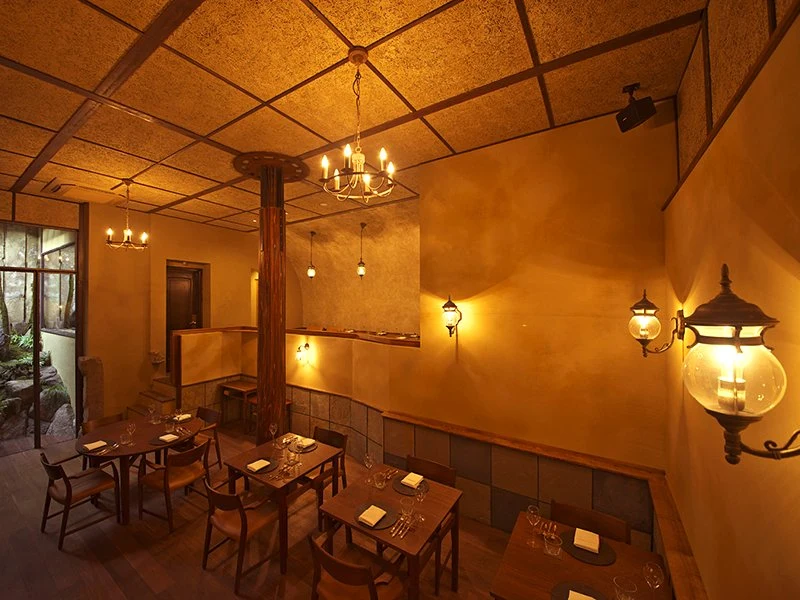
The address in Higashiyama Ward — Sueyoshicho 79 — places Sakamoto among temple paths and stone-paved lanes that set a contemplative tone before you reach the door. Inside, the rhythm follows the Kyoto cuisine tradition: unhurried, course-driven, and calibrated to the pace of the kitchen rather than the clock. The neighbourhood itself functions as context for the meal.
Sakamoto has received recognition including: Opinionated About Dining Top Restaurants in Japan Ranked #484 (2025); Opinionated About Dining Top Restaurants in Japan Ranked #441 (2024).
Sakamoto serves Kyoto cuisine, a tradition centred on dashi-forward cooking, seasonal produce, and techniques rooted in centuries of court and temple dining. The kitchen's calendar follows Kyoto's fine-grained seasonal shifts, so what arrives on the table in late winter differs meaningfully from what appears in spring. Specific menu items are not published in advance, which is standard practice at this level of Kyoto dining.
Hours at Sakamoto: Hours: Monday 12–1 pm, 5–8 pm Tuesday 12–1 pm, 5–8 pm Wednesday 12–1 pm, 5–8 pm Thursday 12–1 pm, 5–8 pm Friday 12–1 pm, 5–8 pm Saturday 12–1 pm, 5–8 pm Sunday 12–1 pm, 5–8 pm.
Sakamoto is located at Japan, 〒605-0085 Kyoto, Higashiyama Ward, Sueyoshicho, 79, Kyoto.
Japan, 〒605-0085 Kyoto, Higashiyama Ward, Sueyoshicho, 79
Higashiyama-ku (Gion)