Skip to Content
    Made ByRestaurant

    Sakurai Tea Experience
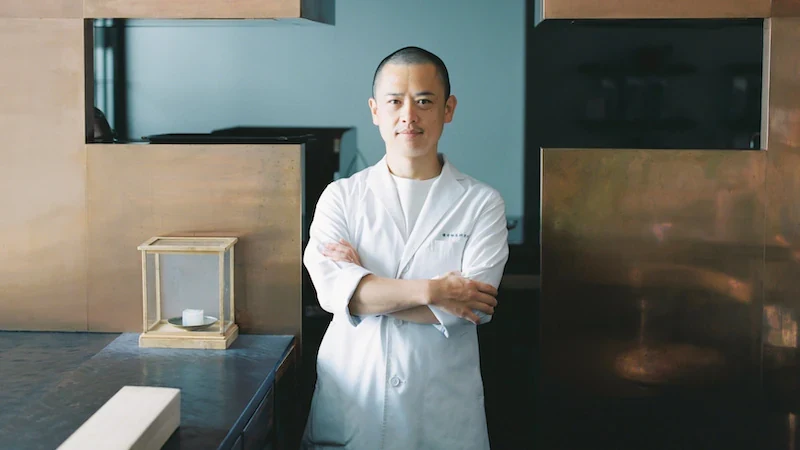
    Shinya Sakurai

    In Residence

    Shinya Sakurai

    Chef

    1. 01CuisineTea Ceremony
    2. 02CityTokyo, Japan
    Sakurai Tea Experience (restaurant)

    Shinya Sakurai, Tea Master and founder, leads Sakurai Tea Experience in Tokyo with tea courses, hojicha roasting, and gyokuro leaves.

    • Opinionated About Dining Casual in Japan Ranked #81 · 2026

    Roasting before the cup

    Hojicha roasts at the counter as Shinya Sakurai, Tea Master and founder at Sakurai Tea Experience in Tokyo, brings heat, leaf, and timing into view. He has led the house since 2014, building a place where Japanese tea sits at the center of the exchange rather than beside it. His stated task is direct: “So many young Japanese have never even tasted a properly prepared cup of tea. I want to change that.” The line carries the discipline of the room. Sakurai does not treat tea as a sealed ceremonial object, held apart from ordinary drinking; he returns it to the hand, the palate, and the present moment. The title Tea Master is formal, but the work here is not guarded for formality’s sake. It asks for attention without making attention feel punitive. Preparation and presentation move together, and Sakurai’s role is as much interpreter as maker, giving guests a structured way into leaf, water, temperature, aroma, and sequence.

    A program built around leaf and heat

    The tea program works through courses rather than a single cup, with hand-rolled green tea, hojicha, bancha, matcha, and high-grade gyokuro appearing as distinct expressions of the same discipline. Sakurai selects teas from farms across Japan, and the house offers over 30 to 50 varieties, from rare leaves to highest-grade lots. The handling changes with the tea. Hojicha may be roasted on site, sometimes in front of guests, turning the counter into a bench where the transformation is visible before it is poured. Gyokuro can move beyond infusion: the steeped leaves are served as a salad, dressed with pink salt, ponzu sauce, or yuzu sauce, so the guest tastes what usually remains in the pot. Seasonal wagashi and light bites make the pairings precise without pulling focus from the cup. In the evening, the same leaf grammar extends into tea-infused drinks, including a Gyokuro Martini and a Hojicha Toddy, with spirits folded into the program rather than placed above it.

    The counter as a modern tea room

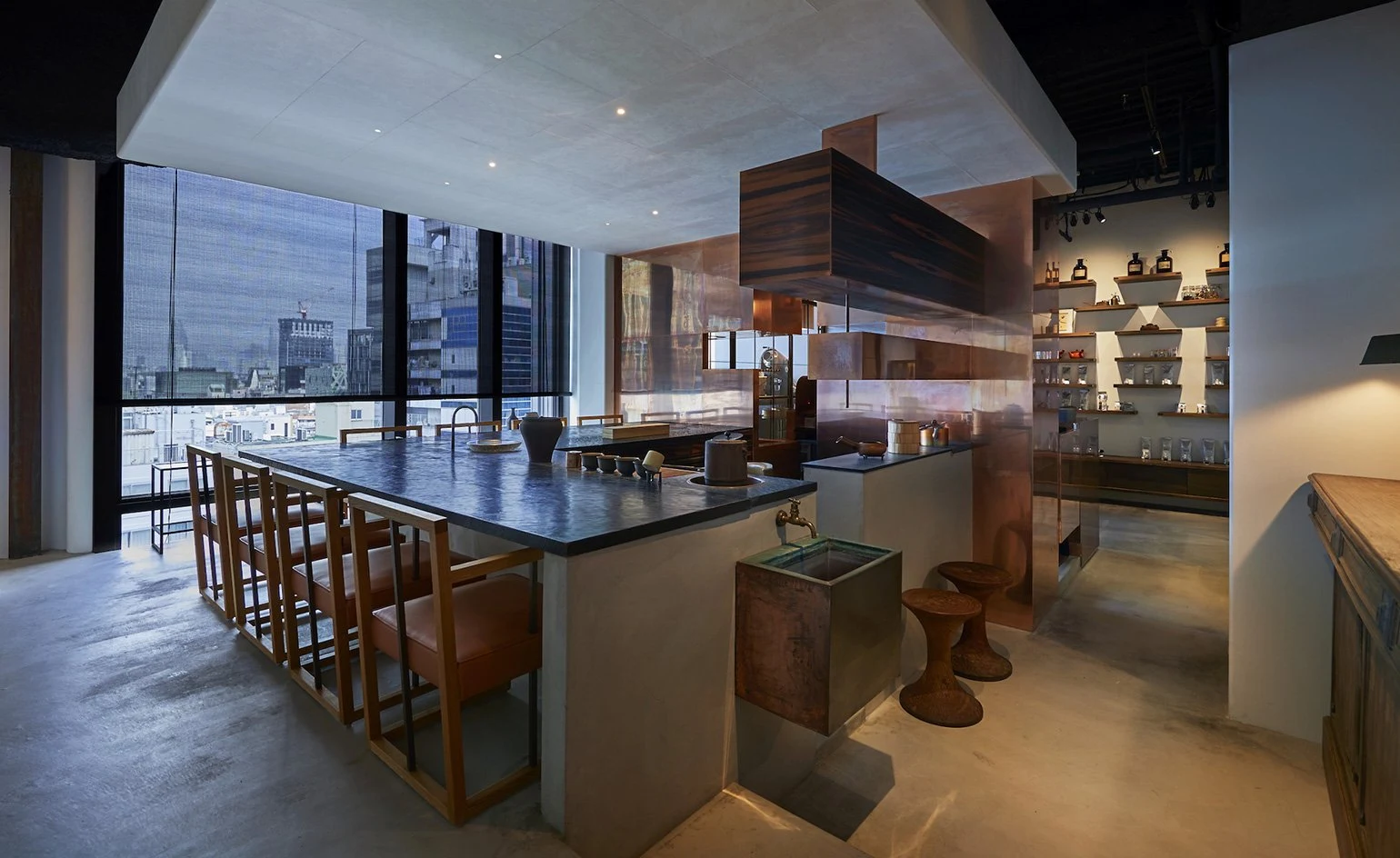
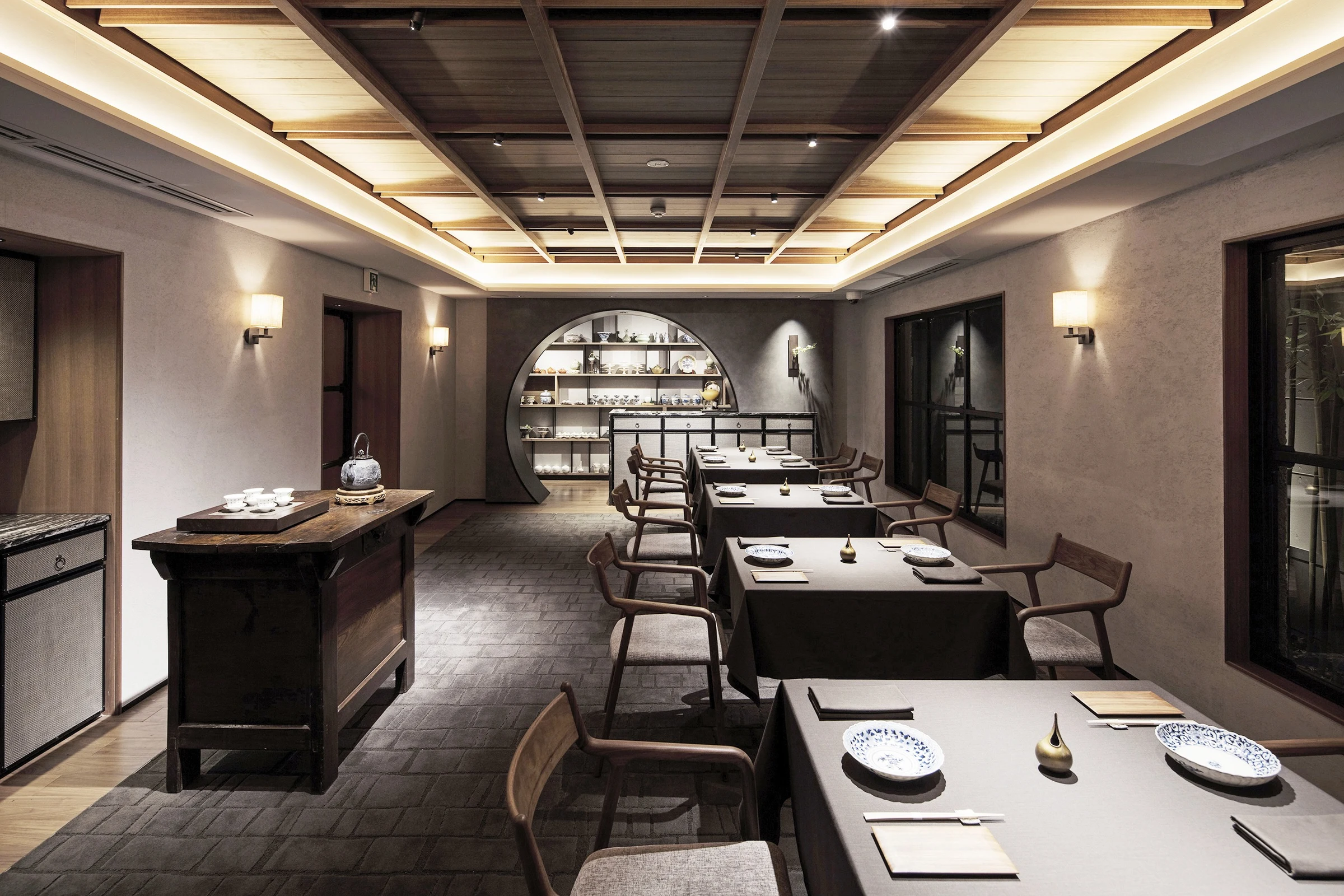
    The room sits on the fifth floor of the Spiral Building in Aoyama, with an 8-seat counter, copper fixtures, warm wood, and clean geometrical lines by Shinichiro Ogata of Simplicity. The design gives the work space to register. Water, fire, soil, copper, and wood appear less as decoration than as the grammar of preparation: heat for roasting, water for extraction, copper at the counter, wood under the hands. Floor-to-ceiling windows pull Tokyo close, but the pace inside narrows around the cup. Guests watch the pass between kettle, leaf, vessel, and hand. Nothing needs to be explained loudly. The counter does that work.

    Access without dilution

    Sakurai’s second statement is just as plain: “I want to offer people a new way of enjoying Japanese tea.” That is the useful tension of the place. The craft stays old enough to carry its method, and open enough for people meeting it without apprenticeship. The house has one current award, and it keeps tea legible without flattening it. If the next cup follows the same conviction, it will begin with leaf, heat, and Shinya Sakurai at the Sakurai Tea Experience counter.

    Questions

    Frequently asked

    Who leads Sakurai Tea Experience?

    Shinya Sakurai, the Tea Master and founder, has led Sakurai Tea Experience since 2014.

    What kind of tea service does it offer?

    The tea program works through courses rather than a single cup, with hand-rolled green tea, hojicha, bancha, matcha, and high-grade gyokuro appearing as separate expressions of the house style.

    What happens at the counter?

    Hojicha may be roasted on site, sometimes in front of guests, so the heat and leaf transformation are visible before the tea is poured. The counter also gives guests a close view of kettle, leaf, vessel, and hand at work.

    What else is served with the tea?

    Seasonal wagashi and light bites are part of the pairing, and steeped gyokuro leaves may be served as a salad with pink salt, ponzu sauce, or yuzu sauce. In the evening, the program also includes tea-infused drinks such as a Gyokuro Martini and a Hojicha Toddy.

    The field

    How it compares

    PlaceCuisineAwardsNotes
    Sakurai Tea ExperienceTea Ceremony··
    DenModern Japanese KaisekiMichelin 2 Stars, World's 50 BestTokyo
    FlorilègeModern French-Japanese Plant-Based Fine DiningMichelin 2 Stars, World's 50 BestTokyo
    NarisawaModern Japanese Satoyama Fine DiningMichelin 2 Stars, World's 50 BestTokyo
    QuintessenceModern French Fine DiningMichelin 3 StarsTokyo
    SazenkaModern Chinese Fine DiningMichelin 3 Stars, World's 50 BestTokyo
    SézanneFrenchMichelin 3 Stars, World's 50 BestTokyo

    In residence

    Similar places

    More in Tokyo← Browse all places