Salicutti
- 01CityMontalcino, Italy
- Falstaff Winery - 5 Stars · 2026
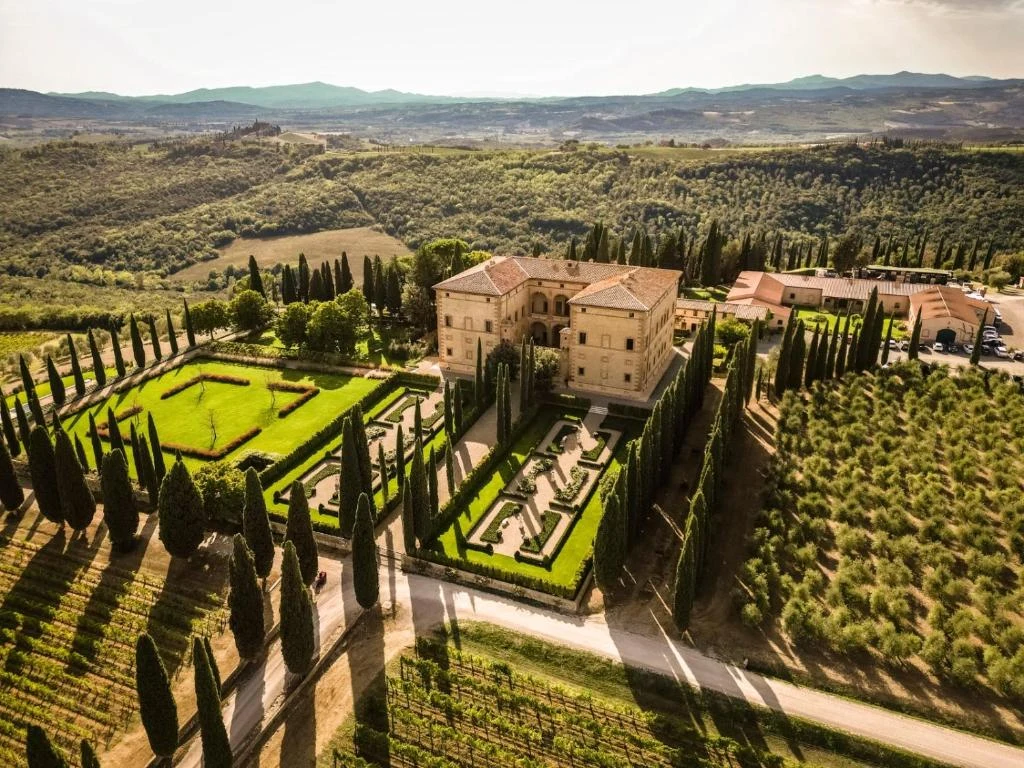
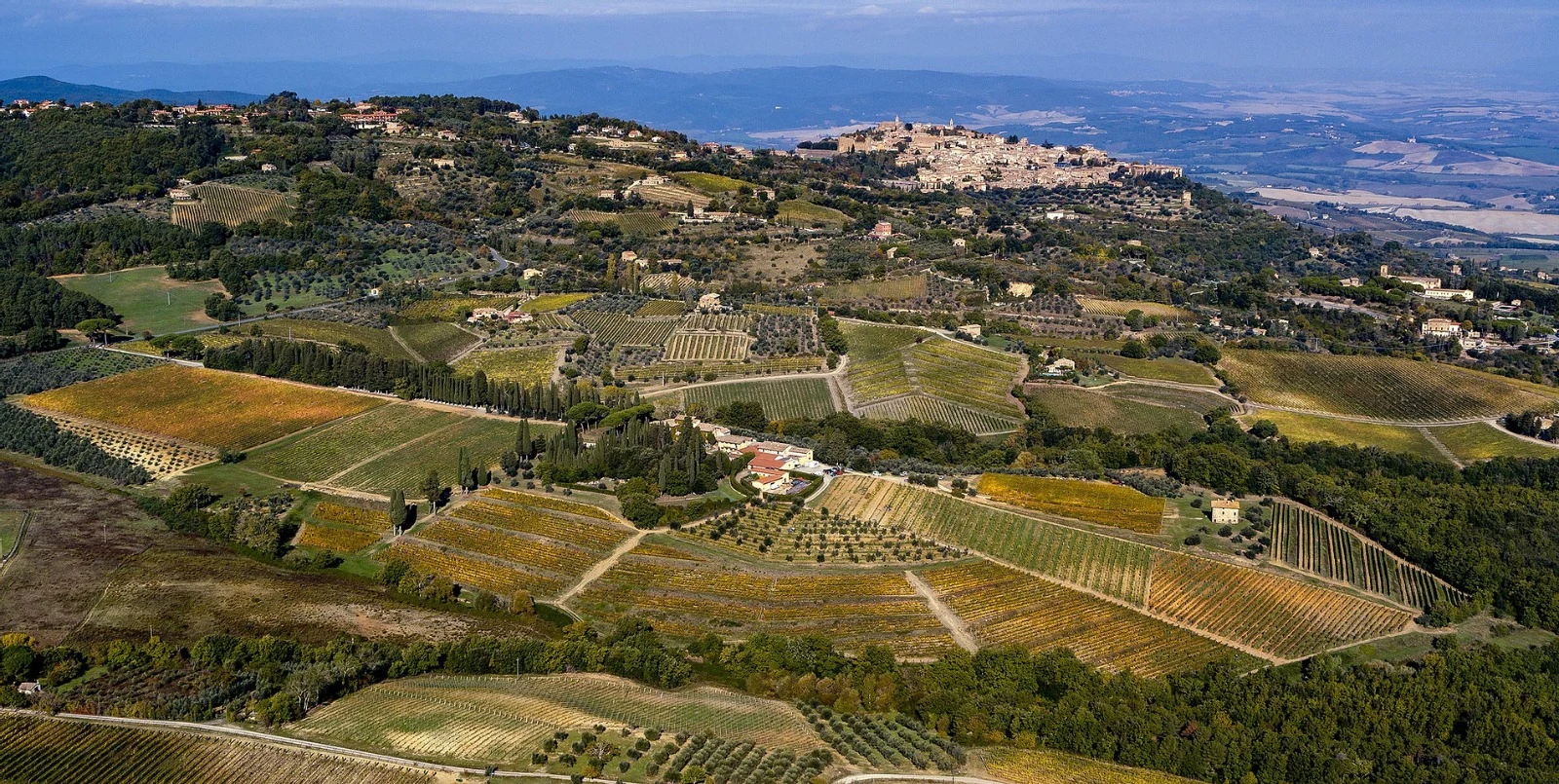
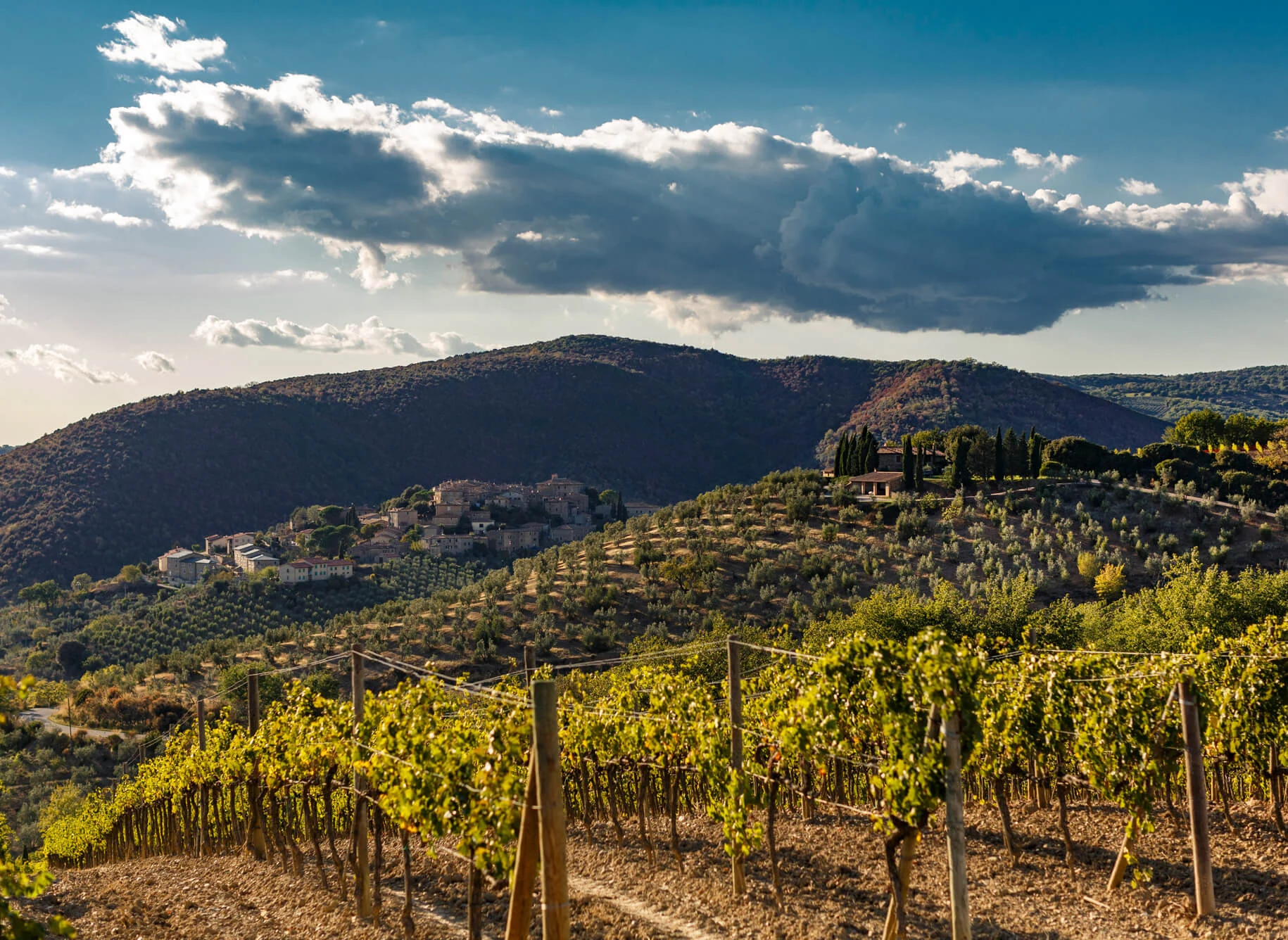
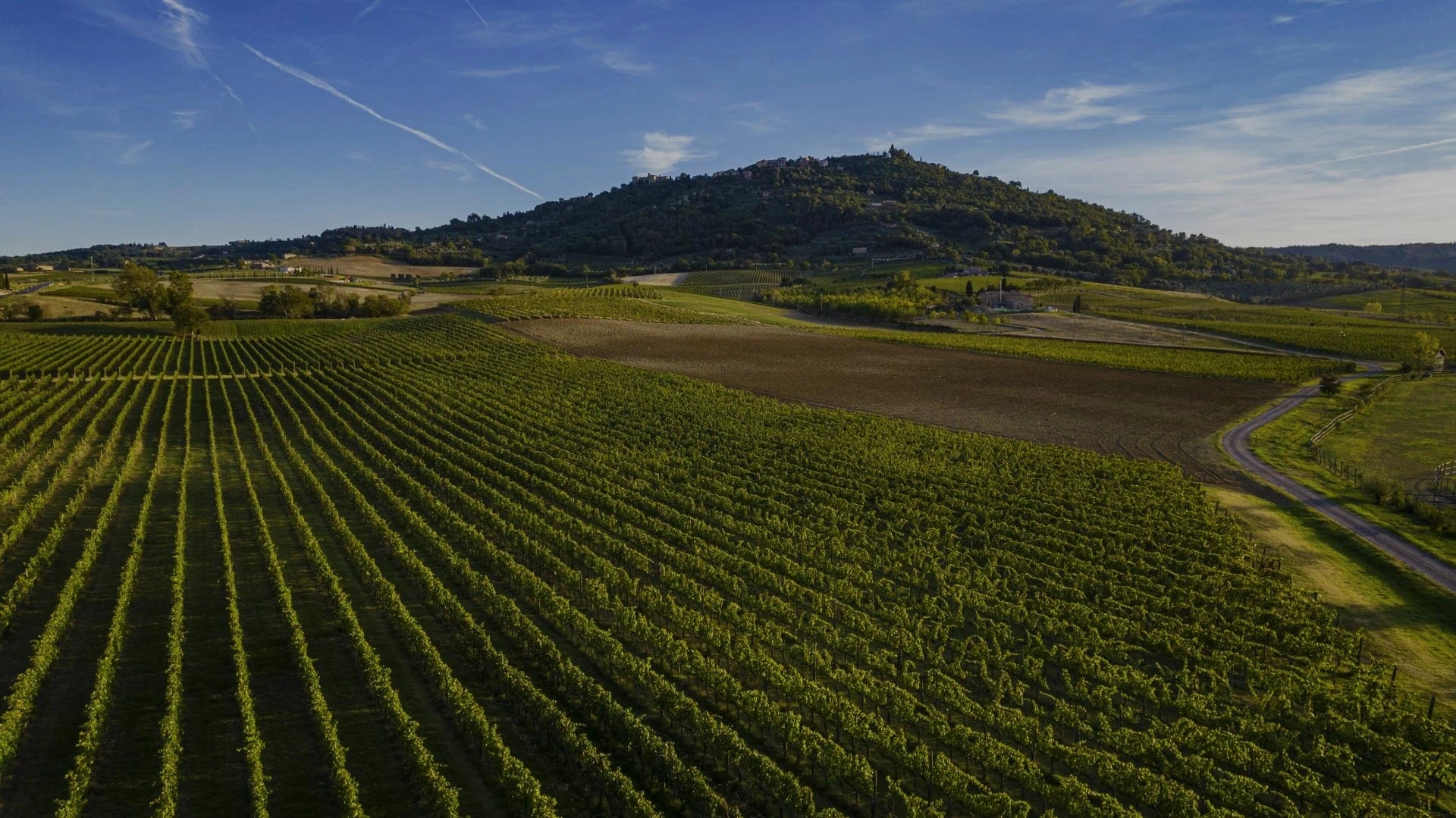
Approaching the ridge, the first impression is agricultural rather than theatrical: vines around the farmhouse, olives and woods beyond them, and Monte Amiata holding the horizon. This is the side of Montalcino where Brunello’s grandeur is less about scale than exposure, altitude, and the patience to separate one Sangiovese parcel from another. Salicutti belongs to that quieter school. It works from an 11-hectare estate, with 4.5 hectares planted to vines, and its strongest argument is that proximity matters: the vineyards sit around the house rather than being scattered across the appellation.
That matters in Montalcino because Brunello is often discussed as a single name, while the wines themselves are shaped by slope, soil, elevation, and the cooling influence of the surrounding hills. In the southeastern corridor, Salicutti reads as a classic-leaning producer with a modern ecological discipline. The estate was Montalcino’s first certified organic property in 1996, began conversion to biodynamics in 2018, and gained Demeter certification in 2022. Those dates are not cosmetic. They place the estate inside a longer argument about how Brunello can retain structure and age-worthiness without leaning on extraction or obvious oak.
Three Brunello crus turn a small estate into a study of altitude
The estate’s portfolio is built around Brunello di Montalcino DOCG and the cru names Sorgente, Piaggione, and Teatro. That structure gives the wines a clear editorial frame: this is not a broad commercial range dressed up with a single flagship bottle, but a narrow study of Sangiovese from neighboring sites. Sorgente is the largest parcel at 1.5 hectares, around 450 meters, with clayey-sandy soil and an underground water source. Piaggione covers about 1.2 hectares, sits between 420 and 450 meters, and is associated with fossil-rich limestone and a steep east-southeast exposure. Teatro is the smallest and highest site, roughly 0.7 hectares at 500 to 520 meters, shaped like an amphitheater and released selectively.
Those figures explain the estate better than any tasting-room adjective could. In warmer years, altitude and water availability become structural assets, not scenery. A parcel such as Sorgente can ripen later because of its soils and spring influence, while Teatro’s height and amphitheater form point to a cooler register within the same property. Piaggione, with its limestone and slope, gives the estate a more tensile counterweight. The point is not that one parcel is superior; the point is that Salicutti makes Brunello legible at a human scale.
Production remains small, at about 15,000 bottles in an abundant year. The cellar choices support the same argument. Concrete has replaced stainless steel for key work, small barrels have been phased out in favor of larger casks, and the 2021 estate Brunello is noted for concrete vinification with 35 days of maceration. Piaggione has also been described as bottled without stabilization, fining, or filtration. In a region where power can dominate the conversation, this is a grammar of restraint: structure without polish for its own sake, transparency without fragility.
Organic history, biodynamic farming, and design-led hospitality sit in the same frame
The estate’s modern identity carries two distinct chapters. Francesco Leanza owned the property for 30 years and helped build its reputation for elegant Brunello. Sabine and Felix Eichbauer purchased it in 2015, with a three-year transition that kept continuity in view while moving the project toward a more explicitly biodynamic and design-conscious phase. Sabine Eichbauer is also named as winemaker, and her architectural sensibility appears across the estate, from the refurbished farmhouse to the newer cellar and two ensuite guest rooms.
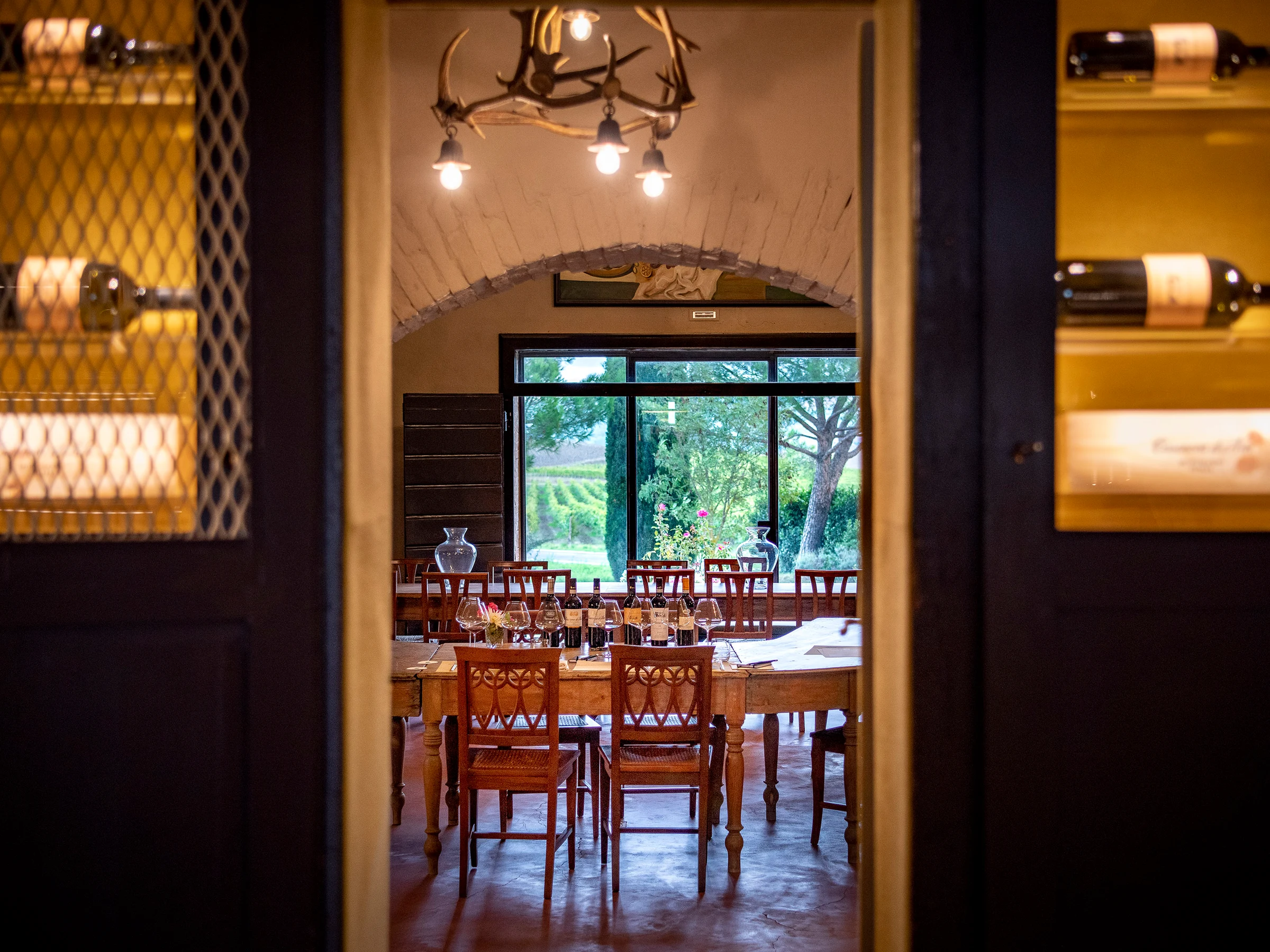
The hospitality reads as small-capacity estate immersion rather than high-throughput wine tourism. The property is quiet, design-forward, and rural, with guided estate tastings and vineyard touring as the natural format. Food pairing is part of the experience, and the visit style suits travelers who want to connect Brunello to land use, farming systems, and the domestic rhythm of a working estate. The atmosphere is intimate rather than formal, helped by the fact that the house, cellar, vineyard rows, olives, forest, and animals belong to one compact agricultural system.
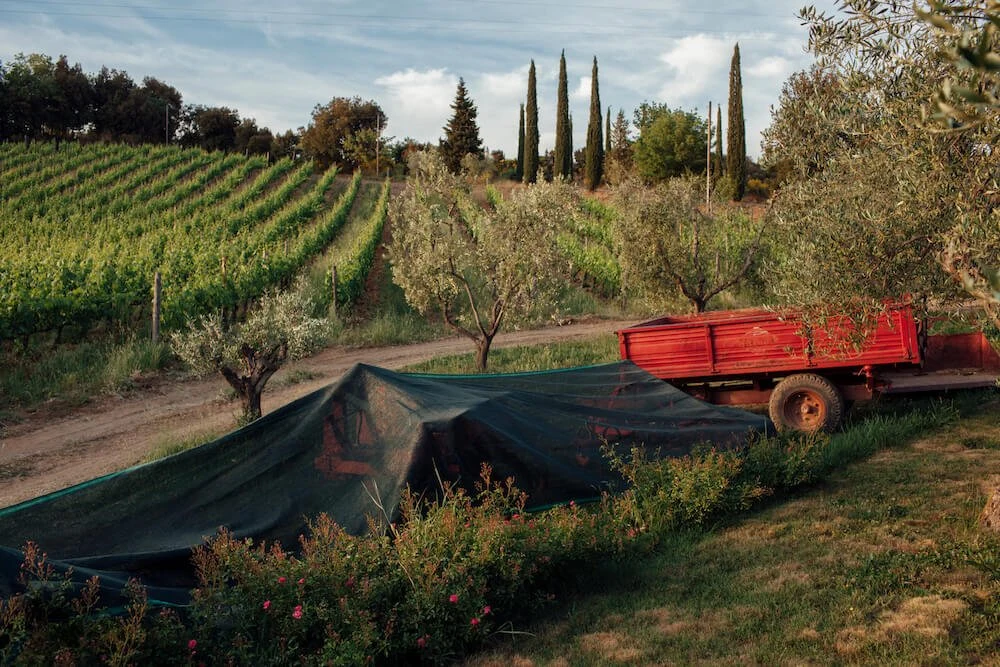
Sustainability here has practical details behind it: in-house composting, hydro-powered electricity, beehives, pigs, chickens, a vegetable garden, and surrounding forest. The estate’s identity is therefore not only organic or biodynamic by label, but mixed-farm in structure. That is increasingly relevant in European wine, where ecological language is often broad and hard to test. Salicutti’s case is more concrete: an enclosed property, contiguous vines, and farming choices that connect cellar decisions to soil management.
How to place it within a Montalcino wine itinerary
For travelers mapping Brunello by style, Salicutti belongs in the terroir-expression lane: small production, single-cru focus, biodynamic farming, and high-altitude Sangiovese. It is a strong counterpoint to larger, more brand-led cellar experiences because the estate’s scale keeps attention on parcel differences rather than hospitality spectacle. Critical recognition supports that position. Recent scores include JD 96, WA 94, WS 94, and VM 93 for the 2021 Brunello di Montalcino; WS 96, WA 95, JD 95, and VM 94 for the 2021 Sorgente; JD 98, WS 97, WA 96, and VM 93 for the 2021 Piaggione; and WA 97, JD 97, WS 97, and VM 95+ for the 2019 Teatro.
As a planning lens, place this estate alongside the broader Montalcino conversation rather than treating it as a standalone stop. Nearby winery research can start with Our full Montalcino wineries guide, while broader trip structure can draw on Our full Montalcino restaurants guide, Our full Montalcino hotels guide, Our full Montalcino bars guide, and Our full Montalcino experiences guide. For additional winery references in and beyond the region, see Aglieta Roberto, Agostina Pieri, Agricola Poggio Rubino, Aisna, Altesino, 3GP SRL in Treviso, 47 Anno Domini in Trebaseleghe, A Mano Wine in Noci, »der Steiner« Hans Steiner in Podersdorf am See, and & Handwein in Mannheim.
Questions
Frequently asked
How expensive is Salicutti?
Salicutti is listed at a price level of $$$.
The field
How it compares
| Place | Notes | Awards |
|---|---|---|
| Salicutti | Southeastern Montalcino, $$$ | · |
| Argiano | Montalcino | · |
| Azienda Agricola Casanova di Neri di Giacomo Neri | Montalcino | World's 50 Best |
| Biondi-Santi Tenuta Greppo | Montalcino | · |
| Castello Banfi | Montalcino | World's 50 Best |
| Poggio di Sotto | Montalcino | · |
| Valdicava | Montalcino | · |