San Fabiano Calcinaia
- 01CityCastellina in Chianti, Italy
- Falstaff Winery - 3 Stars · 2026
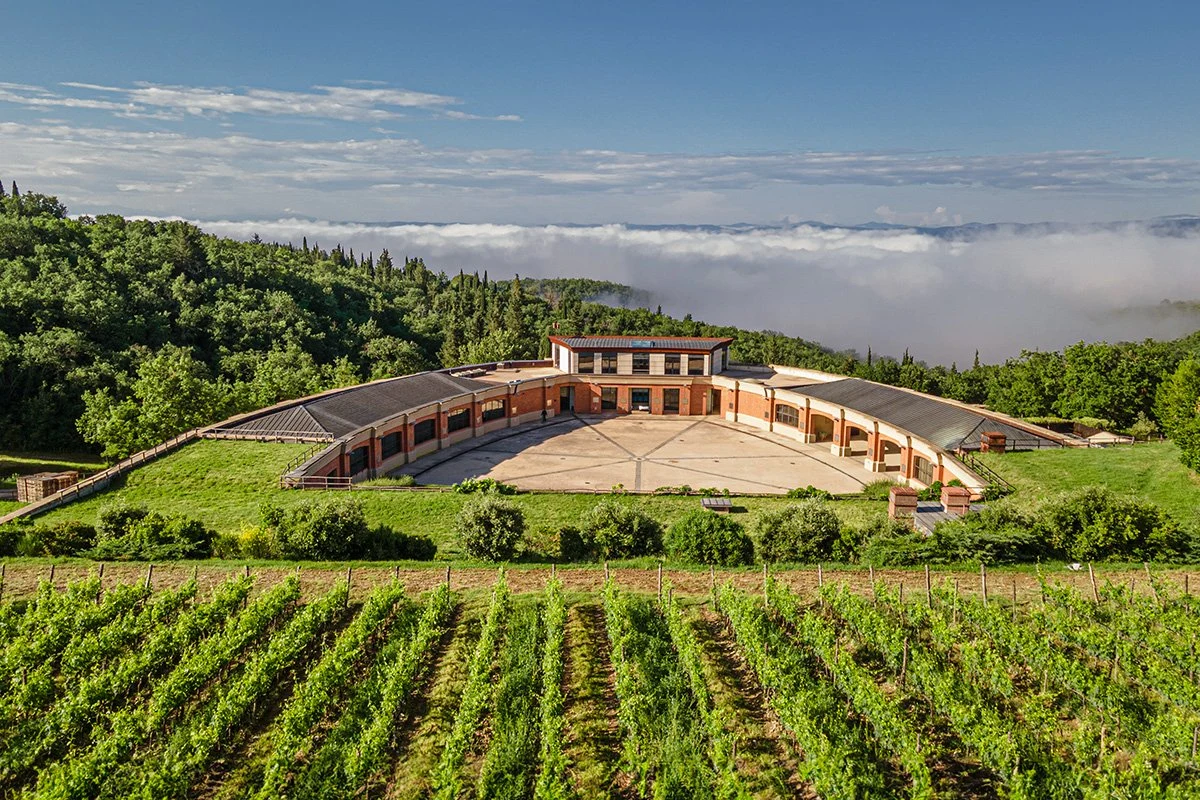
Approaching a Chianti estate through old stone, vineyard rows and quiet hill country changes the terms of a tasting. The first question is not only what is in the glass, but how much of the place can be read through it. San Fabiano Calcinaia sits in Castellina in Chianti with the grammar of a traditional Tuscan estate: medieval hamlet architecture, working vineyards, cellar infrastructure and an agritourism layer that links wine, lodging and regional food rather than treating them as separate businesses.
That setting matters because Chianti Classico is not a single stylistic lane. The zone can produce lean, perfumed Sangiovese, denser Gran Selezione bottlings, international-variety blends and small traditional wines such as Vin Santo. Here the thread is estate control. The property covers 134 hectares, with 34 hectares under vine and 16 hectares classified as Chianti Classico DOCG. The wines are made from the estate’s own grapes, and the farming program has been organic since conversion began in 2009. For travelers using Castellina as a wine base, this is the kind of estate that explains the appellation through land use, not just through labels.
Galestro slopes and estate fruit set the tone
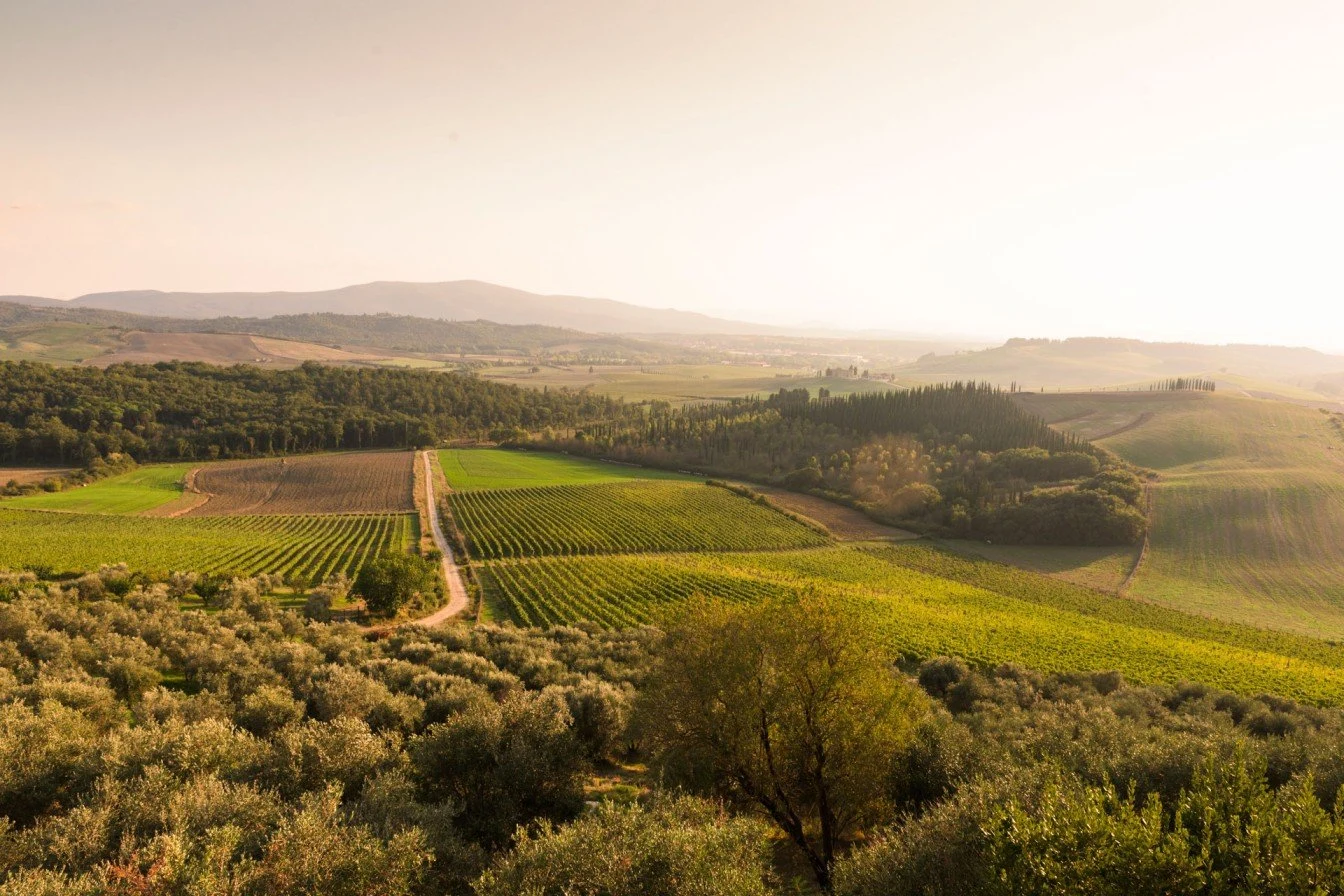
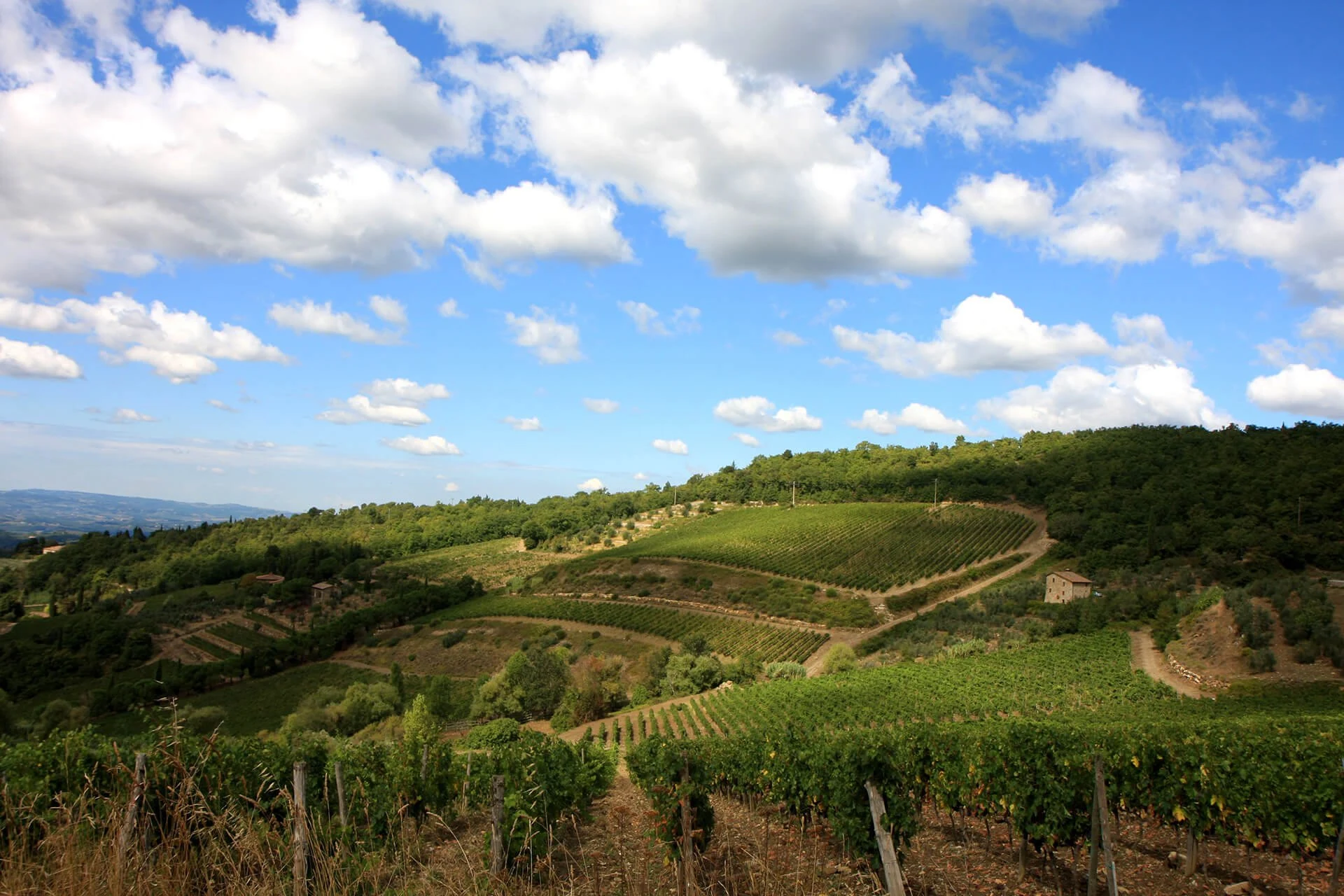
The technical details point directly to the glass. The vineyards sit at 250 to 450 meters above sea level, with south-southwest exposure and galestro soils, the fractured, stony marl long associated with Chianti Classico structure. In Sangiovese country, those factors are not decorative facts. Elevation helps hold acidity, exposure supports ripening, and galestro tends to give wines a firmer mineral line and tannic spine. The result is a style built for clarity and age rather than simple fruit weight.
The training systems, spurred cordon and guyot, reinforce that this is a viticulture-led estate. Hand-picked fruit and organic farming put vineyard work ahead of cellar correction, while the renovated winery and aging spaces show the modern side of the operation. Consultant Carlo Ferrini and oenologist Franco Campanelli are associated with the technical direction, but the more useful point is broader: contemporary Chianti Classico increasingly depends on precision farming and disciplined aging, not rusticity for its own sake.
Cellar approach follows that middle path. Some wines use stainless steel for freshness, while wood is used for structure and integration. Casa Boschino, for example, is documented with controlled-temperature fermentation, 15 to 20 days of skin maceration, light pressing, maturation split between steel and wood, and bottle aging before release. That method reads as calibrated rather than showy, with the aim of keeping Sangiovese’s acidity and tannin in balance.
Gran Selezione anchors a portfolio with Tuscan range
Portfolio follows a familiar Chianti hierarchy but gives it enough breadth to be instructive. Chianti Classico DOCG forms the regional core; Chianti Classico Gran Selezione “Cellole” DOCG occupies the prestige tier; Chianti “Famalgallo” DOCG, Cerviolo Rosso IGT, Cabernet Sauvignon IGT, Casa Boschino IGT and Cerviolo Bianco IGT widen the frame. Small production Vin Santo del Chianti Classico and organic extra virgin olive oil connect the estate to older Tuscan agricultural habits.
Cellole is the clearest reference point for assessing ambition. The 2019 Chianti Classico Gran Selezione is a 90 percent Sangiovese blend with 5 percent Colorino and 5 percent Canaiolo, aged 24 months in barrique. External critical scores place it firmly in premium territory: Veronelli 94 points, Doctor Wine 95, Luca Gardini 95 and James Suckling 93. Those numbers are useful not as trophy language, but as market evidence that the estate’s Gran Selezione competes beyond a casual cellar-door audience.
Cerviolo Rosso Toscana IGT shows the other side of the estate’s identity: Sangiovese blended with Cabernet Sauvignon and Merlot in a Supertuscan register. The 2019 received Veronelli 92, Doctor Wine 95 and Wine Advocate 92. In Chianti Classico, that duality matters. A serious estate often has to defend tradition and engage the broader Tuscan IGT conversation at the same time. San Fabiano Calcinaia does both without abandoning its organic, own-vineyard base.
Visitors planning a wider Castellina circuit can use the local guide network for context, from Our full Castellina in Chianti wineries guide to nearby estate pages such as Azienda Agricola Casavecchia alla Piazza, Azienda Agricola San Donatino, Belguardo, Casale dello Sparviero and Casina di Cornia. For a broader trip build, the city pages cover restaurants, hotels, bars and experiences.
Agritourism makes the tasting feel rooted rather than transactional
The hospitality format is closer to an estate visit than a quick counter pour. Wine tours, guided tastings and estate tastings sit alongside Tuscan-style flats, villas, a pool and local specialties served through the Borgo di Cellole osteria. That combination is a useful expression of modern Chianti wine travel: the glass is supported by architecture, food, agricultural continuity and the slower pace of a working property.
The historic layer gives the experience weight. The site’s origins reach back to an eleventh-century medieval hamlet, with a monastery once connected to pilgrims traveling toward Rome. The modern chapter began in 1983, when Guido Serio and Isa Serio began renewing vineyards, cellar spaces and aging infrastructure. The relevant story is not biography for its own sake; it is stewardship. Chianti estates with centuries of buildings and mixed agricultural land have to decide whether to become scenery or remain productive. This one reads as the latter.
For travelers comparing Italian wine regions, the page set can widen quickly: 3GP SRL in Treviso, 47 Anno Domini in Trebaseleghe and A Mano Wine in Noci show different regional models, while »der Steiner« Hans Steiner in Podersdorf am See and & Handwein in Mannheim broaden the European frame. San Fabiano Calcinaia belongs in that conversation as a compact study in Chianti Classico terroir: organic farming, estate fruit, galestro, altitude and a hospitality format that keeps the land visible.
Questions
Frequently asked
How expensive is San Fabiano Calcinaia?
San Fabiano Calcinaia is listed at a price level of $$.
The field
How it compares
| Place | Notes |
|---|---|
| San Fabiano Calcinaia | Castellina in Chianti, $$ |
| Concadoro | Castellina in Chianti |
| Mazzei (Castello di Fonterutoli) | Castellina in Chianti |
| Rocca delle Macìe - Famiglia Zingarelli | Castellina in Chianti |
| Tenuta di Bibbiano | Castellina in Chianti |
| Tenuta Villa Trasqua | Castellina in Chianti |
| Tregole | Castellina in Chianti |