Sancarlo
- 01CityMontalcino, Italy
- Falstaff Winery - Listed · 2026
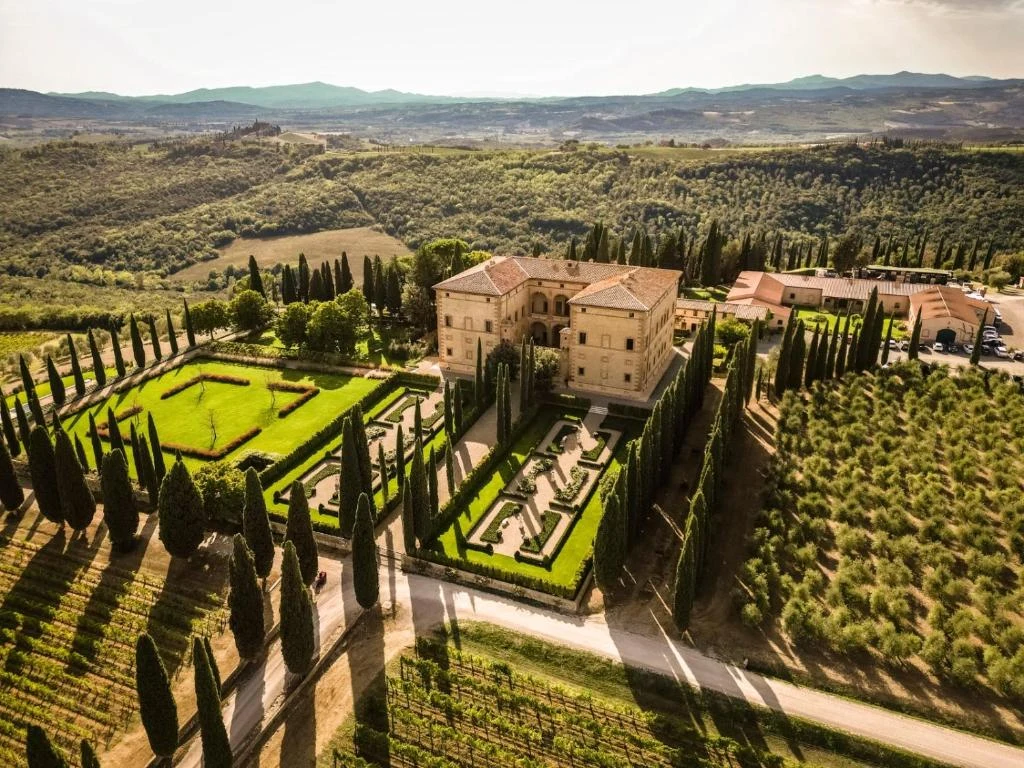
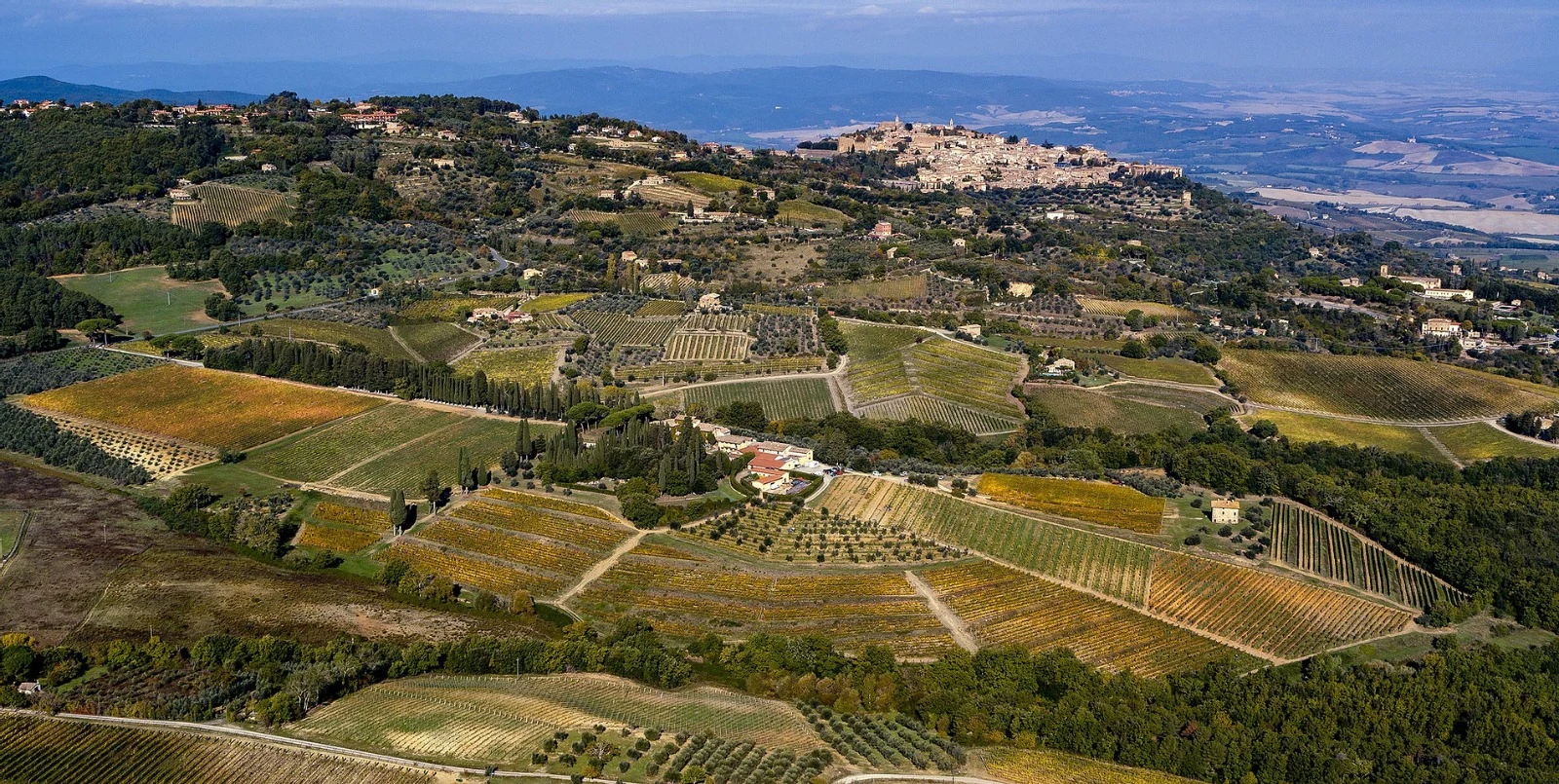
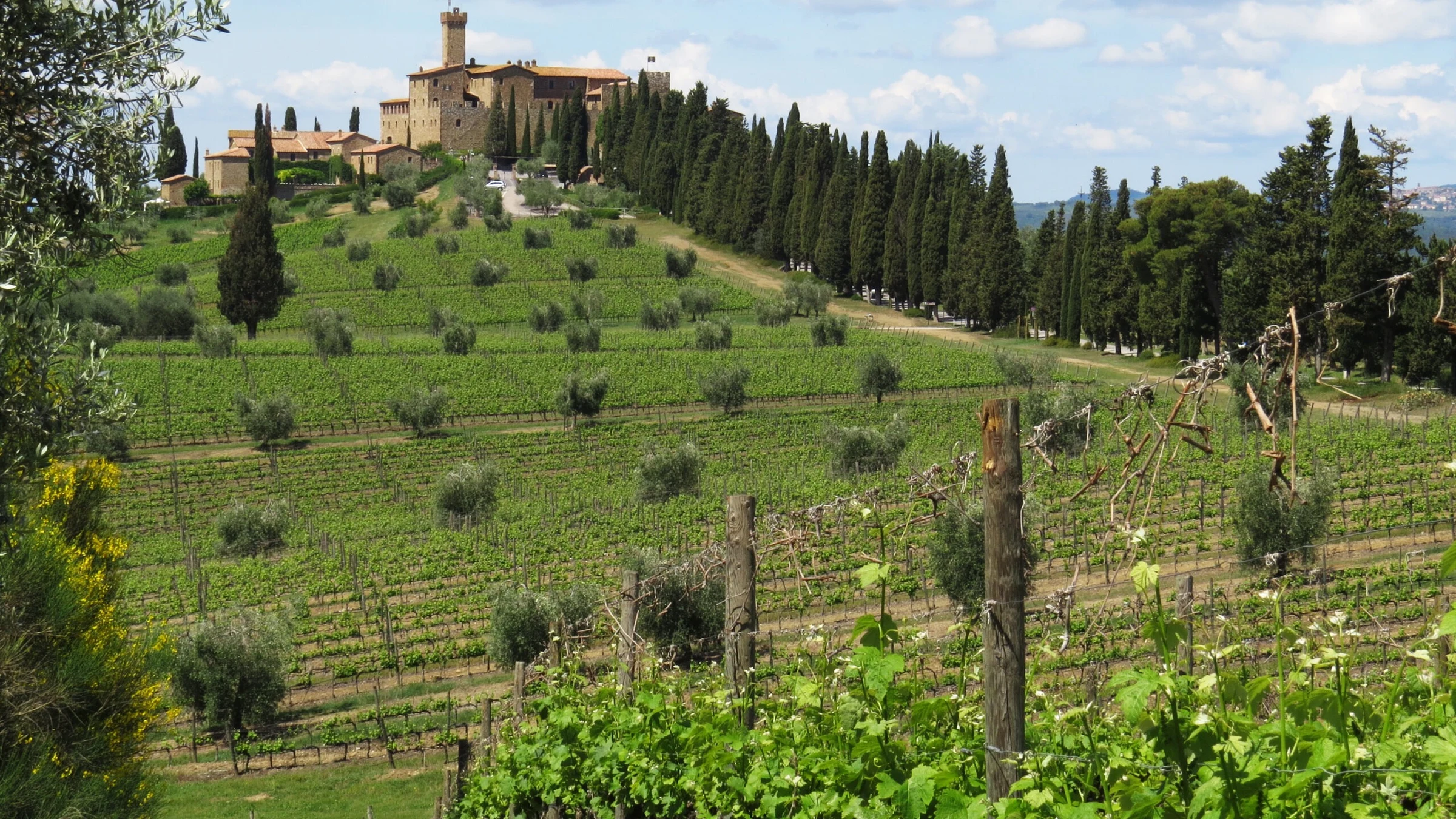
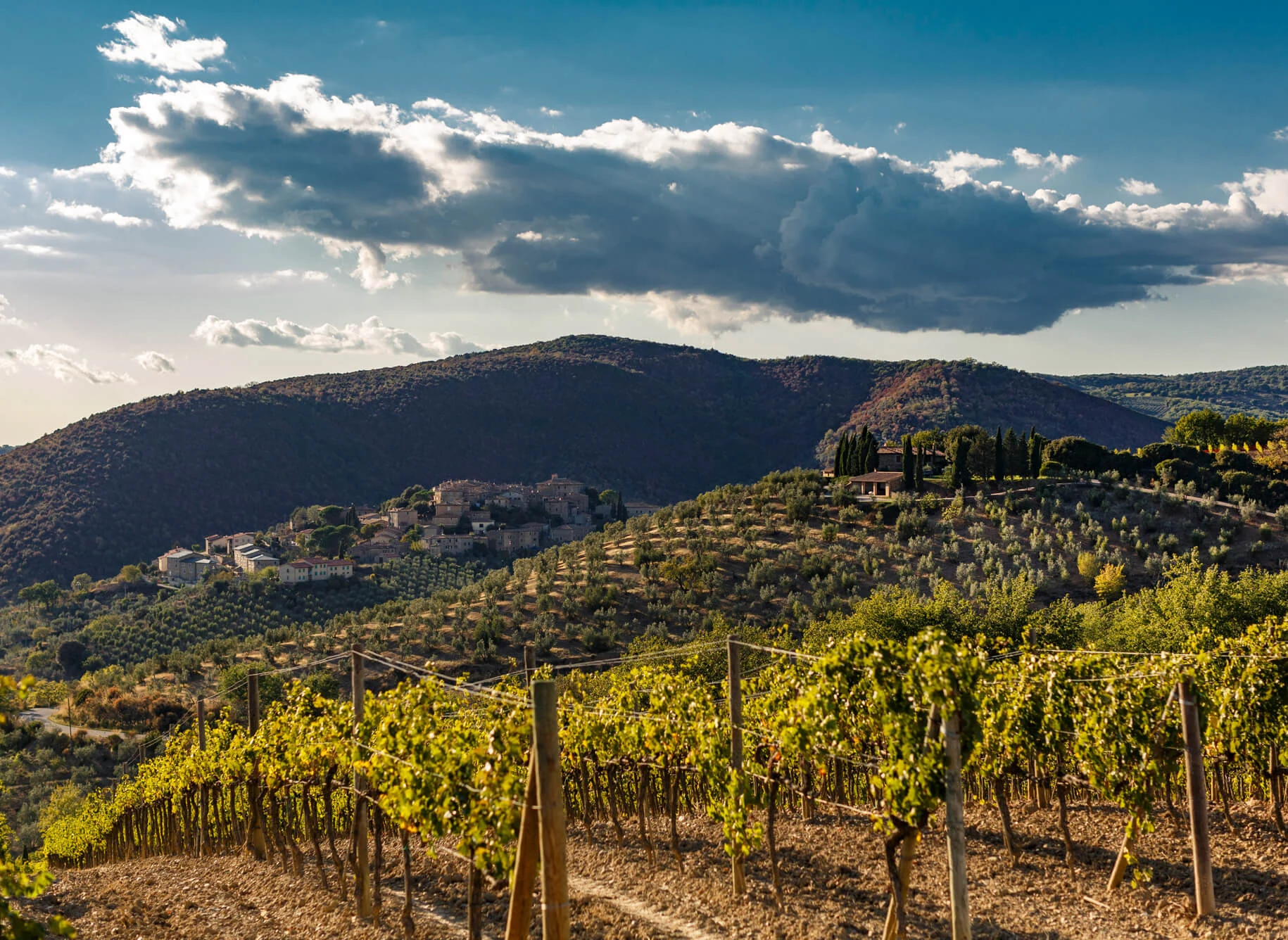
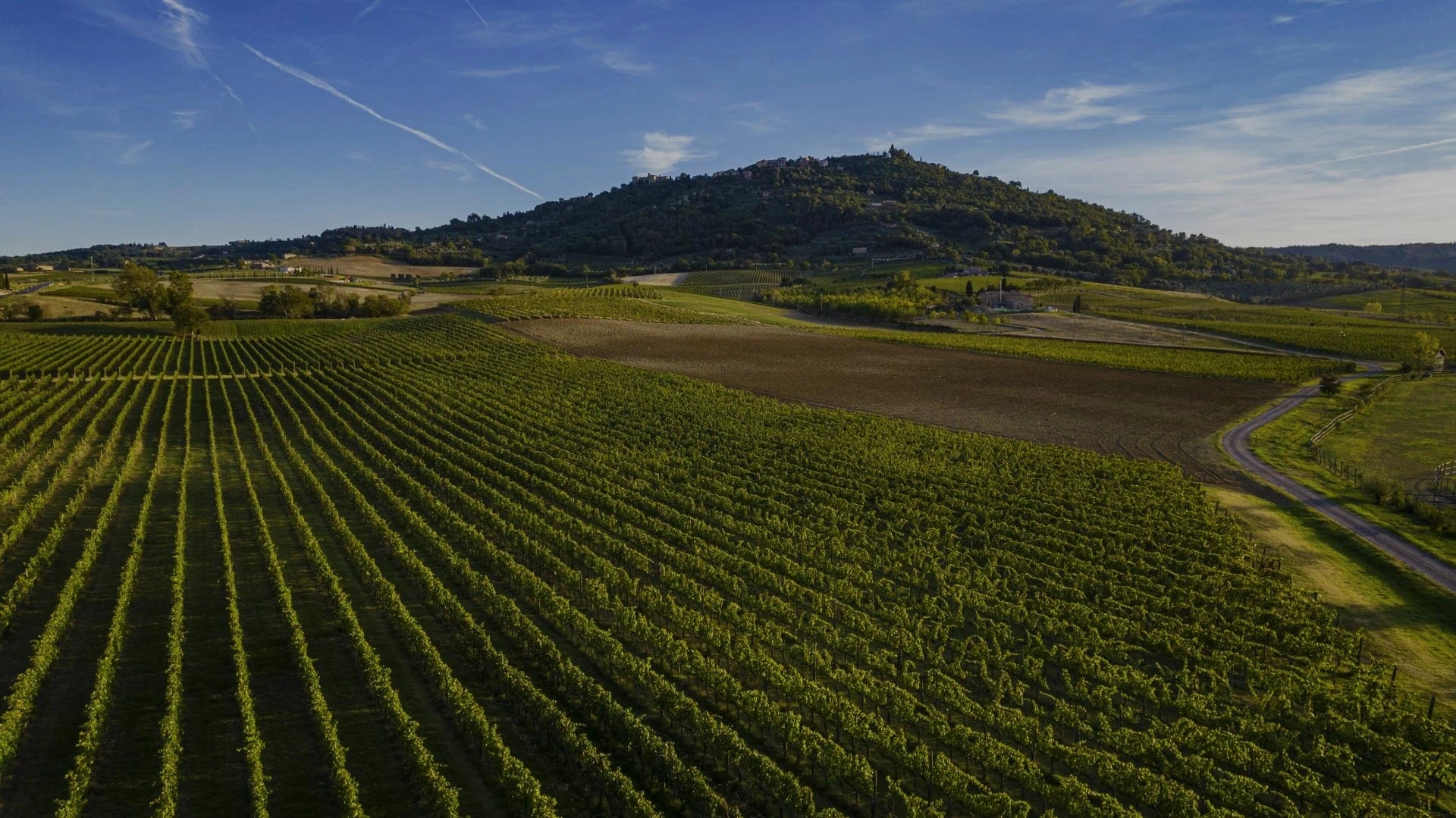
Southwest Montalcino changes tone as the land drops away from the town’s medieval center: vineyards share space with olive trees, woodland, and the drier exposures that give Sangiovese its late-season confidence. Sancarlo belongs to that quieter side of Brunello, where the estate reads less as a showpiece winery than as a working farm whose proportions matter. The planted area is just over seven acres, small even by Montalcino standards, and the surrounding forest is not decoration. It is part of the agricultural frame: vines, olives, and wild land held together rather than converted into a single-use vineyard estate.
That scale is the first clue to the wines. Brunello is often discussed through hierarchy, vintages, and cellar prestige, but the more useful lens here is land pressure. A few acres of Sangiovese cannot behave like a larger producer with multiple sourcing options and broad market coverage. Choices become narrower and more consequential: hand harvest in small crates, indigenous yeast fermentation, controlled stainless steel, and aging in tank or older Slavonian oak botti. The result is a Brunello model that leans on site, ripeness, and restraint rather than cellar gloss.
Southwest Montalcino gives this Sangiovese its frame
The vineyard setting is unusually legible. The estate sits near Tavernelle on the southwest side of Montalcino, with vines at roughly 1,050 feet and soils combining sand, limestone, and clay. In Sangiovese country, those are not background details. Elevation helps preserve freshness during warm seasons, while the rain-shadow position supports dry summers and autumns, useful for the long ripening window Brunello requires. The woodland around the vineyards adds another layer of separation from more open, intensively planted slopes.
Three named parcels, Vigna dei Meli, Vigna del Picchio, and Vigna della Sorgente, form the vineyard map. Planting dates span 1974, 1986, and 2000, giving the estate a mix of mature material rather than a single-generation block. That matters for a range built entirely around Sangiovese: Rosso di Montalcino for earlier drinking, Brunello di Montalcino as the central statement, and Brunello di Montalcino Riserva only in selected years from older-vine material. The portfolio follows the classic Montalcino pyramid, but the production scale keeps it tight. Fewer than 6,000 bottles of Brunello are produced per vintage.
The cellar choices reinforce that reading. Indigenous yeasts keep fermentation tied to the estate’s own microbial environment, while stainless steel under controlled temperature avoids the rusticity that can come from imprecise extraction. Older Slavonian oak botti place the Brunello in a traditional register: structure and Sangiovese character take precedence over new-oak imprint. This is not a maximalist interpretation of Montalcino. It is a small-farm reading of the appellation, where the vineyard’s altitude, dryness, and mixed soils carry the argument.
A family estate with market visibility, not trophy architecture
Montalcino has producers built for global hospitality circuits, and it has estates whose credibility comes from the bottle moving through serious wine channels. Sancarlo sits closer to the second camp. The Marcucci family’s connection to the property goes back to 1965, when Fulvio Marcucci and Renata acquired woodland on the southwest side of Montalcino with the intention of planting vines and olive trees. Gemma Marcucci now appears as the named winemaker, giving the estate a direct family line from land purchase to current production.
Recognition here is quieter than medal-heavy branding. A Vinous listing for SanCarlo Brunello di Montalcino 2020 places the wine inside a major fine-wine publication database, while trade attention has focused on the estate’s small footprint and current generation of winemaking. Those signals matter because tiny Brunello estates can otherwise remain local curiosities. Visibility beyond the hill gives the wines a place in the wider Sangiovese conversation without changing the underlying scale.
Sustainability is expressed in practical farming rather than certification theater. The estate uses organic treatments whenever possible, harvests manually, and preserves a mixed rural holding of vines, olives, and forest. In a region where land values incentivize expansion and vineyard conversion, the decision to keep woodland in the farm’s identity is not incidental. It shapes the visual character of the estate and supports the broader point: this is Brunello made from a small, specific agricultural place, not from an abstract brand idea.
How to place Sancarlo within a Montalcino wine itinerary
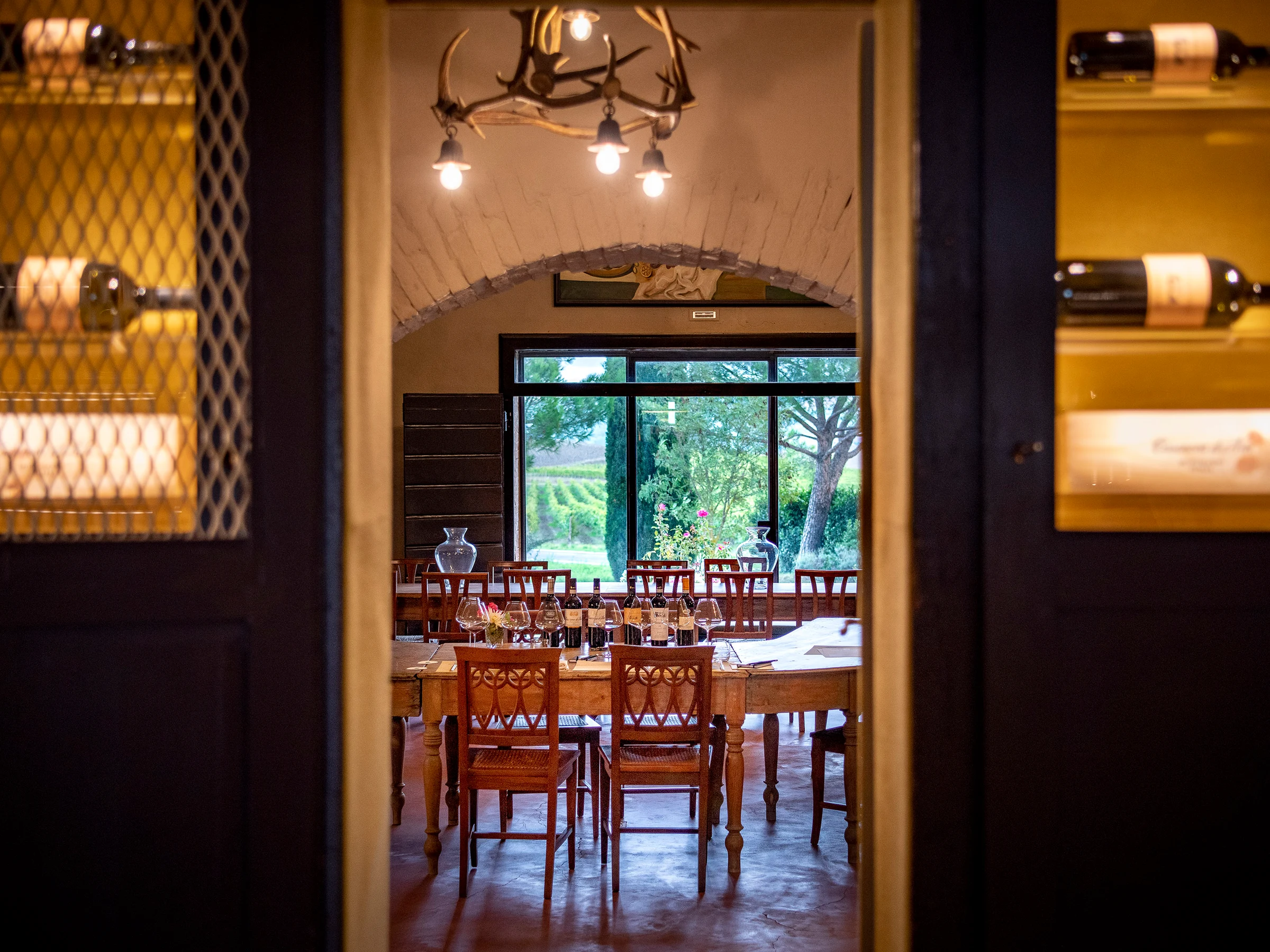
For travelers building a day around Brunello, this is the kind of appointment that suits focused tasting rather than casual drop-in tourism. The format is estate-led and intimate, with wine education and the grounds doing more of the work than hospitality spectacle. The useful expectation is precision: Sangiovese, Brunello di Montalcino DOCG, a small production base, and a rustic estate atmosphere on the hillside. It is better paired with other carefully selected producer visits than treated as a broad hospitality stop.
Readers comparing the wider region can use Our full Montalcino wineries guide as the main planning spine, with nearby winery pages such as Aglieta Roberto, Agostina Pieri, Agricola Poggio Rubino, Aisna, and Altesino helping frame different scales of the appellation. For the rest of the trip, Our full Montalcino restaurants guide, Our full Montalcino hotels guide, Our full Montalcino bars guide, and Our full Montalcino experiences guide cover the non-wine parts of the itinerary. Broader European wine context can be traced through 3GP SRL in Treviso, 47 Anno Domini in Trebaseleghe, A Mano Wine in Noci, »der Steiner« Hans Steiner in Podersdorf am See, and & Handwein in Mannheim.
Questions
Frequently asked
How expensive is Sancarlo?
Sancarlo is listed at a price level of $$$.
The field
How it compares
| Place | Notes | Awards |
|---|---|---|
| Sancarlo | Tavernelle, $$$ | · |
| Argiano | Montalcino | · |
| Azienda Agricola Casanova di Neri di Giacomo Neri | Montalcino | World's 50 Best |
| Biondi-Santi Tenuta Greppo | Montalcino | · |
| Castello Banfi | Montalcino | World's 50 Best |
| Poggio di Sotto | Montalcino | · |
| Valdicava | Montalcino | · |