Scopone
- 01CityMontalcino, Italy
- Falstaff Winery - Listed · 2026
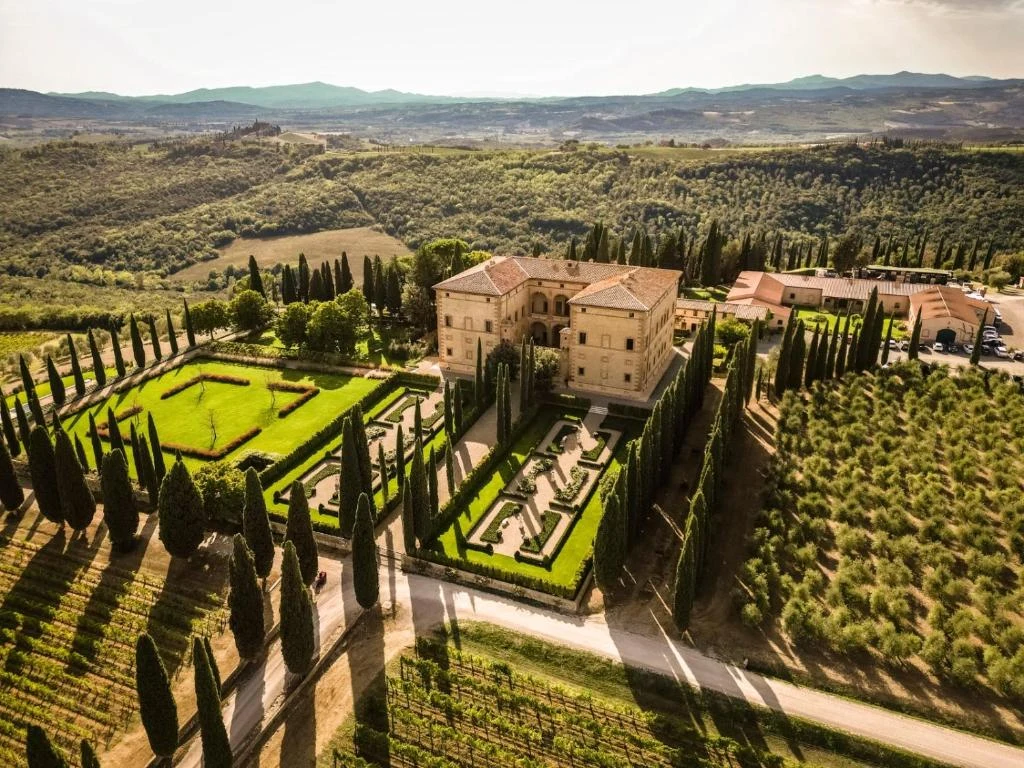
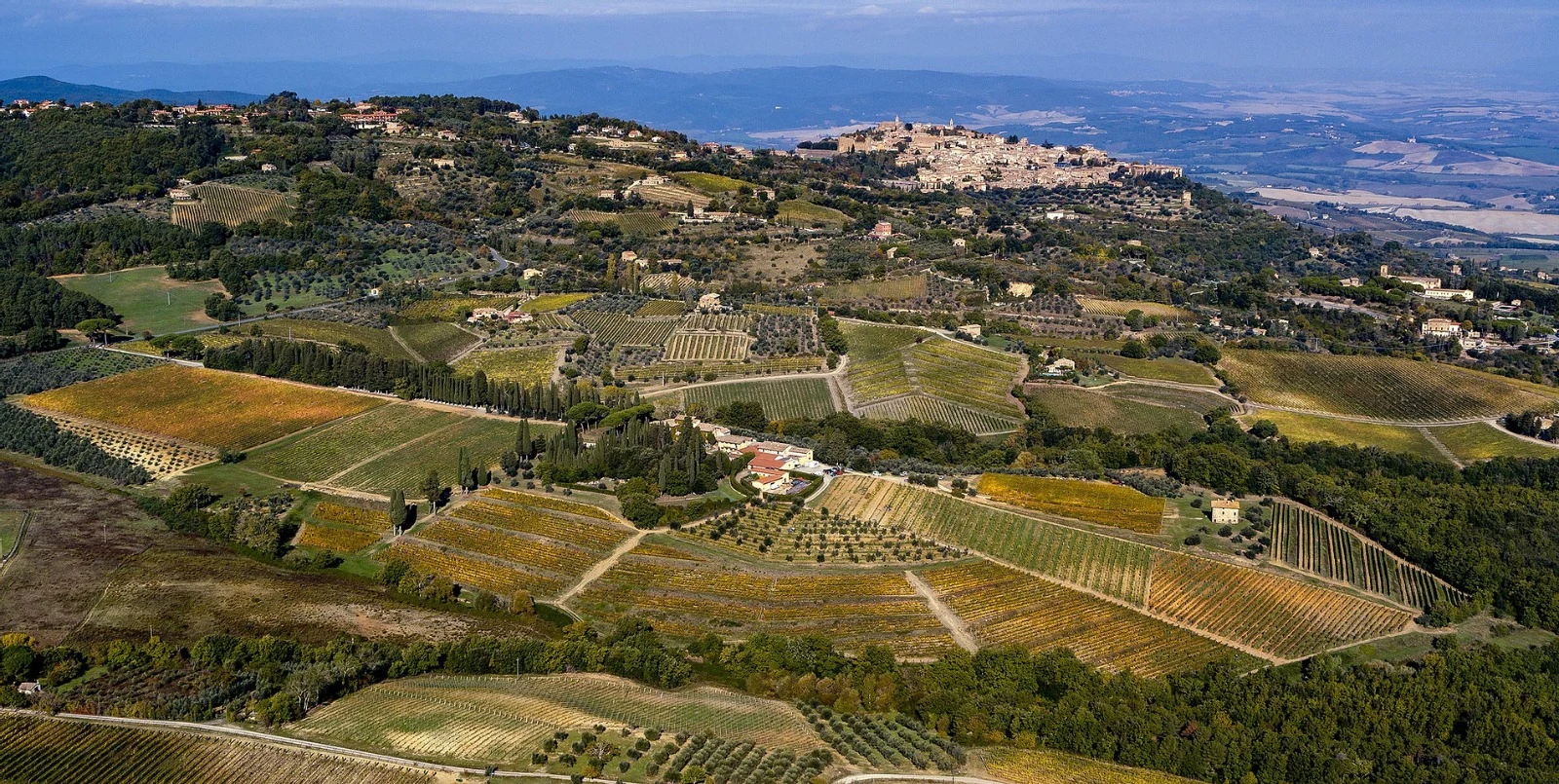
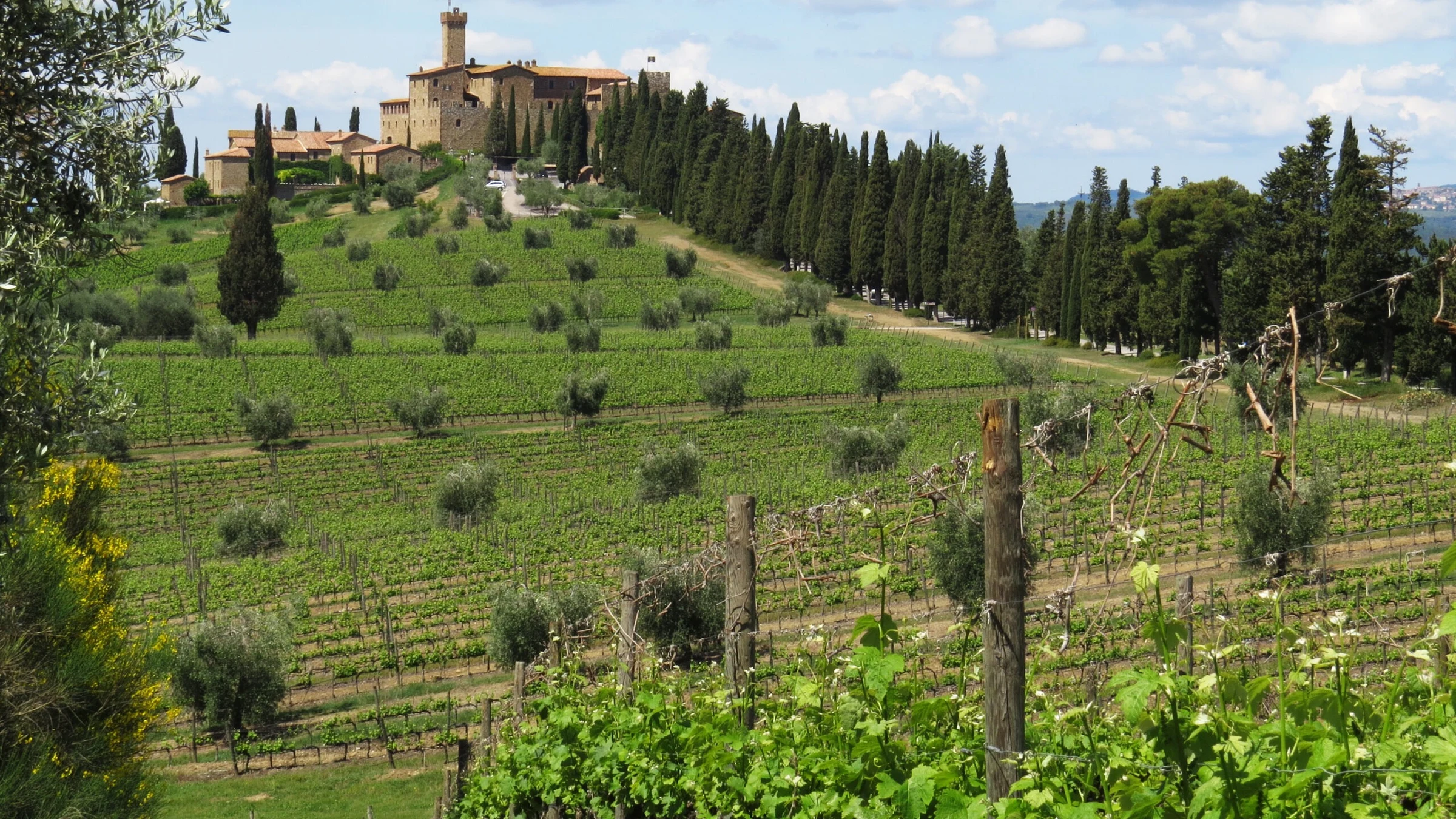
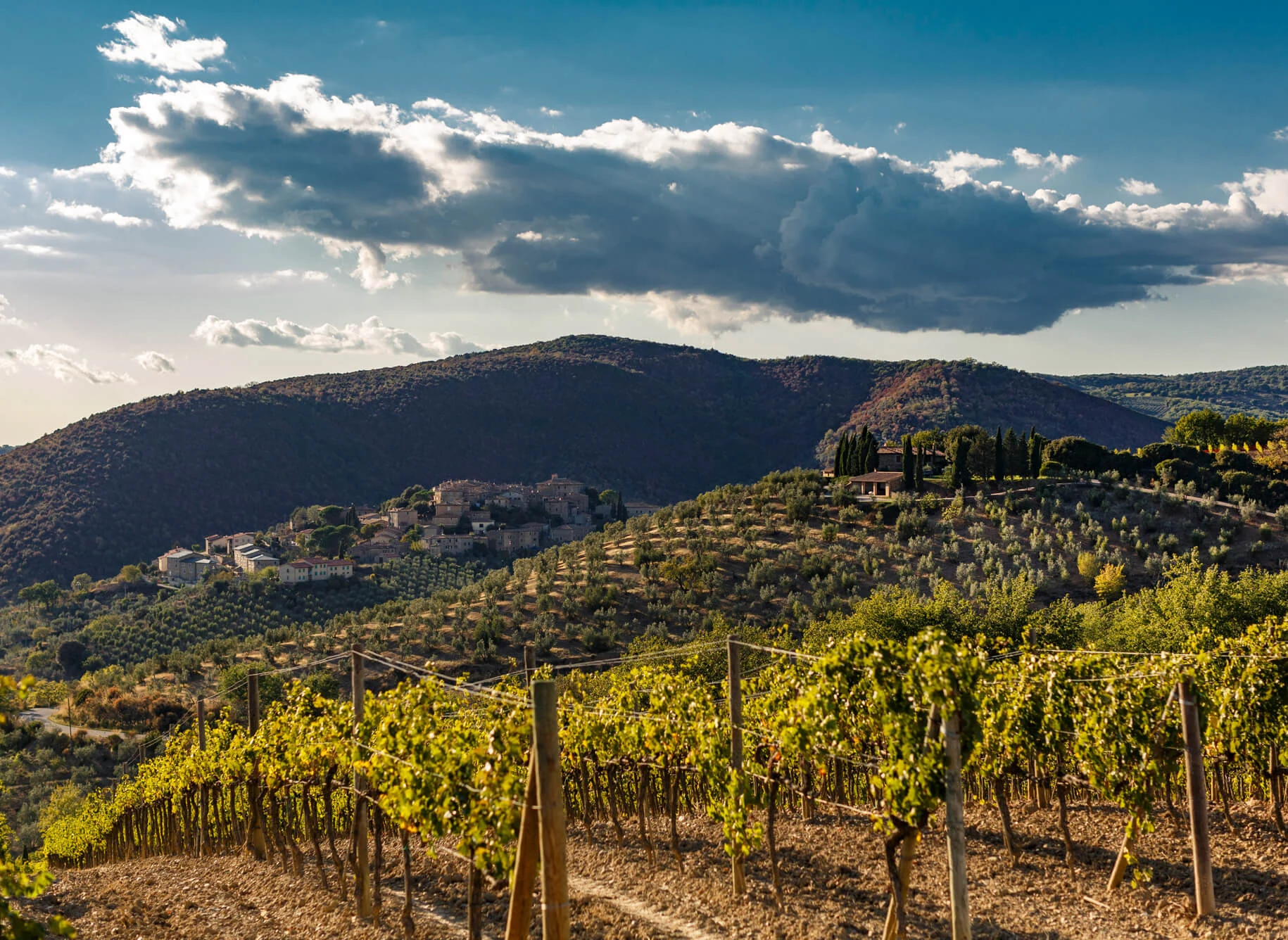
Approaching the hills between Montalcino and Sant’Antimo, the wine story is already visible before the glass appears: olive trees, vineyards, old rural buildings and the line of Mount Amiata beyond the rows. This part of the Val d’Orcia is not a neutral backdrop for Brunello. It is a working agricultural zone inside a UNESCO-recognised cultural area, where elevation, exposure and soil structure shape the style of Sangiovese as much as cellar technique does.
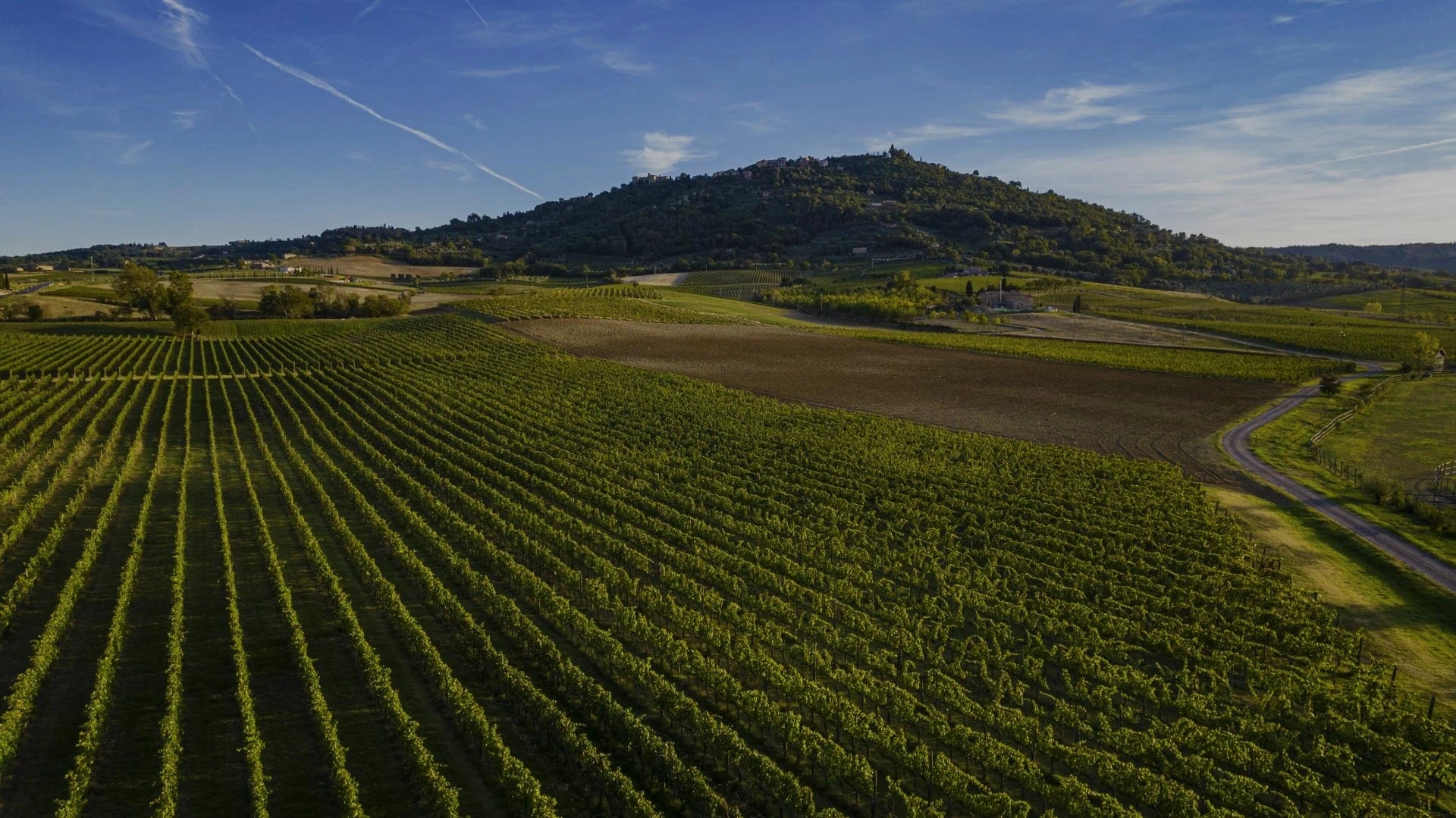
Scopone belongs to the high-altitude side of that conversation. Its vineyards sit at nearly 500 metres above sea level in the southeast of the appellation, on slopes described at 6% to 10%, with galestro and alberese soils beneath the vines. In Montalcino terms, those facts matter. Altitude can slow ripening and preserve tension; stony, limestone-influenced soils tend to favour drainage and structure. The estate’s argument is therefore less about spectacle than place: Brunello and Rosso built around Sangiovese, with the site doing much of the editorial work.
High-altitude Sangiovese, not cellar theatre
Montalcino rewards patience, but it also punishes overstatement. The stronger contemporary Brunello producers increasingly treat oak, extraction and ripeness as tools rather than declarations. Here, the production details point in that direction: fermentation in stainless steel for about 7 to 10 days at 28 to 29°C, followed by roughly 15 days of maceration, with pumping over used early in fermentation. Ageing takes place mainly in large French oak barrels ranging from 25hl to 65hl, a format that sits closer to traditional Brunello discipline than to small-barrique gloss.
The vineyard base is compact enough to read as estate-led rather than industrial: 12 hectares planted mainly to Sangiovese, with Merlot, Cabernet Sauvignon and Syrah also present. Annual production is around 50,000 bottles, placing the property in a visible but still medium-scale bracket for the appellation. That scale matters for travellers who care about wine education. The visit is not framed around a grand brand universe; the useful lens is the relationship between a hillside site, a traditional red-wine regimen and the way Sangiovese behaves when grown high above the warmer valley floor.
The estate’s modern chapter began after the Genazzani family acquired the property in 1992, with winemaking activity starting in 1996 and the first vintage released in 1997. Since 2021, the Minari family has led a new phase, with Francesco Bufalini named as winemaker and Cristina Minari as proprietor. Those names matter as credentials, but the more interesting shift is stylistic: critical commentary from Kerin O’Keefe has pointed to recent releases as more elegant and more faithful to the high-altitude vineyards. That is the relevant signal, because Brunello’s competitive field is crowded with power, polish and reputation; site clarity is the harder thing to sustain.
Brunello orthodoxy with a Tuscan-blend counterpoint
Portfolio follows the region’s hierarchy while leaving room for a broader Tuscan register. Brunello di Montalcino DOCG and Rosso di Montalcino DOC are made from 100% Sangiovese, keeping the estate anchored in appellation orthodoxy. Rimani Toscana IGT moves differently, blending Cabernet Sauvignon, Sangiovese, Merlot and Syrah. That mixed structure gives the range two audiences: drinkers who come to Montalcino for Sangiovese purity, and those interested in the Tuscan tradition of international varieties folded into local context.
Giacomo Tachis connection gives that latter thread more weight. His advice was part of the early recognition of the property’s potential, and Cabernet Sauvignon was planted at the estate under that influence. In a region often reduced to Brunello alone, that history usefully complicates the picture. The classic bottle remains the reference point, but the IGT label shows how Montalcino estates can operate within both DOCG discipline and the more flexible language of Tuscan blending.
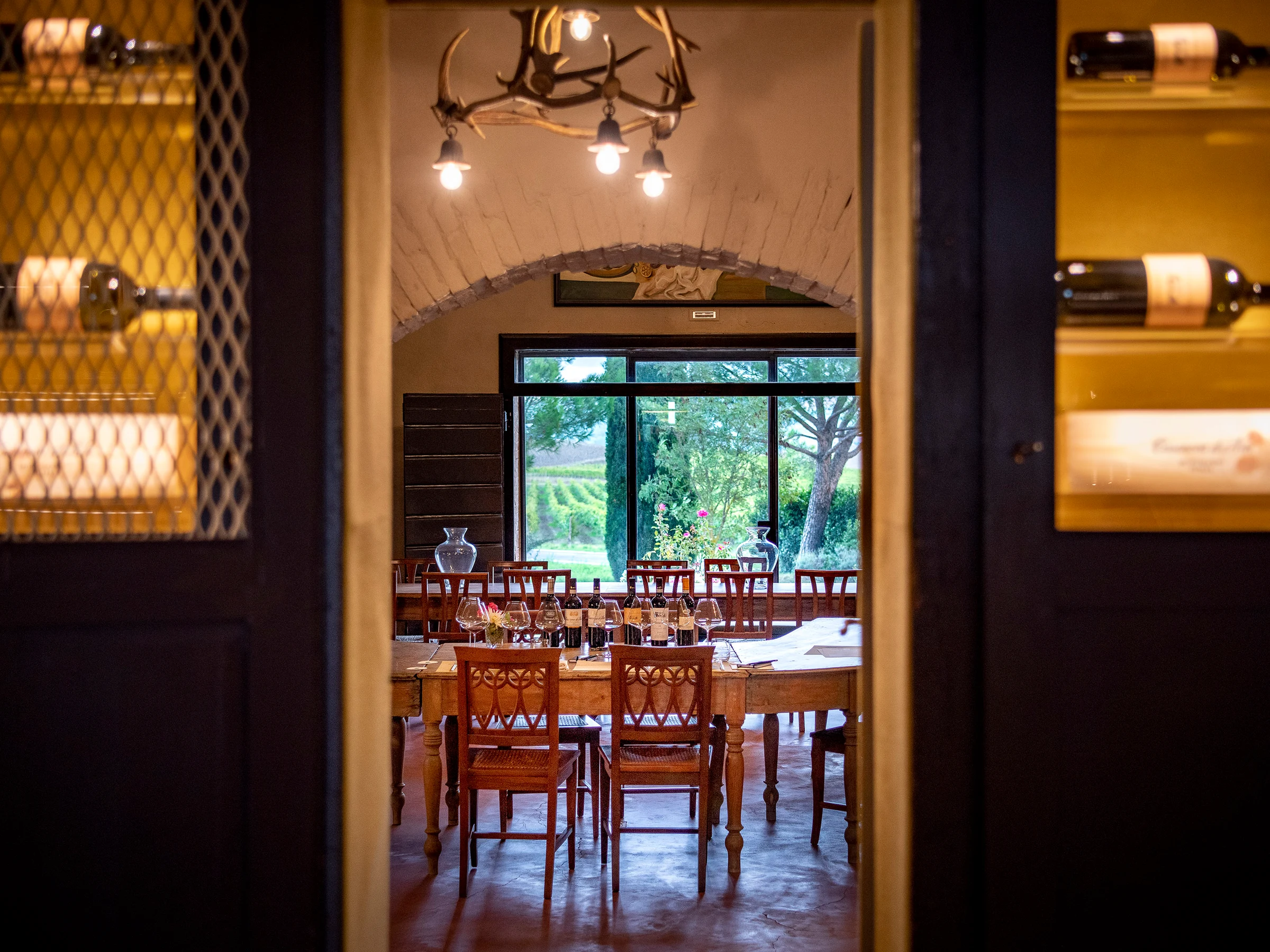
Recent releases cited for the estate include Brunello 2021, Rosso 2022, Rimani 2019 and Rosé 2023. The range is therefore not a single-lane Brunello proposition. It has an earlier-drinking Sangiovese expression, a prestige DOCG bottling, a blended Toscana IGT and a rosé category. For a visitor, that makes the tasting more instructive than a simple vertical of ambition: it can show how the same property thinks across appellation rules, grape composition and drinking window.
What the setting teaches about Montalcino
The name Scopone comes from Erica scoparia, the heathland shrub found in the surrounding woods. That is a small detail, but it says something about how rural Tuscan estates build identity: not only through grape variety or vintage, but through vegetation, local memory and agricultural continuity. The property dates back to the 19th century as a farmhouse and later served as a refuge during World War II, before becoming a winery in the late 20th century. In Montalcino, those layers are not decorative; they are part of why wine tourism here feels different from urban tasting rooms or resort-led cellar doors.
The estate atmosphere is quiet, rustic and scenic, with vineyard and mountain views forming the natural frame. The strongest reason to go is not scale or ceremony, but the chance to read Brunello through altitude: Sangiovese on mineral-rich hillside soils, large-format oak, and a portfolio that keeps the appellation’s classical grammar while allowing a Tuscan-blend aside. Travellers building a wider Montalcino itinerary can place this visit alongside the broader regional context in Our full Montalcino wineries guide, then use Our full Montalcino restaurants guide, Our full Montalcino hotels guide, Our full Montalcino bars guide and Our full Montalcino experiences guide to build the rest of the day around the town rather than a single cellar stop.
For further wine reading across Montalcino and beyond, see Aglieta Roberto, Agostina Pieri, Agricola Poggio Rubino, Aisna, Altesino, 3GP SRL in Treviso, 47 Anno Domini in Trebaseleghe, A Mano Wine in Noci, »der Steiner« Hans Steiner in Podersdorf am See and & Handwein in Mannheim.
Questions
Frequently asked
How expensive is Scopone?
Scopone is listed at a price level of $$$.
The field
How it compares
| Place | Notes | Awards |
|---|---|---|
| Scopone | Between Montalcino and Sant’Antimo, $$$ | · |
| Argiano | Montalcino | · |
| Azienda Agricola Casanova di Neri di Giacomo Neri | Montalcino | World's 50 Best |
| Biondi-Santi Tenuta Greppo | Montalcino | · |
| Castello Banfi | Montalcino | World's 50 Best |
| Poggio di Sotto | Montalcino | · |
| Valdicava | Montalcino | · |