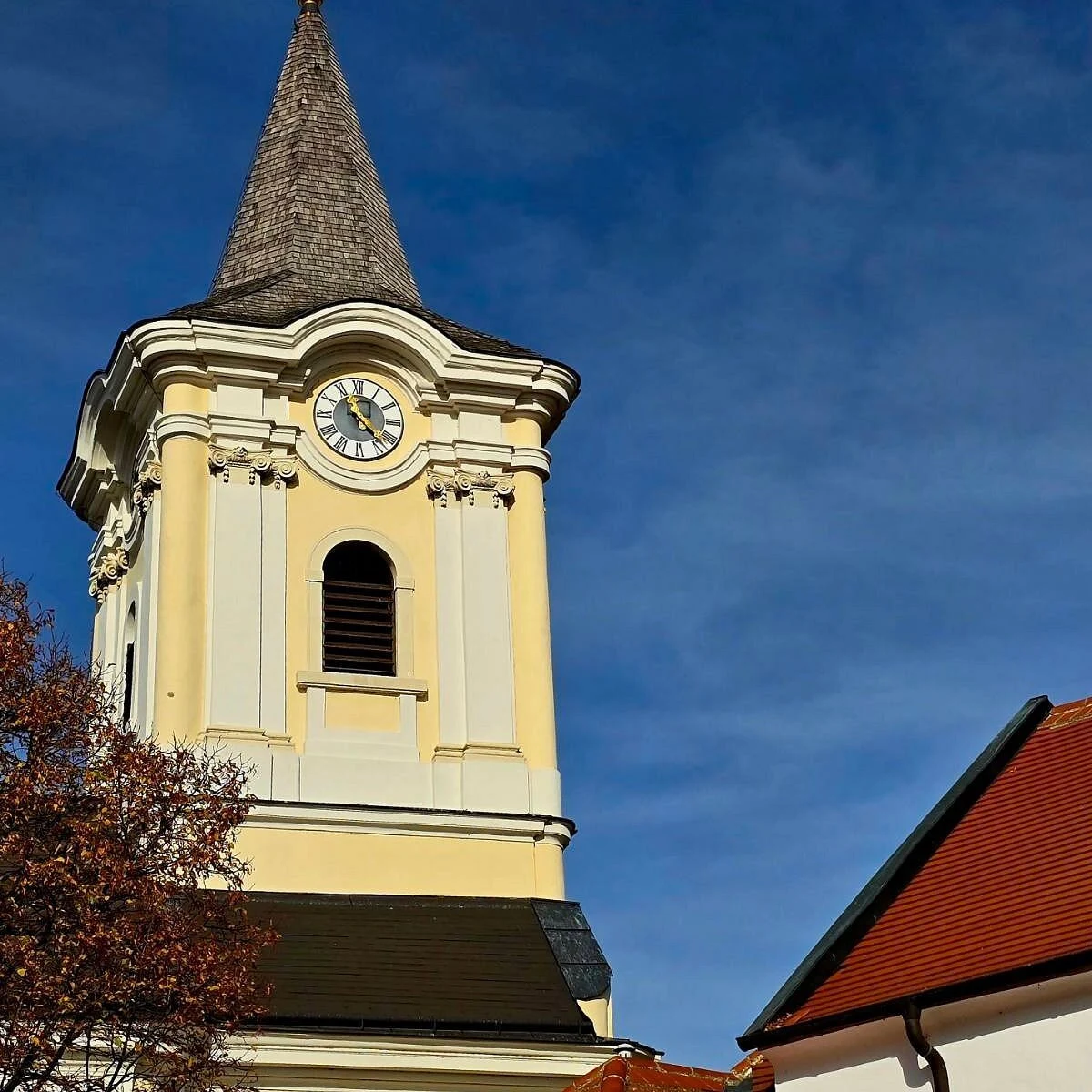
Seegut Lentsch
- 01CityPodersdorf am See, Austria
- Falstaff Winery - 2 Stars · 2026
On the eastern side of Lake Neusiedl, wine is not separated from weather. Wind, reeds, salt ponds, sandy soils, and long Pannonian light are part of the grammar, and the stronger producers in Podersdorf am See tend to make sense when read through that physical setting rather than through cellar theatre. Seegut Lentsch belongs to that lakeshore mode: quiet in tone, rooted in village vineyards, and more persuasive when the conversation turns to site, season, and how different parcels behave over time.
The estate has been operating since 1962 and is now framed as a three-generation winery, which matters in a village where vineyard memory carries more weight than spectacle. The portfolio does not reduce Podersdorf to a single house style. It splits the lake’s identity into practical drinking categories: fruit-forward summer wines, more patient reserve bottlings, food-oriented Burgundy varieties and local reds, then single-vineyard wines where the place name starts to matter as much as the grape.
Lake Neusiedl expressed through summer wines, reserves, and named sites
Neusiedlersee wine has a particular tension: it can be generous and sun-fed, but the lake and wind keep the better bottles from feeling blunt. Seegut Lentsch uses that contrast as its organizing principle. Welschriesling, Grüner Veltliner, Sämling, Muskat Ottonel, rosé styles, Zweigelt, and frizzante bottlings sit on the fresher side of the range, the kind of category that makes sense in a lakeside village where warm-season drinking is part of the local economy.
The reserve tier changes the pace. Grauburgunder Reserve, Chardonnay Reserve, Blauer Zweigelt Reserve, Blaufränkisch Reserve, Sankt Laurent Reserve, Cabernet Franc Reserve, and Remanenz point toward wines built for more time in bottle. That breadth is useful because it shows the estate is not treating quality as a red-wine-only question. Grauburgunder and Chardonnay are given a serious role, while Blaufränkisch, Zweigelt, and Sankt Laurent keep the range tied to the Austrian red tradition around the lake.
The clearest evidence of ambition is the single-vineyard structure. Zweigelt from Ried Seeweingärten, Blaufränkisch from Ried Lüss, and Grauburgunder from Ried Rohrjoch move the discussion from varietal familiarity to origin. Ried Seeweingärten is described as the house vineyard, close to the lake and central to the village identity. Ried Lüss is the estate’s oldest vineyard at 48 years old and is linked to the winery’s first barrique wine more than 30 years ago. Ried Rohrjoch carries the deepest historical charge, with wine cultivation documented in the Josephine Land Survey from 1782–1785 and Grauburgunder associated with Cistercian monks in Podersdorf am See.
Grauburgunder gives the estate its historical spine
In many Austrian lake-region tastings, aromatic whites and easy reds can dominate the first impression. Here, Grauburgunder deserves closer attention because it connects the modern range to the older agricultural history of Podersdorf. The grape appears both in the reserve tier and in the Ried Rohrjoch bottling, giving it two different registers: one shaped by patience and structure, the other by a named site with documented late-18th-century cultivation.
That is the useful editorial distinction. Seegut Lentsch is not compelling because it has a single flagship bottle shouted above the rest; it is compelling because the same small lakeshore area is translated through several lenses. A drinker can move from Welschriesling or Muskat Ottonel into Blaufränkisch, then into reserve Chardonnay or Grauburgunder, then into a Ried wine that carries a more precise vineyard identity. The progression teaches the region rather than simply displaying a product line.
A concrete example sits outside the single-vineyard frame: Podersdorf Rouge 2021 is listed as 50% Zweigelt, 30% St. Laurent, and 20% Cabernet Sauvignon, with 13.5% alcohol. That blend says something about local practicality. Zweigelt and St. Laurent keep the wine in an Austrian idiom, while Cabernet Sauvignon adds an international accent without turning the bottle into a copy of a warmer-climate red. It is a useful counterpoint to the more site-specific wines, showing the estate’s everyday-drinking side.
A quiet appointment-led stop for drinkers who want the region explained by vineyard
The experience here is better understood as a small-scale winery visit than as a polished wine-tourism production. The setting is described through estate grounds, vineyard context, and a historic-building frame, with a quiet, rustic, classic atmosphere rather than a high-volume hospitality format. That makes it a strong fit for wine education, solo exploration, group tastings, and special-occasion drinking where the point is to understand Podersdorf through the glass.
The practical rhythm follows that slower register. Visits are appointment only, the dress code is casual, and the price level sits in the moderate bracket. Food pairing is not part of the listed format, so the stronger reason to come is the tasting room itself: a chance to compare still white, still red, rosé, and sparkling styles within one lakeshore producer. The estate is also marked by a sustainable production philosophy, though the more meaningful reader-facing point is the long-view stewardship implied by old vineyard holdings and site-specific bottlings.
For a broader Podersdorf am See wine circuit, use Our full Podersdorf am See wineries guide as the planning spine, with nearby winery pages including Behike Wein, Bio-Weingut Ettl, Johannes E.F. Strudler, Schaller vom See, Seewirt Karner, and »der Steiner« Hans Steiner in Podersdorf am See. For the rest of the trip, keep the city rails close: Our full Podersdorf am See restaurants guide, Our full Podersdorf am See hotels guide, Our full Podersdorf am See bars guide, and Our full Podersdorf am See experiences guide. Austria-wide reference points can sit in a wider cellar itinerary, from ®walzer in Gneixendorf Bei Krems and 1516 Brewing Company Distillery in Vienna to A-Nobis Sektkellerei in Zurndorf and the cross-border curiosity of & Handwein in Mannheim.
Questions
Frequently asked
How expensive is Seegut Lentsch?
Seegut Lentsch is listed at a price level of $$.
The field
How it compares
| Place | Notes |
|---|---|
| Seegut Lentsch | Seewinkel, $$ |
| Bio-Weingut Ettl | Podersdorf am See |
| Johannes E.F. Strudler | Podersdorf am See |
| Weingut Fabian Sloboda | Podersdorf am See |
| Weingut Franz und Ingrid Steiner | Podersdorf am See |
| Weingut Jost | Podersdorf am See |
| Weingut Neff | Podersdorf am See |