Shabour
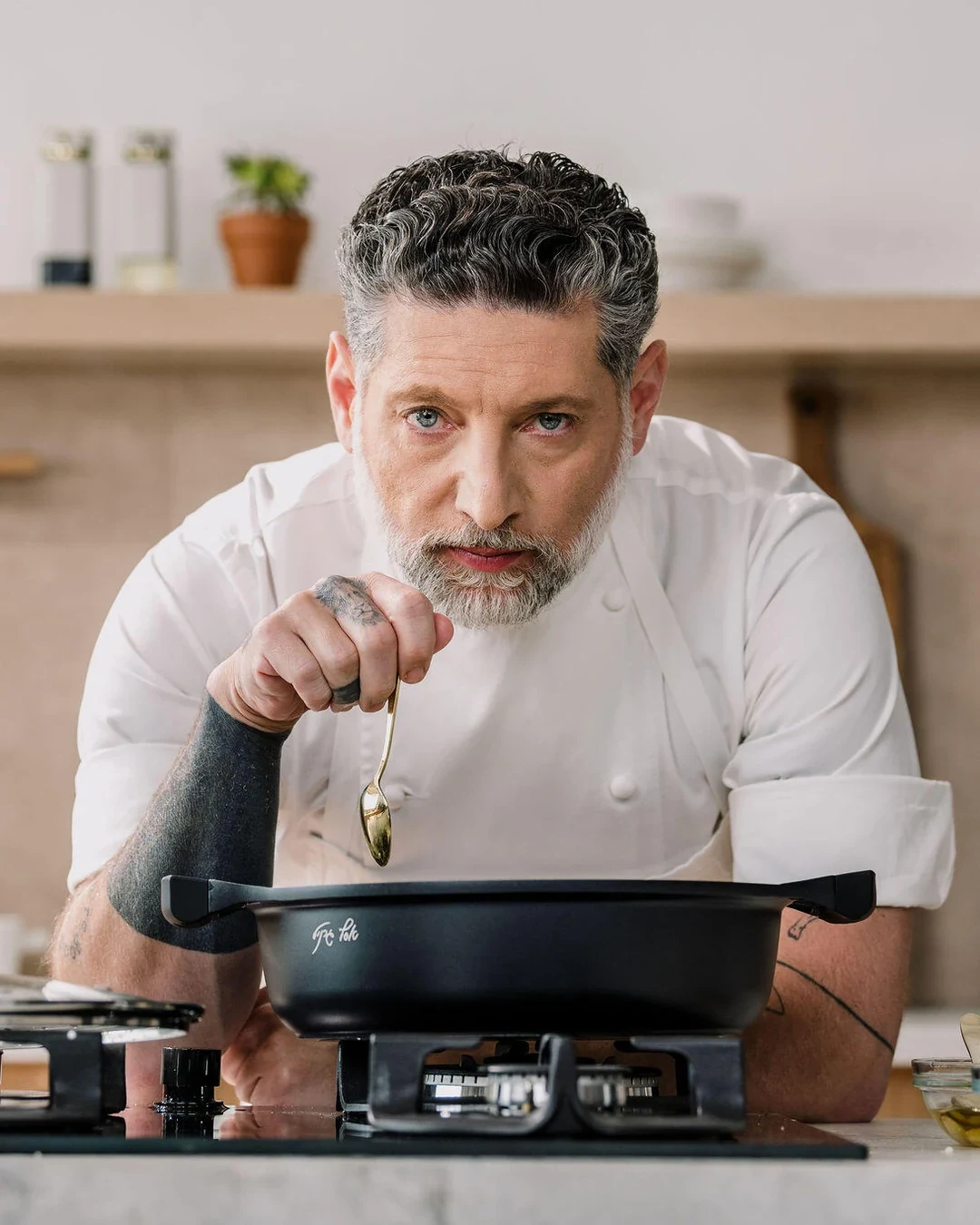
In Residence
Assaf Granit
Chef
- 01CuisineModern Israeli-Mediterranean Fine Dining
- 02CityParis, France
- 03RecognitionOne Michelin Star
From the people index
Recommended by
One trusted voice points here.
- 1 Michelin Star · Michelin Guide
- Opinionated About Dining Top Restaurants in Europe Recommended · 2026
- Michelin 1 Star · 2026
- Michelin 1 Star · 2025
- Opinionated About Dining Top Restaurants in Europe Ranked #452 · 2025
- Michelin 1 Star · 2024
The Israeli Kitchen Finds a Parisian Address
Paris has long absorbed foreign culinary traditions and repackaged them through a French lens. What makes the current generation of immigrant-inflected restaurants different is the refusal to sand down the rough edges. Israeli cuisine, built on the collision of Levantine, North African, and Eastern European food cultures, does not soften well. Its defining qualities, the raw brightness of fresh herbs, the deep bass of tahini and slow-cooked legumes, the citrus-forward acid that cuts through rich fats, sit at odds with the classical French instinct for reduction and polish. When a kitchen leans into that tension rather than resolving it, something interesting happens.
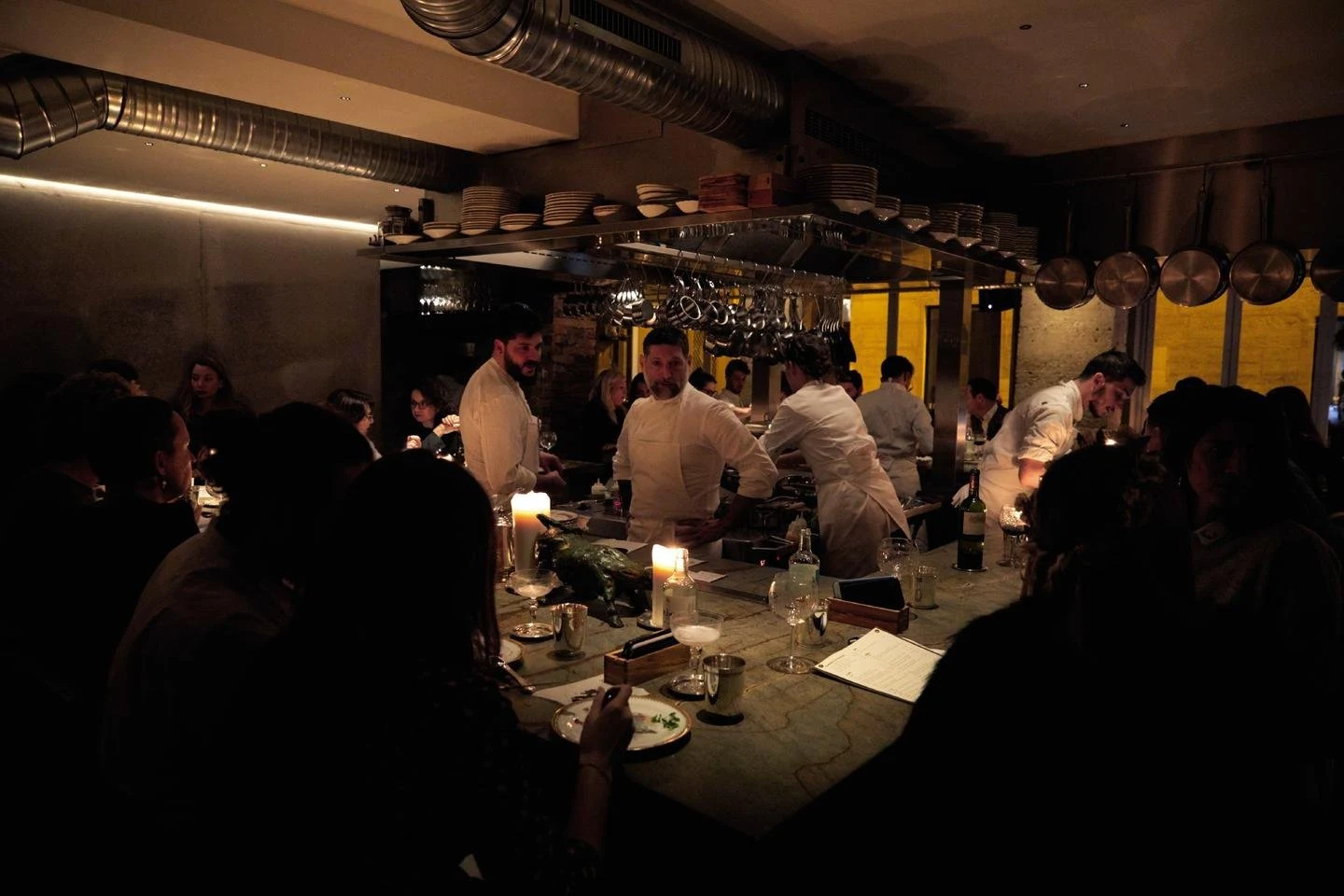
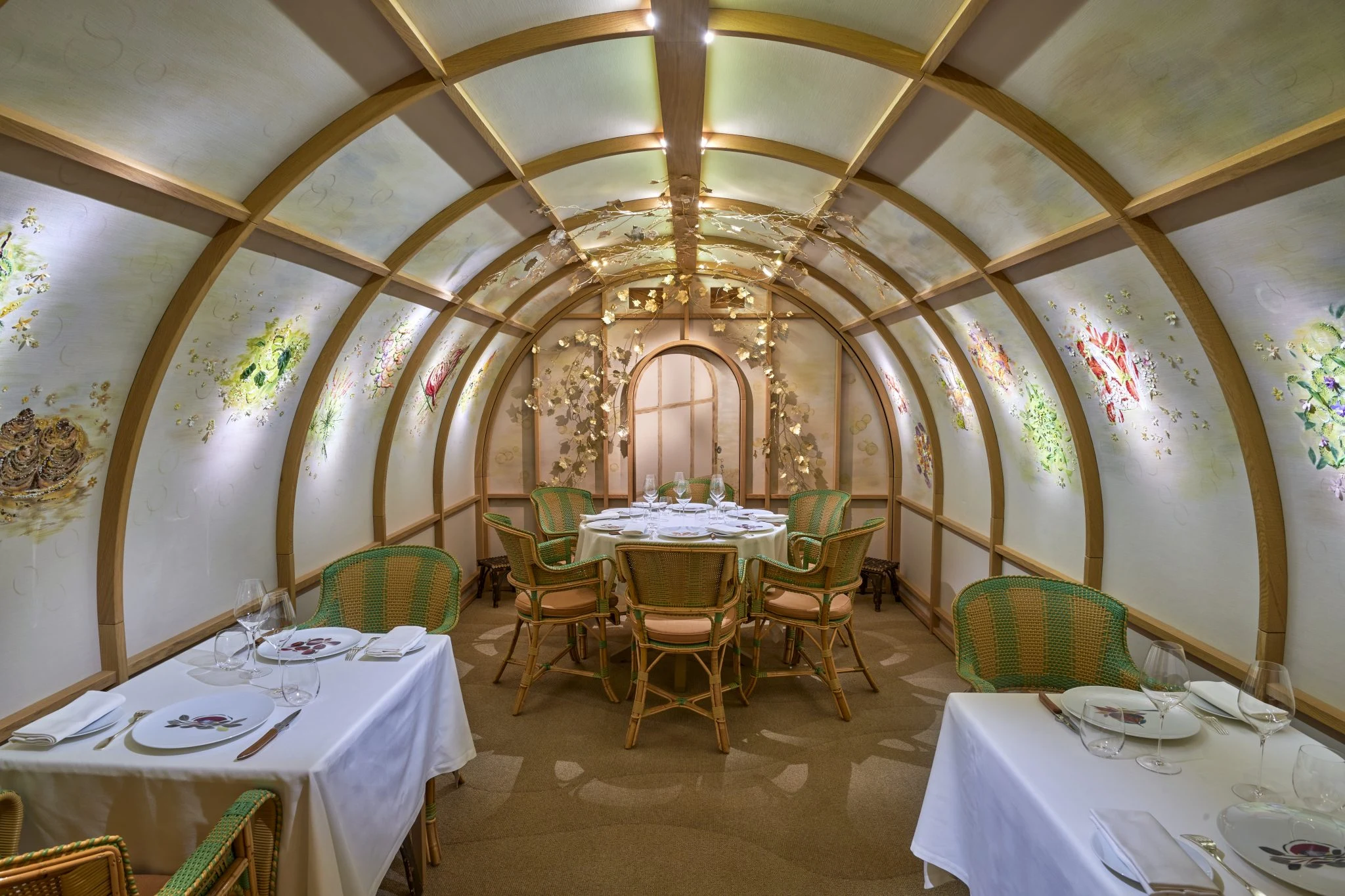
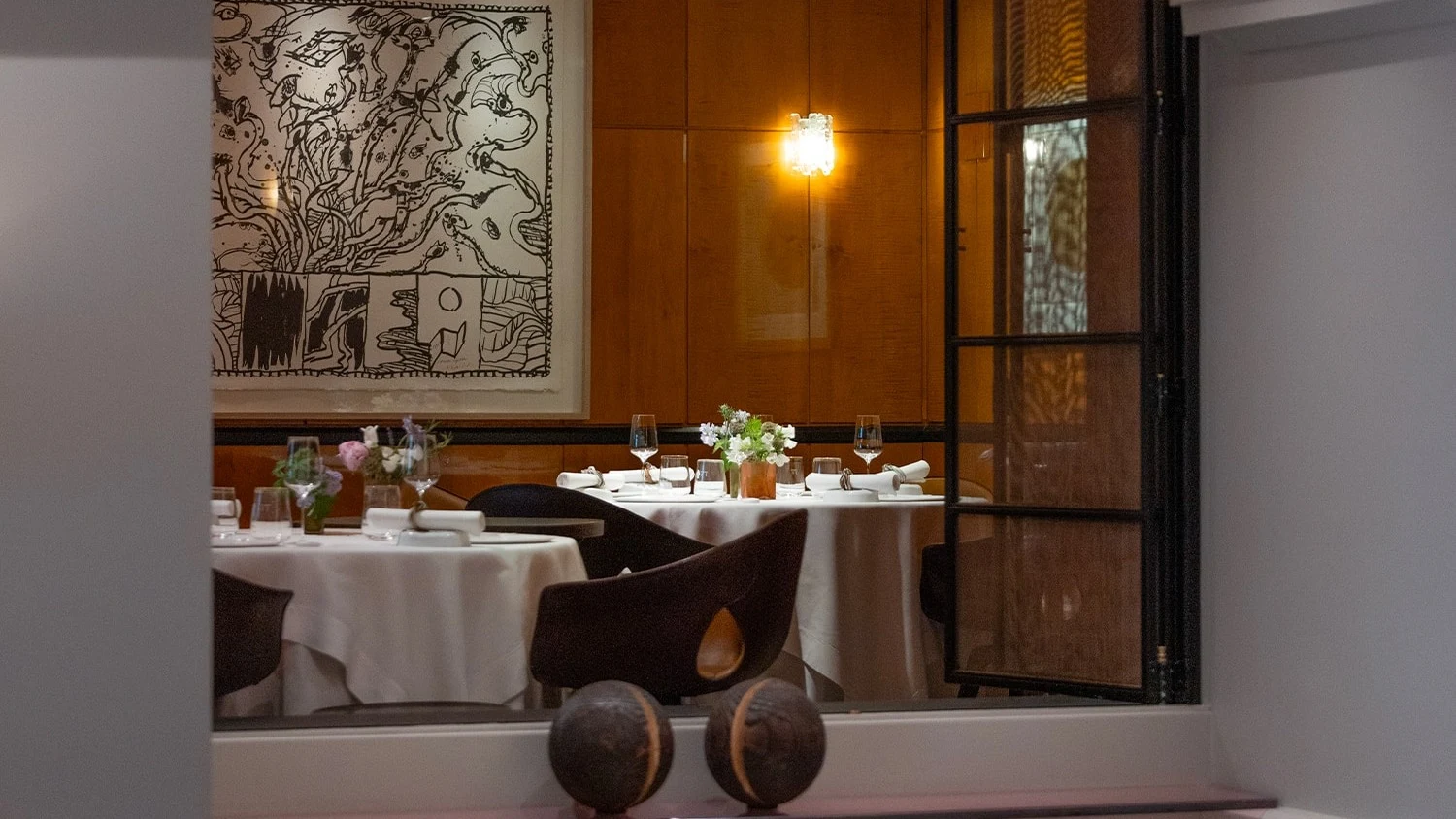
Shabour is a one-Michelin-star restaurant in Paris's 2nd arrondissement at 19 Rue Saint-Sauveur, serving modern Israeli-Mediterranean fine dining. The address places it between rue Saint-Denis and rue Montorgueil, two of the 2nd arrondissement's most historically layered streets: one a former centre of commerce and nightlife stretching back centuries, the other a market corridor that has retained a genuine daily-life character even as the neighbourhood around it gentrified. The building itself carries the weight of that history, which makes the raw-industrial interior a more deliberate choice than it might appear. Exposed metal ducting on the ceiling, subdued lighting, and a room calibrated for energy rather than quiet formality signal a kitchen that intends to provoke, not reassure.
The Sunday letter
Find new places through the people who run them.
Our Sunday email brings you the chefs, winemakers and hoteliers behind our newest stories. See a sample before you subscribe.
See a sample of the Sunday emailOne email a week. Unsubscribe from any issue.
Where This Fits in Paris's Creative Tier
At the €€€€ price point, Shabour occupies the same bracket as several of Paris's most acclaimed addresses. The comparison set matters. Restaurants such as Alléno Paris au Pavillon Ledoyen, Arpège, and Le Meurice Alain Ducasse occupy the upper registers of classical or neo-classical French cooking. Shabour's one Michelin star confirms its critical standing, but the more telling signal is what it is not doing: it is not competing with palatial French dining rooms like Le Gabriel at La Réserve Paris on their own terms. It competes on cultural specificity and kitchen honesty.
The creative category in Paris has widened considerably. A decade ago, a non-French fine dining concept at this price tier would have needed to speak French cuisine's language to gain serious traction. Michelin recognition places it alongside inventive addresses like Blanc in the city's current wave of starred kitchens that earn their position through culinary identity rather than classical pedigree. Across Europe, similar creative-tier kitchens, from Enrico Bartolini in Milan to JAN in Munich, demonstrate that regional distinctiveness at the starred level is no longer an anomaly.
The Menu as Cultural Argument
Israeli cuisine is frequently misread as a single coherent tradition. It is better understood as a living archive of the Levant, the Maghreb, and the Jewish diaspora, in constant negotiation. The menu captures the approach precisely: carrots with slow-cooked egg, tahini foam, salmon eggs and tzimmes; seared mullet in an Eastern take on bouillabaisse; semolina pudding with orange blossom and crème anglaise with pumpkin. These are not fusion constructions in the reductive sense. Each dish holds a recognisable cultural reference point while being assembled with fine-dining precision.
The tzimmes, a slow-cooked Ashkenazi preparation typically built on root vegetables and dried fruit, appearing alongside tahini and salmon eggs on a single plate, is the kind of juxtaposition that requires a kitchen confident enough in both traditions to risk the collision. The Eastern bouillabaisse is a more pointed move still: it takes the Marseille coastline's most nationalist dish and reframes it through a different Mediterranean vocabulary. For diners who know both reference points, it functions as argument as much as recipe. For those who don't, it reads as a dish that delivers on its own sensory terms.
Granit has built a multi-city operation spanning Jerusalem and London before arriving in Paris, and that experience informs the consistency that Michelin recognition requires.
Dining in the 2nd: Context and Character
The 2nd arrondissement has quietly become one of Paris's most interesting restaurant neighbourhoods. It carries none of the destination-district self-consciousness of the Marais, and it doesn't operate as a satellite of Saint-Germain. The streets around rue Montorgueil have supported serious food culture for generations, from the covered passages that once anchored the city's food trade to the contemporary kitchens that have taken root since the neighbourhood's property dynamics shifted in the 2010s. For a kitchen with Shabour's energy level and demographic, it is a more fitting address than the more obviously prestigious arrondissements. The room feels earned rather than inherited.
Paris rewards that distinction. The city's dining culture has always had space for the kind of serious-but-informal restaurant that does not need a grand room to charge grand-room prices, because the cooking justifies the invoice. The model has precedent in the city's long history of bistros that punched far above their physical weight. Shabour recalibrates that tradition for a kitchen whose reference points are the Levant rather than Lyon, but the underlying logic, stripped rooms, concentrated cooking, a room built for conversation rather than ceremony, is consistent with how Paris has always accommodated its most compelling smaller restaurants.
How Shabour Compares to France's Wider Starred Field
France's Michelin map is dense with restaurants that have operated within inherited culinary frameworks for decades. Properties like Flocons de Sel in Megève, Mirazur in Menton, Troisgros in Ouches, Paul Bocuse in Collonges-au-Mont-d'Or, Bras in Laguiole, and Auberge de l'Ill in Illhaeusern each root themselves in terroir, regional identity, and in some cases multi-generational continuity. What they share with Shabour is the willingness to commit fully to a single culinary point of view. The specific origins differ sharply, but the discipline required to sustain a coherent identity across an entire menu is the same.
Shabour's Michelin star marks its place in a broader shift in French fine dining, where distinct culinary identities are increasingly recognized on their own terms.
Planning Your Visit
Shabour operates Tuesday through Saturday for dinner from 7 PM, with an additional Saturday lunch service from noon to 1 PM. The restaurant is closed on Sundays and Mondays. At the €€€€ price tier, it sits in the upper bracket of Paris dining spend.
Questions
Frequently asked
What recognition does Shabour hold?
Shabour holds 1 Michelin star.
Who works at Shabour?
Made By profiles Assaf Granit (Chef) at Shabour.
How expensive is Shabour?
Shabour is listed at a price level of $$$$.
Where is Shabour and what does it serve?
Shabour is in 2nd arrondissement, Paris, serving Modern Israeli-Mediterranean Fine Dining.
The field
How it compares
| Place | Awards | Cuisine | Notes |
|---|---|---|---|
| Shabour | Michelin 1 Star | Modern Israeli-Mediterranean Fine Dining | 2nd arrondissement, $$$$ |
| Arpège | Michelin 3 Stars, World's 50 Best | Vegetable-Focused French Fine Dining | Paris |
| Epicure | Michelin 3 Stars | Contemporary French Fine Dining | Paris |
| Guy Savoy | Michelin 2 Stars, World's 50 Best | Classic French Fine Dining | Paris |
| Le Cinq | Michelin 3 Stars, World's 50 Best | Modern French Fine Dining | Paris |
| Le Taillevent | Michelin 2 Stars, World's 50 Best | Classic and Modern French Fine Dining | Paris |
| Pierre Gagnaire | Michelin 3 Stars, World's 50 Best | Avant-Garde French Fine Dining | Paris |
In residence
Similar places
Vegetable-Focused French Fine Dining
Arpège
Paris, France
★★★ · 50 Best
Contemporary French Fine Dining
Epicure
Paris, France
★★★
Classic French Fine Dining
Guy Savoy
Paris, France
★★ · 50 Best
Modern French Fine Dining
Le Cinq
Paris, France
★★★ · 50 Best
Classic and Modern French Fine Dining
Le Taillevent
Paris, France
★★ · 50 Best
Avant-Garde French Fine Dining
Pierre Gagnaire
Paris, France
★★★ · 50 Best
The Sunday letter
Get the next Made By story in your inbox.
We send one email every Sunday morning with the places and people we covered that week.
See a sample of the Sunday emailOne email a week. Unsubscribe from any issue.