Chef in Residence
Shahrzad Shokouhivand
Chef

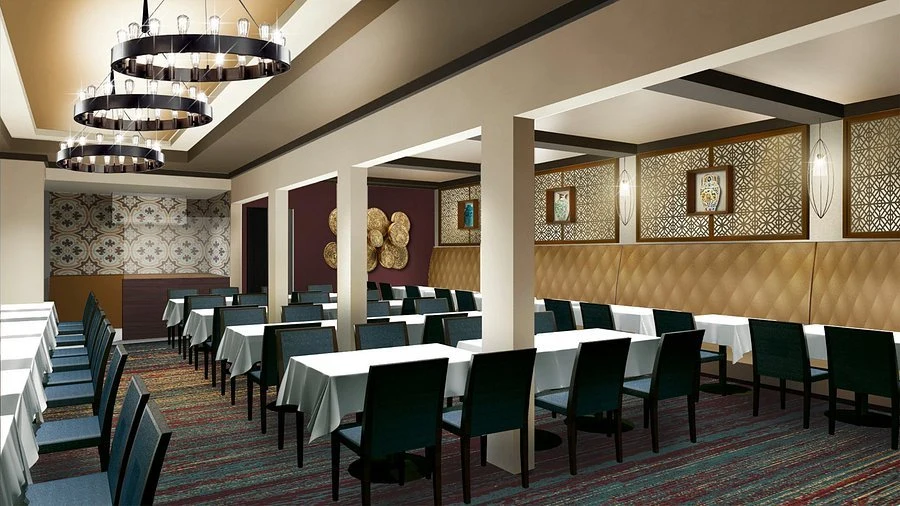
On Westwood Boulevard, Shaherzad has served Los Angeles's Iranian community and curious diners alike for decades, operating as one of the city's most enduring Persian restaurants. The menu reads as a primer on the architecture of classical Iranian cooking: slow-braised stews, char-marked kebabs, and saffron-steeped rice dishes that carry the weight of a culinary tradition rarely represented at this depth in the American West.
<h2>Where Persian Cooking Finds Its Structure</h2><p>Westwood has long functioned as Los Angeles's Persian dining corridor. The stretch of Westwood Boulevard running south from Wilshire carries more Persian restaurants, bakeries, and grocers per block than almost anywhere outside Tehran, and within that concentrated scene, Shaherzad at 1422 Westwood Blvd has operated as a restaurant. It is not a fusion experiment or a reimagining. It is a restaurant where the menu itself functions as an argument about what Iranian cuisine actually is, presented with the confidence of an institution that has never needed to explain itself to a trend.</p><p>For readers accustomed to tracking Los Angeles's higher-profile dining circuit, where venues like <a href="https://www.enprimeurclub.com/restaurants/kato-los-angeles-restaurant">Kato</a> reframe Asian culinary traditions through a contemporary lens, or where <a href="https://www.enprimeurclub.com/restaurants/hayato">Hayato</a> applies kaiseki discipline to Japanese cooking, Shaherzad occupies a different position entirely. Its authority comes not from reinvention but from fidelity to a cuisine whose classical architecture is intricate enough that faithful execution is itself a form of mastery.</p><h2>The Menu as a Map of Iranian Cooking</h2><p>The menu is organized around the core structures of Iranian cooking. Unlike European tasting-menu formats, where a single narrative arc runs from amuse to dessert, classical Persian restaurant menus are built around categories of technique and ingredient that operate in parallel. Stews (khoresh), grilled meats (kebab), and rice preparations (polo) each represent a distinct pillar of the cuisine, and a well-ordered Persian meal draws from all three rather than treating one as the main event.</p><p>Stews like ghormeh sabzi, a herb-intensive braise that balances dried limes and kidney beans against lamb, or fesenjan, the walnut-and-pomegranate reduction that coats poultry with a sauce of almost medieval complexity, represent the khoresh tradition at its most demanding. These are dishes measured in hours of preparation, and they carry flavor profiles that have almost no equivalent in other Middle Eastern cuisines. The pomegranate and walnut pairing in fesenjan, for instance, places Iranian cooking in conversation with northern Persian regional traditions around the Caspian, not with the grilled-meat emphasis that outsiders often associate with the broader region.</p><p>Kebab preparations here follow a parallel logic. Koobideh, ground lamb or beef mixed with onion and spices and pressed onto wide flat skewers, is grilled over open flame and served with rice and charred tomato. Barg, thinly sliced marinated lamb fillet, sits at the other end of the register: leaner, more delicate, demanding precise timing on the grill. The contrast between these two preparations is itself a lesson in how kebab culture in Iran is not a single technique but a spectrum of approaches to heat and meat that varies by region, occasion, and cut.</p><p>Rice is the thread that runs through everything. Persian polo is not boiled rice; it is a two-stage preparation in which parboiled rice is steamed in a sealed vessel over low heat, developing a golden crust called tahdig at the bottom of the pot. Tahdig is arguably the most discussed element of Iranian home cooking among people who grew up eating it, and its presence at Shaherzad signals that the kitchen is not cutting corners on the most labor-intensive part of the meal. Saffron-stained rice served alongside stews and kebabs anchors the plate in a way that no other starch in Western or Asian cooking quite replicates.</p><h2>Vegetarian Depth in a Meat-Dominant Tradition</h2><p>Iranian cooking, despite its reputation for lamb and beef, contains a substantial vegetarian repertoire rooted in the herb-intensive and legume-based traditions of Persian home cooking. Ash-e reshteh, a thick noodle soup loaded with spinach, beans, and kashk (a fermented whey), is a traditional dish with deep cultural resonance, served at Nowruz and other significant occasions. Mirza ghasemi, a smoked eggplant preparation from the Caspian region, demonstrates the cuisine's capacity to build complexity without meat. For diners prioritizing plant-based options, a Persian restaurant operating at this level of classical fidelity tends to offer more genuine depth than a modern fusion kitchen where vegetarian dishes are often afterthoughts. Confirming current menu specifics directly with the restaurant is recommended, since preparation details and availability can shift seasonally.</p><h2>Westwood in the Broader Los Angeles Dining Context</h2><p>Los Angeles's dining geography is expansive enough that no single neighborhood defines the city's ambitions, but Westwood's Persian corridor represents something that the city's more publicized restaurant scenes do not: a community-rooted dining tradition that has operated continuously for over four decades without requiring validation from food media or award bodies. This is a different kind of durability than the critical recognition that drives visibility for venues like <a href="https://www.enprimeurclub.com/restaurants/providence">Providence</a> or <a href="https://www.enprimeurclub.com/restaurants/somni-los-angeles-restaurant">Somni</a>, or the chef-driven ambition that places <a href="https://www.enprimeurclub.com/restaurants/osteria-mozza">Osteria Mozza</a> inside an Italian-American conversation. Shaherzad's longevity is community-sustained, which is its own form of credential.</p><p>For context within the American fine dining conversation, the gap between Persian cuisine's complexity and its representation in the national critical apparatus is notable. Restaurants like <a href="https://www.enprimeurclub.com/restaurants/le-bernardin">Le Bernardin in New York City</a>, <a href="https://www.enprimeurclub.com/restaurants/alinea">Alinea in Chicago</a>, or <a href="https://www.enprimeurclub.com/restaurants/the-french-laundry">The French Laundry in Napa</a> have institutional recognition systems that amplify their profiles. Persian cooking in America operates largely outside those systems, not because the cuisine lacks depth but because the award infrastructure was built around European and Japanese culinary frameworks. Shaherzad exists in a category where the relevant credentials are communal rather than institutional.</p><p>Diners approaching Westwood from other Los Angeles neighborhoods might also consider how this part of the city fits into a broader day of eating. The neighborhood is a short drive from Culver City, where <a href="https://www.enprimeurclub.com/restaurants/kato-los-angeles-restaurant">Kato</a> operates its New Taiwanese tasting menu format, or from downtown, where <a href="https://www.enprimeurclub.com/restaurants/hayato">Hayato</a> runs one of the city's most demanding kaiseki programs. Shaherzad operates in a different register from either of those, and that difference is the point. Our full Los Angeles restaurants guide maps the city's dining by neighborhood, cuisine, and price tier for readers planning across multiple meals.</p><h2>Planning Your Visit</h2><p>Shaherzad is located at 1422 Westwood Blvd, Los Angeles, CA 90024, in the heart of the Westwood neighborhood's Persian commercial corridor. Street parking on Westwood Boulevard can be limited during peak dinner hours; the adjacent side streets and nearby structures are generally more reliable. Given the venue's neighborhood reputation and community following, walk-in availability varies by day and time. The restaurant is open daily from 11 AM to 10 PM, and reservations are recommended.</p><p>Address: 1422 Westwood Blvd, Los Angeles, CA 90024</p>
Shaherzad is located at 1422 Westwood Blvd, Los Angeles, CA 90024, Los Angeles.
Westwood developed into Los Angeles's primary Iranian dining corridor following the large-scale immigration of the 1980s, and the neighborhood now holds several long-running Persian establishments within a few blocks of 1422 Westwood Blvd. What separates restaurants in this corridor is typically the depth of the non-grilled menu: stews, herb dishes, and rice preparations rather than kebabs, which most kitchens handle adequately. Shaherzad's menu is organized around all three classical categories of Iranian cooking, which gives it range beyond the grill-focused format common at shorter-menu competitors.
At a restaurant rooted in Westwood's Persian corridor, the stews and rice preparations are the clearest test of kitchen commitment. Iranian cooking organizes itself around khoresh (braised stews served over rice) and polo (layered rice dishes with crusted tahdig), and these are where a kitchen's technical priorities show. Order from that tier first before moving toward grilled proteins.
Westwood's Persian dining strip at 1422 Westwood Blvd draws consistent traffic from the local Iranian community and the UCLA-area crowd, so walk-in availability varies by day and time. Weekday lunch typically offers more flexibility than weekend dinner. Calling ahead is advisable if you are planning a larger group.
The defining idea is structural: the menu maps Iranian cooking across its three classical pillars of stews, rice preparations, and grilled meats, rather than collapsing the cuisine into a single showpiece dish. That organizational logic is itself the argument Shaherzad makes about how Iranian cooking should be read. It positions the restaurant as a reference point within Westwood's Persian dining corridor in Los Angeles.
Classical Persian cooking carries more vegetarian depth than most Middle Eastern cuisines represented in Los Angeles, built on herb-intensive dishes, legume-based preparations, and rice formats that stand without meat. Shaherzad's menu reflects that tradition, giving vegetarians structural options rather than a token salad or two. The herb-forward stews and rice dishes are where that depth is most apparent.
Persian restaurants in Westwood generally operate at mid-range price points within the Los Angeles dining spectrum, positioned well below the city's tasting-menu tier. At that price level, Shaherzad offers access to a cooking tradition with genuine technical complexity, particularly in the rice and stew preparations. The value case is strongest if you order from those core categories rather than treating the menu as a kebab-only outing.
1422 Westwood Blvd, Los Angeles, CA 90024
Westwood

Modern Seafood Fine Dining
Providence
Los Angeles, United States
★★★ · 50 Best
Modern Taiwanese Fine Dining
Kato
Los Angeles, United States
★★ · 50 Best

Modern Mexican Seafood
Holbox
Los Angeles, United States
★ · 50 Best

California-French Fine Dining
Mélisse
Los Angeles, United States
★★

Traditional Japanese Kaiseki
Hayato
Los Angeles, United States
★★

Modern Spanish Fine Dining
Somni
Los Angeles, United States
★★★ · 50 Best