Shanghai Terrace
- 01CuisineModern Shanghainese
- 02CityChicago, United States
Duck and dim sum at the pass
- Forbes 4-Star · 2026
- Forbes 4-Star · 2025
The dumpling bench sets the pace
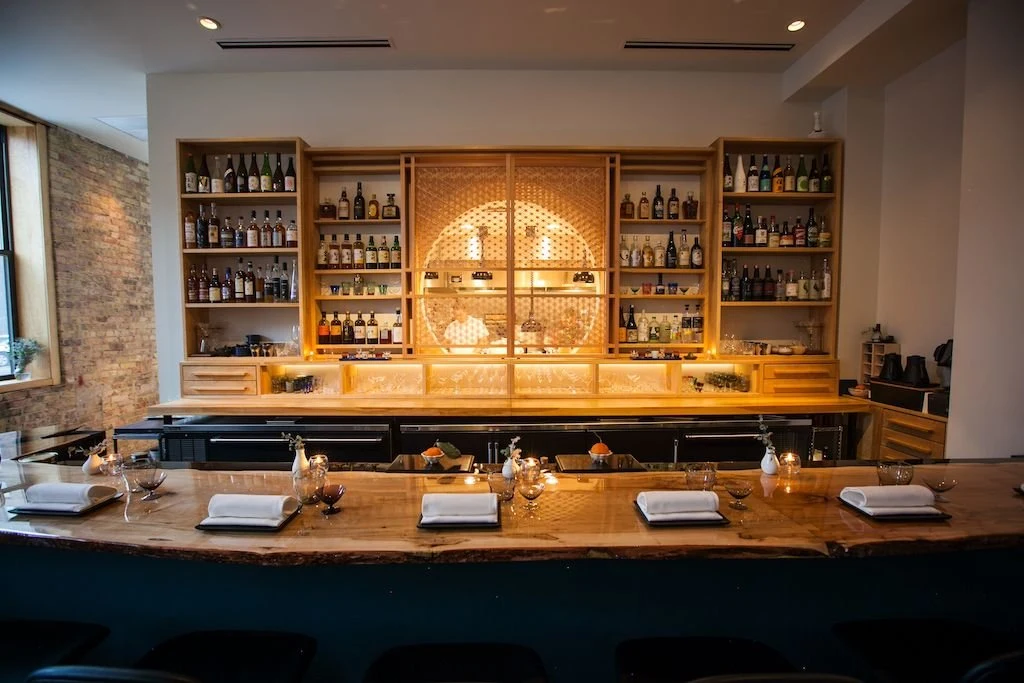
The dumpling bench sets the pace before the room fills at Shanghai Terrace in Chicago, a kitchen built for Cantonese technique, Shanghainese poise and the formal rhythm of a hotel dining room. Chef de Cuisine Ivan Yuen took that post in July 2010, having started here as a line cook, which is a particular kind of authority: the promotion came from inside the same brigade rather than from a hire. In a house where the signature dishes have to be identical every night, that continuity is worth more than a new voice would be.
The restaurant opened in 2000 within The Peninsula Chicago at 108 E Superior St, and the hotel marked twenty years in 2021. The stated idea has been to blend midwestern hospitality with Far Eastern graciousness, and the dining room’s reference point is the elegance of 1930s Shanghai supper clubs. That places it deliberately apart from the casual dim sum houses of Chinatown: same tradition, different service contract.
Duck skin, dumpling folds, and a tight program
The craft gathers around dishes that depend on timing more than display. Peking duck carries the room’s centre of gravity, with crisp skin, chun bing wraps, julienned cucumber, radish, hoisin, and sweet-sour sauce. The lobster chicken black truffle dumplings work in a smaller register, where the filling has to hold richness without collapsing the wrapper or blurring the finish. Prawn spring rolls, pork buns, vegetable dumplings, braised eggplant, Szechwan beans, steamed halibut, Dong Po pork belly, Kung Pao chicken, and Shanghai fried rice broaden the station work, but the method stays tied to the same demands: heat, seal, snap, gloss, and restraint.
Heritage dishes stay in conversation with seasonal specials. For the hotel’s twentieth anniversary in 2021 the kitchen built a bespoke dumpling with a rainbow-patterned vegetable wrapper and a filling of shrimp and twenty ingredients, which is the sort of project a dim sum team can only attempt if the daily folds are already reliable. The beverage program stays curated rather than sprawling, with wines, cocktails, and teas built to sit alongside duck, seafood, and dim sum.
Ebony, gold, scarlet, and the fourth floor
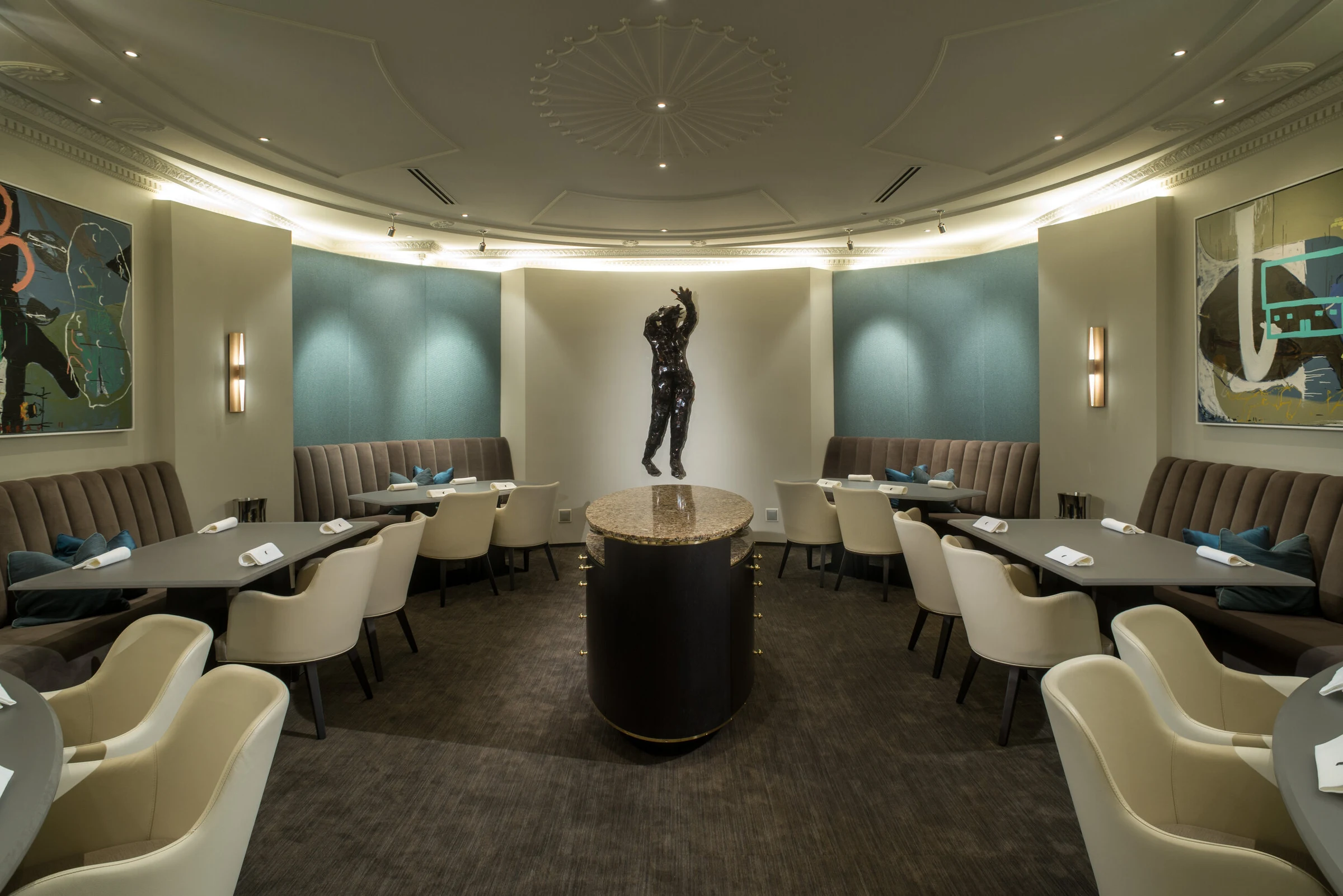
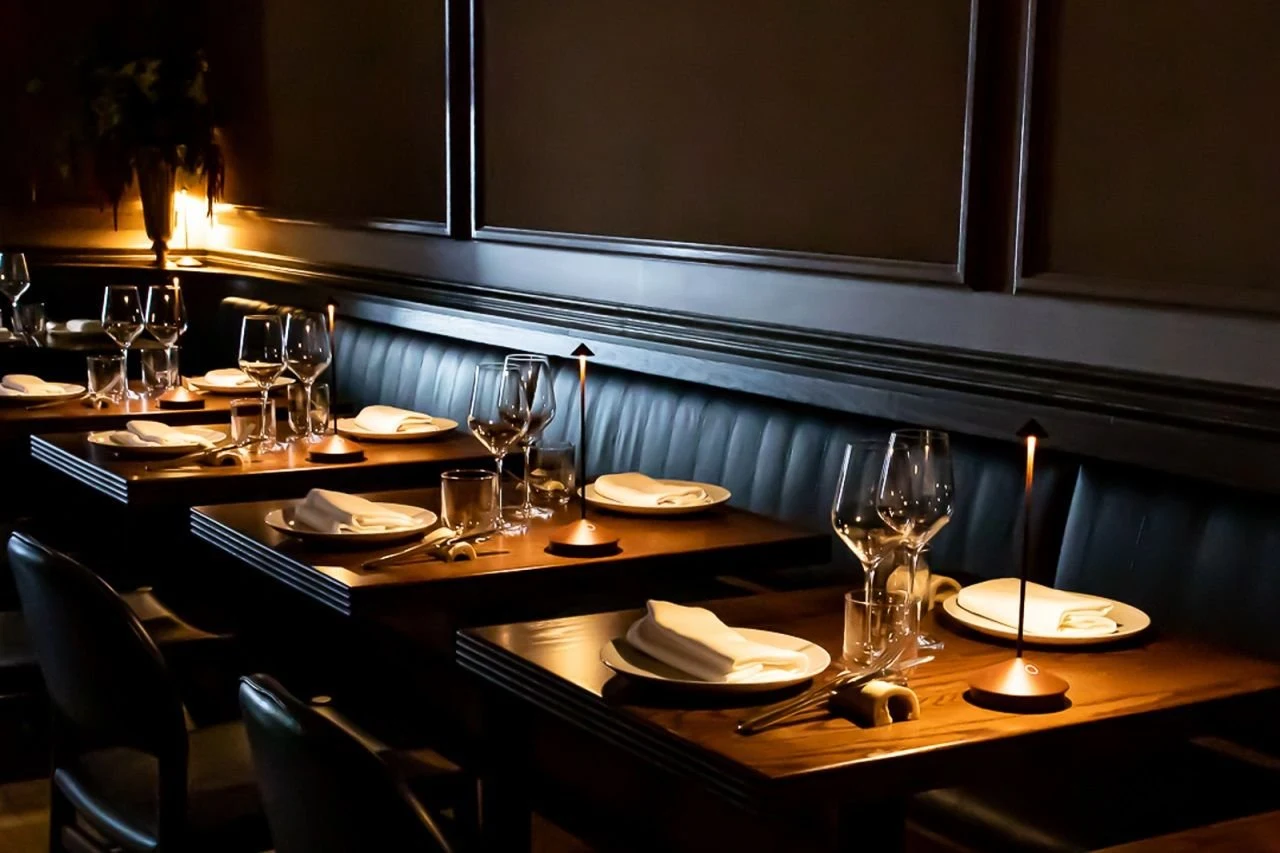
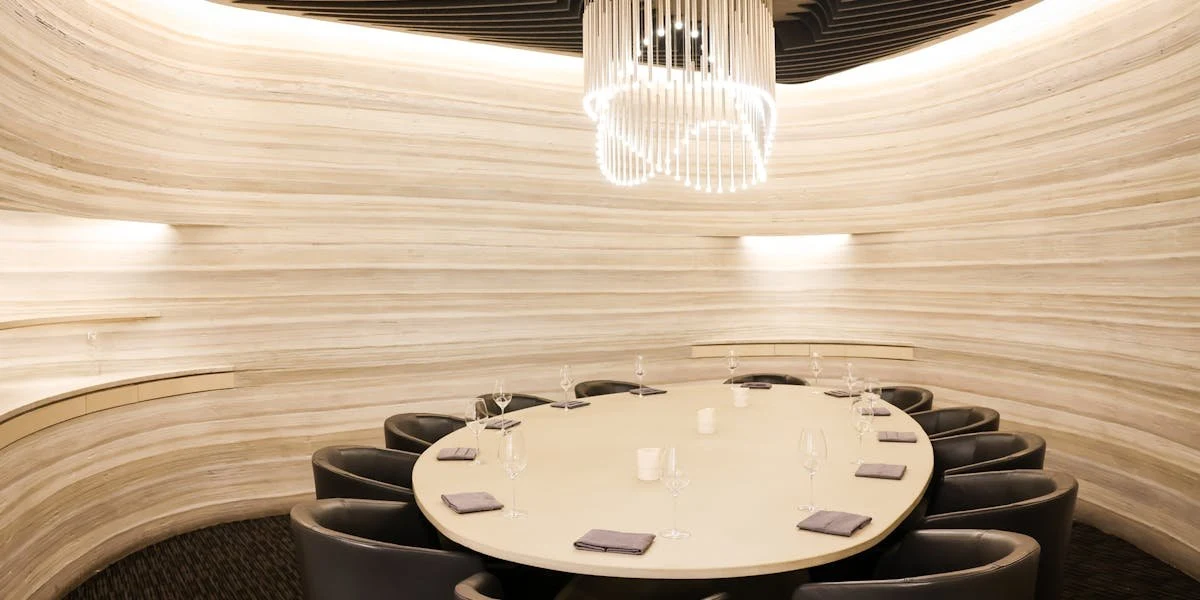
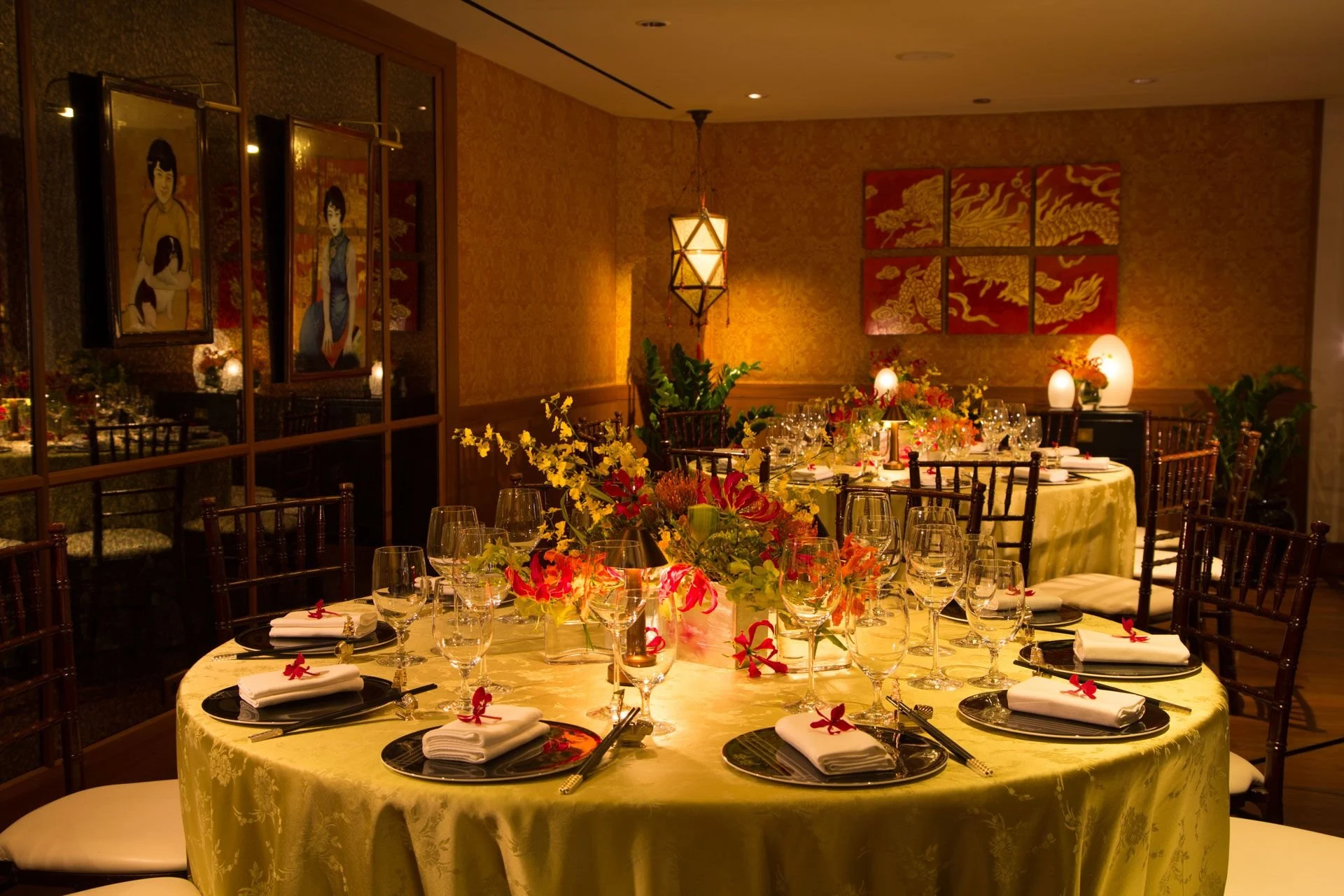
The room sits on the fourth floor, away from the street’s immediate movement. Inside, ebony, gold, and scarlet tones give the dining room its 1930s Shanghai reference without turning the space into a set. Light stays low enough for the lacquer and tableware to carry their own shine. The main room holds an intimate scale, with conversation kept close and the pass moving just beyond the composed surface of service. In warmer months, the terrace changes the register. The city comes into view, including Willis Tower, while the same dishes arrive with more air around them. Chopsticks rest in golden boat-shaped holders; bamboo and red accents keep the table in the restaurant’s visual language.
A place held in revision
Shanghai Terrace renovated in 2015, a practical sign that the house treats atmosphere as part of the method rather than a fixed backdrop. The point is not nostalgia alone. The kitchen keeps returning to duck, dumplings, seafood, vegetables, and rice as working materials, while the room keeps its supper-club line on the fourth floor. If there is a final measure here, it is the way a table can move from prawn spring rolls to Peking duck without the evening losing its shape.
Questions
Frequently asked
Who runs the kitchen at Shanghai Terrace?
Chef de Cuisine Ivan Yuen runs the kitchen, and he took the post in July 2010 after starting there as a line cook.
What is Shanghai Terrace known for?
The restaurant is built around Cantonese technique, Shanghainese poise, and a formal hotel dining-room rhythm, with Peking duck and lobster chicken black truffle dumplings among the signature dishes.
Where is it, and what is the setting like?
Shanghai Terrace is on the fourth floor of The Peninsula Chicago at 108 E Superior St in the Magnificent Mile area. The room draws on 1930s Shanghai supper clubs, with ebony, gold, and scarlet tones.
What are the booking and dress expectations?
Reservations are recommended, and the dress code is smart casual. Bookings are made through OpenTable.
When is Shanghai Terrace open?
It is closed on Monday and Tuesday. It opens Wednesday through Sunday, with service from 5 to 10 PM on Wednesday, Thursday, and Sunday, and from 5 to 11 PM on Friday and Saturday.
The field
How it compares
| Place | Cuisine | Notes | Awards |
|---|---|---|---|
| Shanghai Terrace | Modern Shanghainese | Magnificent Mile, $$$$ | · |
| Alinea | Avant-Garde Molecular Gastronomy | Chicago | Michelin 3 Stars, World's 50 Best |
| Asador Bastian | Basque-Inspired Steakhouse | Chicago | · |
| Ever | Modern American Fine Dining | Chicago | Michelin 2 Stars |
| Kumiko | Japanese Dining Bar | Chicago | · |
| Oriole | Modern French-Japanese Tasting Menu | Chicago | Michelin 2 Stars |
| Smyth | Modern American Tasting Menu | Chicago | Michelin 3 Stars, World's 50 Best |
Similar places
Avant-Garde Molecular Gastronomy
Alinea
Chicago, United States
★★★ · 50 Best
Basque-Inspired Steakhouse
Asador Bastian
Chicago, United States
Modern American Fine Dining
Ever
Chicago, United States
★★
Japanese Dining Bar
Kumiko
Chicago, United States
Modern French-Japanese Tasting Menu
Oriole
Chicago, United States
★★
Modern American Tasting Menu
Smyth
Chicago, United States
★★★ · 50 Best