Shimbashi Shimizu
In Residence
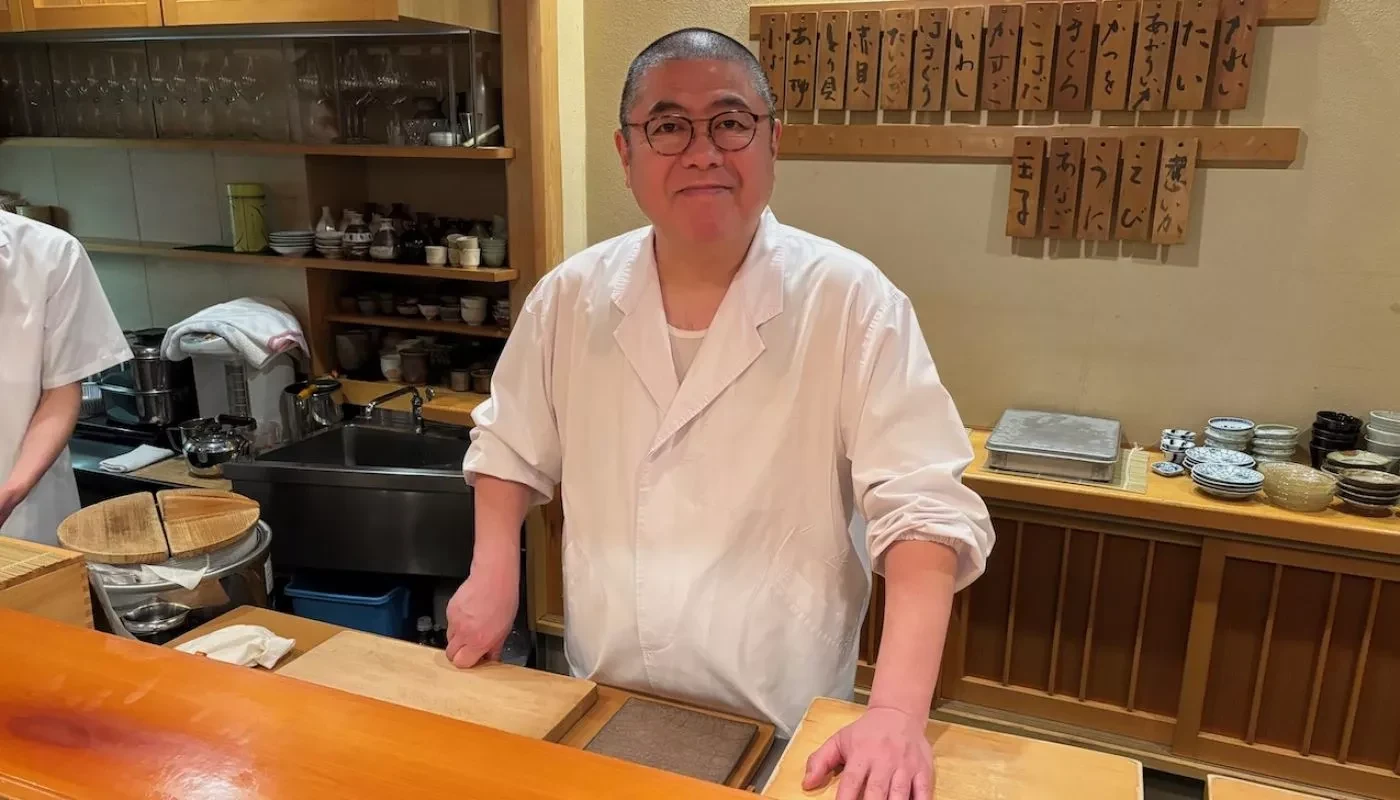
Kunihiro Shimizu
Chef
- 01CuisineAuthentic Edomae Omakase
- 02CityTokyo, Japan
- Opinionated About Dining Top Restaurants in Japan Ranked #121 · 2026
- Tabelog Chef's Gold #11: 4.3pts · 2026
- Tabelog Bronze #400: 4.3pts · 2026
- Tabelog Chef's Gold · 2025
- Tabelog 100 #24: 4.3pts · 2025
- Tabelog Silver · 2025
- Opinionated About Dining Top Restaurants in Japan Ranked #98 · 2024
- Opinionated About Dining Top Restaurants in Japan Ranked #144 · 2023
Shinbashi has a way of stripping ceremony down to its working-city bones: station exits, narrow shrine approaches, office crowds, small counters above street level. That setting matters for sushi. In Tokyo, the grand Ginza counter often sells polish and ceremony; Shinbashi keeps a sharper, more regular-driven rhythm, where the room is small, the exchange is close, and the meal depends on trust built across visits rather than spectacle.
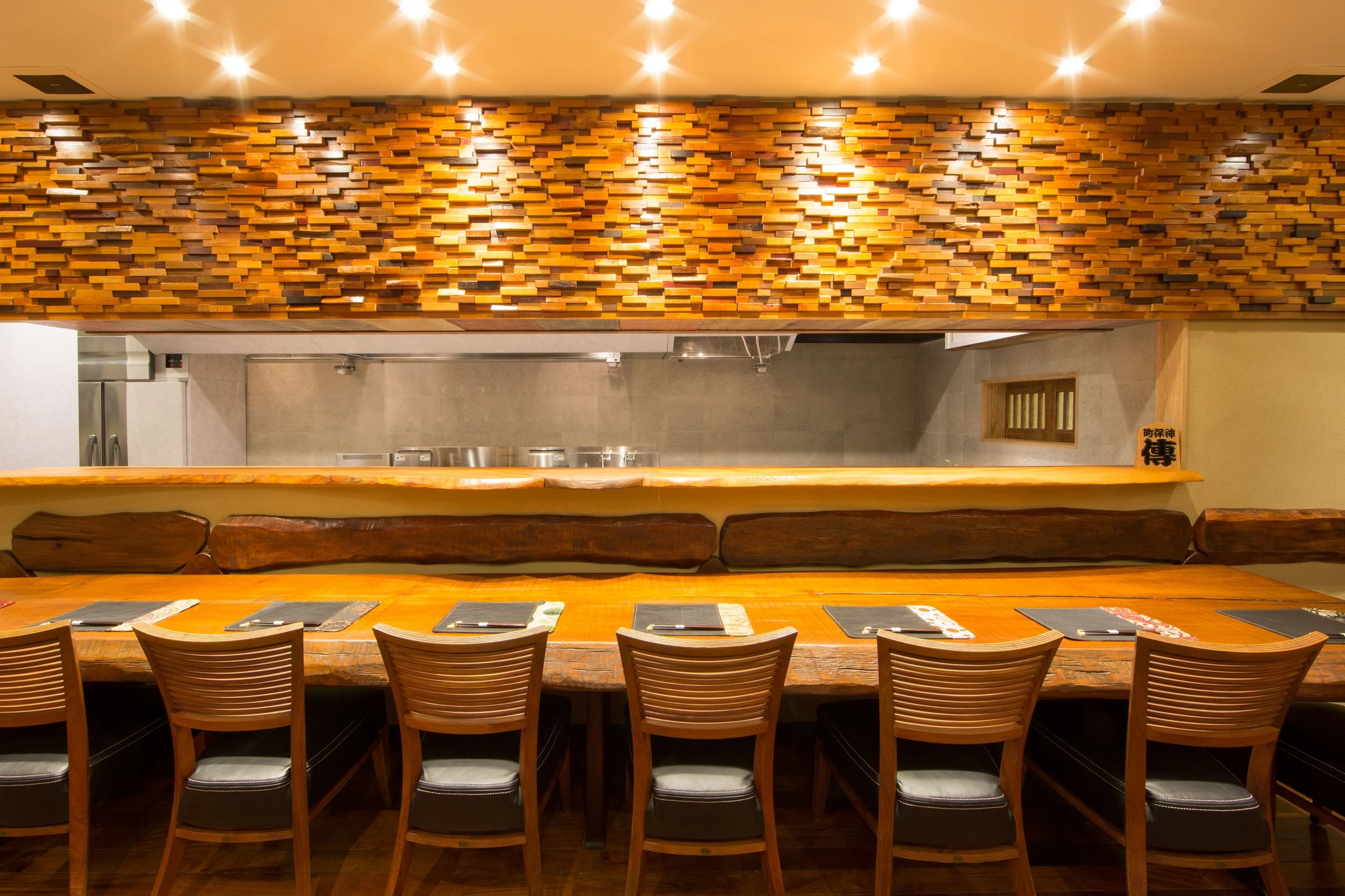
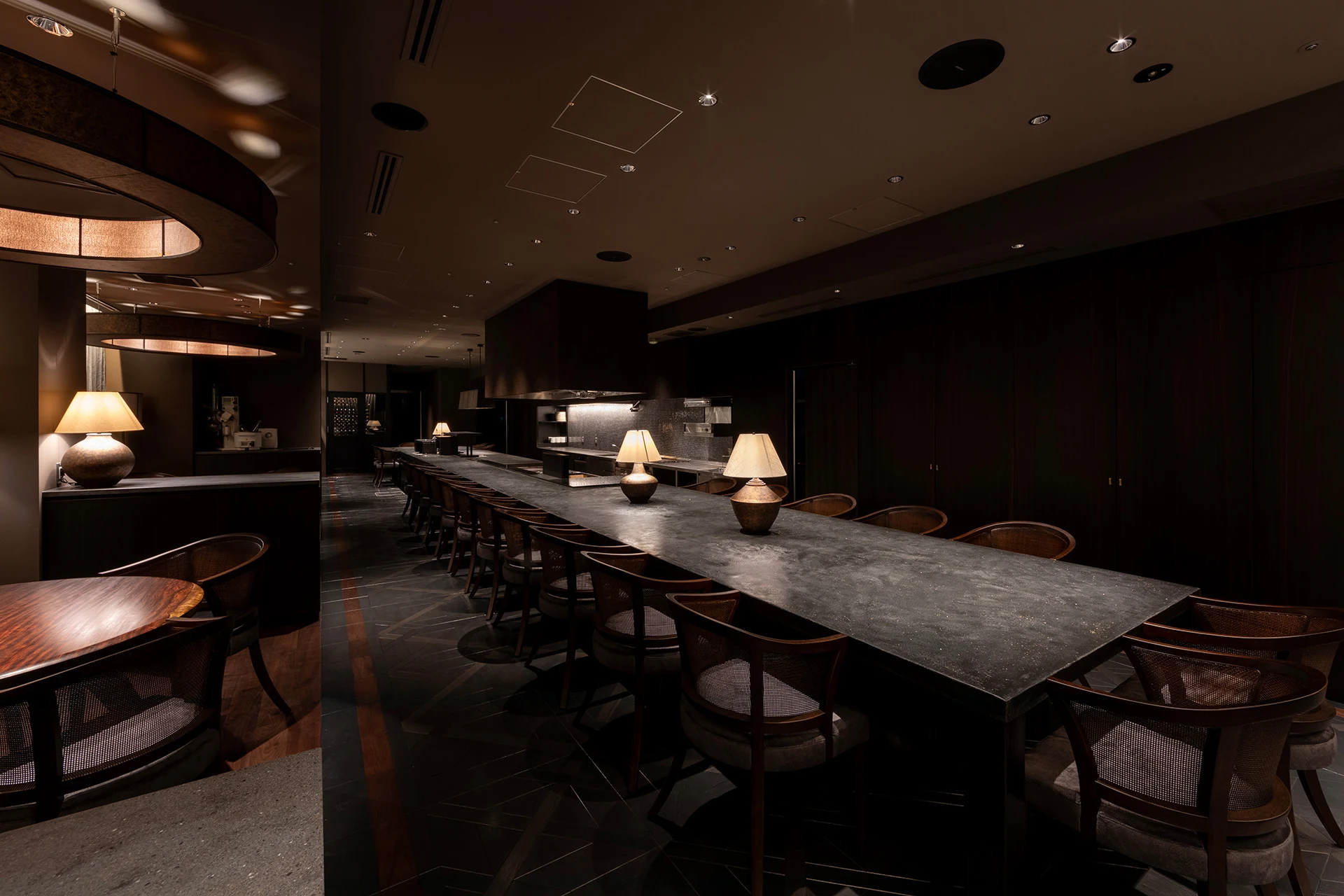
Shimbashi Shimizu sits squarely in that category. The format is counter-only and small enough that a single booking changes the whole room. For loyal diners, that intimacy is not a decorative detail; it is the operating system. Tokyo sushi at this level runs on repetition, memory, and restraint: the chef reads the pace of the counter, guests understand the etiquette, and the meal unfolds with fewer explanations than a tourist-facing omakase would provide.
Seven seats and the Tokyo sushi regulars' code
The useful way to read this counter is through its regulars. A seven-seat sushi room gives little space for anonymity, and the customs are correspondingly precise. Strong fragrance is discouraged, private rooms are absent, and the counter is the entire stage. That makes the experience less flexible than a larger restaurant, but also more exacting. It rewards diners who want the quiet concentration of sushi rather than a long evening built around room design, conversation pockets, or a broad drinks programme.
This is also why Shinbashi is an instructive neighbourhood for comparison. Around the station, Tokyo compresses different dining economies into a small radius: casual counters, pork specialists, izakaya drinking rooms, and high-commitment sushi. A low-cost udon stop such as Oniyanma Shimbashi ten belongs to the same commuter ecosystem as pricier, reservation-led rooms; both express the neighbourhood’s appetite for efficiency, but in completely different registers. The point is not luxury versus everyday dining. It is how Shinbashi lets both coexist without changing its pace.
Within that ecosystem, Shimbashi Shimizu has built a reputation on sushi rather than variety. The category is clearly defined, the counter is the format, and the drinks language stays close to sake and wine. Chef Kunihiro Shimizu’s name gives the room its personal anchor, but the larger story is Tokyo’s mature sushi culture: at this tier, the chef’s presence matters because the margin for distraction is low, not because the meal needs biography to carry it.
Award consistency without the Ginza gloss
Recognition helps separate serious counters from the long list of expensive ones. Shimbashi Shimizu was a Tabelog Award Bronze winner in 2026, a Silver winner in 2025, and has appeared across multiple Tabelog Award years, including Silver and Bronze citations. It was also selected for Tabelog Sushi Tokyo 100 in 2025, with earlier selections in 2022 and 2021. Those signals matter in Japan because Tabelog’s restaurant culture is review-dense and highly category-specific; sushi counters are judged against a crowded field of specialists, not against general fine dining.
The more interesting detail is the pattern. A single award can reflect a moment; repeated recognition suggests durable regular support and consistency across seasons. For a seven-seat room, that durability is harder to manufacture than publicity. There is simply not enough capacity to hide behind volume. The counter has to keep convincing diners who already understand the genre.
That makes it a different proposition from Tokyo’s broader premium dining circuit. Hyakuyaku by Tokuyamazushi belongs to a Japanese fine-dining lane with a broader culinary frame, while Torishige works from a pork-focused tradition. Bar P.M.9 sits in another evening economy altogether, where the spend is attached to drinks and late-night cadence. These comparisons clarify the decision: this is not a general Japanese restaurant, a drinking room, or a flexible neighbourhood meal. It is sushi in a compact, high-attention format.
How to think about the meal before choosing the counter
Regulars return to counters like this for calibration. In sushi, calibration means temperature, rice rhythm, fish selection, portioning, and the chef’s ability to keep the meal moving without turning it into performance. None of that requires a long menu description to be meaningful. In fact, the better Tokyo counters often communicate through omission: fewer written choices, fewer flourishes, and a stronger expectation that the diner has chosen the room for its discipline.
For travellers, that expectation is the main filter. Diners looking for a flexible à la carte evening, vegetarian improvisation, or a private celebration room should choose elsewhere. Diners who value compact counters, Japanese sushi etiquette, and the social quiet of a room built around repeat trust will understand the appeal faster. The restaurant’s non-smoking policy and counter-only setup reinforce that focus: this is a concentrated meal, not a lounge-like night out.
Tokyo planning also benefits from separating sushi ambition from broader itinerary needs. For restaurant context beyond this counter, Our full Tokyo restaurants guide gives the wider dining frame, while Our full Tokyo hotels guide, Our full Tokyo bars guide, Our full Tokyo wineries guide, and Our full Tokyo experiences guide map the rest of the city’s hospitality circuit. Nearby and category-adjacent contrasts include. 鮪と炭火焼き うお炭 秋葉原店, 12/10 Shinjuku ten, 124. KAGURAZAKA (Yakitori), 2D Cafe, and 3 Chome no Curry Ya San.
For travellers extending the food itinerary beyond Tokyo, the national contrast is useful: -Grilled beef Sukiyaki- KAMAKURA TANUKIAN 鎌倉 たぬき庵 in Kamakura,.cafe in Osaka,.know in Kumamoto, (Shoku) Vietnam in Kawasaki, [Curry Senmon Ten] Maruyama Kyoju. in Sapporo, and [ki:] in Kyoto show how sharply Japanese dining formats change by city and category. Across the Pacific, Jōdo Saké Bar in Los Angeles and Onigiri Time in Pasadena offer useful reminders of how Japanese food culture shifts when translated abroad.
The editorial verdict is narrow by design: Shimbashi Shimizu is for diners who understand that small-counter sushi is not a maximalist experience. Its strength lies in concentration, repeat recognition, and the kind of room where regulars shape the atmosphere as much as the counter itself. In Tokyo, that is often the difference between an expensive sushi meal and a serious one.
Questions
Frequently asked
Who works at Shimbashi Shimizu?
Made By profiles Kunihiro Shimizu (Chef) at Shimbashi Shimizu.
How expensive is Shimbashi Shimizu?
Shimbashi Shimizu is listed at a price level of $$$.
Where is Shimbashi Shimizu and what does it serve?
Shimbashi Shimizu is in Minato, Tokyo, serving Authentic Edomae Omakase.
The field
How it compares
| Place | Cuisine | Notes | Awards |
|---|---|---|---|
| Shimbashi Shimizu | Authentic Edomae Omakase | Minato, $$$ | · |
| Den | Modern Japanese Kaiseki | Tokyo | Michelin 2 Stars, World's 50 Best |
| Florilège | Modern French-Japanese Plant-Based Fine Dining | Tokyo | Michelin 2 Stars, World's 50 Best |
| Narisawa | Modern Japanese Satoyama Fine Dining | Tokyo | Michelin 2 Stars, World's 50 Best |
| Quintessence | Modern French Fine Dining | Tokyo | Michelin 3 Stars |
| Sazenka | Modern Chinese Fine Dining | Tokyo | Michelin 3 Stars, World's 50 Best |
| Sézanne | Modern French Fine Dining | Tokyo | Michelin 3 Stars, World's 50 Best |
In residence
Similar places
Modern Japanese Kaiseki
Den
Tokyo, Japan
★★ · 50 Best
Modern French-Japanese Plant-Based Fine Dining
Florilège
Tokyo, Japan
★★ · 50 Best
Modern Japanese Satoyama Fine Dining
Narisawa
Tokyo, Japan
★★ · 50 Best
Modern French Fine Dining
Quintessence
Tokyo, Japan
★★★
Modern Chinese Fine Dining
Sazenka
Tokyo, Japan
★★★ · 50 Best
Modern French Fine Dining
Sézanne
Tokyo, Japan
★★★ · 50 Best