Simpsons in The Strand
- 01CuisineTraditional British Fine Dining
- 02CityLondon, United Kingdom
- National Restaurant Awards Top 100 #55 · 2026
If You Do One Thing in London's Strand, Eat Here
If there is a single dining room in London that functions as a primary document of British table culture, Simpsons in the Strand makes a credible case for that position. This is not a nostalgia exercise or a themed attraction. The silver-domed carving trolleys that have moved between tables at 100 Strand since 1828 represent one of the longest unbroken roast traditions in the country, and the room itself carries the particular authority of a space that has never needed to reinvent itself to stay relevant. Newer openings chasing British identity, such as Dinner by Heston Blumenthal or CORE by Clare Smyth, look backward at a tradition that Simpsons has simply never stopped practising.
The Room and the Ritual
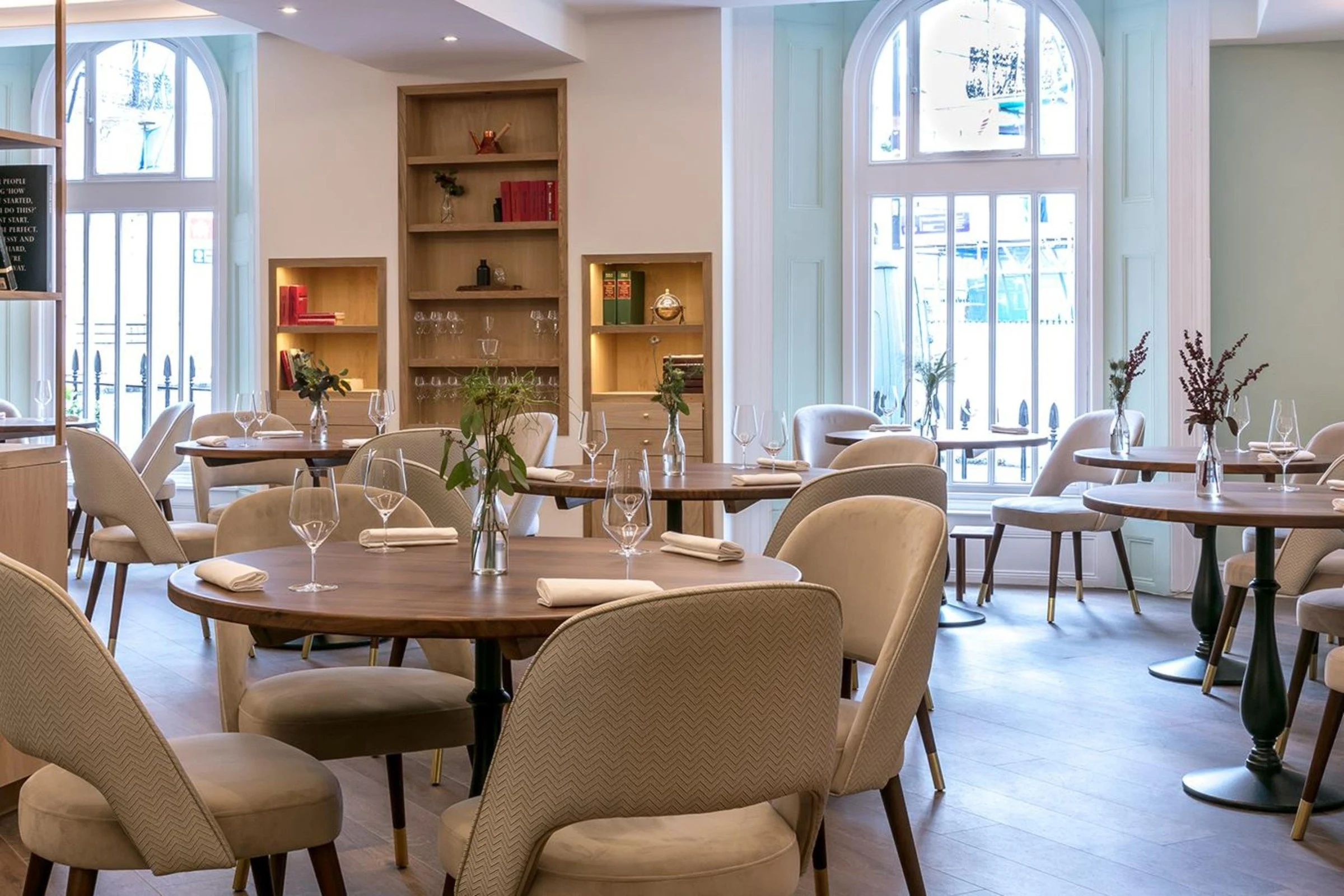
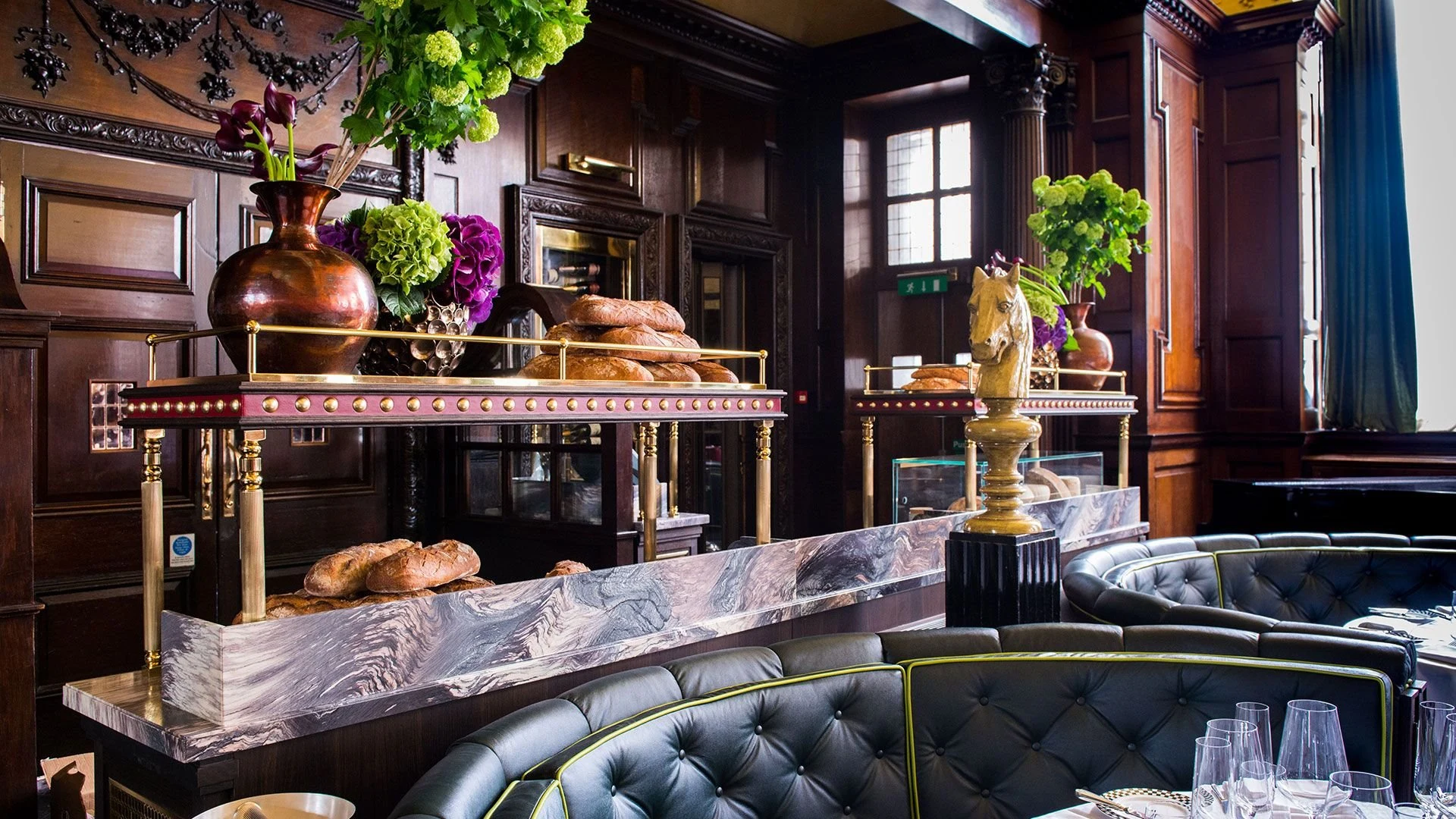
The dining room on the ground floor of the Savoy-adjacent building on the Strand seats guests beneath ornate ceilings in a space that has absorbed more than a century of state dinners, chess tournaments, and working lunches for the city's professional classes. The Victorian grandeur is structural, not decorative: the proportions, the panelling, the measured pace of service. This is the architecture of formal British dining before it became self-conscious about being formal.
The ritual that defines the experience is the trolley service. Joints of roast beef, saddle of lamb, and other large-format British roasts are wheeled to the table and carved in front of the guest. This format predates the modern tasting menu by well over a century, and it operates on a different logic entirely: the theatre is in the craft of carving, not in the construction of a plate. Regular guests understand the choreography and tend to have a clear preference for cut and accompaniment before they sit down.
The Regulars' Ledger
Clientele at Simpsons has always been a particular kind of London fixture. Historically, the room was a stronghold of the chess-playing intelligentsia, and later a reliable canteen for barristers, journalists, and civil servants working along the Strand and Fleet Street corridors. That occupational mix has shifted over time, but the underlying loyalty pattern has not: people come back because the room delivers a specific and unchanging proposition, and because that proposition has become harder to find elsewhere.
What keeps regulars returning is not novelty. The menu does not surprise. The room does not evolve season to season. What it offers instead is a kind of institutional reliability that sits outside the normal dynamics of the London restaurant market, where the pressure to refresh and iterate is constant. Against a peer group of high-investment Modern British rooms like The Ledbury or Sketch, The Lecture Room and Library, Simpsons operates on different coordinates altogether. It is not competing for the same diner.
The unwritten menu that regulars carry in their heads tends to involve a specific cut from the trolley, a particular table in the room, and a timing preference. Lunch, historically, is the session that locals favour, when the room runs at a professional cadence rather than the more tourist-oriented rhythm of dinner service. The full-room experience, with the trolley making its rounds and the room at capacity, is worth timing deliberately.
Where Simpsons Sits in British Dining
London's fine dining scene in 2024 is largely organised around tasting menus, modern technique, and chef-driven narratives. The high-end tier, which includes venues like Restaurant Gordon Ramsay, operates on a fundamentally different model of hospitality than what Simpsons offers. The comparison reveals something useful: Simpsons is not in that race, and never has been. Its frame of reference is closer to the great roast-and-carve rooms that once defined English institutional dining, many of which no longer exist in any recognisable form.
The closest British analogues outside London are destination country houses that maintain formal carving or roast traditions, such as Le Manoir aux Quat' Saisons in Great Milton or Gidleigh Park in Chagford, though neither occupies quite the same cultural position as a city dining room with an almost two-century record of continuous service. Internationally, the only real comparison class is the grand brasserie or carving room tradition of older European capitals. Even among New York's long-standing institutions, like Le Bernardin, the concept of tableside carving as the central act of a meal is largely absent from the contemporary conversation.
The broader British dining context is also worth marking. The country's serious restaurant culture now radiates well beyond London, with destination-level cooking at The Fat Duck in Bray, L'Enclume in Cartmel, Moor Hall in Aughton, and Hand and Flowers in Marlow. None of these venues does what Simpsons does. The trolley carving tradition is, at this point, a protected species in British dining culture.
Planning Your Visit
Simpsons in the Strand sits at 100 Strand, London WC2R 0EZ, directly between Covent Garden and the Embankment, with Charing Cross station a short walk away. The location means it draws both visitors staying along the South Bank and workers from the legal and media institutions that cluster in this part of central London. Reservations are advisable, particularly for lunch midweek when the room fills with a more local crowd. The dress code aligns with the room's formal register; arriving underdressed reads against the grain of the experience.
Questions
Frequently asked
How expensive is Simpsons in The Strand?
Simpsons in The Strand is listed at a price level of $$$$.
Where is Simpsons in The Strand and what does it serve?
Simpsons in The Strand is in Strand, London, serving Traditional British Fine Dining.
The field
How it compares
| Place | Cuisine | Notes | Awards |
|---|---|---|---|
| Simpsons in The Strand | Traditional British Fine Dining | Strand, $$$$ | · |
| CORE by Clare Smyth | Modern British Fine Dining | London | Michelin 3 Stars, World's 50 Best |
| Ikoyi | Modern West African Fine Dining | London | Michelin 2 Stars, World's 50 Best |
| Kitchen Table | Modern British Fine Dining | London | Michelin 2 Stars |
| KOL | Modern Mexican Fine Dining | London | Michelin 1 Star, World's 50 Best |
| Row on 5 | Modern British Fine Dining with Mediterranean & Asian Influences | London | Michelin 2 Stars |
| The Ledbury | Modern British Fine Dining | London | Michelin 3 Stars, World's 50 Best |
Producers
Sourced from / Made with

Similar places
Modern British Fine Dining
CORE by Clare Smyth
London, United Kingdom
★★★ · 50 Best
Modern West African Fine Dining
Ikoyi
London, United Kingdom
★★ · 50 Best
Modern British Fine Dining
Kitchen Table
London, United Kingdom
★★
Modern Mexican Fine Dining
KOL
London, United Kingdom
★ · 50 Best
Modern British Fine Dining with Mediterranean & Asian Influences
Row on 5
London, United Kingdom
★★
Modern British Fine Dining
The Ledbury
London, United Kingdom
★★★ · 50 Best