Sri Trat Restaurant and Bar
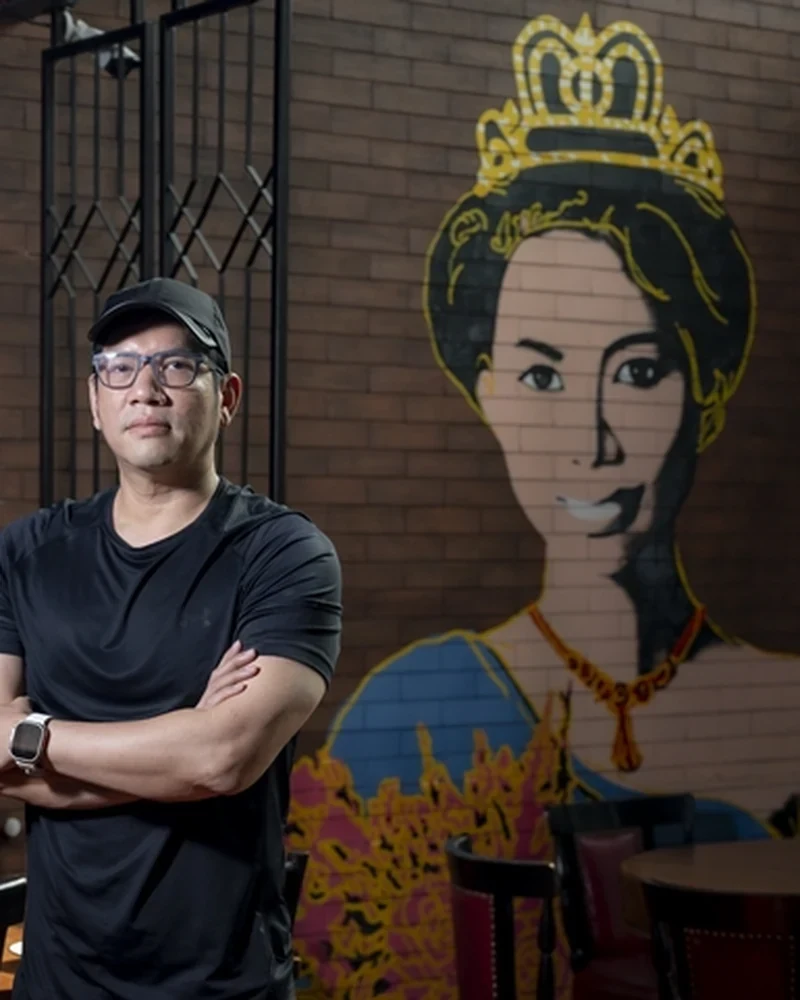
In Residence
Wongwich Sripinyoo
Chef
- 01CuisineEastern Thai Seafood from Trat
- 02CityBangkok, Thailand
From the people index
Recommended by
One trusted voice points here.
- Opinionated About Dining Casual in Asia Ranked #20 · 2026
- Opinionated About Dining Casual in Asia Ranked #16 · 2025
- Opinionated About Dining Casual in Asia Ranked #8 · 2024
- Opinionated About Dining Casual in Asia Ranked #8 · 2023
Eastern Thai Cooking on a Sukhumvit Side Street
Bangkok's Thai restaurant scene has long been organised around a rough hierarchy: the tasting-menu format at one end, the streetside vendor at the other, with a broad middle ground where regional cooking happens in proper sit-down rooms. Sri Trat occupies that middle tier with unusual consistency, drawing its identity entirely from Trat province, a coastal area on Thailand's eastern seaboard that borders Cambodia and sits far enough from the Bangkok food conversation to have been systematically underrepresented in the city's restaurants. On Sukhumvit Soi 33, a lane that runs between serviced apartments and neighbourhood coffee shops, that regional focus gives the restaurant a very specific competitive position: it is not competing with Nahm or Saneh Jaan at the formal end of the Thai dining spectrum, nor is it a casual lunch counter. It is something else: a regional-specialist room that has held OAD Casual Asia rankings across three consecutive years.
Rice as the Structural Principle of Eastern Thai Cooking
To understand what Sri Trat is doing, it helps to think through the role rice plays in the regional tradition it draws from. Across Thailand, rice is not a side component. It is the meal's architecture. In the central plains, jasmine rice, hom mali, frames dishes built around coconut-rich curries and clear, aromatic broths. In the north, sticky rice arrives in small woven baskets and is used as an edible utensil, pinched and pressed around vegetables, grilled meats, and intensely fermented dips. Trat province sits at a different register. The eastern seaboard's cooking has more in common with coastal Cambodian and Cham traditions than it does with the central Thai canon taught in most Bangkok kitchens. Herb usage is more aggressive, fermented shrimp pastes carry a deeper saline character, and the seafood-forward dishes are calibrated to be eaten with plain steamed jasmine rice in a way that uses the rice's neutrality as an active counterpoint rather than a passive filler.
That framework matters when reading a menu at Sri Trat. The rice question is not incidental to what arrives on the table; it is the organisational logic behind how the dishes are seasoned and portioned. Dishes that read as very salty, very sour, or very funky are not calibrated for solo eating, they are calibrated for dilution across a shared table, with rice doing the moderating work that the chef anticipates from the first plate forward. This is the cooking grammar of the eastern provinces, and it is one that Bangkok diners accustomed to tasting-menu formats or solo-plate dining occasionally find disorienting on a first visit.
The Room and the Approach
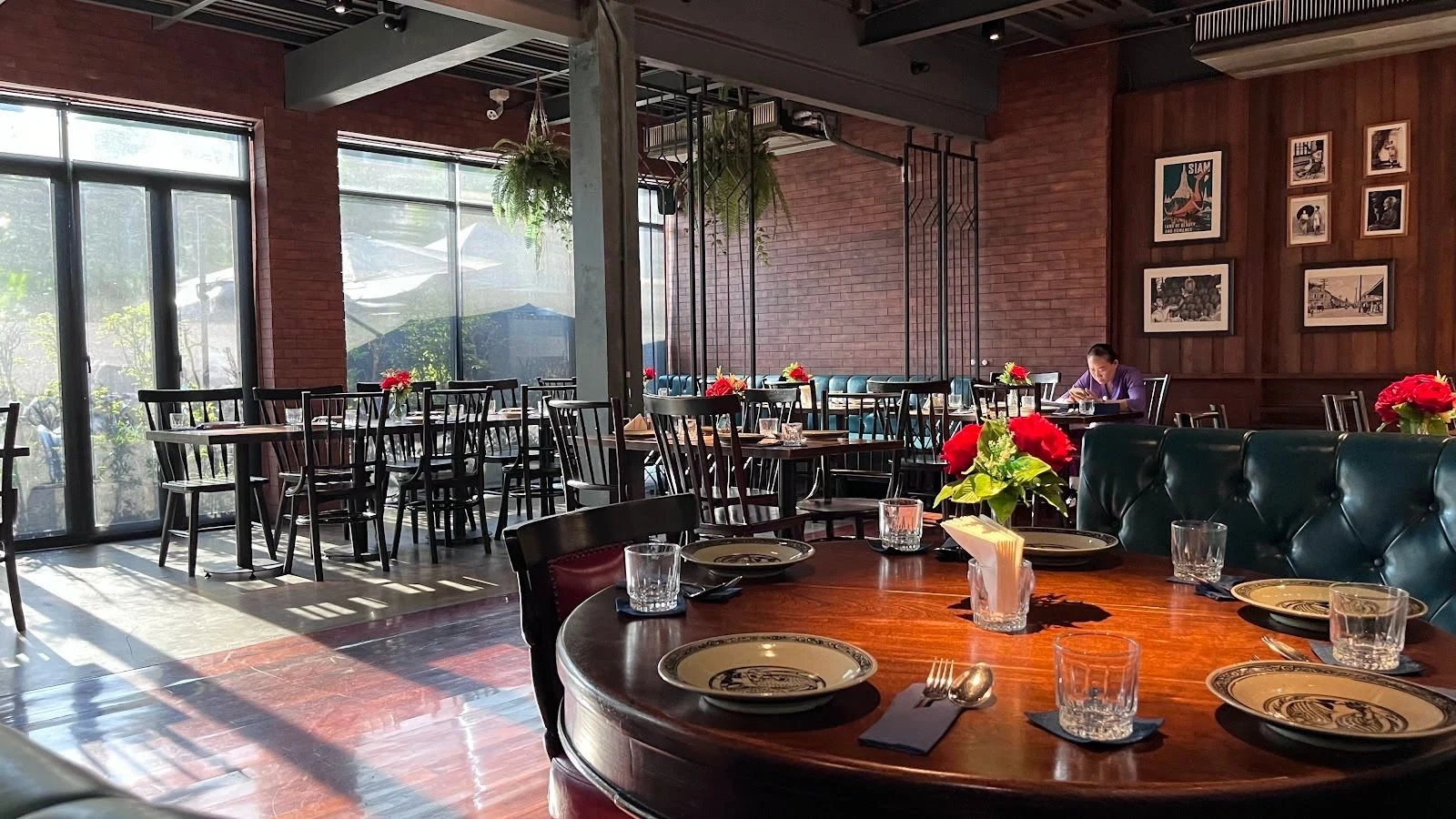
Sukhumvit Soi 33 is residential enough that arriving on foot from the BTS system involves a few minutes of walking through a neighbourhood that feels genuinely local rather than curated for visitors. The soi sits between Phrom Phong and Asok stations, making it reachable from either end of that stretch. The restaurant's presence on this particular lane rather than in a mall food hall or hotel podium is itself a signal about its positioning: it operates as a neighbourhood room that happens to draw an audience from much further afield.
Chef Wongwich Sripinyoo leads the kitchen, and the training context that matters here is not a formal fine-dining lineage but a deep grounding in Trat's domestic cooking traditions, the kind of regional specificity that sits closer to the heritage-preservation impulse found at places like Samrub Samrub Thai and Aksorn than to the modernist transformation approach of Bangkok's ฿฿฿฿ tier. That ฿฿฿฿ tier includes a different competitive set entirely: Chim by Siam Wisdom works in a more formal register, while venues like Sorn, Baan Tepa, and Sühring occupy a price bracket that makes Sri Trat's casual format a genuinely different proposition for the same culturally curious Bangkok diner.
What the OAD Rankings Indicate
Opinionated About Dining's Casual Asia list is judged by a community of experienced food travellers and critics who eat across the region regularly. A ranking of #8 in both 2023 and 2024 on that list places Sri Trat inside a small cohort of casual Asian restaurants judged by that peer group to be worth a significant detour. Sliding to #16 in 2025 is a relative movement within a consistently high-performing band rather than a departure from the list, and it does not alter the fundamental assessment: this is a restaurant that has sustained critical attention for three consecutive years across a very competitive field.
For context on what OAD Casual Asia rankings mean in practice: the list sits alongside the formal OAD fine-dining rankings and is not organised by price tier but by the quality of the experience relative to format. A Google review score of 4.5 across 2,436 reviews adds a second, independent data layer. That combination, sustained critic-facing ranking alongside a high-volume popular rating, is less common than either signal in isolation and suggests the restaurant is performing consistently across different types of visitors.
Planning Your Visit
Sri Trat is open seven days a week, 11am to 10:30pm. The lunch service is worth noting as a strategic option: regional Thai specialists of this calibre in Bangkok often operate on leaner midday covers, which can mean shorter waits and more attentive service during the first half of the day.
| Venue | Format | Price Tier | Regional Focus | OAD Recognition |
|---|---|---|---|---|
| Sri Trat | Casual, à la carte | Mid-range | Eastern Thailand (Trat) | Casual Asia #16 (2025) |
| Sorn | Tasting menu | ฿฿฿฿ | Southern Thailand | OAD Top 100 Asia |
| Baan Tepa | Tasting menu | ฿฿฿฿ | Thai contemporary | OAD recognition |
| Samrub Samrub Thai | Casual, à la carte | Mid-range | Central Thai heritage | OAD listed |
AKKEE in Pak Kret and Aeeen in Chiang Mai represent the northern register. PRU in Phuket and The Spa in Lamai Beach cover the south. Angeum in Phra Nakhon Si Ayutthaya and Agave in Ubon Ratchathani reach into the central plains and northeast. For Thai cooking carried outside the country, Boo Raan in Knokke and Kin Khao in San Francisco offer useful comparison points on how regional Thai traditions translate abroad.
Questions
Frequently asked
Who works at Sri Trat Restaurant and Bar?
Made By profiles Wongwich Sripinyoo (Chef) at Sri Trat Restaurant and Bar.
How expensive is Sri Trat Restaurant and Bar?
Sri Trat Restaurant and Bar is listed at a price level of $$.
Where is Sri Trat Restaurant and Bar and what does it serve?
Sri Trat Restaurant and Bar is in Khlong Toei Nuae, Bangkok, serving Eastern Thai Seafood from Trat.
The field
How it compares
| Place | Cuisine | Notes | Awards |
|---|---|---|---|
| Sri Trat Restaurant and Bar | Eastern Thai Seafood from Trat | Khlong Toei Nuae, $$ | · |
| Baan Tepa | Creative Thai Fine Dining | Bangkok | Michelin 2 Stars, World's 50 Best |
| Gaa | Modern Indian Fine Dining with Thai Influences | Bangkok | Michelin 2 Stars, World's 50 Best |
| Gaggan Anand | Progressive Indian | Bangkok | Michelin 1 Star, World's 50 Best |
| Potong | Progressive Thai-Chinese Fine Dining | Bangkok | Michelin 1 Star, World's 50 Best |
| Sorn | Fine Southern Thai | Bangkok | Michelin 3 Stars, World's 50 Best |
| Sühring | Modern German Fine Dining | Bangkok | Michelin 3 Stars, World's 50 Best |
In residence
Similar places
Creative Thai Fine Dining
Baan Tepa
Bangkok, Thailand
★★ · 50 Best
Modern Indian Fine Dining with Thai Influences
Gaa
Bangkok, Thailand
★★ · 50 Best
Progressive Indian
Gaggan Anand
Bangkok, Thailand
★ · 50 Best
Progressive Thai-Chinese Fine Dining
Potong
Bangkok, Thailand
★ · 50 Best
Fine Southern Thai
Sorn
Bangkok, Thailand
★★★ · 50 Best
Modern German Fine Dining
Sühring
Bangkok, Thailand
★★★ · 50 Best


