Chef in Residence
Takashi Ono
Chef

Sukiyabashi Jiro Roppongiten places the Jiro lineage inside Roppongi’s international dining circuit rather than Ginza’s old-money sushi theatre. The draw is a disciplined eight-seat counter led by Takashi Ono, with Michelin two-star recognition in 2024 and 2025, La Liste scores, OAD Japan placement, and repeated Tabelog sushi selections anchoring its credibility.
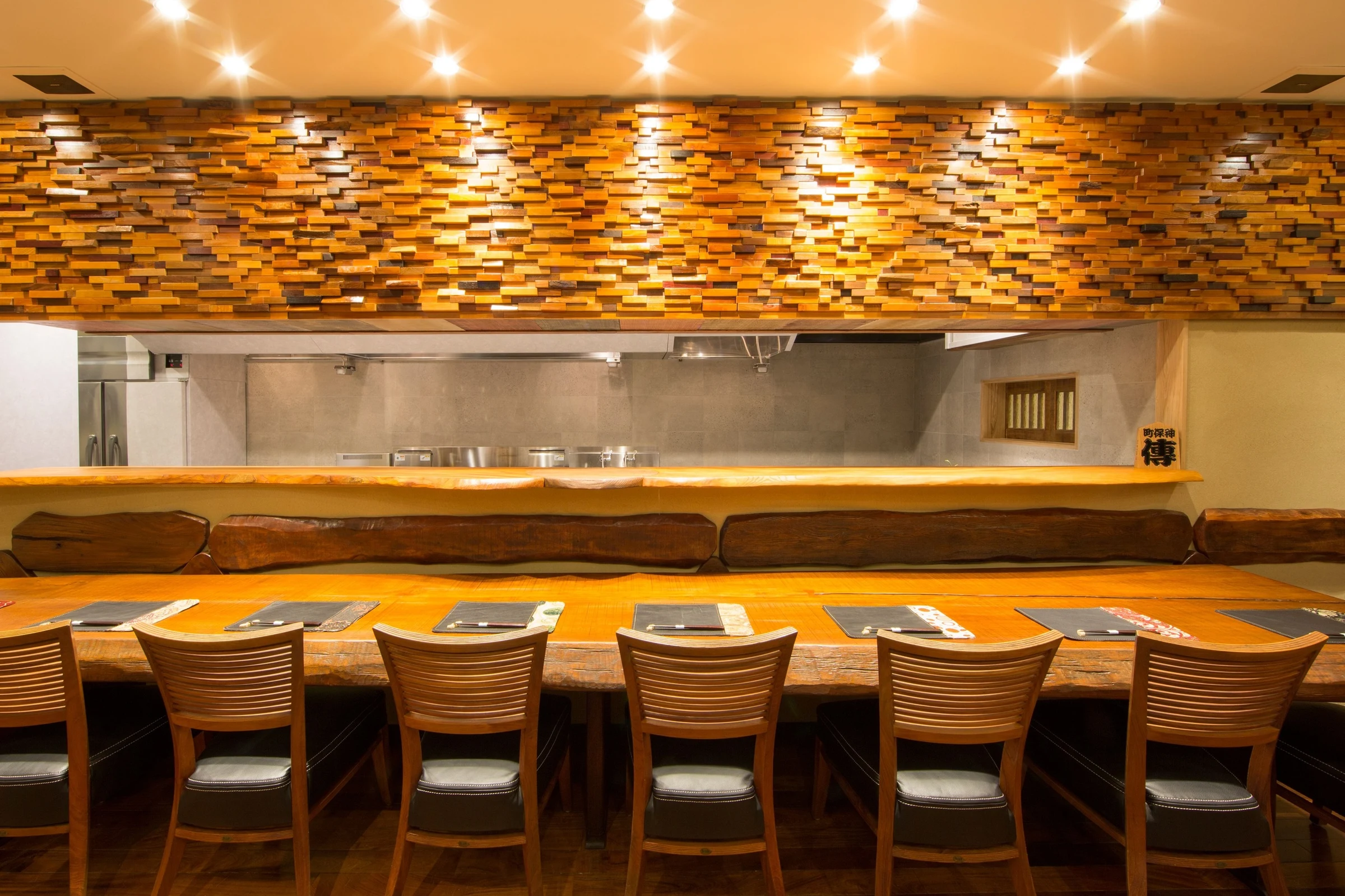
<p>The room is described here through concentration: little visual distraction, a compressed rhythm, and the disciplined pace of serious Tokyo dining. At this tier, atmosphere is not decoration but control. The diner is asked to pay attention to sequence, timing, restraint, and the silence that follows when a focused room works properly. Sukiyabashi Jiro Roppongiten belongs to the small Tokyo category where luxury is measured less by room theatre than by precision under pressure.</p><p>Tokyo’s dining calendar moves not only by broad season, but by condition, availability, and the judgment of what is worth presenting before the customer sees it. That is the useful frame for this restaurant. The clearest way to read the experience is through sourcing, sequence, and restraint rather than through decorative signals. In this tradition-led format, the market is not a warehouse; it is an information system built on relationships, memory, and repeated judgment.</p><h2>Tokyo dining measured by the calendar, not by spectacle</h2><p>Modern Tokyo dining often splits into two lanes. One chases rarity, drama, or luxury signals that travel well on social media. The other treats restraint as the point: temperature, sequence, handling, seasoning, and the decision to do less when the product can carry itself. Sukiyabashi Jiro Roppongiten sits in the second lane. Its recognition profile includes selection in the Opinionated About Dining restaurants source for 2026, placing it in a serious international conversation without needing to turn the room into a stage.</p><p>The seasonal argument matters because Tokyo dining at this level is not a fixed menu culture in the broad Western sense. A restaurant of this kind depends on daily judgment, while the deeper rhythm is monthly: different products have moments when texture, richness, or sweetness shifts. The customer is not buying a list of famous items, but the restaurant’s ability to decide what belongs in the sequence that day and what does not.</p><p>That makes comparisons inside Tokyo more useful than broad global rankings. Sushiya Shota and Fujisushi occupy one part of the city’s serious dining field, while Mitsui and Nishiazabu Sushi Shin sit closer to the premium conversation. Sushi Kimura is relevant as another expression of the genre, especially for diners interested in how product handling defines a restaurant’s identity. No style cancels another. Tokyo rewards specificity, and serious diners should choose according to format, appetite for tradition, and tolerance for formality.</p><h2>A compact room makes timing part of the meal</h2><p>A compact room changes the stakes. Small dining rooms expose every operational choice: cadence, how the team reads the room, the speed at which each course is presented, and the quiet choreography around service. In a larger restaurant, timing errors can disappear into the room. At a focused Tokyo restaurant, they become the experience. Scale is therefore not a minor logistical fact in this style of dining; it is part of the format’s grammar.</p><p>The restaurant’s role should be read less as biography than as continuity. The Jiro name carries a particular association with pared-back dining practice, and Sukiyabashi Jiro Roppongiten has been judged within that demanding frame rather than as a casual offshoot. The OAD recognition in 2026 places it in an international conversation, but the more revealing signal remains the way serious Tokyo diners parse differences between rooms. In this city, small distinctions in temperature, pacing, and product handling matter.</p><p>There is also a useful caution. The room’s discipline suits diners who want a focused meal, not a long, conversational dinner with broad menu choice. The format points toward solo diners and small parties rather than celebration groups. Drinks may be part of the picture, but the meal is led by the sequence, not pairing theatre. For travellers building a Tokyo food itinerary, it pairs more naturally with other tightly edited rooms than with restaurants designed around lingering.</p><h2>How it fits into a serious Tokyo itinerary</h2><p>Tokyo gives the restaurant a precise position in the city’s dining map. The relevant context is not nightlife or landmark tourism; it is the city’s obsession with specialization. A diner can spend a week in Tokyo moving across many distinct dining languages without repeating the same kind of meal. That breadth is why Sukiyabashi Jiro Roppongiten should be booked as a study in one discipline, not as a general Tokyo dinner.</p><p>For a wider view of the city, compare this focused decision with other Tokyo dining rooms in EP Club’s guide. The broader planning pages are useful for sequencing the trip: Our full Tokyo restaurants guide, Our full Tokyo hotels guide, Our full Tokyo bars guide, Our full Tokyo wineries guide, and Our full Tokyo experiences guide.</p><p>Travellers extending the Japan itinerary can use contrast rather than repetition. Regional and category shifts sharpen the experience: move from Tokyo rooms to other Japanese dining rooms with different rhythms, products, and service styles. For an international comparison of how this kind of focused format changes outside Japan, consider the structure generically: the same discipline can feel different once ingredients, market access, and local expectations change.</p><p>The editorial verdict is clear: this is a restaurant for diners who want Tokyo dining at a disciplined, tradition-led register. The value lies in seasonality, compression, and judgment, not in a long menu or theatrical service. For a first Tokyo splurge, some diners may prefer a more explanatory room. For those already fluent in the genre, the appeal is sharper: a severe format, a quiet room, and a sourcing argument that treats the market as the real foundation of the meal.</p>
Sukiyabashi Jiro Roppongiten is presented here as a serious Tokyo restaurant.
Specific pricing is not provided in the supplied venue data.
Specific opening hours are not provided in the supplied venue data.
Tokyo.
A specific chef name is not provided in the supplied venue data.
Japan, 〒106-0032 Tokyo, Minato City, Roppongi, 6 Chome−12−2 六本木けやき坂通り 3F
Roppongi

French
Sézanne
Tokyo, Japan
★★★ · 50 Best
Modern Chinese Fine Dining
Sazenka
Tokyo, Japan
★★★ · 50 Best

Modern Japanese Satoyama Fine Dining
Narisawa
Tokyo, Japan
★★ · 50 Best

Modern French-Japanese Plant-Based Fine Dining
Florilège
Tokyo, Japan
★★ · 50 Best

Modern Japanese Kaiseki
Den
Tokyo, Japan
★★ · 50 Best

Modern French Fine Dining
Quintessence
Tokyo, Japan
★★★