Don Pham, chef and owner of Sushi Ishikawa in New York City, shapes omakase course by course at the counter.
- Opinionated About Dining Top Restaurants in North America Recommended · 2026
Seventeen courses under Don Pham’s hand
The sequence changes with the fish in front of him, and Chef Don Pham makes that decision at Sushi Ishikawa in New York City as chef and owner. The title is not ornamental. It gives him the authority to let the omakase move by availability, seasonality, and instinct rather than by a locked script. Pham’s path to this counter ran through New York kitchens where tempo mattered: Executive Chef at Geisha from 2003, Master Sushi Chef at Geisha Table until 2013, then stations at Morimoto, Kitaro, and O Ya from 2015. What carries forward is not a borrowed house style, but a discipline around sequence, restraint, and the pressure of serving one piece after another while the guest is still watching the hands. At Sushi Ishikawa, that history settles into chef-owner authorship. The meal can be tailored to the seat, not merely repeated across it. Fish, rice, garnish, heat, and pause become decisions made close to the counter, with the structure of omakase holding the work in place.
A frame that leaves room for whim
The signature work is MATSU 17 - COURSES Omakase, a 17-course format that gives the evening a clear spine while leaving Pham room to alter the run. The restaurant is known for omakase menus that typically move between 12 and 17 courses, but the point is not arithmetic. The frame lets him judge what belongs next: caviar or truffle when richness is needed, foie gras or A5 wagyu with wagyu fat powder when the line can bear weight, uni when the sea should come forward. The register can shift sharply. Black abalone has appeared with mushroom soup; octopus with green-tea salt; hay-smoked skipjack tuna with smoke carrying across the bite. King salmon has taken a Southeast Asian turn through fried shallots, Thai basil, and chili vinaigrette. Shrimp may meet torched ramp butter and bottarga. Toro can arrive with caviar and gold leaf. Some fish meet the blowtorch just long enough for heat to change the surface without taking the center away from itself.
The counter keeps the room close
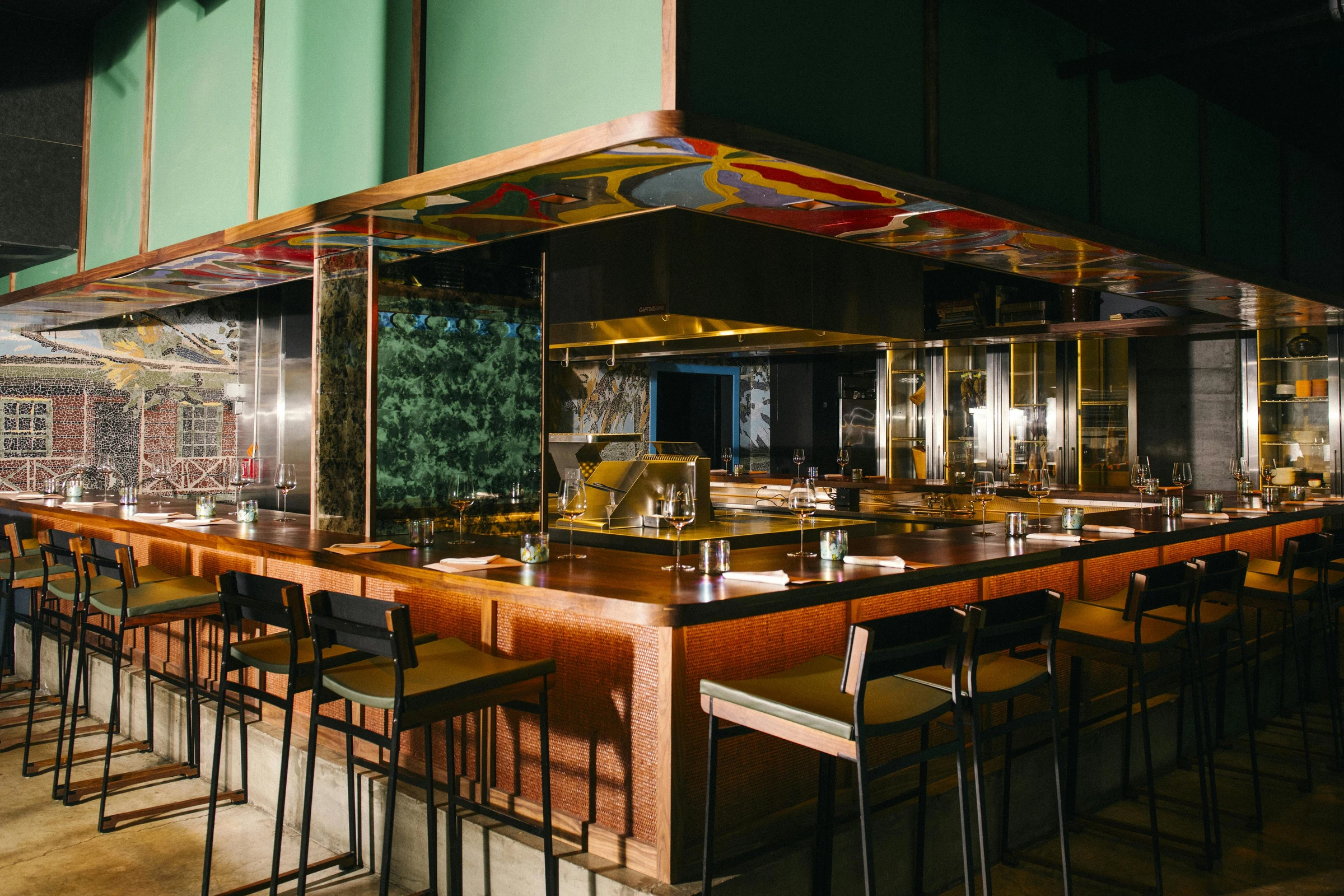
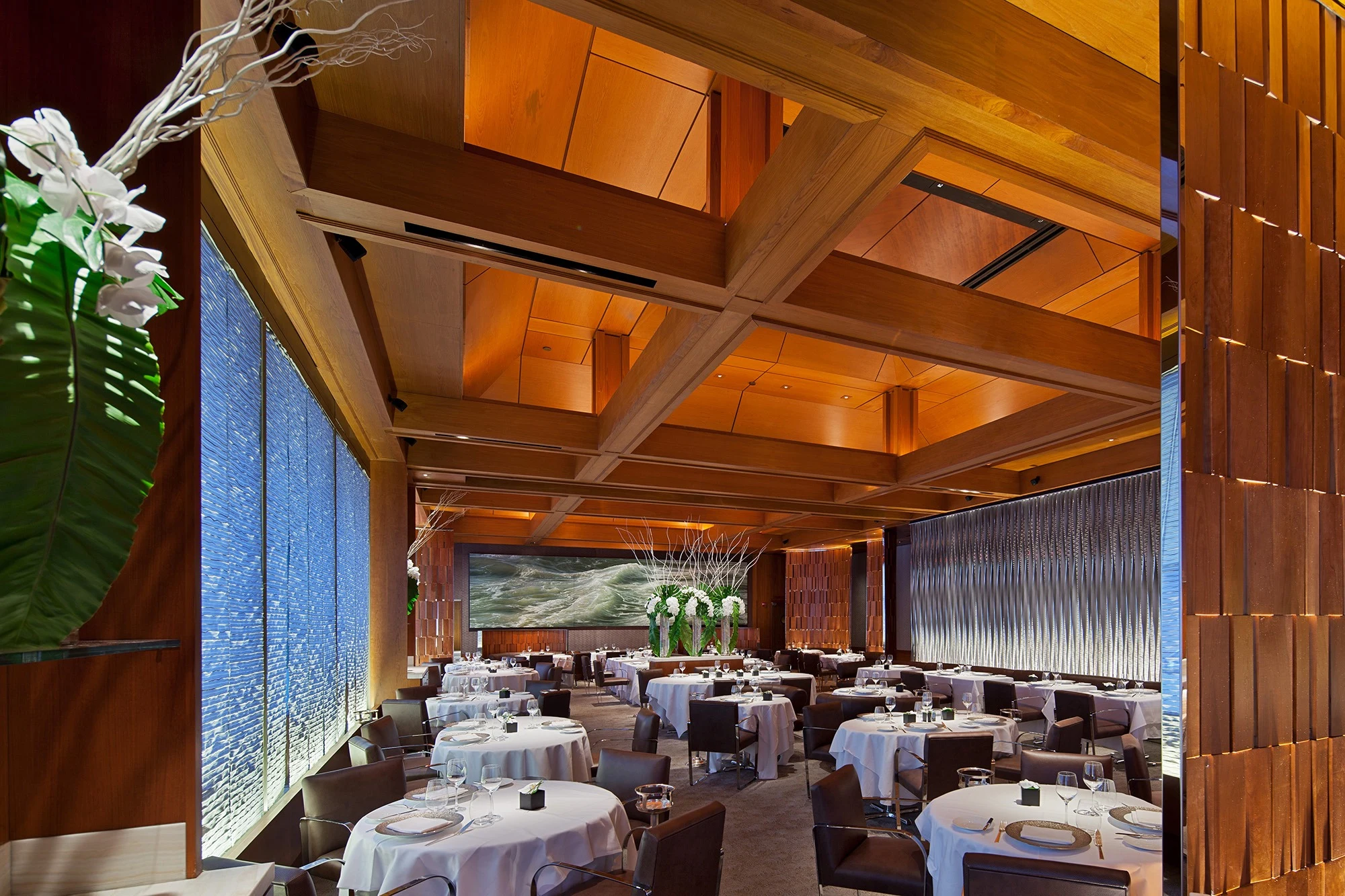
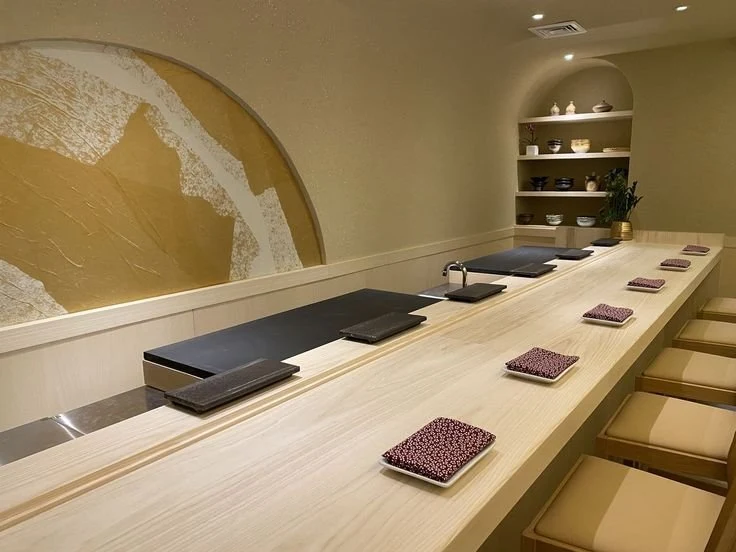
The Upper East Side room is brick-walled and tidy, low lit at the tables, brighter at the sushi counter where the work reads most clearly. The counter seats are close enough for the handoff to matter. Chefs often pass pieces directly to guests and speak through sourcing and flavor, not as performance, but as part of the exchange between bench and seat. There is polish in the room, though not the kind that asks to be admired before the fish arrives. The small notes stay small: chopstick holders shaped like lounging pandas, a little humor beside the lacquer and stone. On the Upper West Side, the counter carries the same intimacy in a more compressed register. Across both Manhattan addresses, the room’s best function is concentration. It keeps attention on the pass, the rice, the knife, the brief flare of the torch.
The piece changes because the seat changes
Pham’s authorship matters most in the moment he declines sameness. Sushi Ishikawa’s omakase is built to respond to product and season, but also to the person in front of him, which gives the counter its particular pulse. Nothing here needs a larger claim than that. The close work is in the adjustment, course by course, until MATSU 17 - COURSES Omakase becomes less a menu than a run of decisions made by Don Pham.
Questions
Frequently asked
Who is behind Sushi Ishikawa?
Don Pham is the chef and owner of Sushi Ishikawa in New York City. His background includes work as Executive Chef at Geisha from 2003, Master Sushi Chef at Geisha Table until 2013, and later stations at Morimoto, Kitaro, and O Ya from 2015.
What is Sushi Ishikawa known for?
The restaurant is known for omakase menus that typically move between 12 and 17 courses. Its signature offering is MATSU 17 - COURSES Omakase, a 17-course format shaped by seasonality, availability, and Pham’s decisions at the counter.
How does the omakase change from one visit to the next?
The sequence changes with the fish in front of Don Pham, so the meal is not locked to a fixed script. Courses can shift to include ingredients such as caviar, truffle, foie gras, A5 wagyu with wagyu fat powder, uni, black abalone with mushroom soup, octopus with green-tea salt, hay-smoked skipjack tuna, or king salmon with fried shallots, Thai basil, and chili vinaigrette.
What is the dining room like?
The Upper East Side room is brick-walled and tidy, with low lighting at the tables and a brighter sushi counter. The counter seats are close to the work, and chefs often pass pieces directly to guests.
The field
How it compares
| Place | Cuisine | Awards | Notes |
|---|---|---|---|
| Sushi Ishikawa | Sushi | · | · |
| Atomix | Modern Korean Tasting Menu | Michelin 2 Stars, World's 50 Best | New York City |
| Daniel | Modern French Fine Dining | Michelin 1 Star, World's 50 Best | New York City |
| Eleven Madison Park | Contemporary Plant-Based Fine Dining | Michelin 3 Stars, World's 50 Best | New York City |
| Jungsik New York | Modern Korean Fine Dining | Michelin 3 Stars, World's 50 Best | New York City |
| Kabawa | Modern Caribbean Prix Fixe | World's 50 Best | New York City |
| Le Bernardin | French Seafood Fine Dining | Michelin 3 Stars, World's 50 Best | New York City |
In residence
Similar places
Modern Korean Tasting Menu
Atomix
New York City, United States
★★ · 50 Best
Modern French Fine Dining
Daniel
New York City, United States
★ · 50 Best
Contemporary Plant-Based Fine Dining
Eleven Madison Park
New York City, United States
★★★ · 50 Best
Modern Korean Fine Dining
Jungsik New York
New York City, United States
★★★ · 50 Best
Modern Caribbean Prix Fixe
Kabawa
New York City, United States
50 Best
French Seafood Fine Dining
Le Bernardin
New York City, United States
★★★ · 50 Best