Sushi Jubei
- 01CuisineTraditional Fukui Omakase Sushi
- 02CityFukui, Japan
Vinegar matched to each neta
- Opinionated About Dining Top Restaurants in Japan Highly Recommended · 2026
- Opinionated About Dining Top Restaurants in Japan Ranked #376 · 2025
Vinegar chosen at the counter
The vinegar changes with the neta as Tetsuya Tsukada, chef at Sushi Jubei in Bunkyo, Fukui, sets each piece into the omakase rhythm. Tetsuya Tsukada is the second generation at the family sushi restaurant, which has been part of Fukui City for over 40 years. He took over in 2013 after six years of training at Sushi Zen in Sapporo, then work at Sushi Zen in Fukui, bringing that northern apprenticeship back to his father’s business without loosening the local grip of the place. Taisho Tsukada also works here as chef, a role described by concentration rather than range: one kitchen, one city, one discipline. Between them, the restaurant’s story stays close to the counter. The lineage is not theatrical. It is a family handover, a Sapporo training base, a return to Fukui, and the daily pressure of sushi made in front of the guest.
Fukui fish, Hokkaido discipline
The program is omakase, built from daily purchases and adjusted to the intake. A meal commonly moves through 5-6 otsumami, 12-13 nigiri, and zukuri, with winter bringing zuwai gani into the structure. Tsukada’s hand shows in the small corrections: slicing, draping, shari proportioning, and the final touch of vinegar chosen for the fish rather than for the menu as a whole. Local saba carries the Fukui line clearly. Nakazumi can stand where kohada might be expected. Raw botan shrimp is lightly ice-shocked for firmness. Wara-smoked meji maguro brings smoke before the rice takes over, while buri shabu shabu may arrive with the bloodline cut away. Madarako chawanmushi, Echizen kani, boiled tako, ankimo, uni, and local baigai all appear in accounts of the counter, not as fixed promises but as part of the house’s seasonal vocabulary. The sake program has its own local note in Jyubei, the restaurant’s original sake, set beside a wider sake and wine selection.
A Nara cypress counter and quiet service
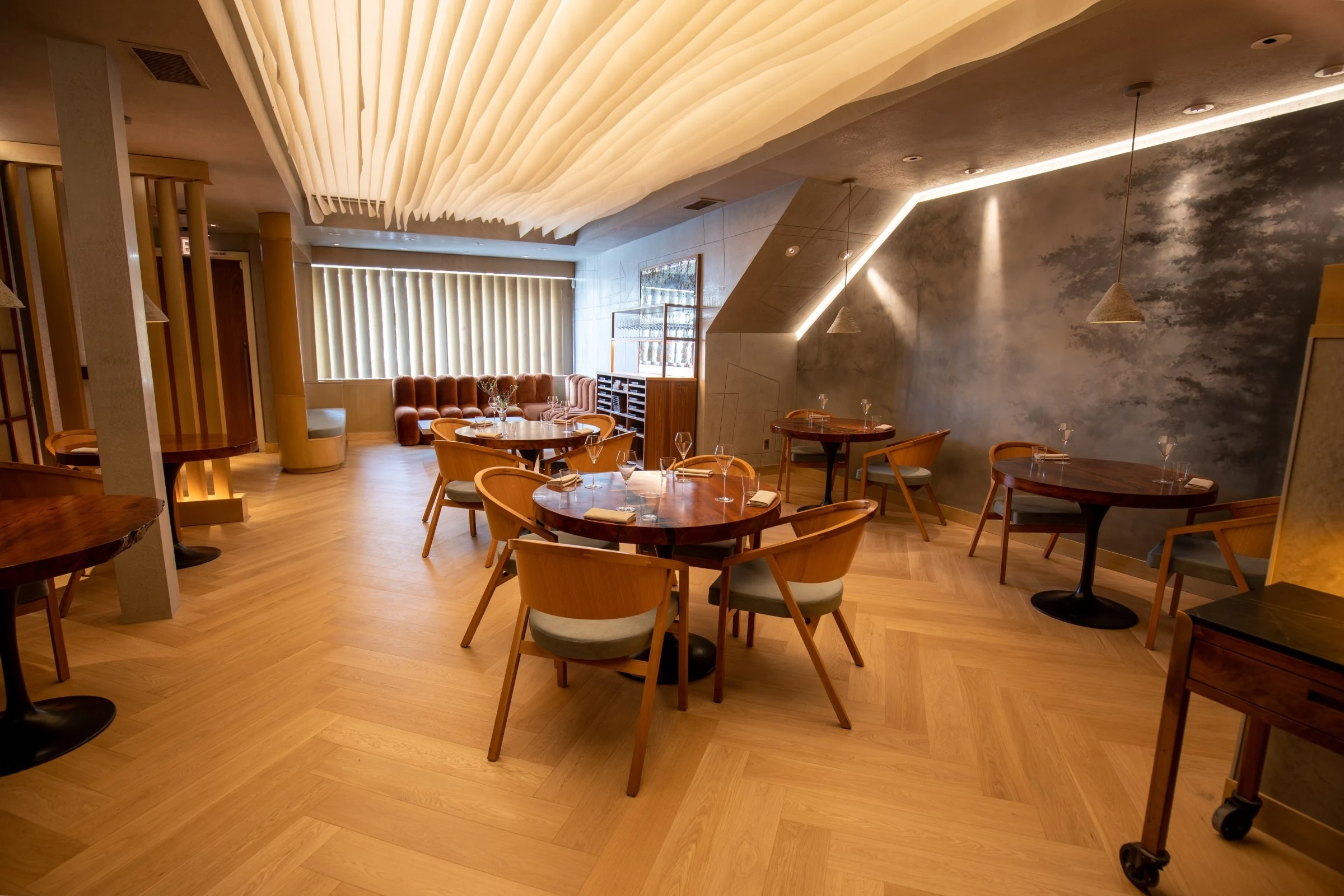
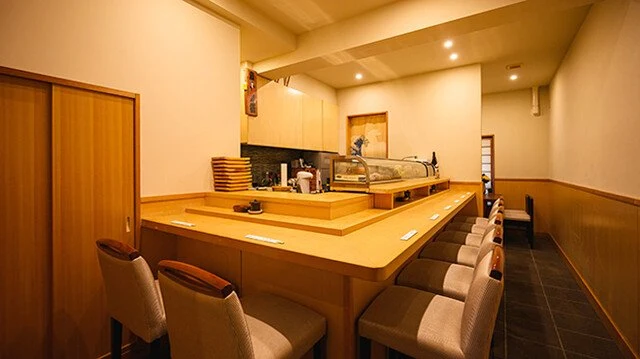
The room keeps the work close. Guests sit at a Nara cypress counter in a simple space, with seasonal decorations doing less than the fish, the rice, and the chef’s hands. The format is counter dining, so the pass is not hidden behind a wall; Tsukada cuts, seasons, forms, and serves within the same field of attention. That intimacy suits the cooking. Sushi Jubei does not need a loud room to hold interest, because the progression gives the room its tempo. One piece resets the palate, another deepens it.
Continuity as the house method
Sushi Jubei carries 2 awards in the current public record, with 1 current-year award and 1 previous-year award attached to the restaurant. At the counter, the family business, the Sapporo training, and the Fukui catch meet in repeated service. If the evening leaves a signature in memory, it is likely to be something specific: local saba, raw botan, or Echizen kani placed by Tetsuya Tsukada at the Nara cypress counter.
Questions
Frequently asked
What kind of restaurant is Sushi Jubei?
Sushi Jubei is a traditional Fukui omakase sushi restaurant in Bunkyo, Fukui. Service is at a Nara cypress counter, with the chef preparing and serving the meal in front of guests.
Who cooks at Sushi Jubei?
Tetsuya Tsukada is the chef and second generation of the family restaurant. Taisho Tsukada also works there as chef.
What is the omakase like?
The omakase is built from daily purchases and adjusted to the intake. A meal commonly moves through 5 to 6 otsumami, 12 to 13 nigiri, and zukuri, with winter bringing zuwai gani into the structure.
What dishes are associated with the restaurant?
Local saba, nakazumi, raw botan shrimp, wara-smoked meji maguro, and Echizen kani are among the dishes named in accounts of the counter. Other seasonal items mentioned include madarako chawanmushi, boiled tako, ankimo, uni, and local baigai.
Do you need to book ahead?
Reservations are essential.
The field
How it compares
| Place | Cuisine | Notes | Awards |
|---|---|---|---|
| Sushi Jubei | Traditional Fukui Omakase Sushi | Bunkyo, $$$$ | · |
| Atelier Crenn | Contemporary French Fine Dining | San Francisco | Michelin 3 Stars, World's 50 Best |
| Coque | Modern Spanish Fine Dining | Madrid | Michelin 2 Stars |
| Kaikatei | Modern Kappo Kaiseki | Fukui | · |
| Kato | Modern Taiwanese Fine Dining | Los Angeles | Michelin 2 Stars, World's 50 Best |
| Kumiko | Japanese Dining Bar | Chicago | · |
| Moor Hall | Modern British Fine Dining | Aughton | Michelin 3 Stars |
Similar places
Contemporary French Fine Dining
Atelier Crenn
San Francisco, United States
★★★ · 50 Best
Modern Spanish Fine Dining
Coque
Madrid, Spain
★★
Modern Kappo Kaiseki
Kaikatei
Fukui, Japan
Modern Taiwanese Fine Dining
Kato
Los Angeles, United States
★★ · 50 Best
Japanese Dining Bar
Kumiko
Chicago, United States
Modern British Fine Dining
Moor Hall
Aughton, United Kingdom
★★★