Sushi Masashi
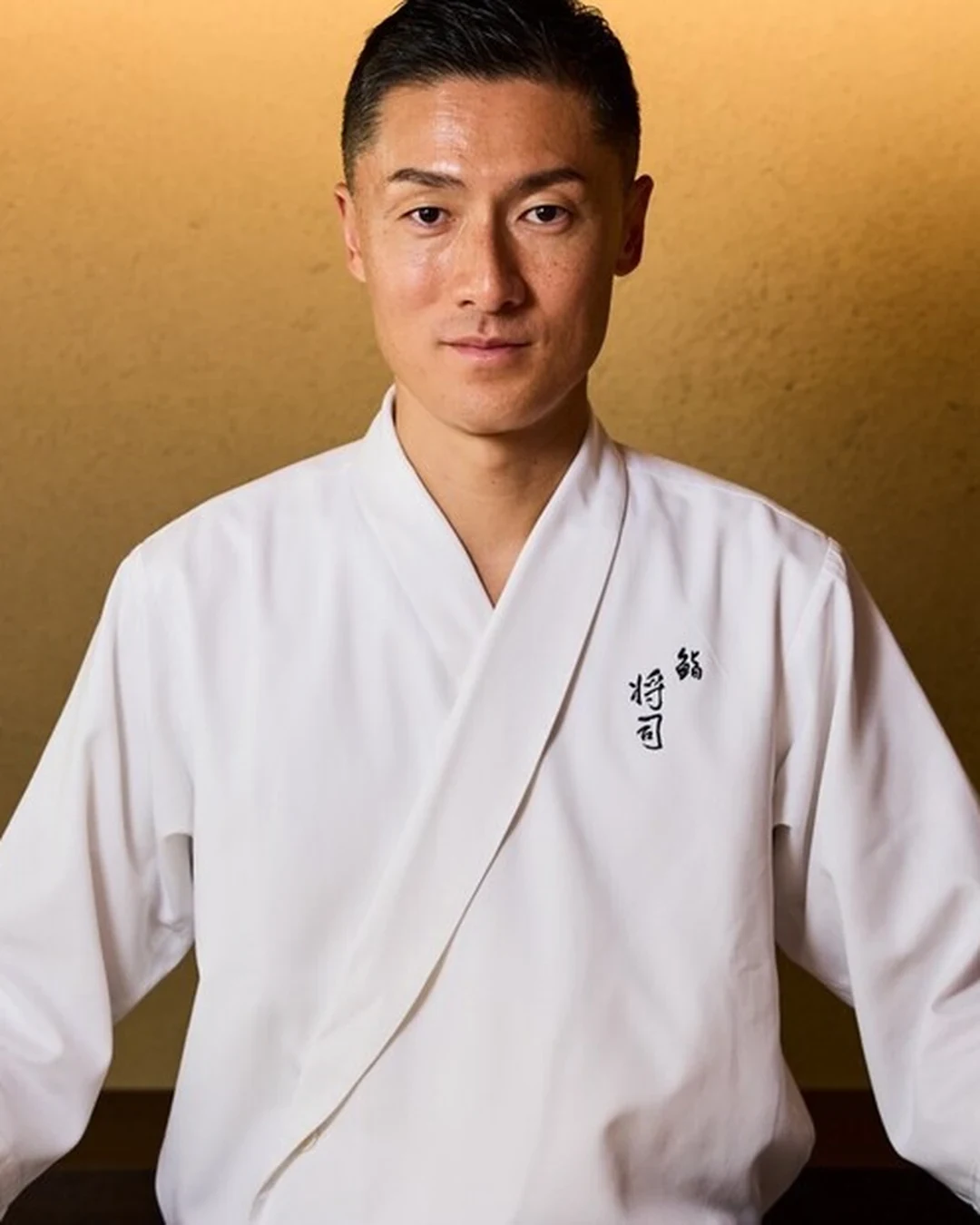
In Residence
Masashi Yamaguchi
Chef
- 01CuisineEdomae Sushi Omakase
- 02CityTokyo, Japan
- 03RecognitionOne Michelin Star
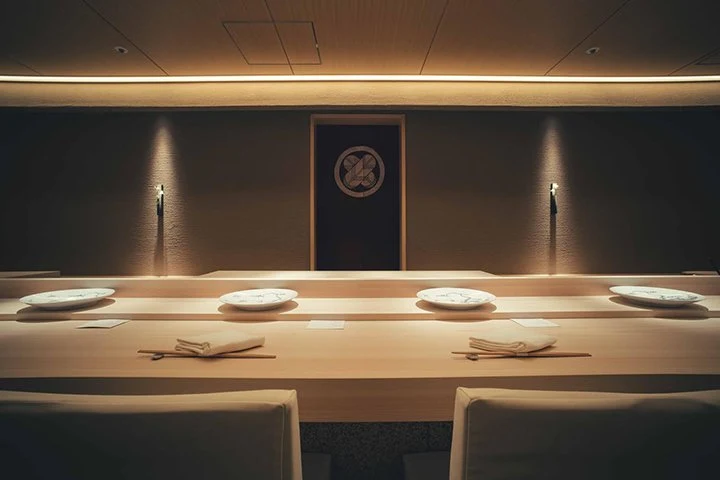
- 1 Michelin Star · Michelin Guide
- Opinionated About Dining Top Restaurants in Japan Recommended · 2026
- Michelin 1 Star · 2026
- Opinionated About Dining Top Restaurants in Japan Ranked #503 · 2025
- Michelin 1 Star · 2024
Where Aoyama Omakase Meets a Tuna-Led Progression
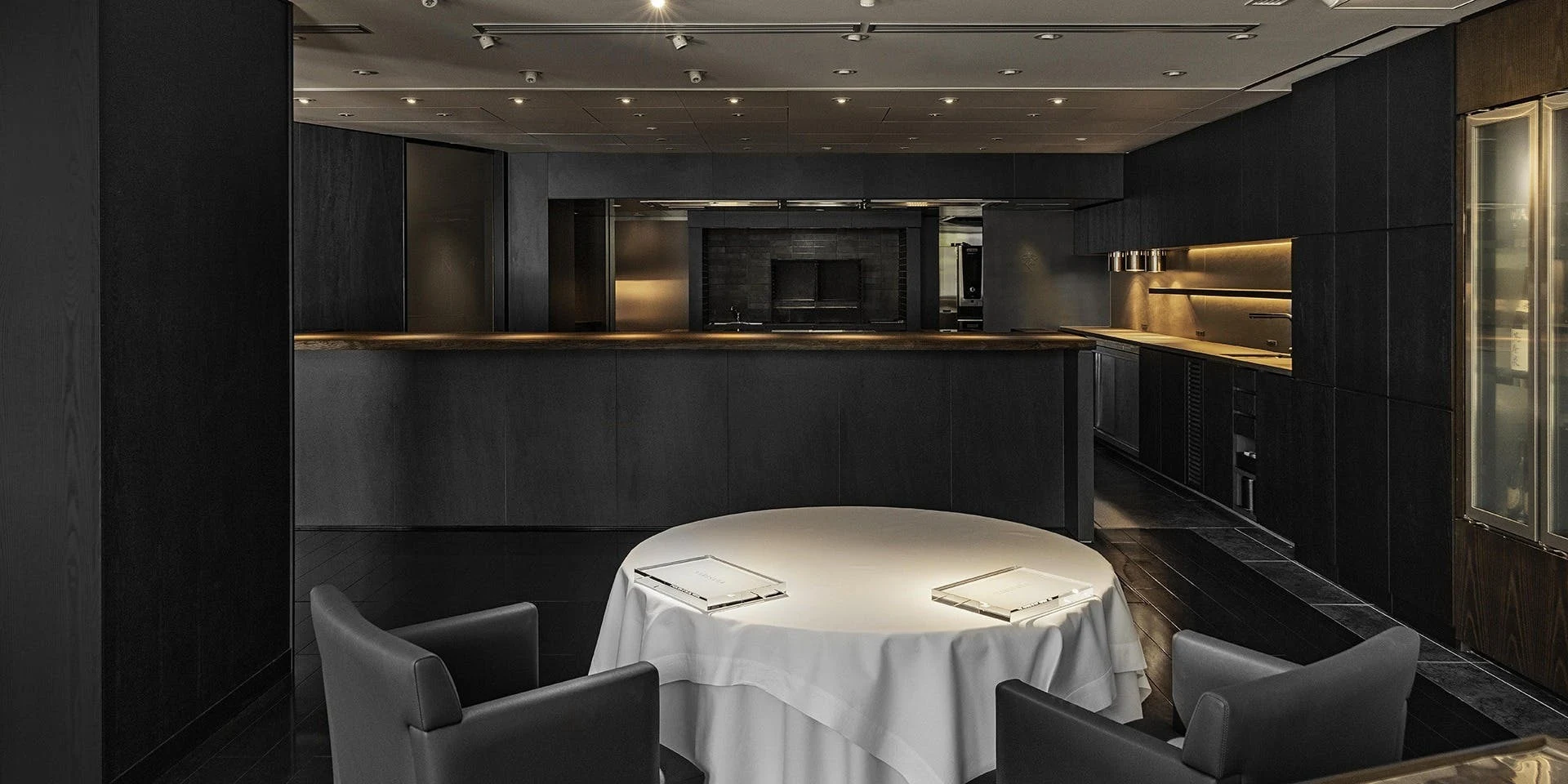
Tokyo's ¥¥¥¥ omakase tier has settled into a recognisable shape over the past decade: a counter format, a single nightly seating, and a progression that tests a chef's ability to hold a room's attention across two to three hours. Within that field, the differentiation increasingly comes from how a kitchen structures its arc, whether it leads with orthodoxy and builds toward flourish, or inverts the sequence and opens with invention before landing on the purist fundamentals. Sushi Masashi, on the seventh floor of a Kita-Aoyama building in Minato City, takes the latter path, and it is a more considered choice than it might first appear.
The address places it in a quiet tier of Aoyama, residential in character, removed from the louder dining corridors around Omotesando's ground level. That physical remove is consistent with a particular kind of Tokyo counter: one that draws its audience by reputation rather than foot traffic, where the Google review average of 4.7 across 217 ratings reflects a self-selecting clientele who have already done their research before arriving. Michelin awarded a star to the kitchen in 2024.
The Sunday letter
Find new places through the people who run them.
Our Sunday email brings you the chefs, winemakers and hoteliers behind our newest stories. See a sample before you subscribe.
See a sample of the Sunday emailOne email a week. Unsubscribe from any issue.
The Arc of the Meal: From Invention to Orthodoxy
The structure of the omakase at Sushi Masashi follows a logic that distinguishes it from many counters in its price tier. Where houses like Sushi Kanesaka and Harutaka build their identity almost entirely around the purity of edomae technique, with appetisers functioning as quiet warm-up rather than statement, Masashi Yamaguchi uses the tsumami course as a space for genuine creative expression before pivoting to precision.
Tuna sukiyaki that appears among the appetisers illustrates the approach directly. Applying a sukiyaki preparation to tuna, a braising tradition associated with Wagyu beef, is a lateral move, one that asks the ingredient to perform in an unfamiliar register and tests whether the result holds together as a dish rather than merely as a concept. That kind of cross-referencing is not unusual in Tokyo's contemporary kaiseki scene, restaurants like Hiroo Ishizaka work similar territory, but it is less common at counters where nigiri remains the declared centrepiece. The fact that the appetiser course operates at this level of ambition makes the subsequent shift to orthodoxy feel deliberate rather than conservative.
When the nigiri sequence begins, the register changes. Chef Yamaguchi's commitment to orthodox technique at the counter is reported as firm, and the menu's rhythm has been described as carefully measured, language that signals an attention to pacing that separates serious omakase from kitchens that simply move through courses at speed. The rice, vinegared and calibrated to complement fat content rather than treated as a neutral vehicle, is the kind of detail that distinguishes a counter that has thought carefully about the whole dish from one focused solely on fish quality.
The Tuna Trilogy and What It Says About the Menu
The spotlight course at Sushi Masashi is built around tuna presented in three cuts: lean (akami), medium fatty (chutoro), and fatty (otoro). This format is not rare in Tokyo's top-tier sushi, it appears in various iterations across the ¥¥¥¥ bracket, and counters such as Sukiyabashi Jiro Roppongiten have long used tuna sequencing as a structural backbone. What matters is not the format itself but what a kitchen does within it: whether the progression reveals meaningful contrast between cuts, whether the rice composition shifts to match the changing fat levels, and whether the pacing gives each piece enough space to register before the next arrives.
The fact that Yamaguchi's menu centres tuna in this way also positions Sushi Masashi within a lineage. Tokyo omakase at this level tends to make a statement about its relationship to the Tsukiji and Toyosu tuna market, the sourcing of bluefin, the preference for particular fishing grounds and seasons, the decision about when fatty cuts have reached their peak. Visiting in the winter months, when Pacific bluefin reaches its highest fat content, aligns the tuna sequence with the fish at its most expressive. This is a meaningful seasonal consideration for any diner planning a visit.
Aoyama in Context
Kita-Aoyama's positioning within Tokyo's dining geography is worth understanding before booking. The neighbourhood sits between the commercial energy of Shibuya and the quieter residential pockets of Minami-Aoyama, and it has attracted a cluster of serious, low-profile dining rooms that operate at ¥¥¥¥ pricing without the neighbourhood visibility of counters in Ginza or Nihonbashi. This is consistent with a broader pattern in Tokyo where the most technically serious restaurants increasingly choose addresses outside the traditional prestige corridors, allowing the food to carry the reputation rather than the postcode.
For visitors building a Japan itinerary around serious dining, Tokyo's sushi tier connects naturally to the broader Japanese restaurant scene. HAJIME in Osaka and Gion Sasaki in Kyoto represent the kaiseki tradition at comparable price levels, while akordu in Nara and Goh in Fukuoka illustrate how serious dining has distributed across Japan's second-tier cities. Those considering the broader sushi format internationally can reference Sushi Shikon in Hong Kong and Shoukouwa in Singapore, both operate Japanese-trained counters outside Japan and provide useful calibration for how the format travels. Closer to Tokyo, 1000 in Yokohama and 6 in Okinawa round out the regional picture for readers planning extended itineraries.
The Edomae Sushi Hanabusa entry in the restaurant guide provides a useful comparison point for those contrasting traditional edomae positioning against Masashi Yamaguchi's more hybrid structure.
Planning Your Visit
Sushi Masashi occupies the seventh floor at 2 Chome-9-9 Kita-Aoyama, Minato City, Tokyo 107-0061 (外苑いちょうの杜 7F). Price tier: ¥¥¥¥, consistent with the Michelin-starred omakase bracket in Tokyo.
Questions
Frequently asked
What recognition does Sushi Masashi hold?
Sushi Masashi holds 1 Michelin star.
Who works at Sushi Masashi?
Made By profiles Masashi Yamaguchi (Chef) at Sushi Masashi.
How expensive is Sushi Masashi?
Sushi Masashi is listed at a price level of $$$$.
Where is Sushi Masashi and what does it serve?
Sushi Masashi is in Minato, Tokyo, serving Edomae Sushi Omakase.
The field
How it compares
| Place | Awards | Cuisine | Notes |
|---|---|---|---|
| Sushi Masashi | Michelin 1 Star | Edomae Sushi Omakase | Minato, $$$$ |
| Den | Michelin 2 Stars, World's 50 Best | Modern Japanese Kaiseki | Tokyo |
| Florilège | Michelin 2 Stars, World's 50 Best | Modern French-Japanese Plant-Based Fine Dining | Tokyo |
| Narisawa | Michelin 2 Stars, World's 50 Best | Modern Japanese Satoyama Fine Dining | Tokyo |
| Quintessence | Michelin 3 Stars | Modern French Fine Dining | Tokyo |
| Sazenka | Michelin 3 Stars, World's 50 Best | Modern Chinese Fine Dining | Tokyo |
| Sézanne | Michelin 3 Stars, World's 50 Best | Modern French Fine Dining | Tokyo |
In residence
Similar places
Modern Japanese Kaiseki
Den
Tokyo, Japan
★★ · 50 Best
Modern French-Japanese Plant-Based Fine Dining
Florilège
Tokyo, Japan
★★ · 50 Best
Modern Japanese Satoyama Fine Dining
Narisawa
Tokyo, Japan
★★ · 50 Best
Modern French Fine Dining
Quintessence
Tokyo, Japan
★★★
Modern Chinese Fine Dining
Sazenka
Tokyo, Japan
★★★ · 50 Best
Modern French Fine Dining
Sézanne
Tokyo, Japan
★★★ · 50 Best
The Sunday letter
Get the next Made By story in your inbox.
We send one email every Sunday morning with the places and people we covered that week.
See a sample of the Sunday emailOne email a week. Unsubscribe from any issue.