Daikanyama Sushi Takeuchi
In Residence
Jun Takeuchi
Chef
- 01CuisineTraditional Japanese Omakase
- 02CityTokyo, Japan
Eight seats, Toyosu fish, Ginza discipline
- Opinionated About Dining Top Restaurants in Japan Recommended · 2026
- Opinionated About Dining Top Restaurants in Japan Ranked #569 · 2025
- Opinionated About Dining Top Restaurants in Japan Recommended · 2023
Ginza discipline at a Daikanyama counter
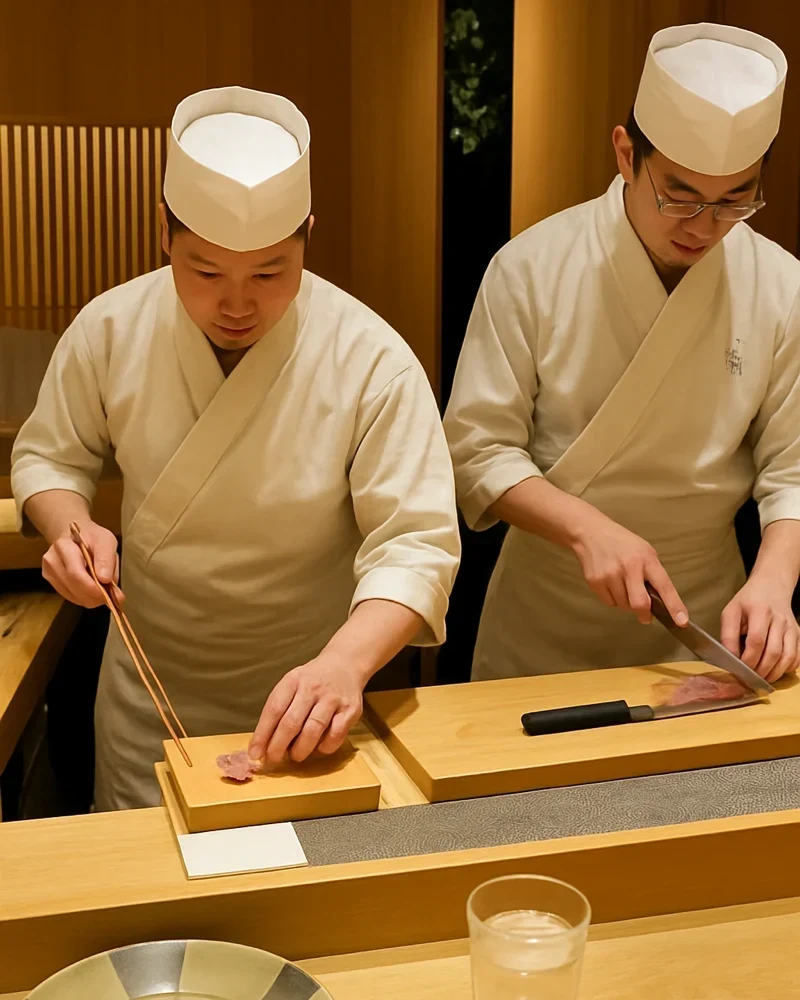
The fish arrives by decision before it reaches the knife. Jun Takeuchi, chef at Daikanyama Sushi Takeuchi in Daikanyama, Tokyo, begins with the day’s selection from Toyosu Market, then lets the counter set the pace. His route into this room was narrow by choice: university, culinary school, formal sushi training at Kanesaka in Ginza, then a decade of work in Ginza before ownership in Daikanyama. The sequence matters because sushi gives little cover to improvisation without a base. Rice temperature, cut, pressure, vinegar, the angle of the hand, all of it has to arrive together in front of the guest. Takeuchi’s station is the owner chef’s station, not a distant title. At Daikanyama Sushi Takeuchi, opened on July 12, 2017, the work stays close to the counter and to the market, with omakase as the central form and seafood as the discipline that organizes the day.
A course built from market work
The restaurant’s method is course-based, with lunch and dinner arranged around sushi rather than à la carte choice. One lunch sequence has included a small dish, 10 pieces of sushi, a roll, soup, and dessert; the longer pattern adds appetizers before the nigiri. The details stay within a classical register: herring spawn on kelp, umi budou with wakame and ponzu, longtooth grouper over red vinegar rice, yellowtail, chu-toro from Oma, horse mackerel with chives, lightly grilled blackthroat seaperch, whelk, scallop, sea urchin, marinated tuna, conger eel, and kanpyo in the roll. Gari-maki, a roll centered on pickled ginger, sits in the house vocabulary as a small signature. The technique is not announced as theatre. Takeuchi cuts, seasons, presses, and serves in a room where the guest can read the difference between a crisp bite of grouper and the softer fat of conger eel.
Eight seats and a white-wood counter
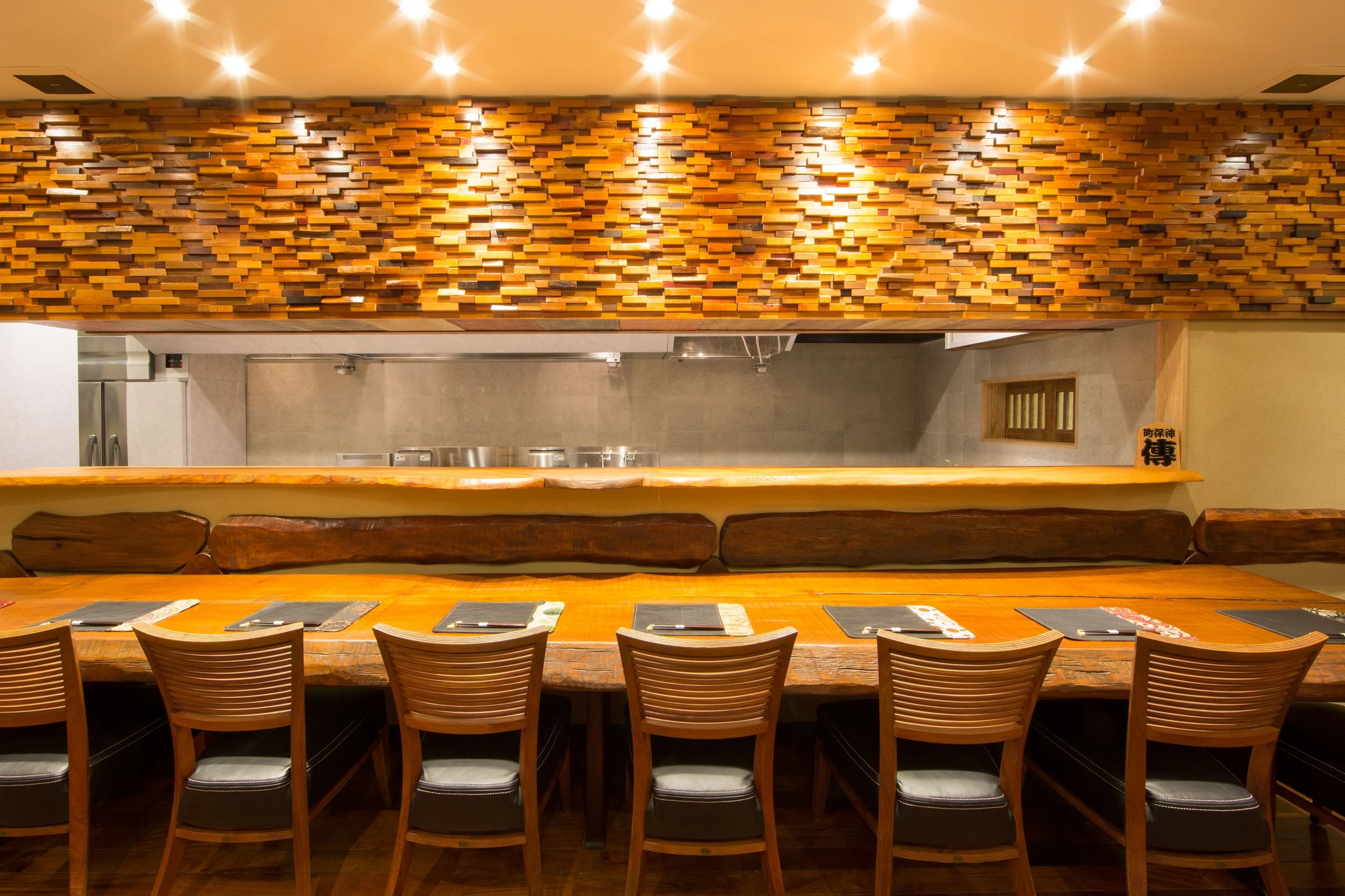
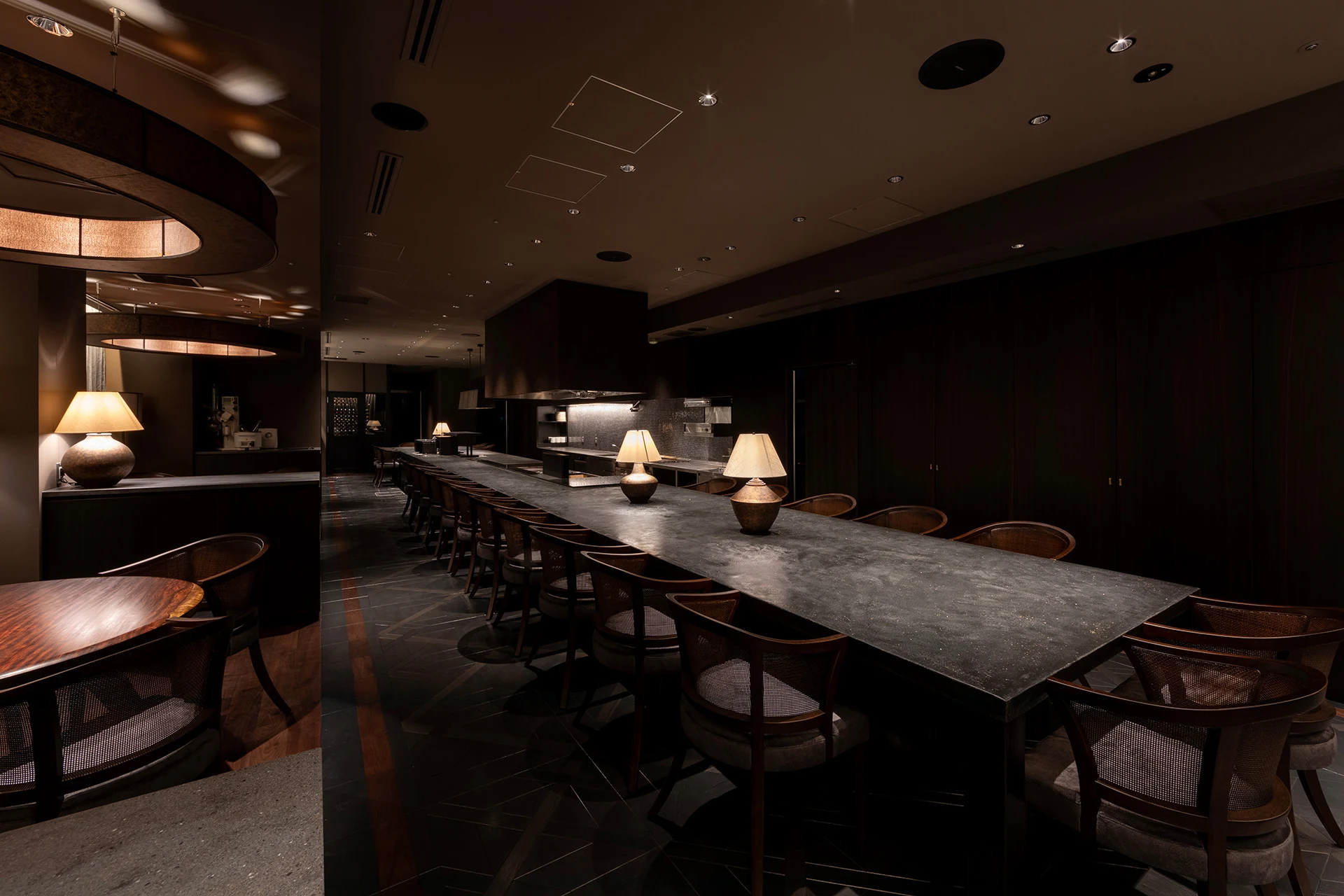
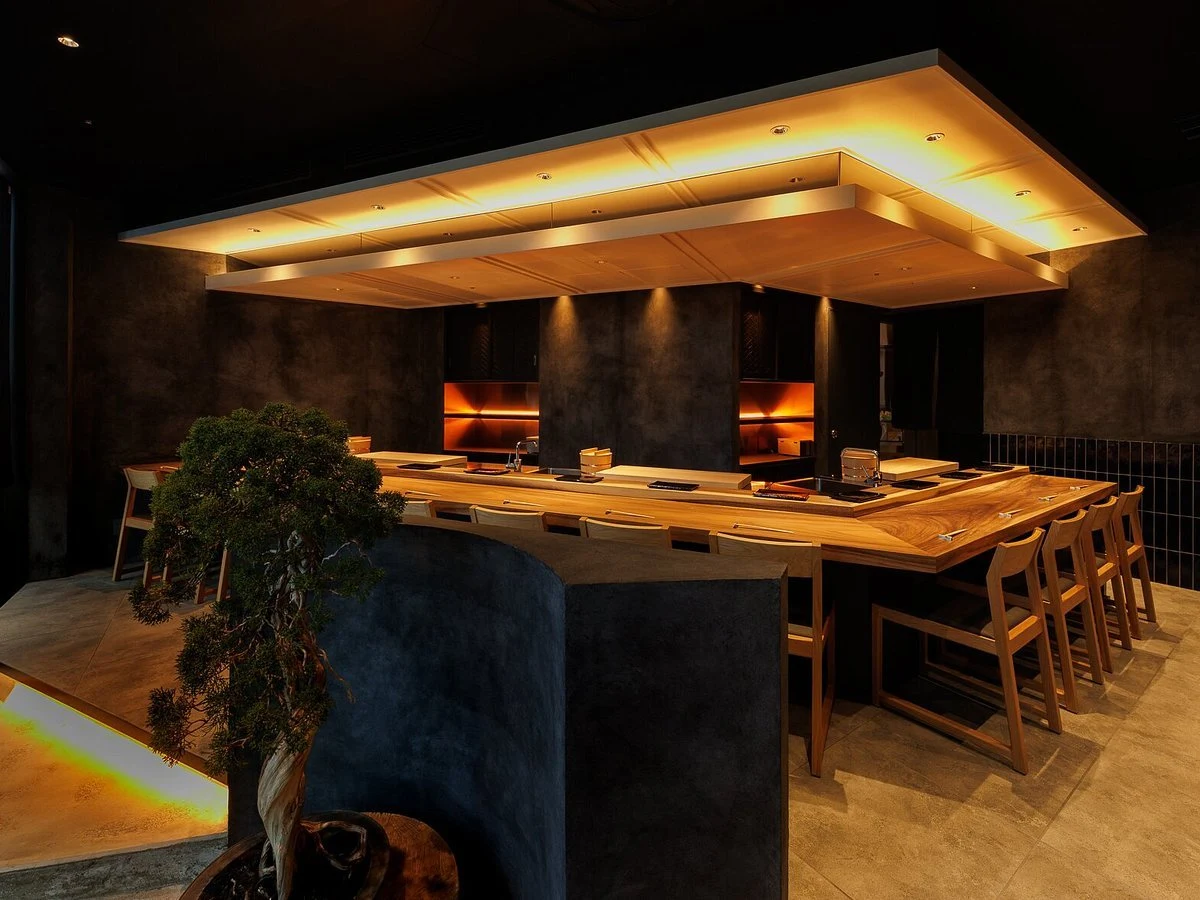
The room is small enough for the hands to remain visible. Daikanyama Sushi Takeuchi has 8 counter seats, set in a quiet residential back alley with a discreet exterior and a small Sushi Takeuchi sign rather than a broad street presence. Inside, the white-wood counter gives the service its line: fish on the bench, rice within reach, sake and shochu moving quietly around the course. The restaurant’s calm is not emptiness; it is compression. Guests sit close to the pass, but the space does not feel hurried. In that kind of room, a pause before toro or uni carries weight because there are few distractions to absorb it.
Recognition without changing the scale
The house was selected for Tabelog Sushi TOKYO “Tabelog 100” in 2022, one marker among the awards attached to the restaurant itself. More useful than the label is what has not changed: the counter remains intimate, the sourcing remains tied to Toyosu Market, and Takeuchi’s ownership keeps the craft at the same distance from the guest. Gari-maki at Daikanyama Sushi Takeuchi says the most with the least movement.
Questions
Frequently asked
What kind of restaurant is Daikanyama Sushi Takeuchi?
Daikanyama Sushi Takeuchi is a traditional Japanese omakase restaurant in Daikanyama, Tokyo, with sushi at the centre of the meal.
Who is the chef at Daikanyama Sushi Takeuchi?
The chef is Jun Takeuchi, who trained in sushi at Kanesaka in Ginza and spent a decade working in Ginza before opening the restaurant in Daikanyama.
What is the format of the meal?
The meal is course-based rather than à la carte, with lunch and dinner arranged around sushi. Lunch can include a small dish, 10 pieces of sushi, a roll, soup, and dessert, while longer sequences add appetizers before the nigiri.
What dishes is it known for?
The restaurant’s course can include herring spawn on kelp, umi budou with wakame and ponzu, longtooth grouper over red vinegar rice, chu-toro from Oma, horse mackerel with chives, lightly grilled blackthroat seaperch, whelk, scallop, sea urchin, marinated tuna, conger eel, and kanpyo in the roll. Gari-maki, a roll centred on pickled ginger, is also part of the house vocabulary.
The field
How it compares
| Place | Cuisine | Notes | Awards |
|---|---|---|---|
| Daikanyama Sushi Takeuchi | Traditional Japanese Omakase | Shibuya, $$$$ | · |
| Den | Modern Japanese Kaiseki | Tokyo | Michelin 2 Stars, World's 50 Best |
| Florilège | Modern French-Japanese Plant-Based Fine Dining | Tokyo | Michelin 2 Stars, World's 50 Best |
| Narisawa | Modern Japanese Satoyama Fine Dining | Tokyo | Michelin 2 Stars, World's 50 Best |
| Quintessence | Modern French Fine Dining | Tokyo | Michelin 3 Stars |
| Sazenka | Modern Chinese Fine Dining | Tokyo | Michelin 3 Stars, World's 50 Best |
| Sézanne | Modern French Fine Dining | Tokyo | Michelin 3 Stars, World's 50 Best |
In residence
Similar places
Modern Japanese Kaiseki
Den
Tokyo, Japan
★★ · 50 Best
Modern French-Japanese Plant-Based Fine Dining
Florilège
Tokyo, Japan
★★ · 50 Best
Modern Japanese Satoyama Fine Dining
Narisawa
Tokyo, Japan
★★ · 50 Best
Modern French Fine Dining
Quintessence
Tokyo, Japan
★★★
Modern Chinese Fine Dining
Sazenka
Tokyo, Japan
★★★ · 50 Best
Modern French Fine Dining
Sézanne
Tokyo, Japan
★★★ · 50 Best