Skip to Content
    Made ByRestaurant

    TACOS BAR

    In Residence

    Marco Garcia

    Chef

    1. 01CuisineMexican
    2. 02CityTokyo, Japan
    TACOS BAR (restaurant)

    Marco Garcia, Chef at TACOS BAR in Tokyo, works a seafood omakase through daily masa, Japanese fish, and Mexican form.

    • Opinionated About Dining Top Restaurants in Japan Recommended · 2026

    Blue corn at the counter

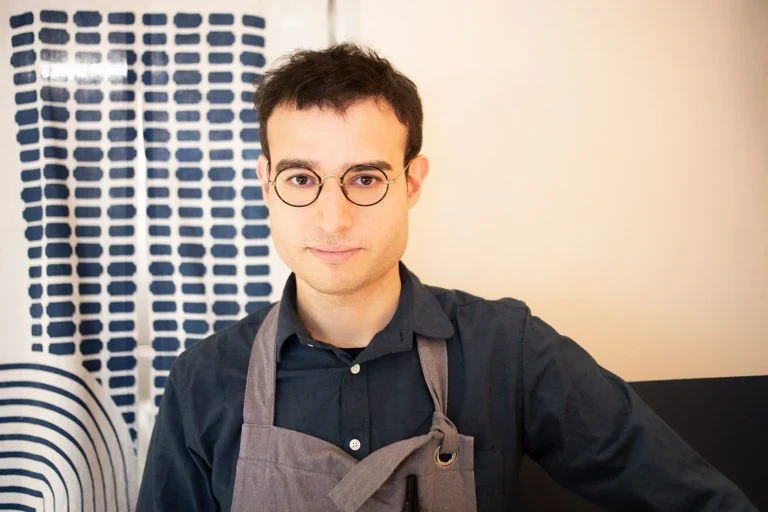
    Marco Garcia mills heirloom corn in house before service, shaping the tortillas that carry the seafood course at TACOS BAR in Tokyo. As Chef, Marco Garcia works from the counter rather than at a remove, with the plancha in view and the masa close enough to read by touch. His route into this station is not a formal apprenticeship story. Self-taught, his discipline has been built through authorship: first as owner and chef of Los Tacos Azules in Monterrey from 2011 to 2018, then through the Tokyo continuation of that work from 2018 onward. TACOS BAR is a different proposition, not the a la carte room of Los Tacos Azules, but the same cook’s insistence follows it. Mexican structure remains the frame. Japanese fish, rice, herbs, and seasonality set the daily question.

    Garcia’s own language gives the measure of that attention. “No es lo mismo un arroz de Nagano que un arroz de Miyazaki.” Rice is not a backdrop in that sentence; provenance changes the work. At TACOS BAR, the same thinking moves into the tortilla, the fish, the acid, the chile, and the finish. The role is not to make one tradition vanish into another. It is to let each ingredient keep its name while the taco holds the form.

    A seafood course held in masa

    The restaurant’s course runs to 9 to 10 dishes, including dessert, and changes with the seafood available from Japan’s regions. The tacos carry no meat. Fish and shellfish move through raw, grilled, steamed, and fried preparations, with a rhythm closer to a composed tasting menu than to repetition at the line. A grilled unagi taco has appeared with wasabi-accented guacamole on a blue corn tortilla, kinome, and salsa verde. Isaki has been paired with diced nopales. Sōdagatsuo has taken chipotle sauce. Chi-ayu has been rolled in spinach-tinted tortillas, while kuromutsu has met mole verde.

    The method depends on restraint at several points. Corn is milled in house and tortillas are made daily, so the base is not a neutral wrapper. It has weight, aroma, and color before anything touches it. Hokkaido kampachi has been set as a tostada with yuzu peel; shirako has appeared in a quesadilla with jalapeno. These are not substitutions for familiarity. They are bench-side decisions about fat, bitterness, heat, and texture, made inside a form that Garcia knows well enough to bend without losing its discipline.

    The pass in Ebisunishi

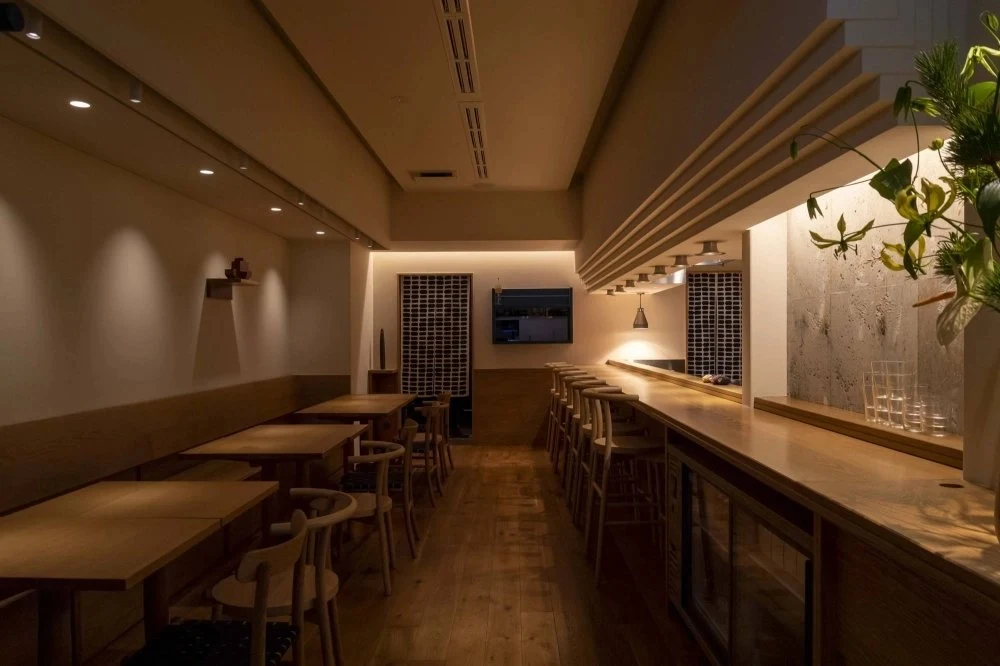
    The room sits on the 1F at 2 Chome−7−1 Ebisunishi, in Shibuya, along the seam between Ebisu and Daikanyama. Inside, indigo walls and shelves take their cue from blue corn tortillas, while blonde wood keeps the counter bright around the pass. The useful seat is the one facing the plancha grill. From there the work reads in sequence: masa pressed, fish warmed or left clean, salsa placed with a cook’s economy, the finished taco handed over before the tortilla gives up its heat.

    The back bar widens the language without pulling it away from the food. Japanese sake, wine, tequila, and mezcal sit beside a course built on seafood rather than meat, and the room stays tuned to that choice. Nothing here needs a broad declaration of fusion. Garcia has made the narrower claim, and the counter tests it course by course: blue corn, kinome, mole verde, and the plancha at TACOS BAR.

    Questions

    Frequently asked

    Who cooks at TACOS BAR?

    Marco Garcia is the chef at TACOS BAR in Tokyo. He is self-taught and works from the counter, with the plancha in view.

    What kind of menu does TACOS BAR serve?

    The restaurant runs a seafood omakase of 9 to 10 dishes, including dessert. The course changes with seafood available from Japan’s regions, and the tacos carry no meat.

    What is the cooking style like?

    Mexican structure is the frame, but Japanese fish, rice, herbs, and seasonality shape the daily menu. Fish and shellfish move through raw, grilled, steamed, and fried preparations, and corn is milled in house before service to make the tortillas daily.

    What is the space like?

    The room is on the 1F at 2 Chome−7−1 Ebisunishi, in Shibuya, along the seam between Ebisu and Daikanyama. Indigo walls and shelves are paired with blonde wood, and the useful seat is the one facing the plancha grill.

    The field

    How it compares

    PlaceCuisineAwardsNotes
    TACOS BARMexican··
    DenModern Japanese KaisekiMichelin 2 Stars, World's 50 BestTokyo
    FlorilègeModern French-Japanese Plant-Based Fine DiningMichelin 2 Stars, World's 50 BestTokyo
    NarisawaModern Japanese Satoyama Fine DiningMichelin 2 Stars, World's 50 BestTokyo
    QuintessenceModern French Fine DiningMichelin 3 StarsTokyo
    SazenkaModern Chinese Fine DiningMichelin 3 Stars, World's 50 BestTokyo
    SézanneFrenchMichelin 3 Stars, World's 50 BestTokyo

    In residence

    Similar places

    More in Tokyo← Browse all places