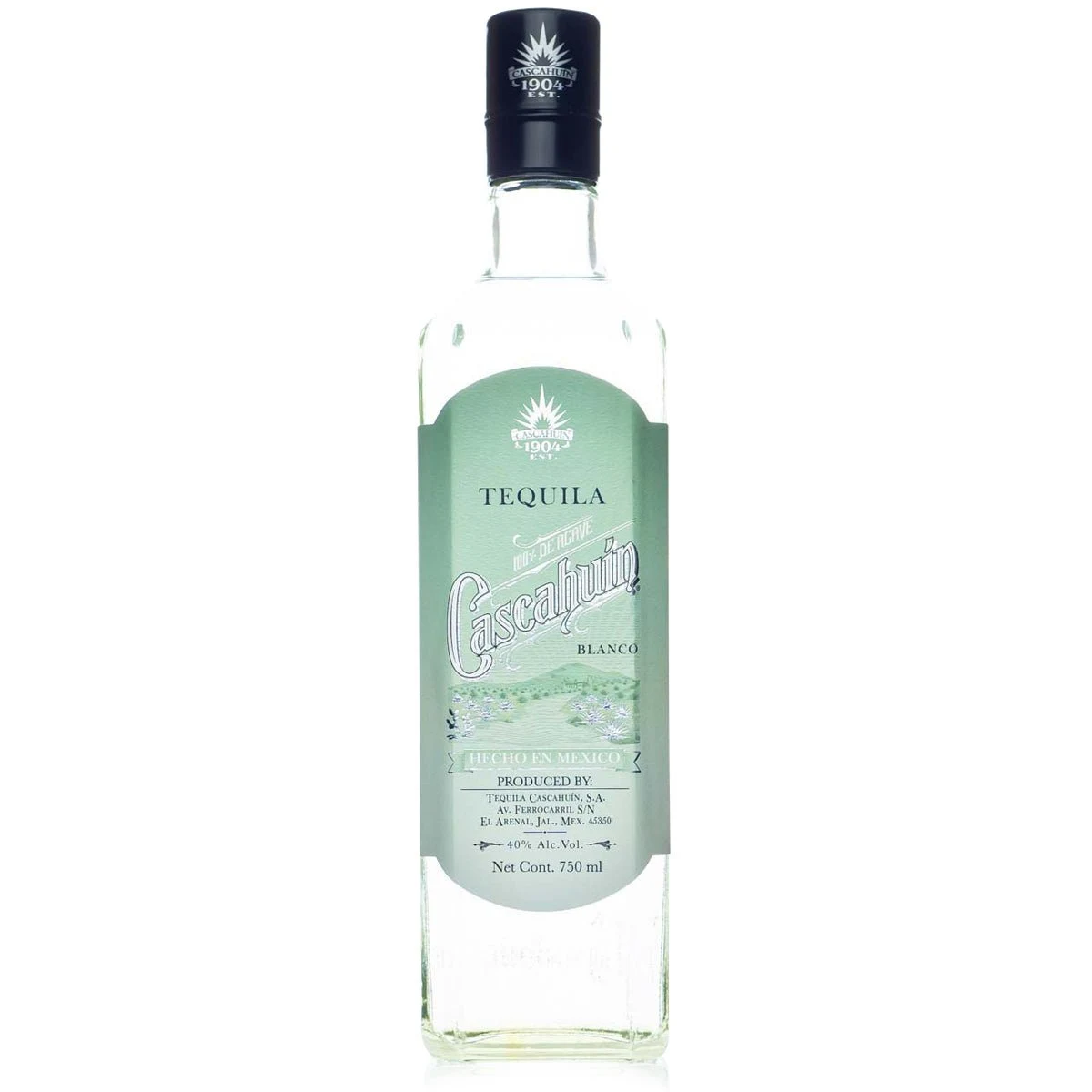
Tequila Cascahuín operates from El Arenal, in the heart of Jalisco's highland agave country, and earned a Pearl 2 Star Prestige rating in 2025. The distillery sits along the Ferrocarril corridor, placing it within the same red-clay volcanic belt that defines the Highlands' agave character. For spirits enthusiasts tracing terroir-driven tequila production, it belongs in the same conversation as the region's most decorated producers.
<h2>El Arenal and the Highlands Argument for Terroir</h2><p>The debate over whether tequila expresses terroir in any meaningful sense has sharpened considerably over the past decade, and the Jalisco Highlands have become the clearest test case. El Arenal sits in the lowlands technically, but the surrounding municipalities of the highlands region collectively define the red volcanic soil and cooler elevation conditions that produce agave with measurably higher sugar content and a richer aromatic profile compared to valley-grown Blue Weber. Cascahuín's home base at Ferrocarril 140, in the San Juan de Dios district of El Arenal, places it within this broader production geography, where the conversation about provenance and production philosophy has grown more exacting than at any point in the spirit's commercial history.</p><p>For context, the tequila industry has bifurcated sharply. At one end, high-volume producers operate diffuser-based extraction and additive-permitted expressions; at the other, a smaller cohort of distilleries prioritizes traditional tahona or roller mill extraction, slow fermentation, and copper pot or small-column distillation.</p><h2>What a Pearl 2 Star Prestige Signals About Positioning</h2><p>Awards in the spirits category function differently from Michelin stars in dining, but they serve a similar positioning role. A Pearl 2 Star Prestige designation from EP Club in 2025 places Cascahuín above baseline recognition and into a tier where production method, agave sourcing, and consistency across expressions are scrutinized against comparable producers. Within the Jalisco Highland and lowland production corridor, this sits the distillery in a competitive set that includes operations recognized for craft-first methodology rather than volume output.</p><p> <a href="https://www.enprimeurclub.com/wineries/jose-cuervo-la-rojena-tequila-winery">Jose Cuervo's La Rojeña in Tequila</a> represents the historical industrial anchor of the appellation, while <a href="https://www.enprimeurclub.com/wineries/la-primavera-don-julio-atotonilco-el-alto-winery">Don Julio's La Primavera operation in Atotonilco El Alto</a> sits in the premium Highland tier. Cascahuín occupies a different register from both: it draws attention not through global distribution scale but through the kind of production specificity that specialists and collectors have increasingly sought out. <a href="https://www.enprimeurclub.com/wineries/casa-herradura-hacienda-san-jose-del-refugio-amatitan-winery">Casa Herradura's Hacienda San José del Refugio in Amatitán</a>, another nearby benchmark, illustrates how geographic proximity does not mean stylistic equivalence, each distillery in the corridor reads differently depending on agave maturity windows, fermentation approach, and distillation cut decisions.</p><h2>Agave Country Beyond Tequila: Understanding the Broader Spirits Map</h2><p>A working knowledge of Cascahuín benefits from some understanding of how Mexico's distilled agave spirits have diversified regionally. The tequila appellation governs Blue Weber agave in specified states, but parallel traditions, mezcal in Oaxaca and Durango, raicilla in coastal Jalisco, bacanora in Sonora, have developed their own recognized production cultures. <a href="https://www.enprimeurclub.com/wineries/los-danzantes-santiago-matatlan-winery">Los Danzantes in Santiago Matatlán</a>, in the Oaxacan mezcal heartland, operates in a different denomination entirely, but draws on a related logic: single-origin agave, small-batch production, and documented provenance.</p><p>The same framework applies to <a href="https://www.enprimeurclub.com/wineries/don-amado-arellanes-family-santa-catarina-minas-winery">Don Amado in Santa Catarina Minas</a> and <a href="https://www.enprimeurclub.com/wineries/el-rey-de-matatlan-tlacolula-de-matamoros-winery">El Rey de Matatlán in Tlacolula de Matamoros</a>, both of which work within Oaxacan mezcal tradition. <a href="https://www.enprimeurclub.com/wineries/banhez-upadec-cooperative-san-miguel-ejutla-winery">Banhez from the UPADEC cooperative in San Miguel Ejutla</a> extends the conversation into ensemble-agave expressions using Jabalí and Mexicano varieties. Knowing these reference points matters when assessing Cascahuín because it clarifies what is specific to the tequila denomination and what the broader agave-spirits category has established as a shared vocabulary around terroir and craft.</p><p>Outside the agave family, <a href="https://www.enprimeurclub.com/wineries/lagrimas-de-dolores-hacienda-dolores-durango-winery">Lágrimas de Dolores in Durango</a> and <a href="https://www.enprimeurclub.com/wineries/casa-cortes-la-soledad-palenque-la-compania-ejutla-winery">Casa Cortés's La Soledad Palenque in La Compañía</a> represent how palenque-based production in other states has built its own credentialed tier. The recurring pattern across all of them is that prestige in Mexican spirits has come to mean specificity of origin and method, not simply age or packaging.</p><h2>The Distillery at Ferrocarril 140: What to Expect on Arrival</h2><p>Approaching El Arenal along the road that once serviced the region's agricultural rail network, the landscape shifts into the semi-arid agave fields that define this stretch of Jalisco. The San Juan de Dios district sits within a town whose identity is inseparable from tequila production, and the Ferrocarril address places Cascahuín in that production core rather than on the outskirts designed for tour-bus traffic. Distilleries at this level of recognition generally receive visitors who arrive with prior knowledge of the production process, and the experience here reads accordingly.</p><p>Planning a visit to Cascahuín requires direct contact or coordination through local specialists, as no website or public booking system is listed. This is not unusual for craft producers in the Highlands whose primary relationship is with importers and collectors rather than walk-in tourism. <a href="https://www.enprimeurclub.com/wineries/el-pandillo-g4-jesus-maria-winery">El Pandillo (G4) in Jesús María</a> follows a comparable model: significant within the collector tier, less structured for casual visitors. Anyone traveling specifically to visit Cascahuín should confirm access arrangements in advance.</p><h2>How Cascahuín Fits a Broader Highland Itinerary</h2><p>El Arenal works well as part of a circuit that takes in the full range of Jalisco's production geography. The town of Tequila itself, where <a href="https://www.enprimeurclub.com/wineries/jose-cuervo-la-rojena-tequila-winery">La Rojeña</a> operates, sits within a short drive; Amatitán, home to <a href="https://www.enprimeurclub.com/wineries/casa-herradura-hacienda-san-jose-del-refugio-amatitan-winery">Casa Herradura</a>, is in the same lowland valley zone. For those wanting to extend northward, <a href="https://www.enprimeurclub.com/wineries/cazadores-distillery-arandas-winery">Cazadores in Arandas</a> and the Don Julio operation in Atotonilco El Alto represent the Highland interior, where elevation and soil composition produce a noticeably different agave character.</p><p>For travelers who map spirits tourism against wine-country frameworks, the comparison with <a href="https://www.enprimeurclub.com/wineries/accendo-cellars">Accendo Cellars in St. Helena</a> or <a href="https://www.enprimeurclub.com/wineries/aberlour-aberlour-winery">Aberlour in Speyside</a> is instructive. All three operate in denominations where terroir claims are taken seriously, production is bounded by appellation rules, and the prestige tier has separated itself from volume production through verifiable method and provenance. Cascahuín's Pearl 2 Star Prestige designation places it within that register for tequila. Similarly, <a href="https://www.enprimeurclub.com/wineries/hacienda-corralejo-penjamo-winery">Hacienda Corralejo in Pénjamo</a>, operating within the tequila denomination from Guanajuato, offers another geographic point of comparison for understanding how the appellation's boundaries shape, but do not fully determine, production character.</p><h2>Planning Your Visit</h2><p>Tequila Cascahuín is located at Ferrocarril 140, San Juan de Dios, El Arenal, Jalisco (45350). No public phone number or website is listed in current records. The 2025 Pearl 2 Star Prestige recognition confirms active production at a level that warrants inclusion in any serious Jalisco spirits itinerary, and the El Arenal location makes it a logical addition to a circuit that combines lowland and Highland producers over two or three days.</p>
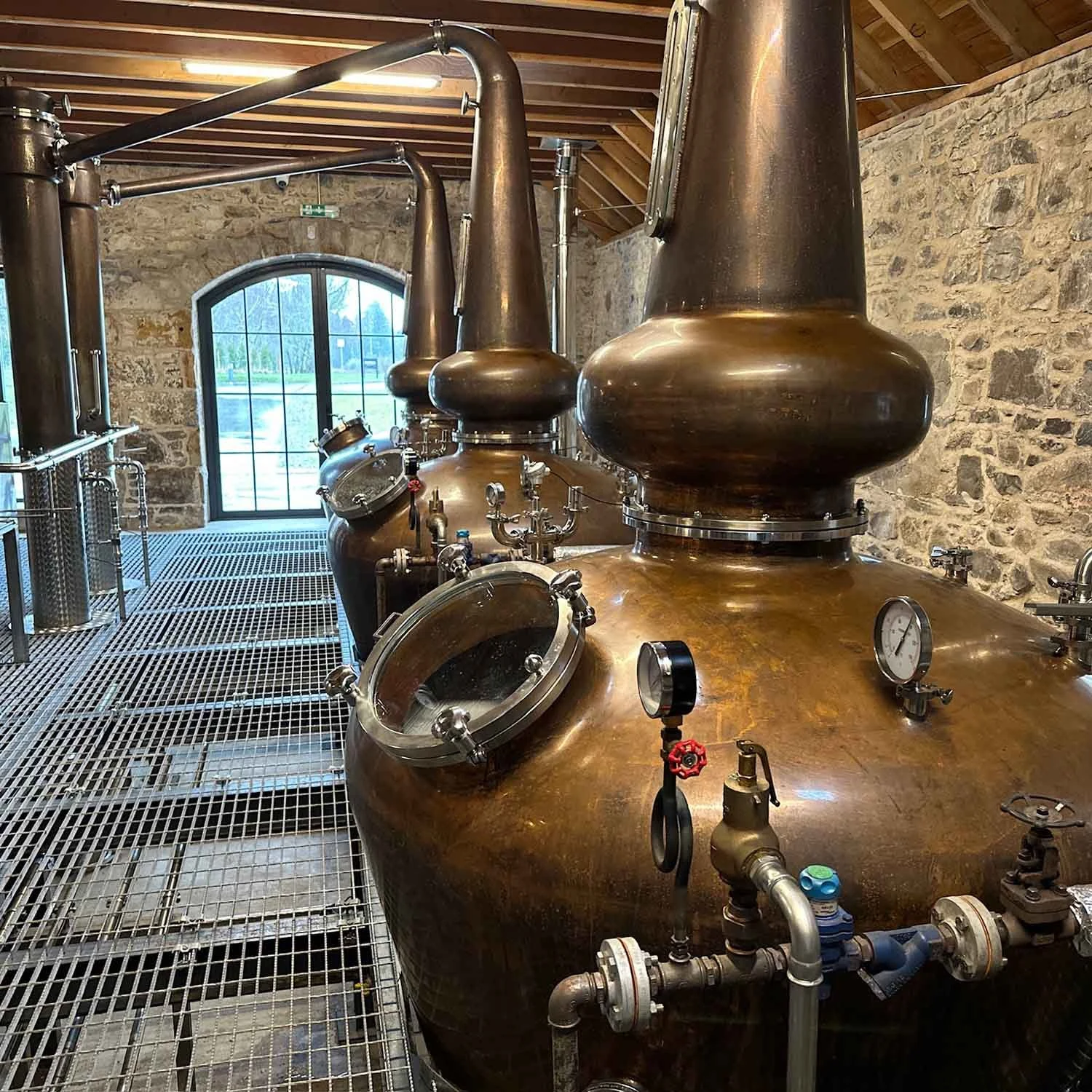
Cascahuín operates as a working production distillery in the semi-arid agave fields outside El Arenal, Jalisco — not a polished hospitality venue. The address at Ferrocarril 140 sits along what was once an agricultural rail corridor, and the surroundings reflect that industrial-agricultural character. Visitors come primarily for the distillation process and the Highland provenance, not for curated tasting-room theatre.
Tequila Cascahuín has received recognition including: Pearl 2 Star Prestige (2025).
Cascahuín is a tequila distillery, not a wine destination, so wine is not part of the offering here. The draw is agave-based spirits produced in the Jalisco Highlands, a region whose high-altitude, red-clay soils produce a distinctly mineral and herbaceous agave character that differs markedly from Lowland expressions.
Tequila Cascahuín is located at Ferrocarril 140, San Juan de Dios, 45350 El Arenal, Jal., El Arenal.
Cascahuín has earned a Pearl 2 Star Prestige rating in 2025, which positions it among a relatively small cohort of Highland producers recognised for consistent quality and regional expression. Its address in El Arenal places it within the Jalisco Highlands appellation, where the combination of altitude and soil type is increasingly cited as the basis for differentiated tequila character.
No public phone number or website is currently listed for Cascahuín, which makes confirming walk-in access difficult before travel. Given that Ferrocarril 140 in El Arenal functions as an active distillery rather than a scheduled tourist attraction, contacting the producer directly in advance is advisable.
El Arenal sits within easy reach of both the town of Tequila and the broader Jalisco Highlands circuit, making Cascahuín a logical stop rather than a sole destination. The distillery's Pearl 2 Star Prestige recognition in 2025 gives it credibility as a primary draw for spirits-focused travellers, but the region's production geography — spanning multiple appellations and agave varieties — rewards a multi-stop approach that puts Cascahuín's Highland character into comparative context.
Ferrocarril 140, San Juan de Dios, 45350 El Arenal, Jal.
Casa Herradura (Hacienda San José del Refugio)