Made ByWinery
Tetramythos Winery
- 01CityAno Diakopto, Greece
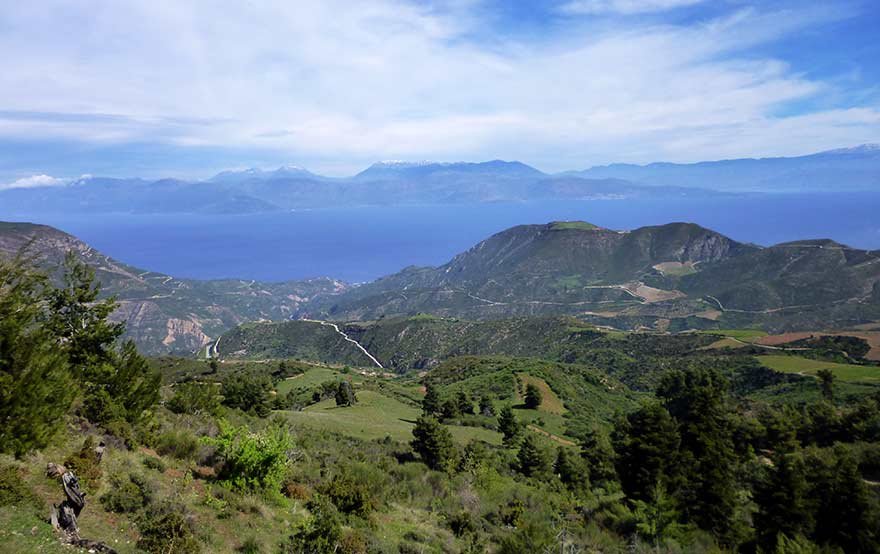
Tetramythos Winery sits in the mountain-framed terrain above the Gulf of Corinth, where altitude and the Peloponnese's schist-heavy soils shape wines of uncommon restraint. A Pearl 2 Star Prestige award (2025) places it in a recognised tier of Greek producers working at the intersection of indigenous varieties and site-specific viticulture. The winery is located along the Epar.Od. Pountas-Kalavriton road outside Ano Diakopto.
At a glance
- Price
- $$
- Neighborhood
- Ano Diakopto
Altitude, Schist, and the Northern Peloponnese's Quiet Case for Terroir
Tetramythos Winery is a winery in Ano Diakopto, Achaia, and the 2025 Pearl 2 Star Prestige award places it in a recognized quality tier. The road from Ano Diakopto climbs fast. Within a few kilometres of the coastal town, the Gulf of Corinth drops behind you, the temperature shifts, and the vegetation thins into the kind of sparse, mineral-exposed hillside that suits viticulture well. The Peloponnese's northern escarpment, where the Vouraikos gorge cuts through and the rack-and-pinion railway from Diakopto threads toward Kalavrita, is a harder, more demanding geography, and the wines it produces carry that difficulty in their structure. Tetramythos Winery sits along the Epar.Od. Pountas-Kalavriton road at roughly the 8-kilometre mark outside Ano Diakopto, positioned in precisely the kind of elevation and soil exposure that defines what this corridor of the Peloponnese can do at its most serious.
Greece's wine identity has long been shaped by the islands: Santorini's Assyrtiko on volcanic pumice, Cephalonia's Robola on limestone, the Aegean whites that international markets reached first. The mainland's mountainous interior, particularly the Peloponnese, has been slower to consolidate its international reputation, even as producers in Nemea built a case for Agiorgitiko and Mantinia established Moschofilero as a benchmark aromatic white. The northern Peloponnese, specifically the Aigialeia zone, sits at a different altitude register altogether. Schist and limestone substrates, significant diurnal temperature variation, and elevations that can exceed 800 metres create a growing environment structurally distinct from the warmer valley floors elsewhere in the region.
What the Pearl 2 Star Prestige Recognition Signals
Tetramythos received a Pearl 2 Star Prestige award in 2025. In the context of Greek wine, where the international press still concentrates critical attention on a relatively small cohort of established names, a prestige-level award for a producer in Ano Diakopto carries specific significance. It positions the winery within a competitive set that includes producers in other parts of Greece, from Acra Winery in Nemea working Agiorgitiko in the southern Peloponnese, to Alpha Estate in Amyntaio building the case for Macedonia's high-altitude vineyards in the north.
Award recognition at this level also signals something about the winery's positioning in the broader Greek wine conversation. Greece has producers operating across a wide spectrum, from historic houses like Achaia Clauss in Patras with deep institutional roots in the region, to smaller specialist estates like Abraam's Vineyards in Komninades and Akrathos Newlands Winery in Panagia working niche terroirs. Tetramythos belongs to a tier defined by site specificity and quality consistency, not scale.
Terroir as the Argument: Aigialeia and Its Elevation Effect
What distinguishes Aigialeia from other Peloponnesian wine zones is primarily thermal. The combination of altitude and proximity to the sea creates a tension between maritime influence and mountain cold that slows ripening in ways that can produce wines of genuine structural interest. Where lower elevations push sugars and soften acidity, high-altitude sites in this corridor preserve both, generating wines that age more predictably and express the mineral character of their substrates more clearly. This is the same principle that drives the prestige of cool-climate viticulture globally, from Burgundy's Côte d'Or to the high-elevation Ribera del Duero estates, and it applies with particular force in Aigialeia, where the escarpment is steep enough to create meaningful mesoclimate differentiation within short distances.
The indigenous varieties of the northern Peloponnese also respond to this environment in specific ways. Roditis, traditionally associated with lighter, often neutral whites when grown on warmer lowland sites, takes on a different character at altitude: tighter, with more evident mineral framing and longer finish potential. This is a pattern seen across Greek viticulture where variety performance is highly site-sensitive, similar to how Anatolikos Vineyards in Xanthi and Artisans Vignerons de Naoussa in Stenimachos have demonstrated in Greece's northern wine zones that indigenous varieties produce their most compelling expressions when terroir conditions provide sufficient natural tension during the growing season.
The Winery in its Regional Context
Ano Diakopto as a base for wine tourism remains largely outside the mainstream Greek wine trail, which still routes most visitors toward Nemea, Naoussa, or the islands. That positioning has practical consequences for visitors. The area does not carry the same infrastructure of tasting rooms and wine-focused hospitality that has developed in more established zones, which means approaching a producer like Tetramythos requires more planning but also delivers a different kind of visit: one where the geography and the wine's connection to it are the primary experience rather than a backdrop to polished hospitality programming.
The drive itself is part of the context. The road from Ano Diakopto toward Kalavrita passes through terrain that explains the wines before you taste them: exposed rock faces, the gorge below, the temperature dropping as the road climbs. Producers working at the level Tetramythos operates have invariably earned that recognition in part because the land pushes the work in productive directions. For visitors interested in Greek wine beyond the established reference points, this corridor offers access to a terroir argument that is genuinely distinct, comparable in its lesser-known-but-significant status to what Aoton Winery in Peania has demonstrated is possible in Attica or Avantis Estate in Chalkida has built in Evia.
Planning a Visit
Tetramythos is located at the 8-kilometre point along the Epar.Od. Pountas-Kalavriton road outside Ano Diakopto. The town itself is accessible by train on the Athens-Patras line, with Diakopto station serving as a connection point for the narrow-gauge Odontotos railway into the Vouraikos gorge. Car is the practical choice for reaching the winery directly. Visit timing matters in this part of the Peloponnese: the road is leading in late spring through early autumn, when conditions are most accessible. The harvest period, typically September through October at these elevations, represents a logical window for visitors interested in seeing the growing environment at its most expressive. Initial enquiries can be made through regional tourism channels.
For those building a broader Peloponnese wine itinerary, combining a visit here with producers at different points in the regional spectrum, including Aiolos Winery in Palaio Faliro or Artemis Karamolegos Winery in Santorini for island contrast, builds a more complete picture of where Greek viticulture is concentrating its most serious work.
Know before you go
- Dress code
- casual
- Reservations
- walk_in_friendly
- Parking
- on_site_lot
- Groups
- Welcomed
Frequently asked
What kind of setting is Tetramythos Winery?
The winery sits at the 8-kilometre mark on the Epar.Od. Pountas-Kalavriton mountain road above Ano Diakopto, a coastal town on the Gulf of Corinth. The drive up from the shore is steep and fast — within a few kilometres, the sea falls behind and the temperature drops noticeably. It is a working agricultural setting in the Aigialeia zone, not a polished resort-style estate.
What recognition does Tetramythos Winery have?
Tetramythos Winery has received recognition including: Pearl 2 Star Prestige (2025).
What wines is Tetramythos Winery known for?
Tetramythos operates within the Aigialeia appellation of the northern Peloponnese, a zone defined by schist soils, high elevation, and proximity to the Gulf of Corinth — conditions that favour aromatic retention and acidity in the finished wines. The 2025 Pearl 2 Star Prestige recognition signals consistency across its range, though specific varietal and production details are not listed in current records.
Where do I go for Tetramythos Winery?
Tetramythos Winery is located at 8ο ΧΛΜ ΕΠΑΡΧΙΑΚΗΣ ΟΔΟΥ, Epar.Od. Pountas - Kalavriton, Ano Diakopto 250 03, Ano Diakopto.
What makes Tetramythos Winery worth visiting?
The 2025 Pearl 2 Star Prestige award places Tetramythos within a defined quality tier among assessed Greek producers. Beyond the wines themselves, Ano Diakopto sits largely outside the well-worn Greek wine circuit — most touring itineraries still route through Nemea or Naoussa — which means the winery draws a more deliberate visitor rather than tour-bus traffic. The Rack Railway connecting Diakopto to Kalavryta also runs nearby, making the area viable as a combined cultural and wine stop.
How hard is it to get in to Tetramythos Winery?
Phone and website details are not currently listed in public records, so confirming opening hours or booking a visit in advance requires some effort. Arriving at the winery address — 8km along the Epar.Od. Pountas-Kalavriton road outside Ano Diakopto — without prior contact carries uncertainty around availability. Reaching out through local tourism offices in Ano Diakopto or Aigio is the most reliable route until direct contact details are confirmed.
Address
8ο ΧΛΜ ΕΠΑΡΧΙΑΚΗΣ ΟΔΟΥ, Epar.Od. Pountas - Kalavriton, Ano Diakopto 250 03
Ano Diakopto
How it compares
Tetramythos Winery
- Cuisine
- Roditis, Malagousia
- Price
- $$
- Awards
- 1 recognition
- Notes
- Ano Diakopto
Markogianni Winery
- Cuisine
- Winery
- Price
- —
- Awards
- 1 recognition
- Notes
- Gastouni
Agathangelou Distillery
- Cuisine
- Winery
- Price
- —
- Awards
- 1 recognition
- Notes
- Mytilene
Filippou Distillery
- Cuisine
- Winery
- Price
- —
- Awards
- 1 recognition
- Notes
- Lesvos
Melissanidi Distillery
- Cuisine
- Winery
- Price
- —
- Awards
- 1 recognition
- Notes
- Oraiokastro
Kanellopoulos Distillery
- Cuisine
- Winery
- Price
- —
- Awards
- 1 recognition
- Notes
- Patras