The Guest House
- 01CuisineSichuan & Huaiyang Chinese with Taiwanese Elements
- 02CityTaipei, Taiwan
- 03RecognitionOne Michelin Star
- 1 Michelin Star · Michelin Guide
- Opinionated About Dining Top Restaurants in Asia Recommended · 2026
- Michelin 1 Star · 2026
- Opinionated About Dining Top Restaurants in Asia Ranked #442 · 2025
- Michelin 1 Star · 2025
- Michelin 1 Star · 2024
- Opinionated About Dining Top Restaurants in Asia Ranked #409 · 2024
- Opinionated About Dining Top Restaurants in Asia Recommended · 2023
A Quiet Room With Serious Credentials
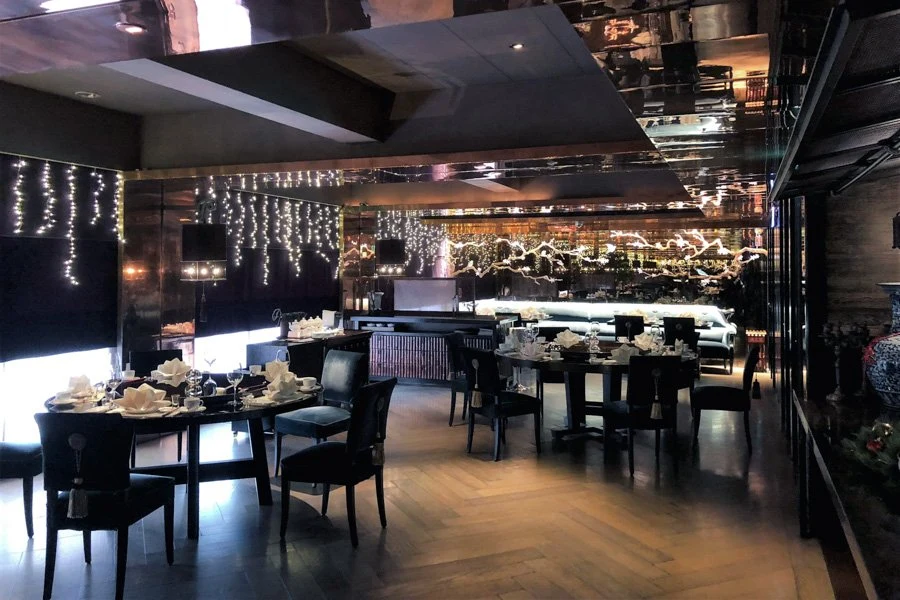
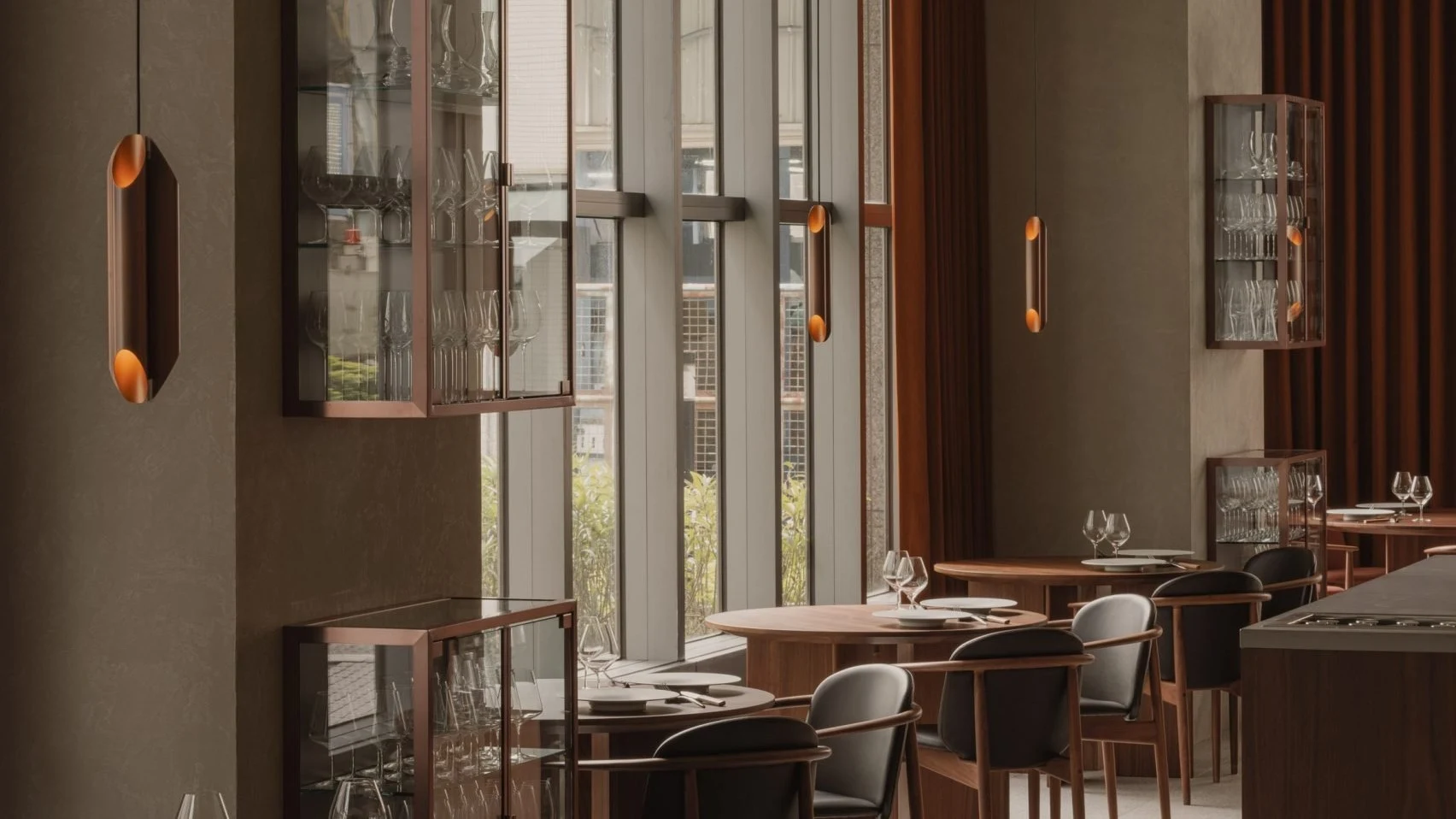
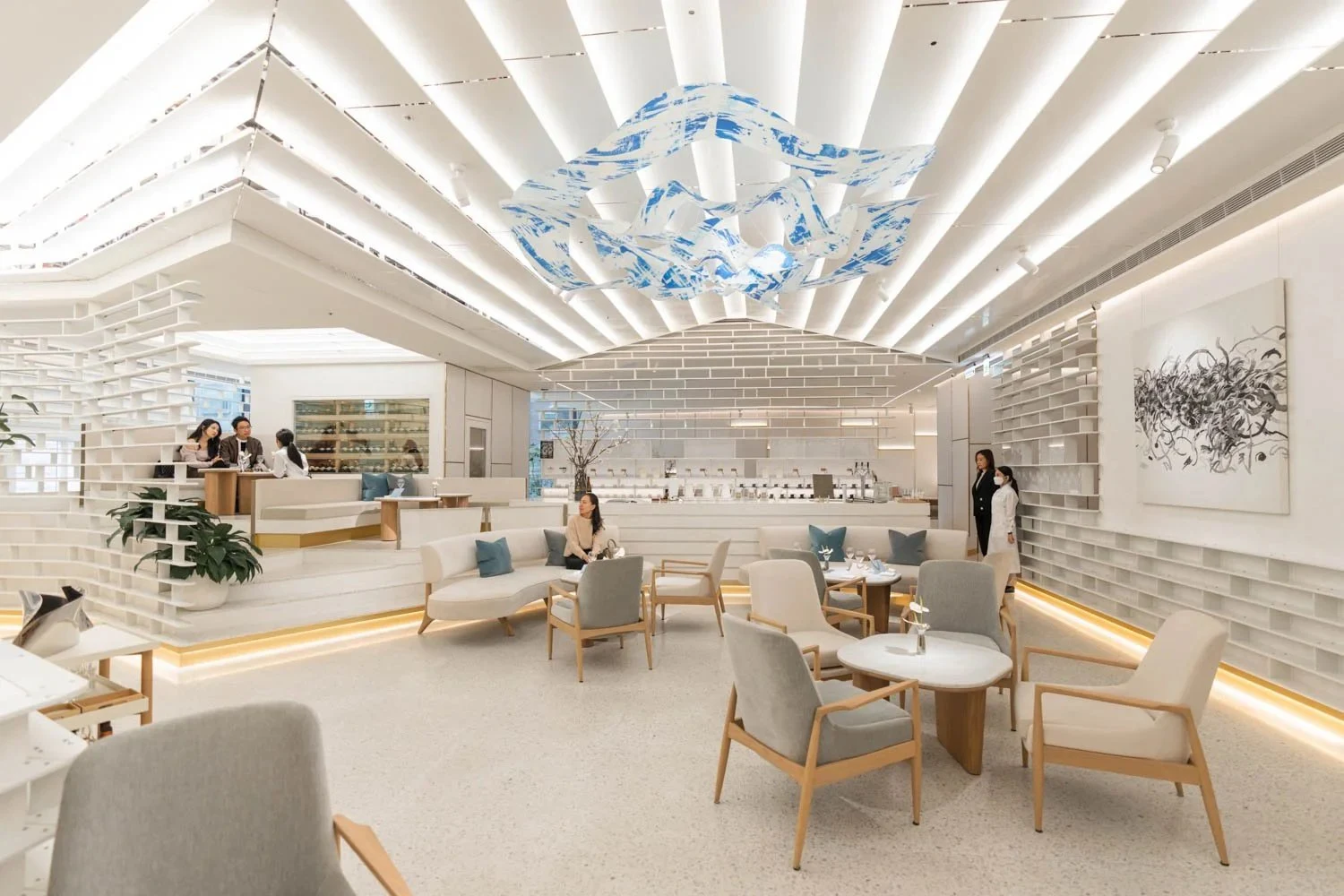
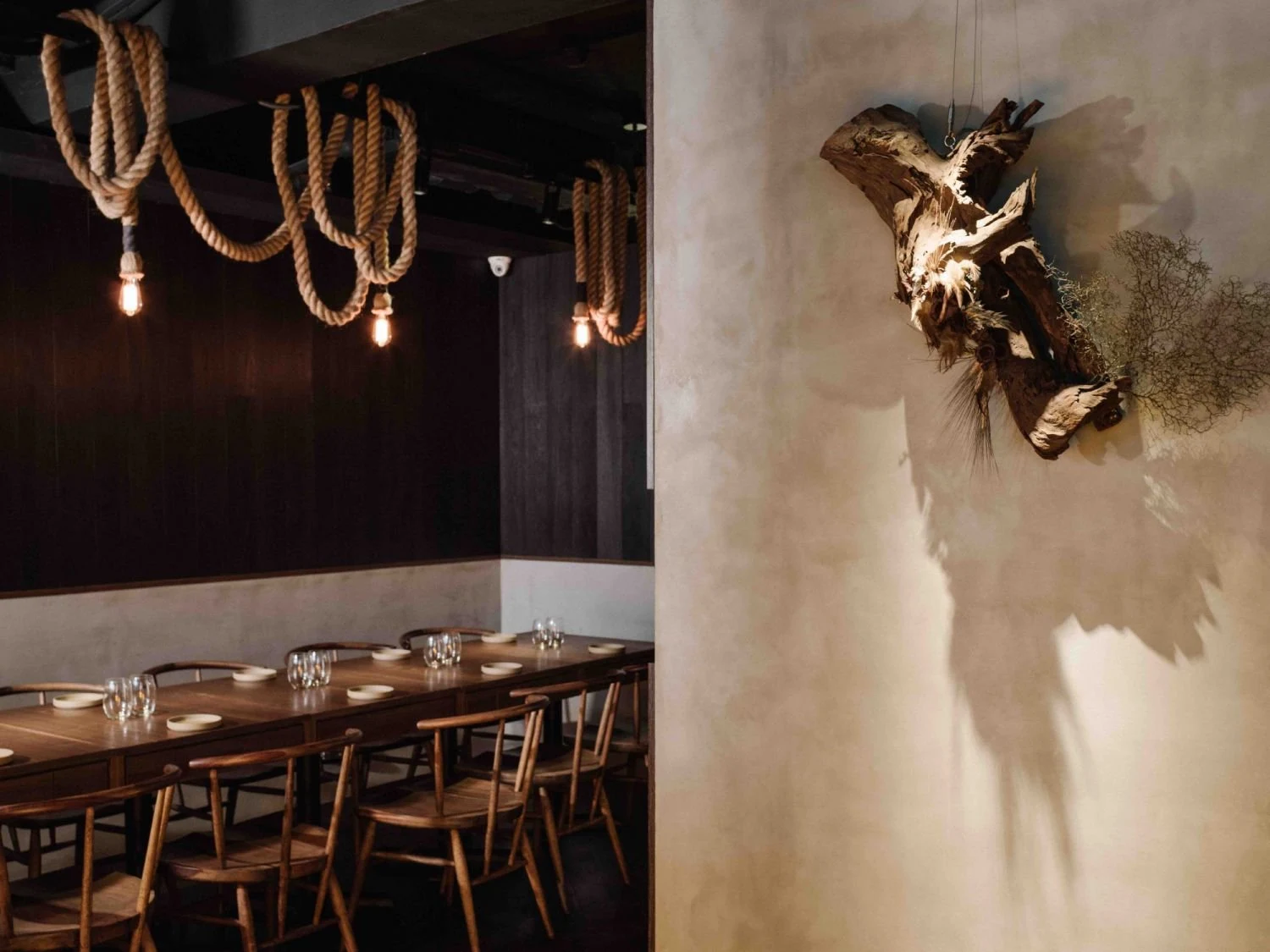
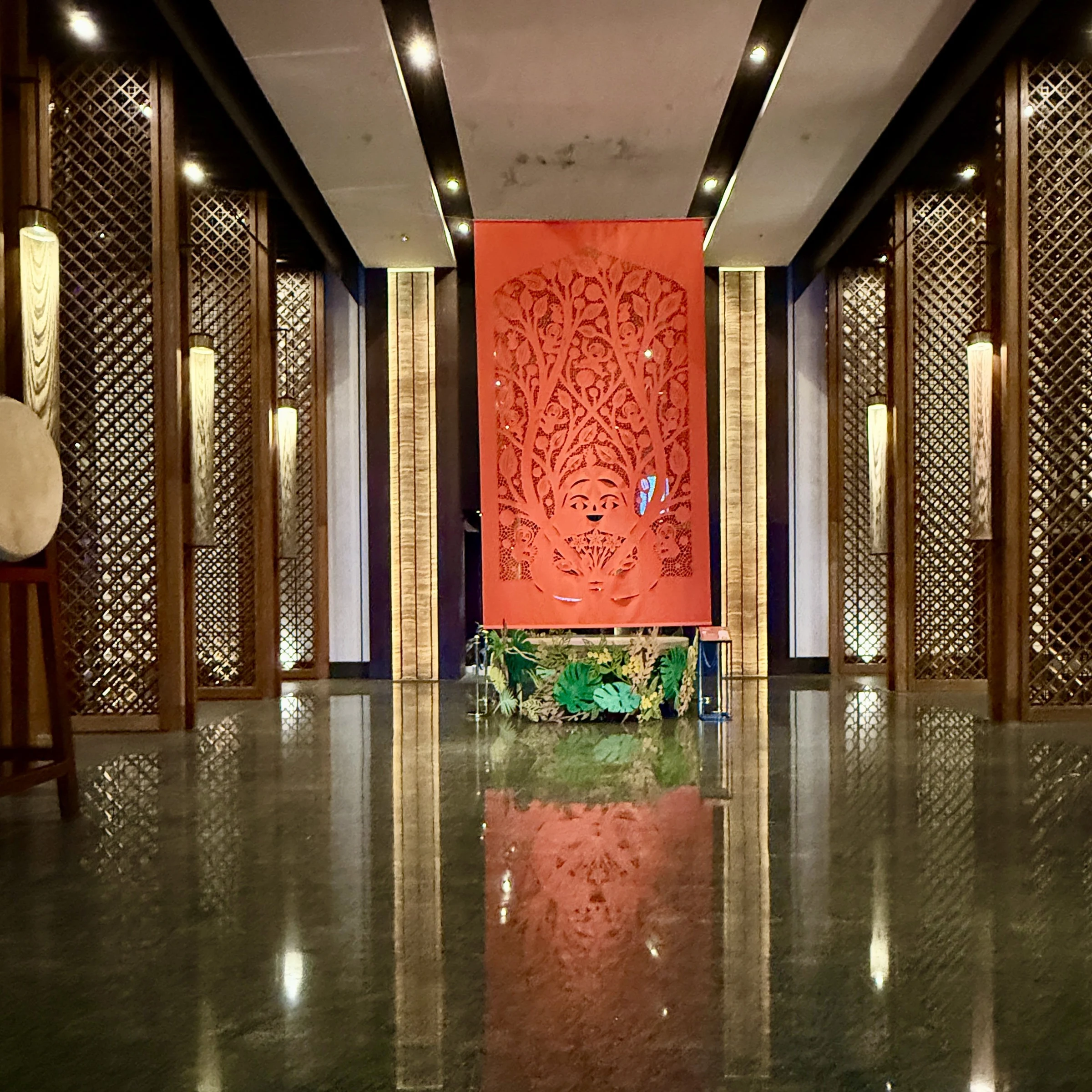
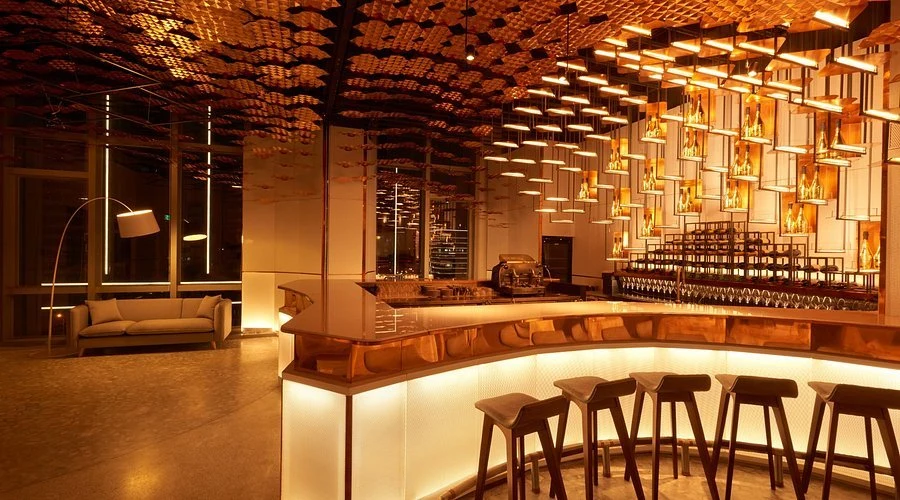
Zhongzheng District is not Taipei's flashiest dining address. The neighbourhood runs along administrative and commercial lines, more government offices than restaurant rows, which makes the 17th floor of the Zhongxiao East Road tower housing The Guest House feel deliberately removed from the city's busier eating circuits. The room itself reinforces that sense of separation: spacious, unhurried, designed for the kind of lunch that extends past two hours without anyone raising an eyebrow. The private rooms at the back function as proper banquet spaces, proportioned for the ceremonies, birthdays, business dinners, family occasions, that structured Chinese dining has always been arranged around.
That the venue spent years as a members-only club before opening to the public explains something about the atmosphere. It was built for regulars who understood the format. The transition to a broader audience has not changed the register: the room remains quiet, the service unhurried, and the expectation is that guests arrive to eat seriously rather than photograph quickly.
Huaiyang Cooking in Taiwan: The Tradition and Its Demands
Huaiyang cuisine occupies a particular position in the taxonomy of Chinese regional cooking. Originating along the Huai and Yangtze river corridors in Jiangsu province, it is Shanghai's culinary parent and the foundation of much of what Taiwanese diners of a certain generation would recognise as refined mainland Chinese cooking. Compared to the fire-forward intensity of Sichuan or the roasted richness of Cantonese cooking, the tradition represented at the highest level in Taipei by Le Palais, Huaiyang depends on subtlety. The flavours are clean, the seasoning is precise, and the techniques around braising, steaming, and knife work are where the skill shows.
This is demanding cooking to execute well, precisely because there is nowhere to hide. The Guest House's OAD listings note specifically that chef Lin Ju-Wei cuts back on oil and salt without sacrificing flavour, a compressed statement that carries real weight in this context. Huaiyang dishes that have been lightened carelessly flatten and lose their identity. When it works, the result is food that reads as restrained on first encounter and then reveals depth over the course of a meal. The distinction between that and mere blandness is the technical gap that separates the region's leading practitioners from the rest.
The menu also incorporates Sichuan classics alongside the Huaiyang core, and extends to Taiwanese favourites. That combination is not unusual in Taipei's high-end Chinese dining rooms, where the city's history as a meeting point for mainland regional traditions created a cooking culture that holds multiple Chinese cuisines simultaneously. What distinguishes The Guest House's version is the execution signal: OAD's assessors describe the classics as shrewdly executed, a phrase that implies fidelity to the source material rather than creative reinterpretation.
The Recognition Record
The awards trajectory at The Guest House traces a consistent upward line. Opinionated About Dining included the restaurant in its Leading Restaurants in Asia list in 2023 as a recommended entry. By 2024, the ranking had moved to number 409, and a Michelin one star arrived the same year. The Google rating of 4.4 across 2,218 reviews adds a volume-weighted data point that confirms the critical assessment aligns with broader guest experience.
At the $$$ price tier, The Guest House occupies a specific position in Taipei's high-end Chinese dining market. It sits below the $$$$ bracket where Le Palais operates, itself a multi-Michelin-starred Cantonese institution that sets a different standard entirely, and alongside the city's serious mid-to-upper-tier dining rooms rather than the experimental tasting-menu format at places like Taïrroir or logy. The pricing positions it as serious without requiring the full commitment of a multi-course tasting menu evening.
The Scene It Belongs To
Taipei's Chinese dining scene has a depth that often surprises visitors more familiar with the city's internationally recognised contemporary restaurants. The post-1949 migration brought chefs and cooking traditions from across mainland China, and the decades since have produced a restaurant culture where Shanghainese, Sichuan, Hunan, Fujian, and Cantonese traditions each have established practitioners and loyal audiences. The Guest House belongs to the Huaiyang strand of that tradition, which in Taipei tends to draw older, established dining clientele alongside those who grew up eating this style of food at family tables.
That context matters for understanding what The Guest House is not. It is not a concept restaurant making statements about Taiwanese identity, in the way that Taïrroir does. It is not a European fine-dining framework applied to local ingredients, as logy does with its Modern European and Asian Contemporary menu, nor a Spanish contemporary template like Molino de Urdániz. The Guest House's ambition is conservative in the precise sense: it aims to execute a classical tradition at a high level, and the Michelin recognition and OAD ranking suggest it succeeds on those terms.
Across Taiwan more broadly, this kind of disciplined classical Chinese cooking appears at different price points and in different regional dialects. JL Studio in Taichung approaches Southeast Asian-Chinese cooking from a contemporary angle, while Akame in Wutai Township represents an entirely different register of indigenous Taiwanese cooking. The Guest House holds the more traditional end of the spectrum, where classical technique and restraint are the measure.
Lunch vs. Dinner: Two Different Arguments
The Guest House runs identical hours across all seven days: lunch from 11:30 AM to 2 PM, dinner from 6 PM to 9:30 PM. Both sittings make sense on their own terms, but the early lunch service points to a specific rhythm. Huaiyang cooking at this level repays a slow meal. Dishes that are braised or steamed arrive in sequence rather than in parade, and the banquet-style private rooms are explicitly built for that format. For solo diners or couples, the main room's spacious layout supports the same unhurried approach. The dinner service in the private rooms suits the formal occasion dining, corporate entertainment, family celebrations, where the room format functions as part of the event.
What to Eat
What the OAD record does confirm is the kitchen's alignment with Huaiyang and Sichuan classics executed with reduced oil and salt, a technique indicator that points toward clean broths, precisely seasoned braises, and controlled wok work rather than heavy saucing. Taiwanese favourites round out the menu, which in this context likely means the comfort dishes that Taipei diners would expect as anchors on any serious Chinese menu. The Michelin committee's endorsement and OAD's consistent recognition both suggest the kitchen handles all three threads, Huaiyang, Sichuan, Taiwanese, without treating any as an afterthought.
Know Before You Go
- Address: 17F, 12 Section 1, Zhongxiao East Road, Zhongzheng District, Taipei
- Hours: Lunch 11:30 AM – 2 PM, Dinner 6 PM – 9:30 PM, seven days a week
- Price range: $$$
- Awards: Michelin One Star (2024); OAD Leading Restaurants in Asia #409 (2024), #442 (2025)
- Private dining: Private rooms available, suited to banquet-format meals and group occasions
- Timing note: Arrive at the start of lunch service if you want the full extended-lunch format
How It Fits Into a Taipei Itinerary
For visitors building a serious Taipei eating itinerary, The Guest House fills the classical Chinese dining slot that the city's contemporary restaurant scene does not. The Michelin and OAD recognition place it among the city's most credentialled Chinese kitchens, and the $$$ tier makes it accessible within a trip that might also include higher-spend evenings at $$$$ tables. Pair it with the city's contemporary end, logy, Taïrroir, or L'Atelier de Joël Robuchon, and the contrast in approaches clarifies what makes Taipei's dining culture genuinely broad rather than narrowly focused on a single mode.
For deeper planning, our full Taipei restaurants guide maps the city's dining rooms across cuisines and price tiers.
Questions
Frequently asked
What recognition does The Guest House hold?
The Guest House holds 1 Michelin star.
How expensive is The Guest House?
The Guest House is listed at a price level of $$$$.
Where is The Guest House and what does it serve?
The Guest House is in Liming, Taipei, serving Sichuan & Huaiyang Chinese with Taiwanese Elements.
The field
How it compares
| Place | Awards | Cuisine | Notes |
|---|---|---|---|
| The Guest House | Michelin 1 Star | Sichuan & Huaiyang Chinese with Taiwanese Elements | Liming, $$$$ |
| Le Palais | Michelin 3 Stars | Fine Dining Cantonese | Taipei |
| logy | Michelin 2 Stars, World's 50 Best | Modern Japanese-Taiwanese Fusion Omakase | Taipei |
| Moon Moon Food (雙月食品社) | Michelin 2 Stars | Modern Fine Dining | Taipei |
| Mume | World's 50 Best | Modern Taiwanese-European Fusion | Taipei |
| Silks House | World's 50 Best | Refined Cantonese | Taipei |
| Taïrroir | Michelin 3 Stars | Taiwanese-French Fusion Fine Dining | Taipei |
Similar places
Fine Dining Cantonese
Le Palais
Taipei, Taiwan
★★★
Modern Japanese-Taiwanese Fusion Omakase
logy
Taipei, Taiwan
★★ · 50 Best
Modern Fine Dining
Moon Moon Food (雙月食品社)
Taipei, Taiwan
★★
Modern Taiwanese-European Fusion
Mume
Taipei, Taiwan
50 Best
Refined Cantonese
Silks House
Taipei, Taiwan
50 Best
Taiwanese-French Fusion Fine Dining
Taïrroir
Taipei, Taiwan
★★★