The House of Rong
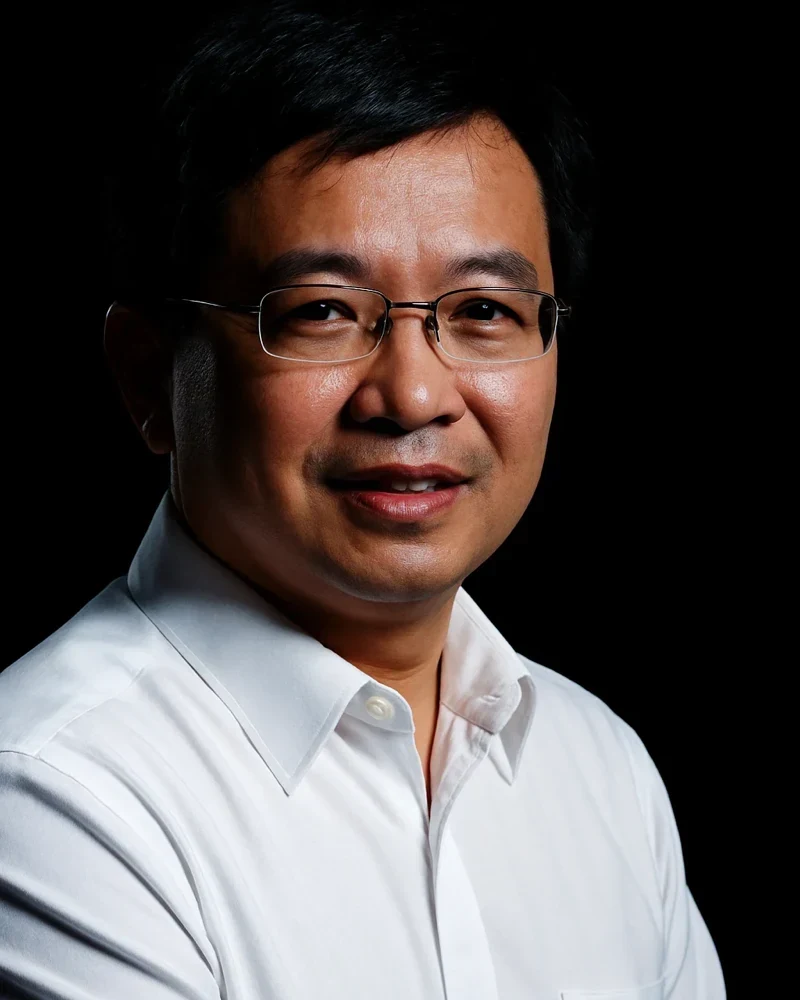
In Residence
Jun Wang
Chef
- 01CuisineTaizhou Seafood Fine Dining
- 02CityShanghai, China
- 03RecognitionTwo Michelin Stars
A Mansion as a Frame for Dining
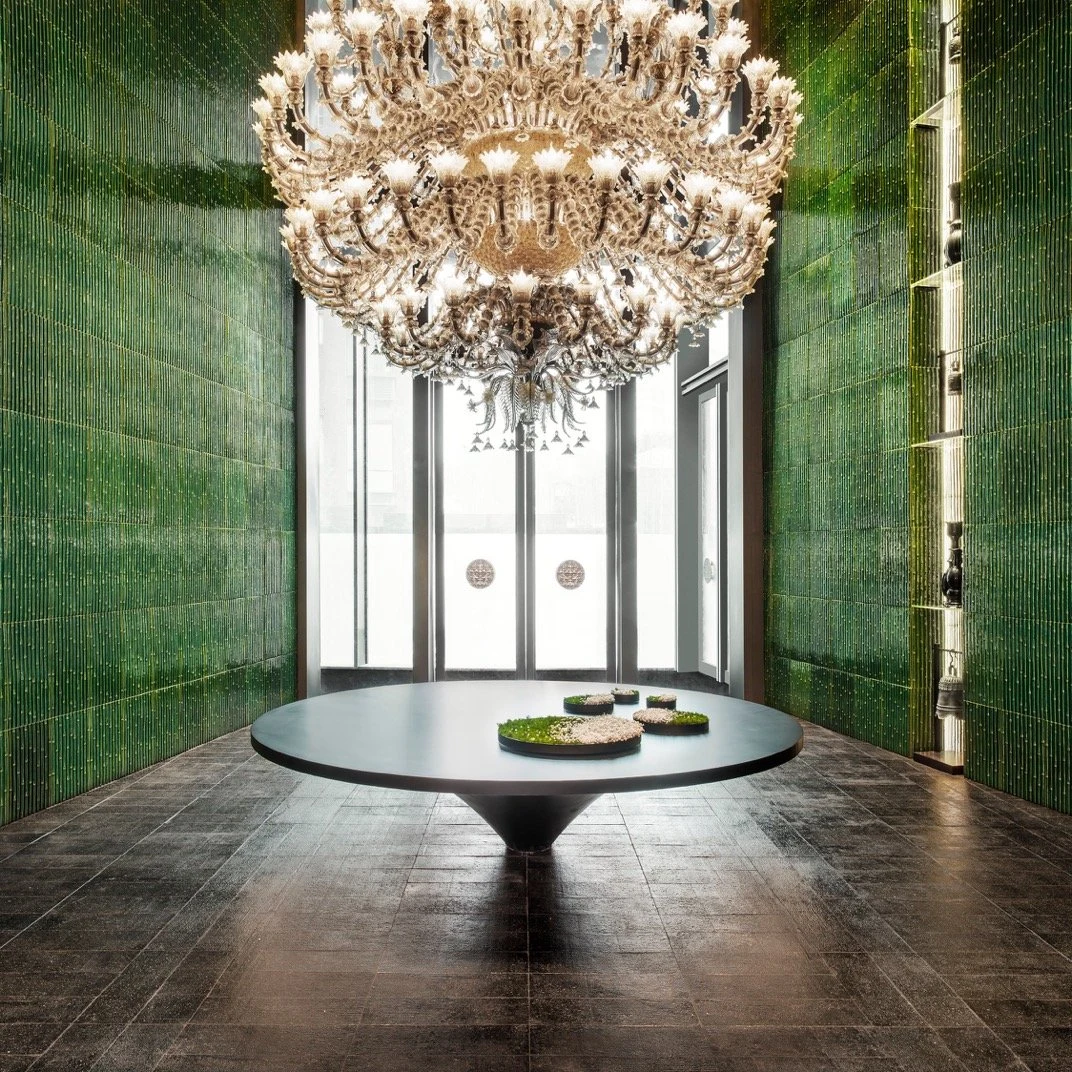
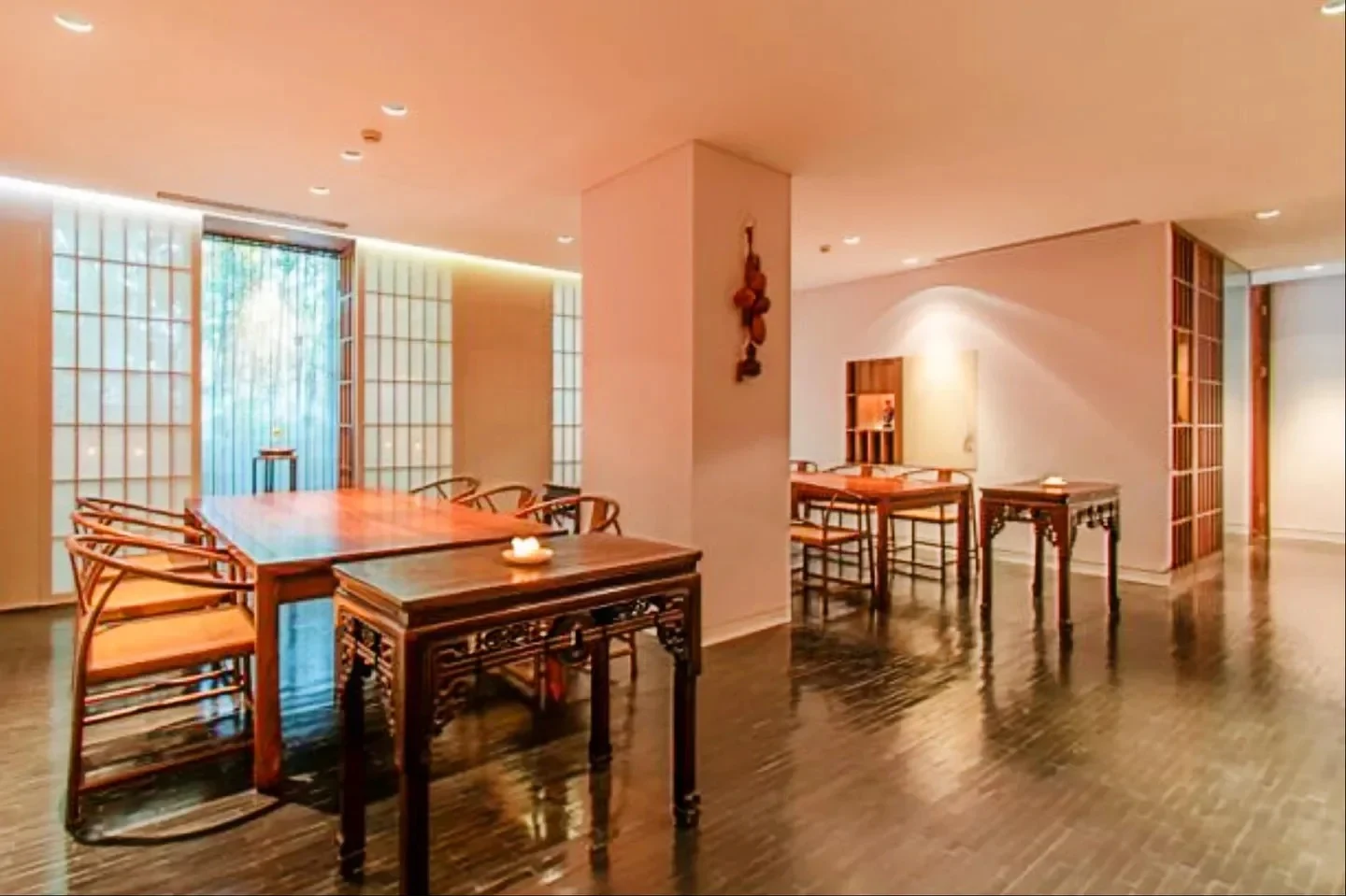
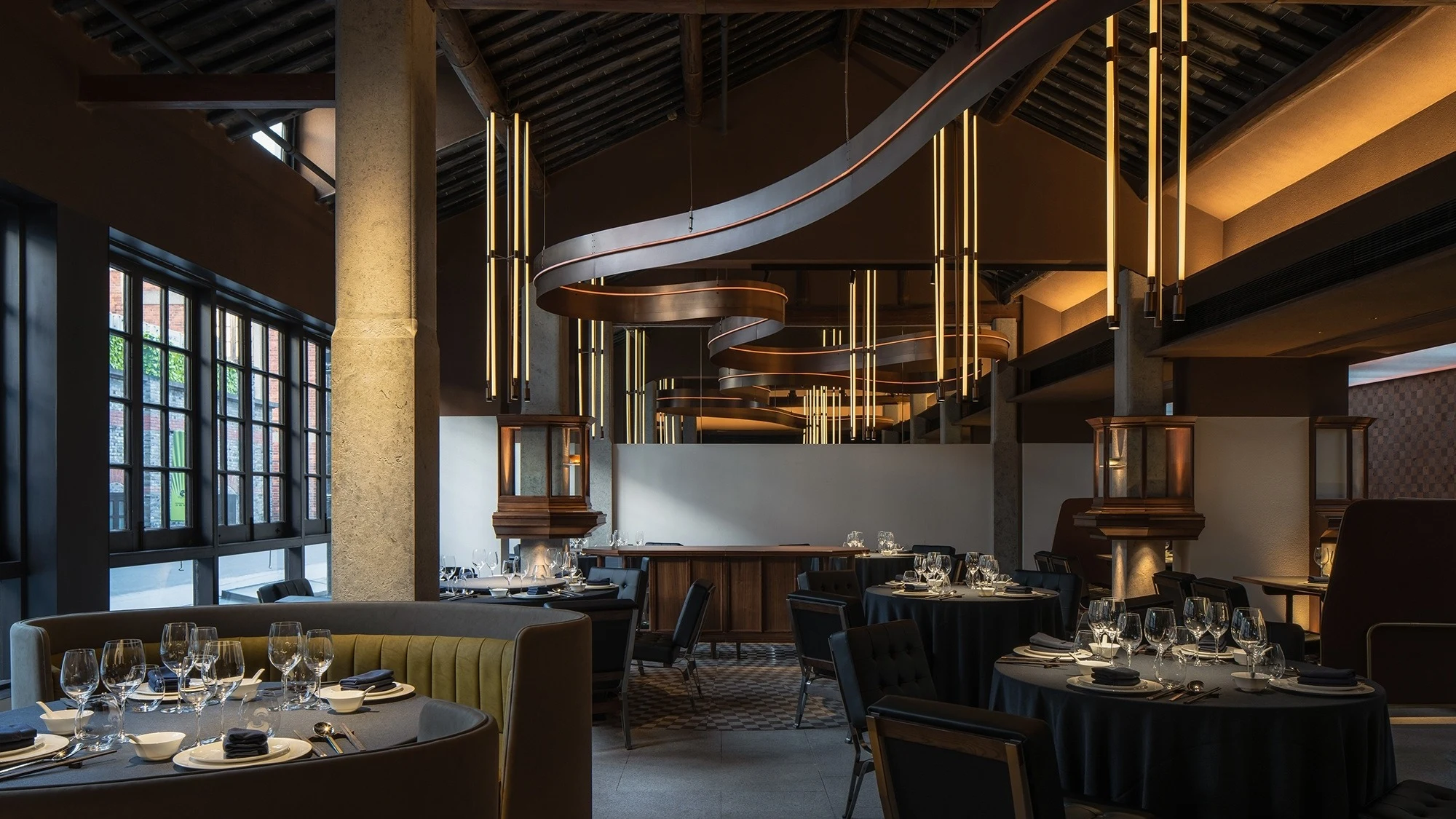
Some dining rooms announce themselves through lighting design or plating theatre. The House of Rong, on Taicang Road in Huangpu, makes its first argument through architecture. The building is a historical mansion associated with architect I.M. Pei's family, and the interiors carry that lineage directly: Pei's original drawings appear within the space, and the decorative language draws from Suzhou-style architectural motifs, latticed timber screens, restrained ornamentation, and proportions that read as considered rather than constructed for effect. Before a dish arrives, the room has already communicated something about the register the meal will operate in.
That register is high. The Suzhou aesthetic, with its preference for elegant geometry and natural material, sits at a remove from the theatrical maximalism that defines parts of Shanghai's luxury dining scene. Here the visual experience is quieter and more deliberate, which creates a particular kind of pressure on the food: there is no spectacle to compensate, so the cooking carries the room rather than the reverse. Two Michelin stars (2024) and a Black Pearl 2 Diamond (2025) indicate the kitchen has met that standard consistently.
The Sunday email
Read about the people behind restaurants like The House of Rong in the Sunday email.
Every Sunday we send a lead story and up to four more about the chefs, winemakers, sommeliers and hoteliers behind the restaurants, bars, wineries and hotels we cover.
Recent stories

Free. One email a week, and you can unsubscribe from any issue.
Taizhou at the Table: A Cuisine Worth Understanding
Taizhou cuisine occupies a specific and underrepresented position within the broader taxonomy of Chinese regional cooking. Located in coastal Zhejiang province, Taizhou's culinary identity is shaped by proximity to the East China Sea, the seafood supply is both diverse and, at the upper end, exceptional. The cooking style tends toward precision over transformation: fresh ingredients are treated with restraint, allowing the inherent qualities of the product to carry the dish rather than burying them under sauce weight or heavy seasoning. Within the larger world of Jiangsu-Zhejiang coastal cuisine, Taizhou sits slightly apart from the sweeter registers of Shanghainese cooking, favouring clarity and clean saline notes.
That profile makes it a natural fit for high-end dining in a city like Shanghai, where sophisticated diners are increasingly interested in regional Chinese specificity rather than pan-Chinese generalism. The parallel here is instructive: just as Beijing's fine dining scene has developed dedicated Taizhou outposts (see Xin Rong Ji (Jinrong Street) and Qian Li), Shanghai has seen Taizhou cuisine earn a serious foothold at the premium tier, with The House of Rong among its most recognised addresses.
The menu here is seafood-focused and built predominantly on ingredients sourced from Taizhou. Wild-caught yellow croaker appears as a reference point, a fish deeply embedded in Zhejiang culinary culture, prized for its firm texture and clean flavour, and significantly more expensive in its wild form than farmed equivalents. Its presence signals procurement priorities as much as culinary ones.
The Customisable Format and What It Means
One of the defining structural features of The House of Rong is a menu format that can be calibrated around the composition of your party. This is not unusual in high-end Chinese dining, where banquet culture has long assumed that meals are social events shaped by group size and preference, but the execution here appears to be a deliberate design choice rather than an accommodation. It shifts authority toward the diner without abandoning the kitchen's sourcing logic.
In practice, this means groups can discuss priorities, whether to emphasise a particular seafood preparation, to build toward a specific course, or to adjust weight across the meal, before the kitchen sequences accordingly. For diners unfamiliar with Taizhou cuisine's range, this format also functions as an educational entry point: the conversation itself is informative.
This approach positions The House of Rong differently from the fixed omakase or set-menu structures that dominate comparable price tiers elsewhere in Shanghai's fine dining market. At the ¥¥¥¥ level, choices narrow considerably. Fu He Hui, one of the city's few vegetarian addresses at this price point, operates on a fixed format. 102 House takes a different approach to Cantonese heritage dining. The customisable structure at The House of Rong is a differentiator within its tier.
Where This Sits in Shanghai's Regional Chinese Scene
Shanghai's premium Chinese dining market has matured significantly over the past decade, moving away from a period when luxury Chinese meant Cantonese by default. Regional specificity now carries real commercial and critical weight. Taizhou cuisine has been one of the beneficiaries of that shift, in part because its seafood-forward identity aligns with how Shanghai diners have historically positioned prestige dining around exceptional fish and shellfish.
The Xin Rong Ji group, which operates the West Nanjing Road flagship in Shanghai as well as outposts in Beijing and Chengdu, has done much to establish Taizhou cuisine as a credible fine-dining category across mainland China. The House of Rong operates in that same refined stratum. The competitive comparison between these two addresses represents the current state of high-end Taizhou: two well-capitalised operations, both Michelin-recognised, each making distinct arguments about what the cuisine can do at its upper register.
Beyond Taizhou, the broader picture of Shanghai's regional Chinese dining includes addresses like Lin Family of One at the Bund and Rong Cuisine, each staking out different positions within the city's fine Chinese spectrum. Across the region, comparable benchmarks exist at Ru Yuan in Hangzhou, Chef Tam's Seasons in Macau, Imperial Treasure in Guangzhou, and Dai Yuet Heen in Nanjing.
Questions
Frequently asked
What recognition does The House of Rong hold?
The House of Rong holds 2 Michelin stars.
Who works at The House of Rong?
Made By profiles Jun Wang (Chef) at The House of Rong.
How expensive is The House of Rong?
The House of Rong is listed at a price level of $$$$.
Where is The House of Rong and what does it serve?
The House of Rong is in Lao Ximen, Shanghai, serving Taizhou Seafood Fine Dining.
The field
How it compares
| Place | Awards | Cuisine | Notes |
|---|---|---|---|
| The House of Rong | Michelin 2 Stars | Taizhou Seafood Fine Dining | Lao Ximen, $$$$ |
| 8 1/2 Otto e Mezzo Bombana (Shanghai) | Michelin 2 Stars | Modern Italian Fine Dining | Shanghai |
| Amazing Chinese Cuisine | Michelin 2 Stars | High-end Chaoshan Cuisine | Shanghai |
| Fu He Hui | Michelin 2 Stars, 50 Best | Modern Seasonal Vegetarian Fine Dining | Shanghai |
| Ling Long Shanghai | Michelin 1 Star, 50 Best | Modern Chinese Fine Dining | Shanghai |
| Meet the Bund | Michelin 1 Star, 50 Best | Modern Fujianese Fine Dining | Shanghai |
| Taian Table | Michelin 3 Stars | Modern European with Asian Influences | Shanghai |
Similar places
Modern Italian Fine Dining
8 1/2 Otto e Mezzo Bombana (Shanghai)
Shanghai, China
★★
High-end Chaoshan Cuisine
Amazing Chinese Cuisine
Shanghai, China
★★
Modern Seasonal Vegetarian Fine Dining
Fu He Hui
Shanghai, China
★★ · 50 Best
Modern Chinese Fine Dining
Ling Long Shanghai
Shanghai, China
★ · 50 Best
Modern Fujianese Fine Dining
Meet the Bund
Shanghai, China
★ · 50 Best
Modern European with Asian Influences
Taian Table
Shanghai, China
★★★
The Sunday email
Read about the people behind restaurants like The House of Rong in the Sunday email.
Every Sunday we send a lead story and up to four more about the chefs, winemakers, sommeliers and hoteliers behind the restaurants, bars, wineries and hotels we cover.
Recent stories
Free. One email a week, and you can unsubscribe from any issue.