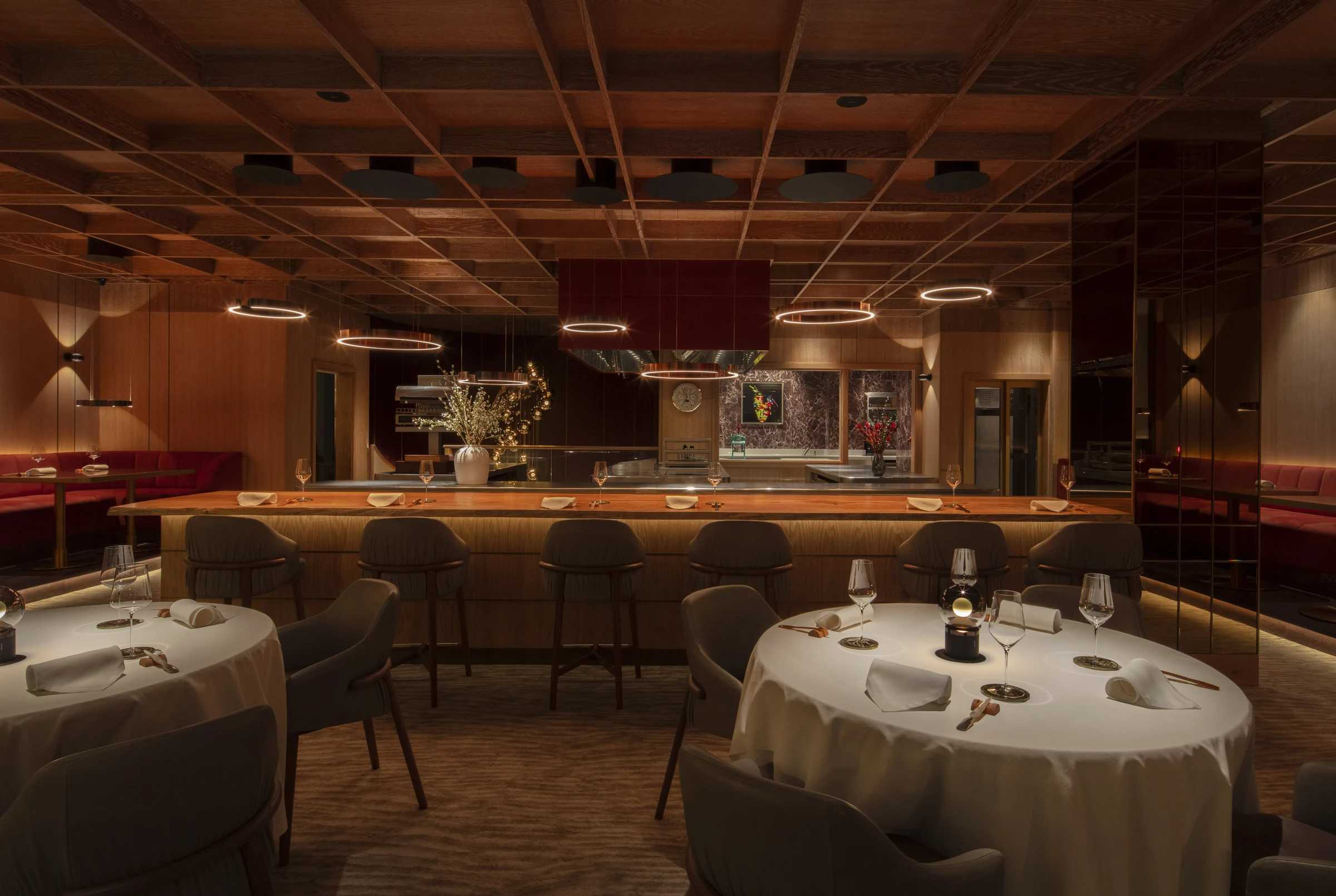
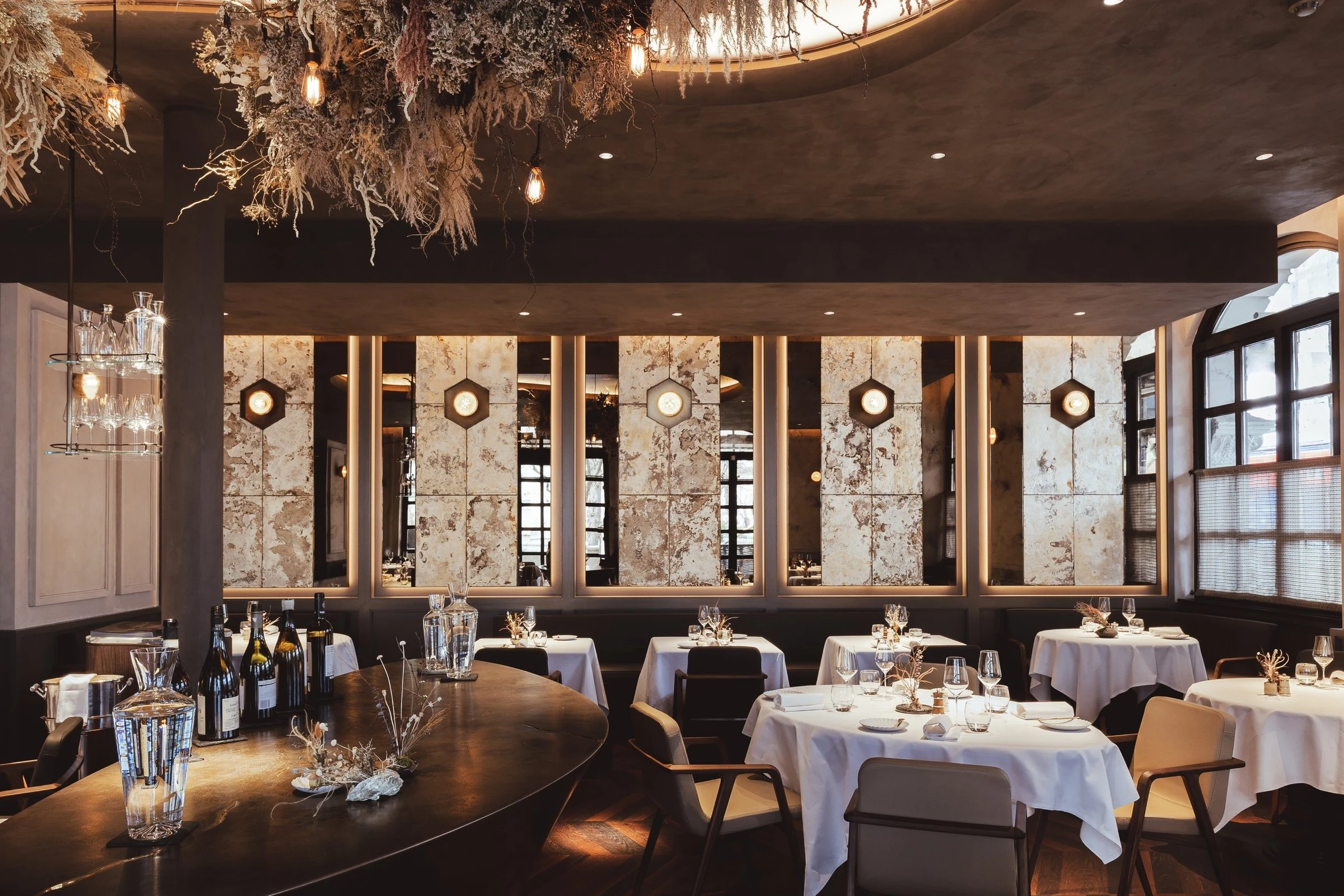
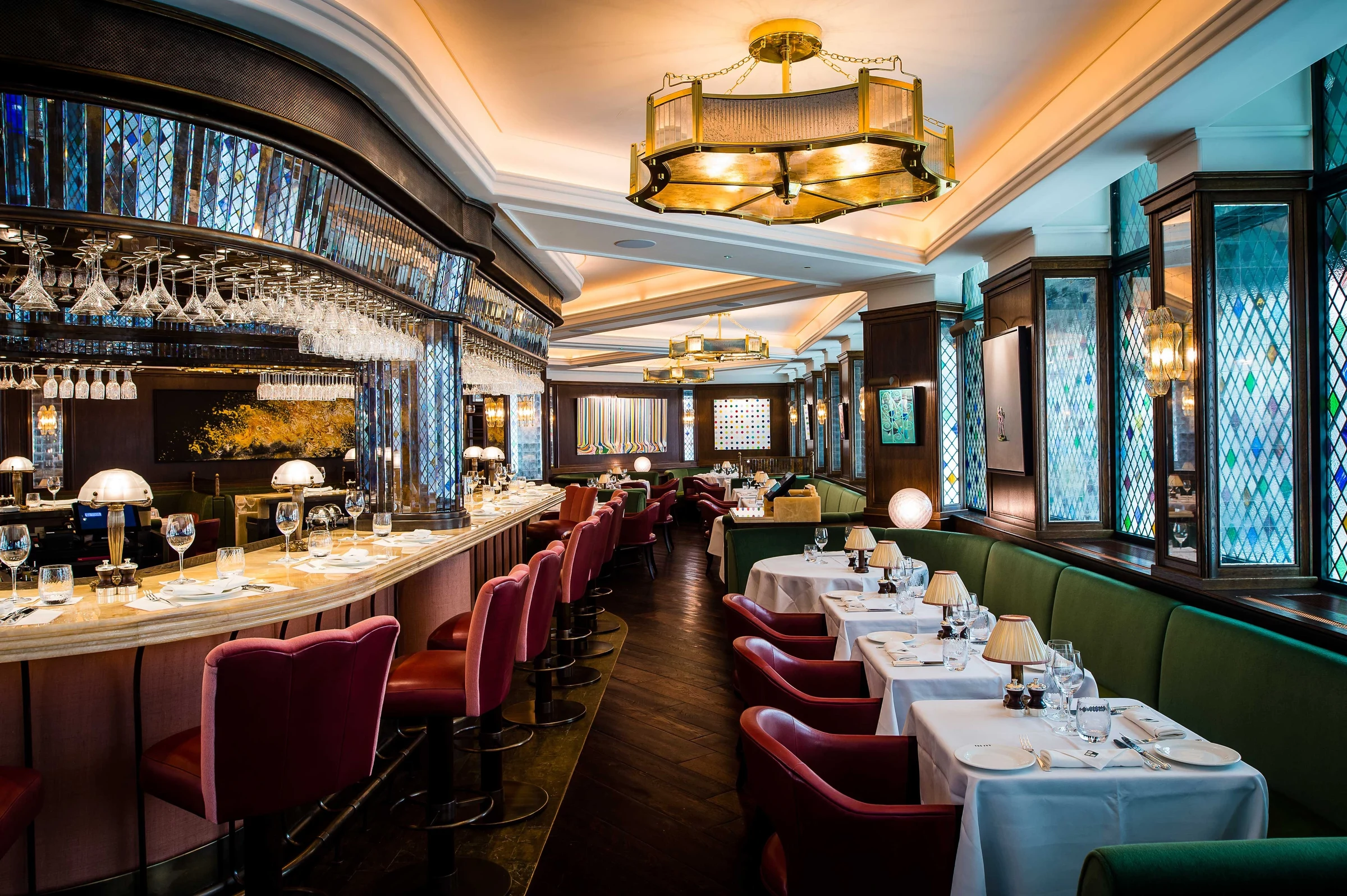
The Ivy
- 01CuisineBritish Brasserie
- 02CityLondon, United Kingdom
- 03RecognitionWorld's 50 Best — No. 8
- World's 50 Best · #8 · World's 50 Best Restaurants
- World's 50 Best Best Restaurants #44 · 2005
- World's 50 Best Best Restaurants #24 · 2004
- World's 50 Best Best Restaurants #31 · 2003
- World's 50 Best Best Restaurants #8 · 2002
A Reputation Built in the Early Years of Global Restaurant Rankings
The Ivy is a British brasserie in London at 20 New Change, and it appeared at number eight on the World's 50 Best Restaurants list in 2002. That single data point locates the restaurant within a specific and consequential moment: the early years of a ranking system that would go on to reshape how premium dining destinations are perceived globally. By 2003 it held the 31st position, climbed to 24th in 2004, and settled at 44th in 2005. Four consecutive appearances in that window, across a period when the list was still establishing its methodology and authority, placed The Ivy in company that included a handful of addresses now considered definitive references in the British and European canon.
London's Modern European category has since fragmented considerably. The upper end now includes tightly formatted tasting-menu operations such as CORE by Clare Smyth and Sketch, The Lecture Room and Library, both carrying Michelin recognition and operating on strict set-menu formats. The Ledbury and Restaurant Gordon Ramsay occupy adjacent territory, using prix fixe structures to control pacing, margin, and the overall shape of the guest experience. The Ivy's early 50 Best presence predates much of that consolidation, which gives it a different kind of authority: not the authority of current rankings, but of having been positioned at the leading edge before the current template hardened.
Modern European with a Californian Register
The cuisine classification here is specific enough to reward attention: British brasserie. That pairing is less common in London than it might appear. Modern European, as a label, typically signals a kitchen working across French, Italian, and broader continental technique without committing to a single national identity. The Californian addition suggests a lighter orientation toward produce, a tendency to draw from Pacific Rim influences, and a looser relationship with sauce-heavy classical structure. It is a combination that sits at some distance from the more rigidly French-derived approach of peers like Restaurant Gordon Ramsay or the British-rooted menu logic of Dinner by Heston Blumenthal.
Chef Alexandre Nicolas leads the kitchen. In the context of editorial positioning, what matters is not the biographical arc but the competitive signal: a named chef in a venue with documented 50 Best history, operating a cuisine classification that bridges two distinct culinary traditions. That is a relatively specific combination in London's EC4 postcode, which is more typically associated with finance-district brasseries and quick-service formats than with the kind of deliberate, cross-continental cooking the classification implies.
The Set Menu Question in a London Context
The tension between prix fixe and à la carte formats is one of the more consequential debates running through premium dining in any major city, and London is no exception. The set menu argument, at its strongest, holds that a fixed progression allows a kitchen to sequence flavours with intention, reduce waste, and communicate a coherent point of view. The à la carte counter-argument is that choice is itself a form of hospitality, that a guest who cannot eat at their own pace and according to their own appetite has been managed rather than served.
At the summit of the London market, the set menu has largely won. Venues like CORE by Clare Smyth and Sketch, The Lecture Room and Library have built their current reputations around tasting menus that run between eight and twelve courses. The economics of that format require a high cover spend per seat and a kitchen geared toward low-volume, high-precision production. It is a model that suits Michelin inspection cycles and the choreography of a two-to-three-hour meal, but it excludes a category of guest: the person who wants a serious meal, not a structured event.
The Ivy's historical positioning sits differently in that framework. Its 50 Best appearances came during a period when the list rewarded restaurants that drew from both professional critical regard and actual dining culture, not purely from the tasting-menu format that now dominates the upper tier. For American visitors accustomed to the prix fixe debate playing out at venues like Le Bernardin in New York City or the more format-rigid Atomix in New York City, the London version of that conversation has its own texture: the city's leading end has consolidated around fixed menus more completely than New York has, leaving fewer options for serious dining outside the tasting-menu format.
Location and Hours: EC4 and the All-Day Format
The address at 20 New Change, EC4M, places The Ivy near St Paul's Cathedral, between the City's financial core and the cultural corridor leading toward the South Bank. It is an area that functions on weekday rhythms, filling rapidly at lunch and early dinner before quieting on evenings and weekends. The kitchen runs Tuesday through Sunday from 11:30am to 2am, with Sunday service ending at midnight.
All-day format is worth noting in the context of London's premium dining geography. Most of the venues that occupy The Ivy's peer tier by historical ranking and cuisine ambition operate on dinner-only or lunch-and-dinner schedules with shorter service windows. The all-day format broadens the accessible moments for a guest and positions the venue differently from strictly evening-format peers such as The Ledbury in Notting Hill or Dinner by Heston Blumenthal at the Mandarin Oriental.
Where The Ivy Sits in the Broader British Restaurant Picture
London's place within the UK dining scene has always required some calibration. The city concentrates the country's highest-profile venues and the majority of its internationally recognised names, but restaurants outside London have consistently challenged that dominance on quality grounds. The Fat Duck in Bray and L'Enclume in Cartmel represent the case for regional ambition outpacing metropolitan concentration. Moor Hall in Aughton, Gidleigh Park in Chagford, Hand and Flowers in Marlow, and Le Manoir aux Quat' Saisons in Great Milton each illustrate that the country's serious dining tradition extends well beyond the M25.
Within that broader map, The Ivy's 50 Best history locates it as a London-specific reference, one whose peak ranking period coincided with the early institutionalisation of international restaurant criticism. That combination of historical ranking and sustained popular rating is uncommon in London's EC4.
Know Before You Go
- Address: 20 New Change, London EC4M 9AG
- Hours: Tuesday to Saturday 8am–10pm; Sunday 8am–10pm; Monday closed
- Cuisine: Modern European, Californian
- Chef: Alexandre Nicolas
- Awards: World's 50 Best Restaurants, #8 (2002), #31 (2003), #24 (2004), #44 (2005) 5 from 5,317 reviews
- Nearest Area: St Paul's / City of London, EC4
Questions
Frequently asked
What recognition does The Ivy hold?
The Ivy holds a place on the World's 50 Best list at number 8.
How expensive is The Ivy?
The Ivy is listed at a price level of $$$.
Where is The Ivy and what does it serve?
The Ivy is in Blackfriars, London, serving British Brasserie.
The field
How it compares
| Place | Awards | Cuisine | Notes |
|---|---|---|---|
| The Ivy | World's 50 Best #8 | British Brasserie | Blackfriars, $$$ |
| CORE by Clare Smyth | Michelin 3 Stars, World's 50 Best | Modern British Fine Dining | London |
| Ikoyi | Michelin 2 Stars, World's 50 Best | Modern West African Fine Dining | London |
| Kitchen Table | Michelin 2 Stars | Modern British Fine Dining | London |
| KOL | Michelin 1 Star, World's 50 Best | Modern Mexican Fine Dining | London |
| Row on 5 | Michelin 2 Stars | Modern British Fine Dining with Mediterranean & Asian Influences | London |
| The Ledbury | Michelin 3 Stars, World's 50 Best | Modern British Fine Dining | London |
Similar places
Modern British Fine Dining
CORE by Clare Smyth
London, United Kingdom
★★★ · 50 Best
Modern West African Fine Dining
Ikoyi
London, United Kingdom
★★ · 50 Best
Modern British Fine Dining
Kitchen Table
London, United Kingdom
★★
Modern Mexican Fine Dining
KOL
London, United Kingdom
★ · 50 Best
Modern British Fine Dining with Mediterranean & Asian Influences
Row on 5
London, United Kingdom
★★
Modern British Fine Dining
The Ledbury
London, United Kingdom
★★★ · 50 Best