TreZe Restaurante
- 01CuisinePortuguese
- 02CityPorto, Portugal
- Michelin Bib Gourmand · Michelin Guide
- Michelin Bib Gourmand · 2026
- Opinionated About Dining Casual in Europe Ranked #816 · 2025
A Spanish Kitchen in Porto's Contemporary Tier
Porto's restaurant scene has developed a distinctive dual character over the past decade: a cluster of high-investment contemporary rooms at the leading end, including Antiqvvm, Blind, Euskalduna Studio, Le Monument, and Vila Foz, and a broader mid-tier where cooking ambition regularly exceeds the price point. TreZe Restaurante, on Rua da Cerca in Porto, sits in that second category, and does so with a culinary identity that sets it apart from most of its neighbours: a Portuguese kitchen with a pronounced commitment to wild game and seasonal market produce, run by chef Saúl Sanz.
That Spanish identity matters contextually. Porto's contemporary dining scene is almost entirely rooted in Portuguese product and tradition, which makes a kitchen oriented around Spanish culinary logic a genuine outlier in the city's comparable set. The comparison set is closer to A'Barra Restaurante y Barra Gastronómica or Corral de la Morería in Madrid than to the Michelin-tracked Portuguese contemporary rooms that dominate the city's upper bracket.
The Room: Counter, Kitchen, Dining Room
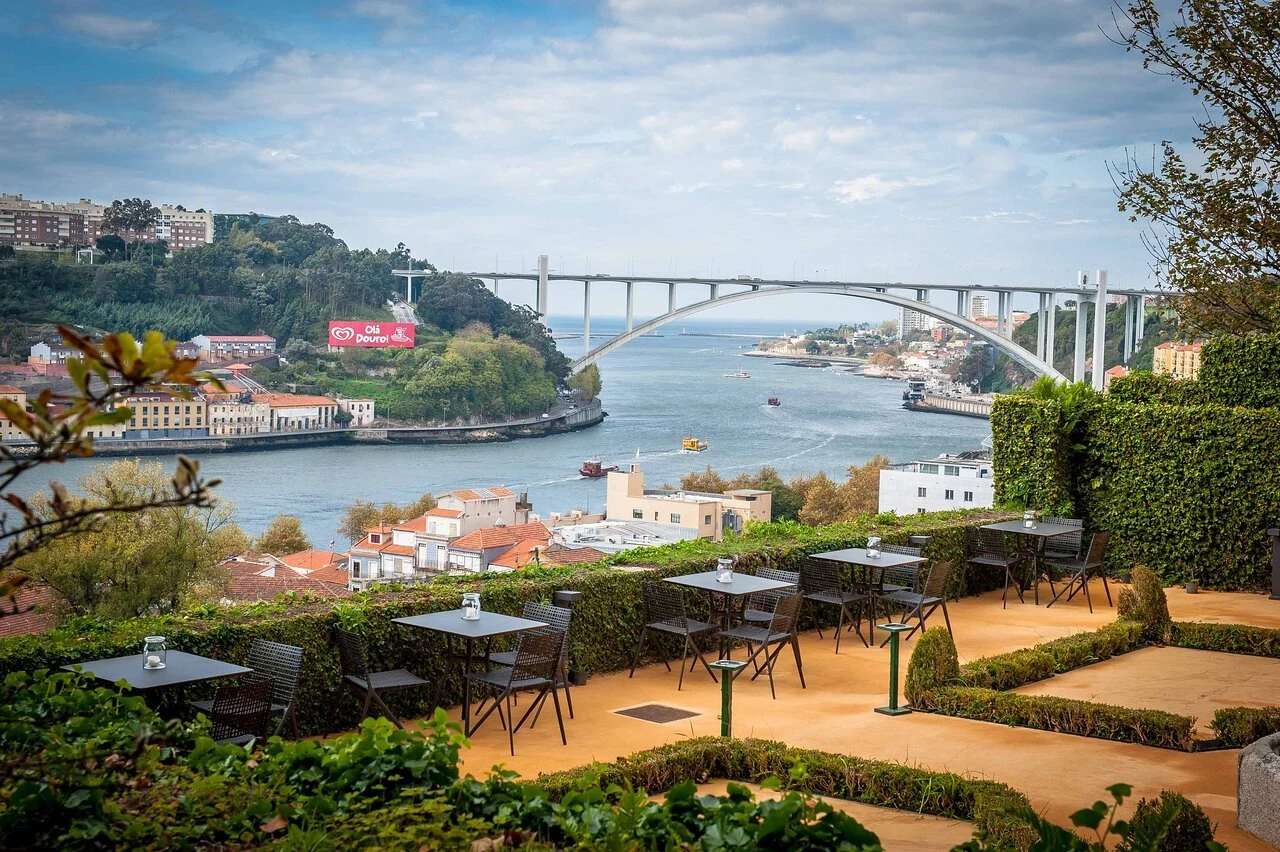
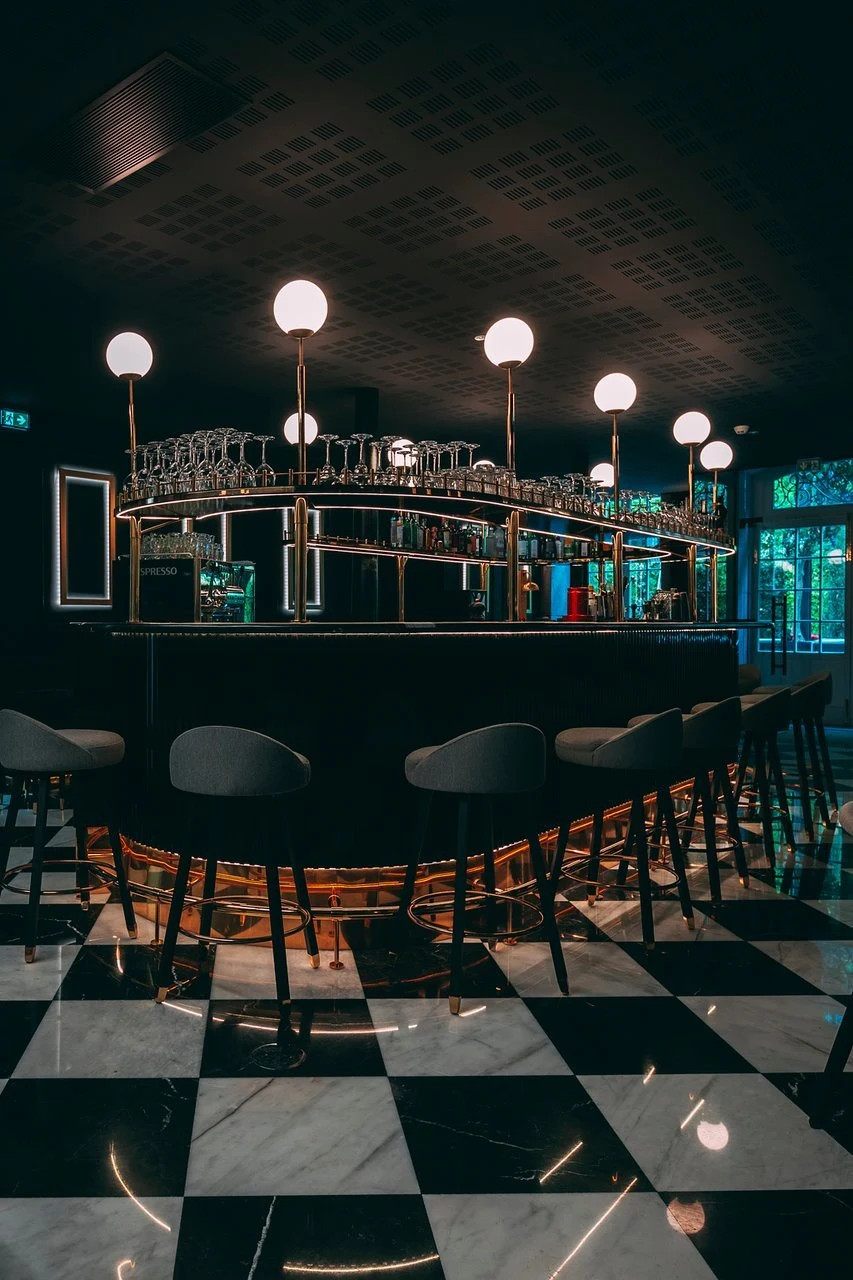
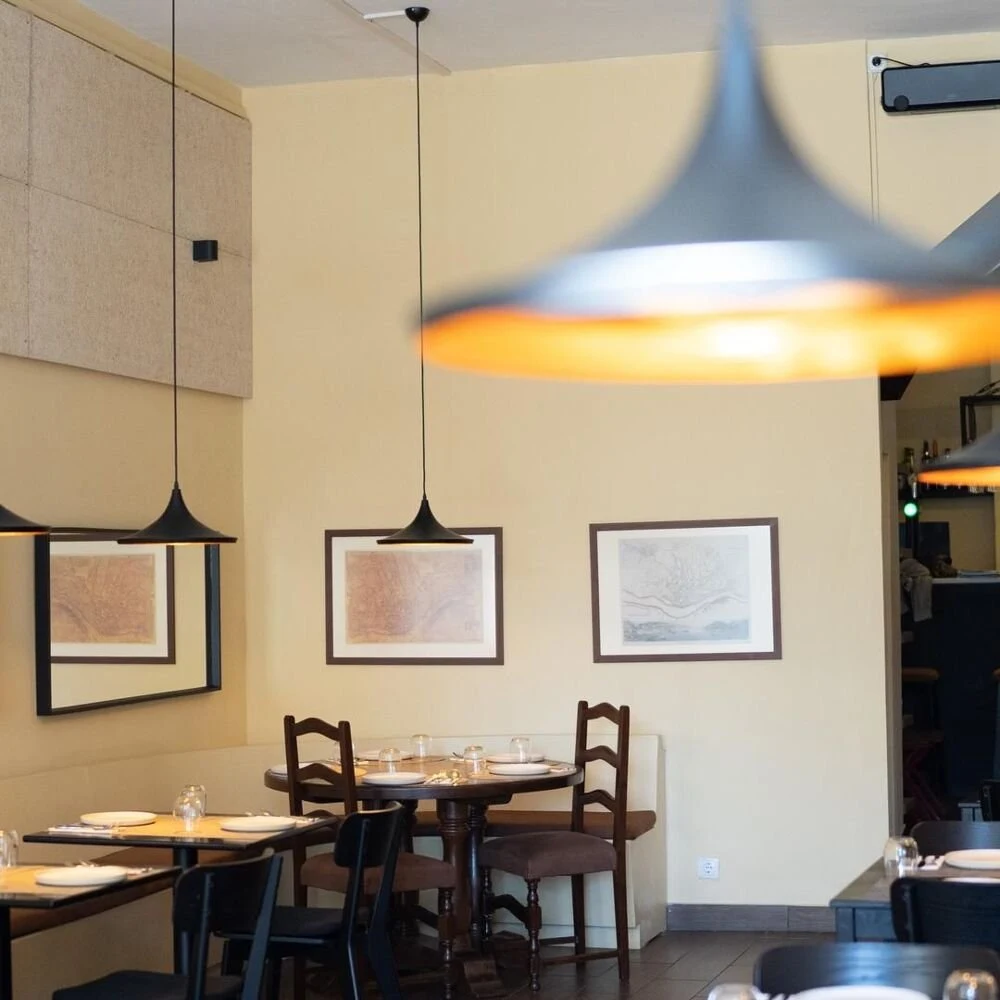
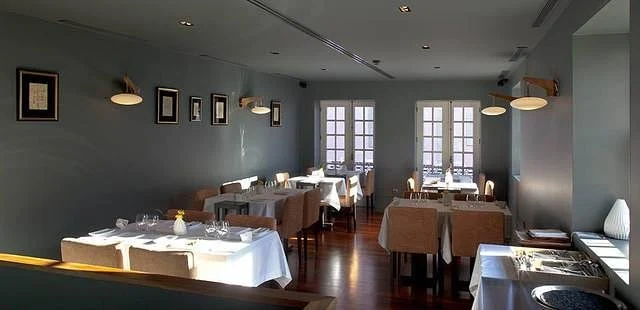
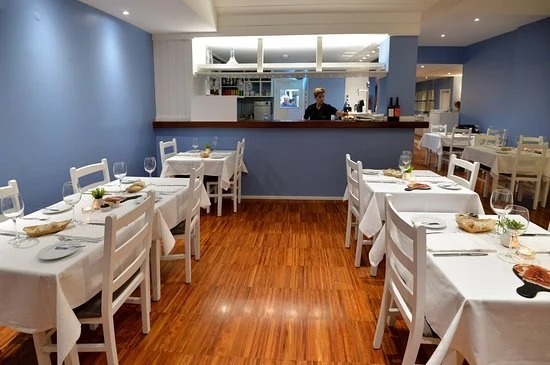
Approaching the room on Rua da Cerca, the physical layout signals intent before a single plate arrives. An attractive bar wraps around an open-view kitchen, giving counter seats a direct line of sight into the cooking. This is a format that has become increasingly common at the mid-to-upper end of Spanish and Portuguese dining, where the theatre of preparation is treated as part of the offer rather than hidden behind a pass. The dining room beyond is appointed with care, calibrated for longer meals rather than rapid turnover.
The format supports two modes of eating: medias raciones, the Spanish-tradition half-portions that allow a table to cover significant ground across the menu without committing to full plates, and a tasting menu for guests who want a more structured progression. Neither format is framed as superior. The medias raciones route in particular suits the wild game orientation of the kitchen, where a wider spread of smaller portions allows the seasonal produce logic to show more clearly across the meal.
Game, Season, and the Market Calendar
Wild game kitchens in Portugal and Spain operate around a strict calendar that most casual diners underestimate. Hunting seasons in the Iberian peninsula run roughly from October through February for most game birds, with different windows for rabbit, hare, and larger quarry. A kitchen that genuinely orients its menu around these windows, as TreZe does, will cook materially differently in November than in June. This is not a marketing claim about freshness; it is a structural constraint that forces the kitchen to rethink the menu several times across the year.
Chef Saúl Sanz is documented as not a hunter himself, which is a meaningful detail in this context. Game kitchens run by hunting chefs tend toward trophy produce and a certain romanticism about the chase. A non-hunting chef who nonetheless tracks seasons carefully tends to approach the same ingredients as a sourcing and cooking problem rather than a personal mythology. The result, in kitchens that execute this well, is more technically precise and less sentimental about the product.
The Wine Angle: What the List Should Be Doing Here
A Portuguese kitchen with game at its centre sets a specific brief for the wine program. Game, particularly birds and hare, has an affinity with older red wines where tannin has softened and secondary and tertiary notes, leather, forest floor, dried fruit, have developed. This pushes the list toward Spanish regions, Rioja Reserva and Gran Reserva, Ribera del Duero with some age, and potentially Bierzo for lighter game preparations. It also creates an argument for aged Portuguese reds, particularly wines from the Douro and Alentejo where the same structural development applies.
Porto is one of the few cities in the world where the wine geography adds another dimension: the Douro Valley is the production source for the port wines aged in the lodges of Vila Nova de Gaia directly across the river, and the region also produces an increasingly serious range of dry reds and whites. A wine program at a game-forward Spanish restaurant in Porto that ignores the Douro's dry wines would be a missed opportunity. Equally, a list that runs heavily Portuguese without engaging with the Spanish regional wines that give context to the kitchen's identity would feel incomplete. The editorial question for a serious wine list at TreZe is whether it earns its Spanish credentials in the cellar as well as on the plate.
For guests arriving with a serious wine interest, Porto rewards extended engagement with the broader scene. Porto's broader wine context maps the Douro context in detail, and The Yeatman operates one of the region's deepest wine programs from directly across the river.
Where TreZe Sits in the Portuguese Restaurant Picture
Portugal's upper dining tier is anchored by a handful of rooms with sustained international recognition. Belcanto in Lisbon, Vila Joya in Albufeira, Casa de Chá da Boa Nova in Leça da Palmeira, Il Gallo d'Oro in Funchal, and Ocean in Porches represent the country's Michelin-dense upper bracket. TreZe sits below that tier. Its 2025 ranking of #816 on the Opinionated About Dining Casual Europe list places it in a different competitive frame, a casually-positioned but seriously-cooked room where the priority is produce quality and seasonal discipline rather than formal service architecture. OAD rankings at this level reflect sustained peer and critic attention rather than institutional award cycles, making the placement a credible signal of consistent cooking rather than a one-season performance.
The Google review score of 4.6 from 1,371 reviews is a volume signal worth noting. A score at that level from a four-figure review count reflects sustained kitchen consistency rather than a spike from a single wave of attention. For a room oriented around seasonal produce and game, where the menu changes materially across the year, maintaining that average across multiple seasonal cycles takes discipline.
Planning a Visit
TreZe is located at Rua da Cerca 440, 4150-230 Porto, in the Boavista district, west of the historic centre and accessible from the city's main hotel corridor. The open counter bar is suited to solo diners or pairs who want to eat at the kitchen's pace; the dining room accommodates groups. Reservations are advisable, particularly during game season from October through February when the kitchen's most distinctive produce is in play and demand from a smaller pool of dedicated regulars and food-oriented visitors tends to peak. Arriving without a booking during that window carries risk; arriving outside peak season with flexibility on timing is more forgiving.
Questions
Frequently asked
What recognition does TreZe Restaurante hold?
TreZe Restaurante holds a Michelin Bib Gourmand.
How expensive is TreZe Restaurante?
TreZe Restaurante is listed at a price level of $$.
Where is TreZe Restaurante and what does it serve?
TreZe Restaurante is in Foz do Douro, Porto, serving Portuguese.
The field
How it compares
| Place | Cuisine | Notes | Awards |
|---|---|---|---|
| TreZe Restaurante | Portuguese | Foz do Douro, $$ | · |
| Antiqvvm | Modern Mediterranean Fine Dining | Porto | Michelin 2 Stars |
| Blind | Modern Surprise Tasting | Porto | Michelin 1 Star |
| Euskalduna Studio | Modern Fusion Tasting Menu | Porto | Michelin 1 Star |
| Pátio 44 | Contemporary Portuguese | Porto | · |
| Pedro Lemos | Contemporary Portuguese Fine Dining | Porto | Michelin 1 Star |
| Quique Dacosta | Avant-Garde Spanish Fine Dining | Dénia | Michelin 3 Stars, World's 50 Best |
Similar places
Modern Mediterranean Fine Dining
Antiqvvm
Porto, Portugal
★★
Modern Surprise Tasting
Blind
Porto, Portugal
★
Modern Fusion Tasting Menu
Euskalduna Studio
Porto, Portugal
★
Contemporary Portuguese
Pátio 44
Porto, Portugal
Contemporary Portuguese Fine Dining
Pedro Lemos
Porto, Portugal
★
Avant-Garde Spanish Fine Dining
Quique Dacosta
Dénia, Spain
★★★ · 50 Best