- Macarfi 7.8 Food Rating · 2026
- Guía Repsol 1 Sol · 2026
- Opinionated About Dining Casual in Europe Recommended · 2026
- Opinionated About Dining Casual in Europe Ranked #555 · 2025
A Market Setting That Changes the Register
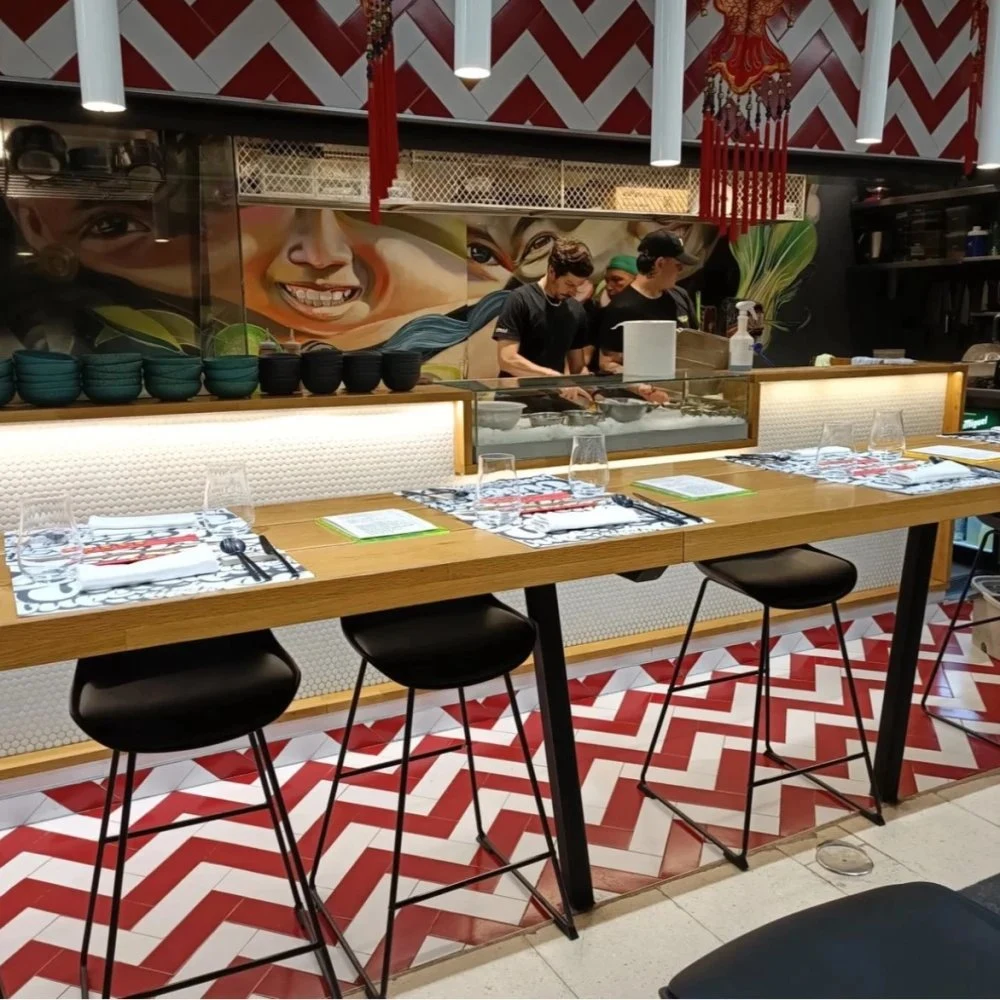
Covered markets across Spain have long served as the infrastructure of everyday eating, but over the past decade a number of them have been quietly reframed as addresses for serious cooking. Madrid's Mercado de Vallehermoso, in the residential Chamberí district, belongs to that reframed category. The iron-and-glass structure on Calle de Vallehermoso houses the kind of daily commerce, fish stalls, butchers, greengrocer runs, that used to define neighbourhood food culture before supermarkets absorbed it. Inside that context, a counter-format restaurant like Tripea reads differently than it would in a purpose-built dining room: the surroundings are lived-in rather than curated, the acoustics are communal, and the visual noise of a working market is always present. That setting is not incidental. It shapes what fusion cooking means in this particular room.
Fusion in Madrid: A Category Worth Placing
Madrid's creative restaurant spectrum sits on a fairly wide range. At one end, addresses like ABYA and Asiakō push Japanese and Latin American cross-references into technically demanding territory. At another, Bacira has made a sustained case for Japanese-Spanish fusion in a neighbourhood bistro format that trades on consistency and accessibility as much as invention. The €€€€ tier, DiverXO, Deessa, Smoked Room, Coque, occupies a different register altogether, where tasting menus run deep and the experience is engineered from arrival to departure.
Tripea sits in a middle zone that Madrid has been building out steadily: casual-format, counter or market-based, with enough technical ambition to attract critical attention but priced and paced for repeat visits rather than special-occasion expenditure. It is the category that I+T and others in the city also occupy, and it is the category that Opinionated About Dining's Casual Europe list is specifically designed to track. Tripea's 2025 ranking at #555 on that list places it inside a recognised set, one defined by cooking quality rather than formality or price.
Fusion as a label has had a complicated reception in Spain. A country with among the more defined and regionally stratified food cultures in Europe, the Basque tradition running through Arzak in San Sebastián and Azurmendi in Larrabetzu, the Catalonian avant-garde represented by El Celler de Can Roca in Girona and Disfrutar in Barcelona, the Valencian rigour of Quique Dacosta in Dénia and the marine conceptualism of Aponiente in El Puerto de Santa María, has historically been resistant to the blurring of culinary identity that fusion implies. The more interesting fusion operations in Spain tend to be those where the cross-referencing has a specific logic, not a general one. Where Ajonegro in Logroño grounds its fusion in Riojan product and Arkestra in Istanbul draws the thread between Anatolian and Japanese traditions, the question for any fusion address is always: what are the two poles, and what is the argument connecting them?
The Kitchen and Its Cultural Position
Roberto Martinez Foronda leads the kitchen at Tripea. His name is attached to a format that keeps service windows deliberately compressed: lunch sits within a one-hour slot (2:30 to 3:30 pm), and dinner runs from 9:30 pm through midnight, Tuesday to Saturday. Both timings track closely with Madrid's eating culture, where lunch is the primary meal of the day and dinner rarely begins before nine. The one-hour lunch window is tighter than most, suggesting a structured service rather than an extended affair, which is consistent with a market counter where table turnover and the surrounding commercial rhythm of the building set the tempo.
The fusion framing at Tripea operates within that compressed, market-rooted context. This is not fusion as spectacle or as a vehicle for lengthy tasting menus. The format implies something more direct: a focused set of dishes, a clear point of view, and a cooking style that can be communicated within the pace of a market sitting.
Chamberí as Context
Chamberí is one of Madrid's most settled residential districts: bourgeois in the original sense, with wide tree-lined streets, early twentieth-century apartment buildings, and a neighbourhood commerce that resisted the tourist overlay that changed parts of Malasaña and Chueca to its south. Dining in Chamberí has historically tracked the preferences of the people who live there, Spanish comfort cooking, traditional tabernas, direct wine bars, rather than the city's more performance-driven creative scene, which has tended to cluster further central or in newer peripheral zones.
A counter-format fusion operation inside Mercado de Vallehermoso is, in that context, a small but legible departure from the district's dominant register. The market itself represents a continuity with Chamberí's traditional food culture; the cooking that comes out of the Tripea counter represents something newer. That combination, market infrastructure, non-traditional cooking approach, is not distinctive to Madrid, but it is a format that tends to work well in residential neighbourhoods where the audience is local, returning, and not easily impressed by novelty for its own sake.
Planning a Visit
Tripea opens Tuesday through Saturday for lunch (2:30 to 3:30 pm) and dinner (9:30 pm to midnight), and is closed Monday and Sunday. The lunch window runs one hour, so arriving promptly matters. The market address, Mercado Vallehermoso, Calle de Vallehermoso 36, Chamberí, 28015 Madrid, is in the north of the district, accessible by metro and within walking distance of several Chamberí accommodation options. Reservations are essential, and the dress code is smart casual. At about $65 per person, Tripea sits in a moderate price tier.
Questions
Frequently asked
Who works at Tripea?
Made By profiles Roberto Martinez Foronda (Chef) at Tripea.
How expensive is Tripea?
Tripea is listed at a price level of $$.
Where is Tripea and what does it serve?
Tripea is in Arapiles, Madrid, serving Peruvian-Asian Fusion.
The field
How it compares
| Place | Cuisine | Notes | Awards |
|---|---|---|---|
| Tripea | Peruvian-Asian Fusion | Arapiles, $$ | · |
| Coque | Modern Spanish Fine Dining | Madrid | Michelin 2 Stars |
| Corral de la Morería | Modern Spanish Fine Dining with Flamenco | Madrid | Michelin 1 Star |
| Desde 1911 | Premium Seafood Fine Dining | Madrid | Michelin 1 Star |
| DiverXO | Avant-Garde Spanish Tasting Menu | Madrid | Michelin 3 Stars, World's 50 Best |
| DSTAgE | Avant-Garde Spanish Tasting Menus | Madrid | Michelin 2 Stars |
| Paco Roncero | Avant-Garde Spanish Fine Dining | Madrid | Michelin 2 Stars |
In residence
Similar places
Modern Spanish Fine Dining
Coque
Madrid, Spain
★★
Modern Spanish Fine Dining with Flamenco
Corral de la Morería
Madrid, Spain
★
Premium Seafood Fine Dining
Desde 1911
Madrid, Spain
★
Avant-Garde Spanish Tasting Menu
DiverXO
Madrid, Spain
★★★ · 50 Best
Avant-Garde Spanish Tasting Menus
DSTAgE
Madrid, Spain
★★
Avant-Garde Spanish Fine Dining
Paco Roncero
Madrid, Spain
★★