Trèsind Studio

In Residence
Bhupender Nath
Founder
- 01CuisineModern Indian Fine Dining
- 02CityDubai, United Arab Emirates
- 03RecognitionThree Michelin Stars
From the people index
Recommended by
2 trusted voices point here.


King oyster noodles, regional memory
- 3 Michelin Stars · Michelin Guide
- World's 50 Best · #2 · World's 50 Best Restaurants
- Gault & Millau UAE Selected Restaurant · 2026
- La Liste Top Restaurants: 93pts · 2026
- World's 50 Best MENA's Best Restaurants #3 · 2026
- Opinionated About Dining Top Restaurants in Asia Ranked #2 · 2026
- Tatler Best Middle East: Best Innovation · 2025
- La Liste Top Restaurants: 94pts · 2025
- The Best Chef Three Knives #3 · 2025
- Tatler Best Middle East: Restaurant of The Year · 2025
- Tatler Listed in Best Restaurants Middle East · 2025
- World Culinary Awards Middle East's Best Indian Cuisine Restaurant 2025 #1
- Michelin 3 Stars · 2025
- World's 50 Best MENA's Best Restaurants #2 · 2025
Regional memory at the pass
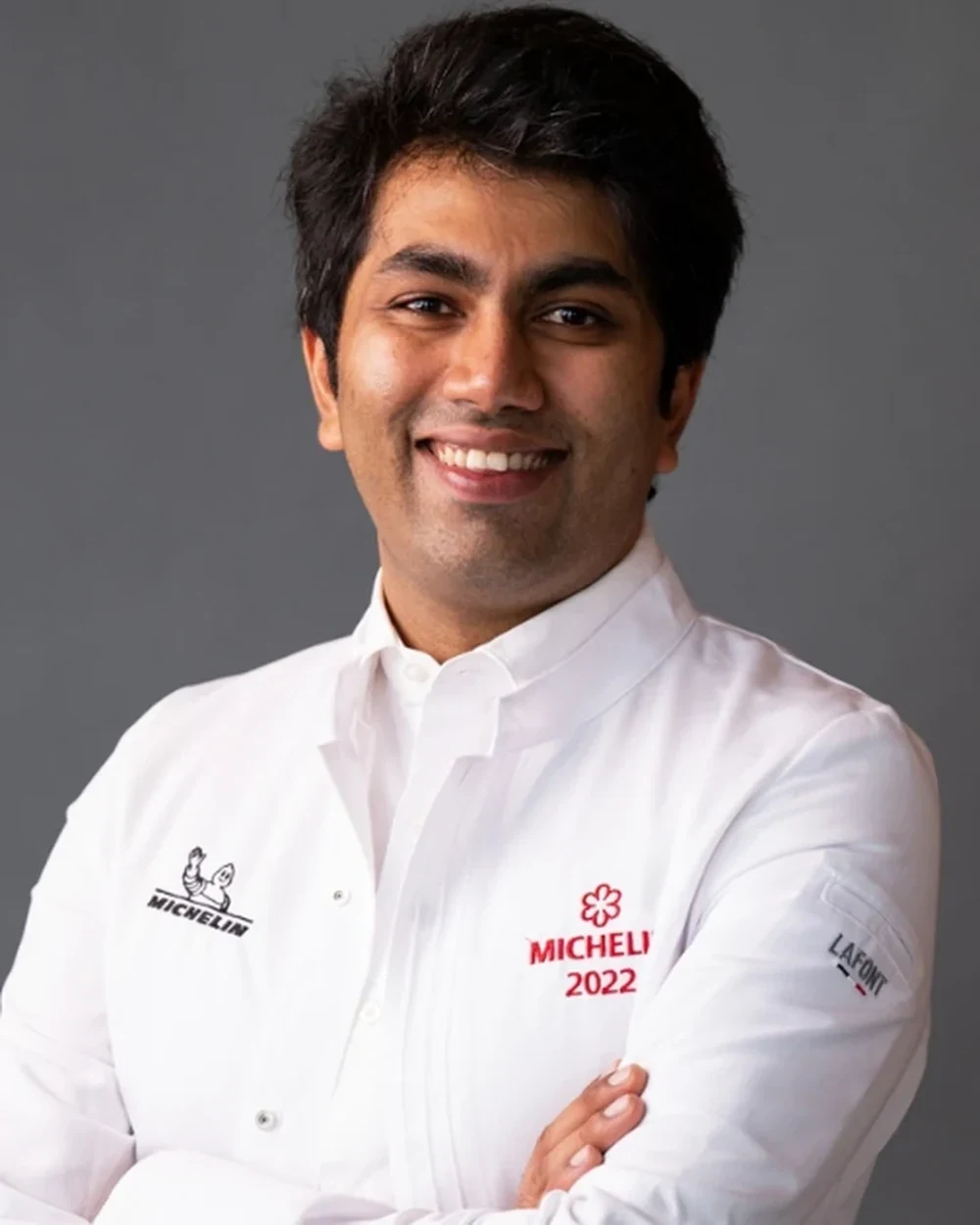
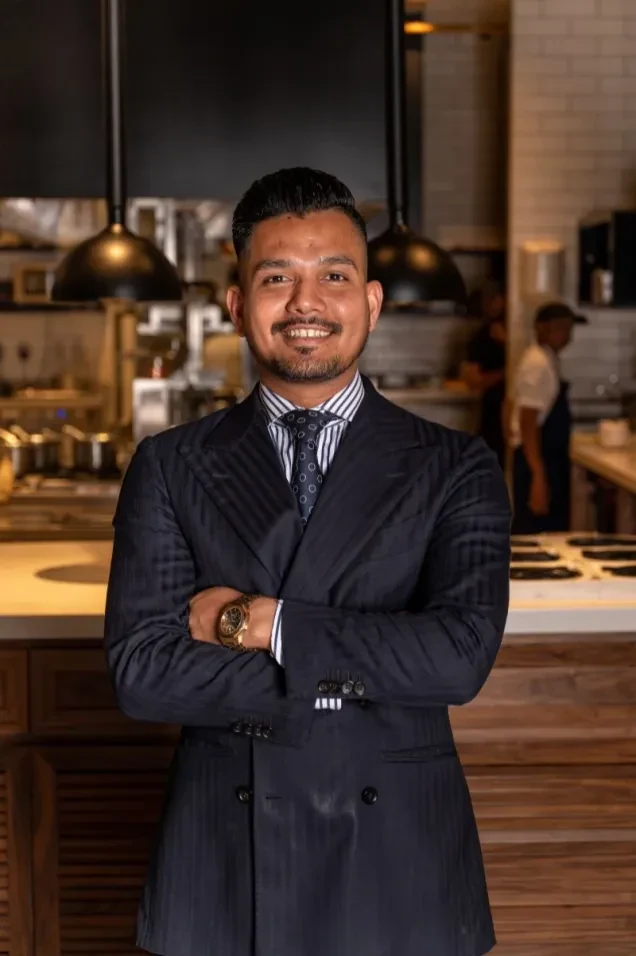
King oyster mushroom leaves the bench as noodles, set with black fungus XO sauce and a shoyu of morel mushrooms. Himanshu Saini, executive chef at Trèsind Studio in Dubai, works in that register, moving a known Indian reference until its outline changes without losing its source. He worked under Manish Mehrotra at Indian Accent in New Delhi, then carried that early modern Indian language to Trèsind in Dubai, which he opened from 2014. Trèsind Studio followed in 2018 as the more concentrated room, a place for tasting-menu pacing, regional framing, and a closer exchange between the pass and the table. The lineage matters because the cooking here does not treat tradition as ornament. Saini uses memory, technique, and regional produce as working materials. His role at the Studio is to tighten the gesture: a dish may borrow the shape of a noodle, the logic of a pickle, the comfort of curry leaf oil, or the acidity of a coastal preparation, then return it to the guest in a form suited to a small, formal dining room on The Palm Jumeirah.
A menu built by region
The format is a tasting menu, with the restaurant’s stated journey moving through four regions of India. The Northern Plains and Himalayan Mountains section gives one useful reading of the method: plains and mountains are not scenery, they become the frame for fungus, morel, depth, and restraint. Elsewhere, the house names Fried Lentil Donut with Gorgonzola, Langoustine with Balchão Pickle, Lobster Tail in Curry Leaf Oil, King Oyster Mushroom Noodles, and Banana Hazelnut Tortellini among its signatures. These are not translations in the loose sense. They are adjustments in texture, temperature, and sequence, with Indian references kept legible inside contemporary technique. The room also carries a curated wine program, wine pairings, and craft cocktails, so the beverage work follows the same discipline as the kitchen: not a separate flourish, but part of the tasting rhythm. Local sourcing, organic produce, and sustainable UAE farms are part of the restaurant’s stated method, giving the menu Dubai immediacy rather than a purely archival idea of India.
The Sunday letter
Find new places through the people who run them.
Our Sunday email brings you the chefs, winemakers and hoteliers behind our newest stories. See a sample before you subscribe.
See a sample of the Sunday emailOne email a week. Unsubscribe from any issue.
The room keeps the work close
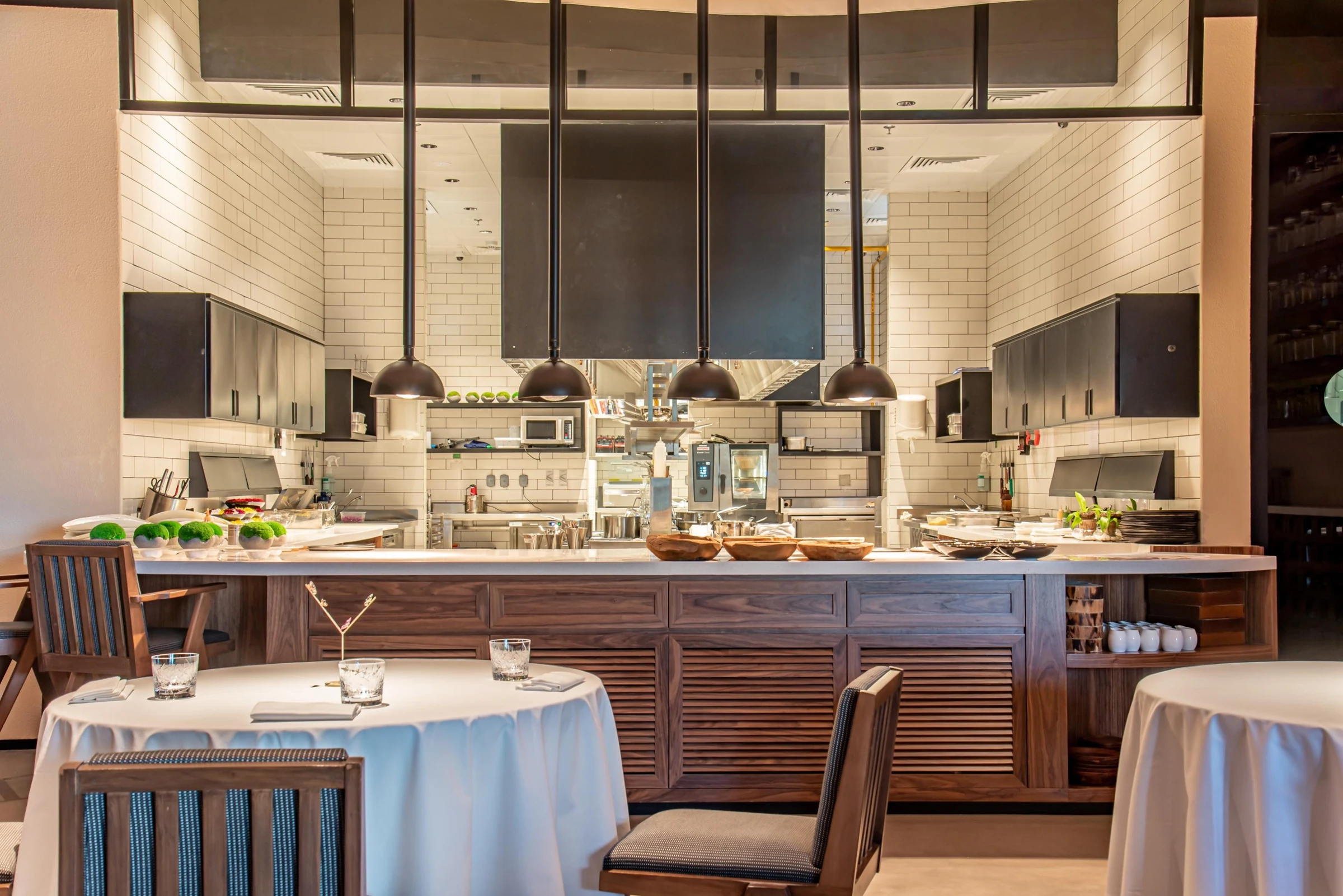
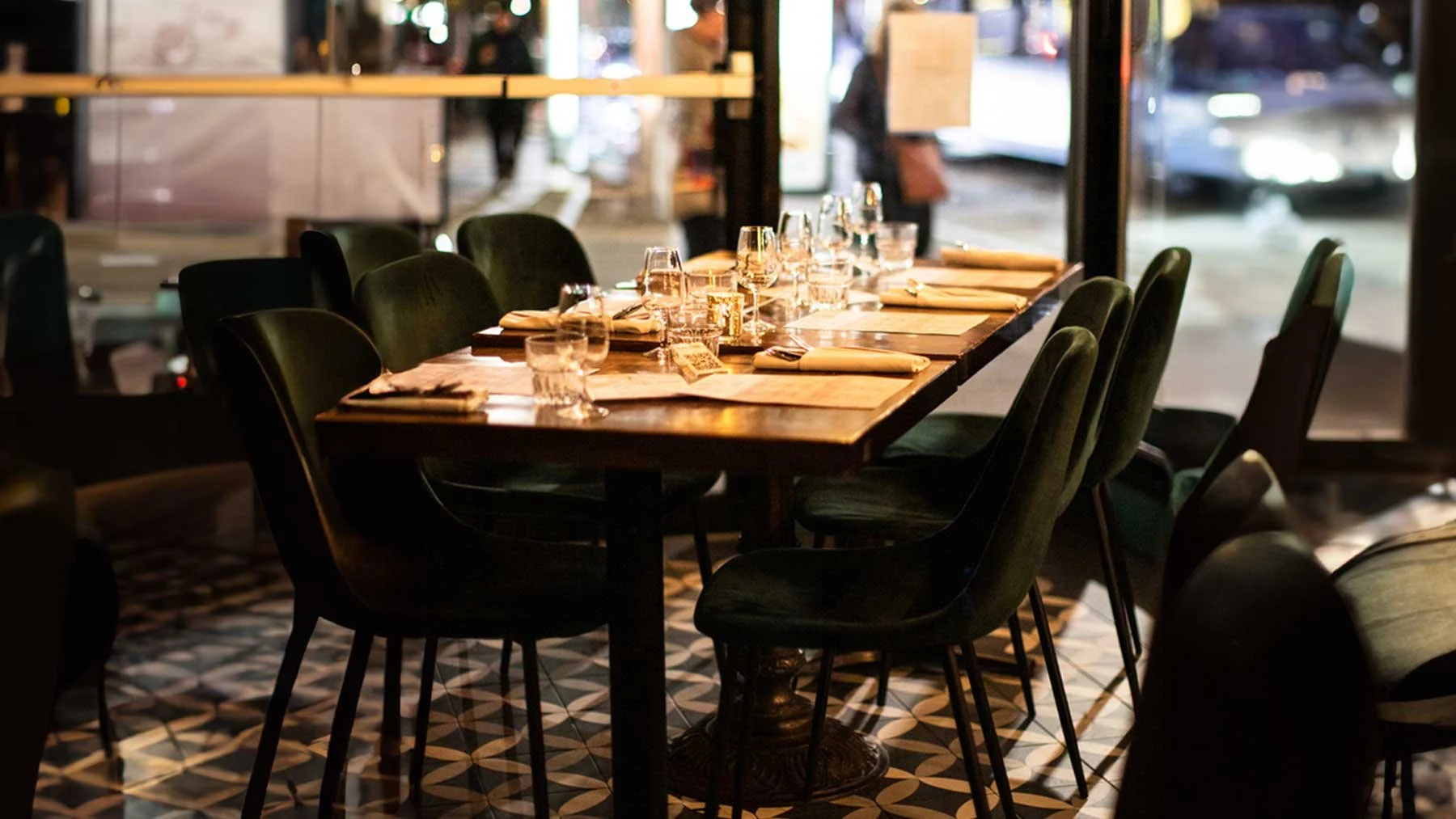
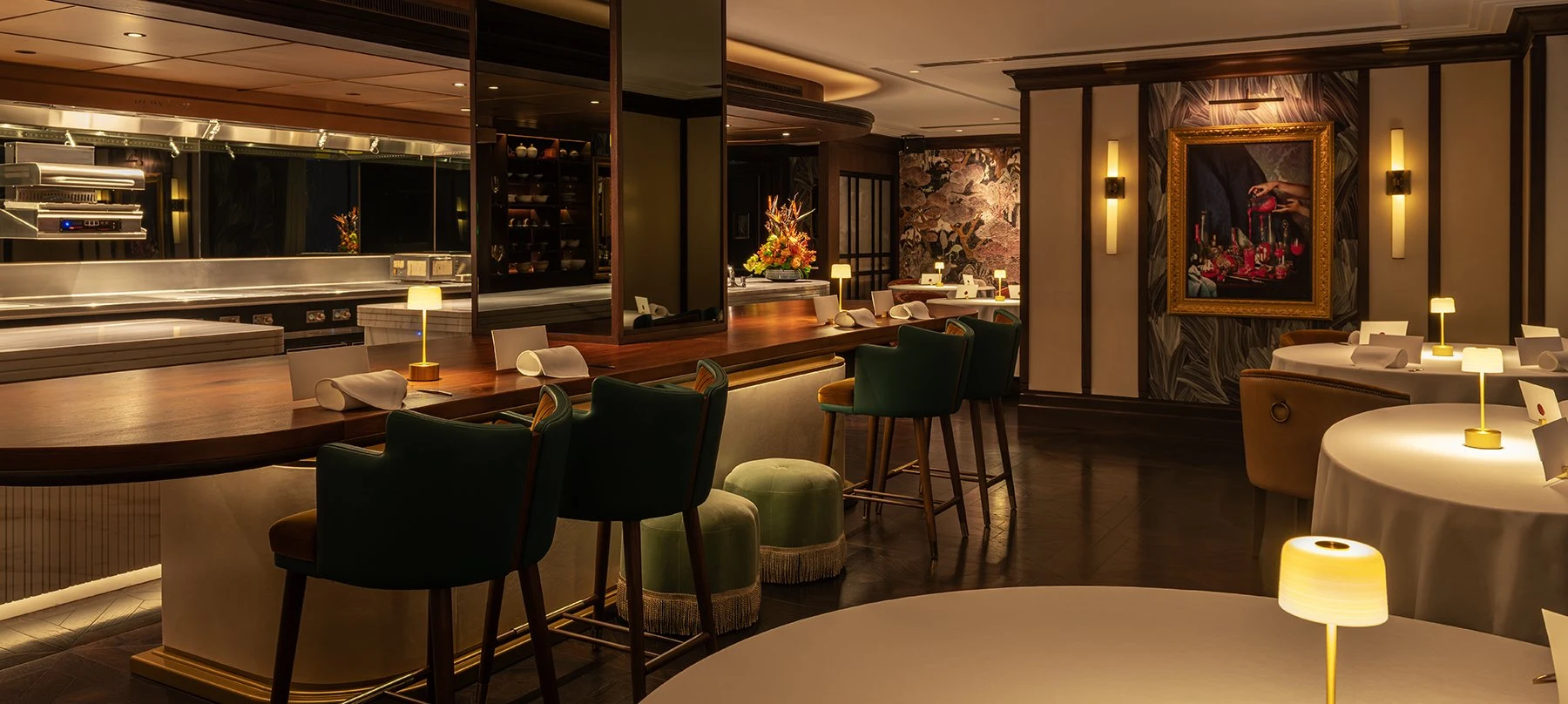
The Studio’s intimacy changes the charge of the pass. The main dining space is darkly furnished and austere, with an open view into the kitchen, so the guest reads the hand before the plate arrives fully explained. Service is formal, but the scale keeps it bench-side in feeling: a course lands, a regional cue is given, the next preparation is already moving in the kitchen’s line of sight. The rooftop garden setting adds a second register, quieter than the city below, while the room holds to controlled theatre rather than spectacle. Trèsind Studio holds three Michelin stars, the first Indian restaurant in the world to receive that distinction, and it appears on The World’s 50 Best Restaurants list at rank 2. The better close, inside the room, is still a plate: langoustine sharpened by Balchão Pickle.
Questions
Frequently asked
Who leads the kitchen at Trèsind Studio?
Himanshu Saini is the executive chef at Trèsind Studio in Dubai. The page describes his cooking as working through region, memory, and technique.
What kind of restaurant is Trèsind Studio?
It is a modern Indian fine dining restaurant on The Palm Jumeirah. The format is a tasting menu that moves through four regions of India.
What is Trèsind Studio known for?
The restaurant is known for dishes such as Fried Lentil Donut with Gorgonzola, Langoustine with Balchão Pickle, Lobster Tail in Curry Leaf Oil, King Oyster Mushroom Noodles, and Banana Hazelnut Tortellini. Its cooking uses regional memory, technique, and produce, including local sourcing and sustainable UAE farms.
What recognition does Trèsind Studio hold?
Trèsind Studio holds three Michelin stars and is ranked number 2 on The World’s 50 Best Restaurants list.
Is booking required at Trèsind Studio?
Reservations are essential, and bookings are taken directly. The restaurant also has valet parking and a smart casual dress code.
The field
How it compares
| Place | Awards | Cuisine | Notes |
|---|---|---|---|
| Trèsind Studio | Michelin 3 Stars, World's 50 Best #2 | Modern Indian Fine Dining | Palm Jumeirah, $$$$ |
| 11 Woodfire | Michelin 1 Star, World's 50 Best | Modern Woodfire Grill | Dubai |
| FZN by Björn Frantzén | Michelin 3 Stars, World's 50 Best | Modern Scandinavian-Japanese Fine Dining | Dubai |
| moonrise | Michelin 1 Star, World's 50 Best | Modern Dubai-Inspired Fine Dining | Dubai |
| Orfali Bros | Michelin 1 Star, World's 50 Best | Contemporary Middle Eastern Bistro | Dubai |
| Ossiano | Michelin 1 Star, World's 50 Best | Modern Seafood Fine Dining | Dubai |
| Row on 45 | Michelin 2 Stars, World's 50 Best | Modern Japanese Fine Dining | Dubai |
In residence
Similar places
Modern Woodfire Grill
11 Woodfire
Dubai, United Arab Emirates
★ · 50 Best
Modern Scandinavian-Japanese Fine Dining
FZN by Björn Frantzén
Dubai, United Arab Emirates
★★★ · 50 Best
Modern Dubai-Inspired Fine Dining
moonrise
Dubai, United Arab Emirates
★ · 50 Best
Contemporary Middle Eastern Bistro
Orfali Bros
Dubai, United Arab Emirates
★ · 50 Best
Modern Seafood Fine Dining
Ossiano
Dubai, United Arab Emirates
★ · 50 Best
Modern Japanese Fine Dining
Row on 45
Dubai, United Arab Emirates
★★ · 50 Best
The Sunday letter
Get the next Made By story in your inbox.
We send one email every Sunday morning with the places and people we covered that week.
See a sample of the Sunday emailOne email a week. Unsubscribe from any issue.