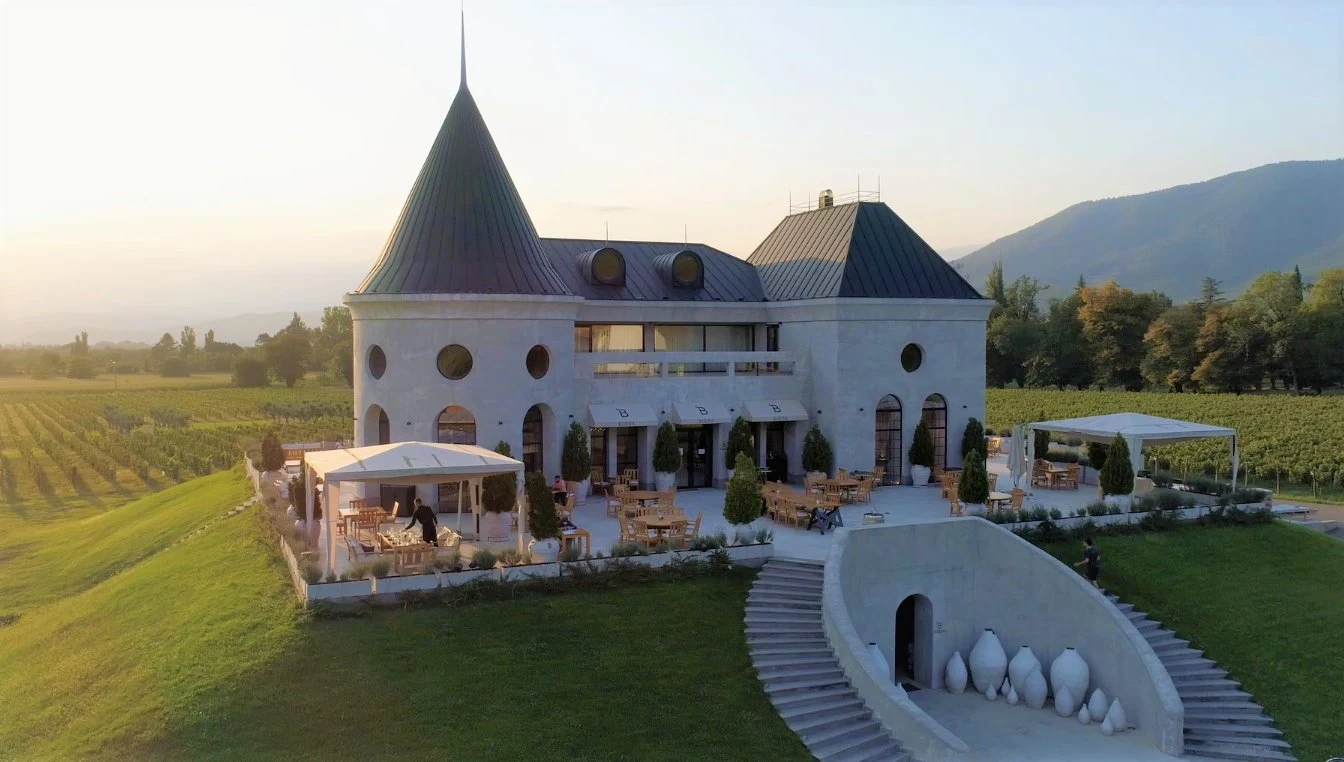
Tsinandali Old Cellar / Mildiani Family Winery
- 01CityTelavi, Georgia

- Falstaff Winery - Listed · 2026
Cool cellar air is part of the appeal of a Georgian winery visit: shade, earth, and a slower register than the polished tasting rooms common in many newer wine destinations. In Telavi, that atmosphere matters because wine is closely tied to place, household tradition, and the continuing conversation between traditional Georgian viticulture and modern production.
Tsinandali Old Cellar / Mildiani Family Winery sits in that overlap. The picture is not of a restaurant built around a detailed dining format, but of a cellar-and-winery setting with a traditional Georgian wine identity and modern production equipment. For travelers, the safest way to read it is as a wine-focused stop in Telavi rather than as a fully documented restaurant, resort, or tasting-menu venue.
Tsinandali's cellar context gives the visit its frame
Georgian wine is often discussed through old cellar traditions, regional memory, and the relationship between craft and hospitality. The Tsinandali context adds a recognizable cellar mood: cool, dark, earthy, and suited to guided tastings. That does not require overclaiming the details of the program. The grounded point is simpler and more useful: this is a Telavi winery experience framed by cellar atmosphere and Georgian viticulture.
Specific grape lists, menu structures, opening dates, tour languages, food pairings, seat counts, and exact visit formats should be checked directly with the winery before planning around them. What can be said with confidence is that the setting is rooted in traditional Georgian wine culture while also using modern production equipment.
That combination is a meaningful part of contemporary Georgian wine tourism. Many visitors arrive expecting only an old-world cellar image, but a working winery may balance heritage with practical production tools. Tsinandali Old Cellar / Mildiani Family Winery is best understood through that balance: historic cellar character, a traditional Georgian viticulture identity, and modern equipment supporting the production side.
Old-cellar identity, modern equipment, and a restrained hospitality style
A cellar visit succeeds when the place itself helps explain the wine culture around it. Here, the strengths are atmospheric rather than menu-specific: a historic cellar-and-winery setting, a rustic tone, and the broader Tsinandali association with cool, dark, earthy cellar spaces. Those are useful signals for travelers who want a quieter wine stop rather than a venue defined by spectacle.
The modern-equipment detail is also important. It prevents the experience from being reduced to nostalgia. A winery can be traditional in identity while still using contemporary tools, and that tension is often part of what makes Georgian wine tourism interesting. Visitors should expect the story to involve both heritage and production rather than a purely museum-like presentation.
The dress and mood cues are best read as classic and rustic. This is not a place that needs to be framed through formal dining language. The more grounded expectation is a cellar-and-winery environment where the setting, wine identity, and guided tasting context matter more than fashion, nightlife, or a restaurant-style service script.
Travel planning should stay practical. Since public detail is thin, confirm any time-sensitive or service-specific needs directly before visiting. Questions about hours, group size, languages, food availability, private events, accessibility, transport, or specific tasting content should not be assumed from general winery tourism patterns. The reliable baseline is that Tsinandali Old Cellar / Mildiani Family Winery is a Telavi wine venue with a historic cellar setting and a Georgian viticulture identity.
Who should put this cellar into a Kakheti itinerary
This venue is a natural fit for travelers who want Georgian wine culture explained through atmosphere and setting. It is especially relevant for visitors who prefer a cellar-led experience over a restaurant-led one, or who want to see how traditional Georgian wine identity can sit alongside modern production equipment. The tone is better described as classic and rustic than flashy.
The listed price level is moderate, shown as $$. That is the only pricing signal, so visitors should avoid assuming a specific tasting fee, package, lunch price, bottle price, or tour cost without direct confirmation. Treat the price marker as a broad guide rather than a quote.
It is also wise to separate facts from tempting assumptions. The name and setting support a winery visit in Telavi, and the broader Tsinandali context supports expectations of cellar atmosphere and guided tastings. Beyond that, detailed claims about cuisine, pairings, grape varieties, tour duration, reservation rules, or awards are not part of the record provided here.
For a Telavi itinerary, Tsinandali Old Cellar / Mildiani Family Winery works well as a focused wine stop: historic cellar mood, traditional Georgian viticulture identity, modern production equipment, and a moderate price category. Travelers comparing it with other dining or wine options in Telavi should do so generically unless they have current, direct information from the venues themselves.
Questions
Frequently asked
How expensive is Tsinandali Old Cellar / Mildiani Family Winery?
Tsinandali Old Cellar / Mildiani Family Winery is listed at a price level of $$.
The field
How it compares
| Place | Notes | Awards |
|---|---|---|
| Tsinandali Old Cellar / Mildiani Family Winery | Tsinandali, $$ | · |
| Château Buera | Telavi | World's 50 Best |
| Marani Milorauli | Telavi | · |
| Rtvelisi | Telavi | · |
| Tchotiashvili Family Winery | Telavi | · |
| Teliani Valley | Telavi | · |
| Vaziani Company | Telavi | · |