Made ByWinery
Upper Shirley Vineyards
- 01CityCharles City, United States
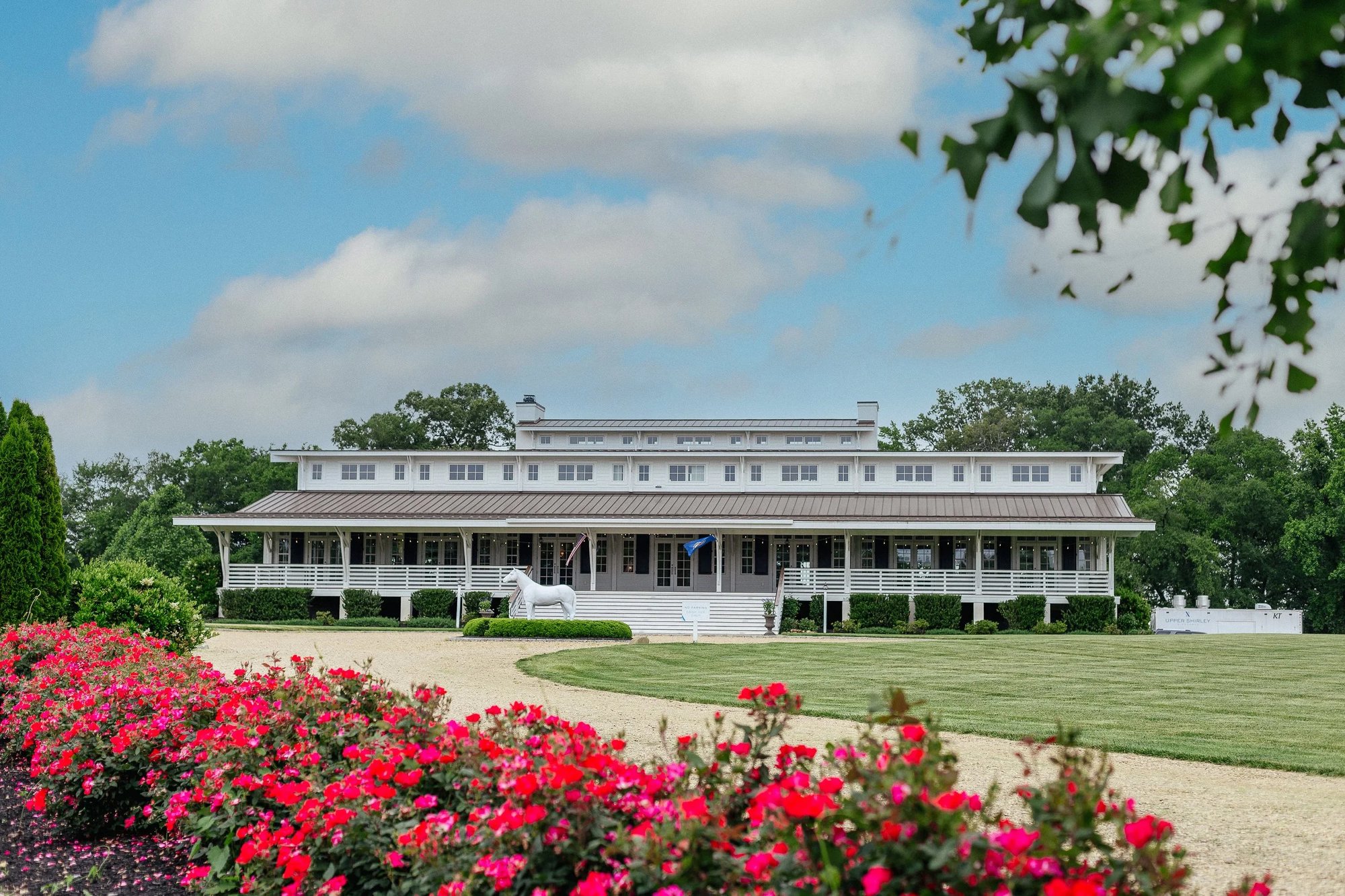
Upper Shirley Vineyards sits along Shirley Plantation Road in Charles City, Virginia, where the James River corridor's clay-rich soils and humid continental climate shape wines that carry a distinctly Tidewater character. The property earned a Pearl 2 Star Prestige rating in 2025, placing it among a small tier of Virginia producers drawing sustained critical attention. For visitors tracing the state's serious wine geography, this is a considered stop.
At a glance
- Price
- $$$
- Per person
- $25
- Neighborhood
- Charles City
Where the James River Corridor Meets the Vine
Upper Shirley Vineyards is a winery in Charles City, Virginia, known for its Pearl 2 Star Prestige recognition in 2025 and a price tier that places tastings at about $25 per person. The drive along Shirley Plantation Road prepares you, in a way that a tasting note cannot, for what Upper Shirley Vineyards is actually about. The James River bottomlands of Charles City County are historically tobacco and plantation country, a stretch of Virginia where agriculture has always been shaped by proximity to water. The river moderates temperature swings, the clay-heavy soils drain slowly and retain minerals, and the humidity that makes summers punishing also extends the growing season in ways that allow slow phenolic development in the fruit. This is not Napa's volcanic drama or the cool maritime precision of California's Sonoma Coast. It is something older and more complicated, and the wines here should be read through that lens.
Virginia's wine identity has been contested for decades. The state's producers have consistently argued that the Chesapeake Bay watershed and its river corridors offer terroir conditions worth taking seriously on their own terms, rather than as approximations of European or West Coast models. Upper Shirley sits directly inside that argument, occupying land along the James where viticulture requires genuine engagement with the local climate rather than engineering around it. Upper Shirley is making a version of that same case for the Virginia Tidewater.
The 2025 Pearl 2 Star Prestige Rating and What It Signals
In 2025, Upper Shirley Vineyards received a Pearl 2 Star Prestige rating, a credential that places it within a defined tier of producers recognized for consistent quality and regional significance. In the context of Virginia wine, where critical infrastructure has historically lagged behind California, Oregon, and Washington, this kind of sustained recognition carries particular weight. It suggests a producer operating above the regional baseline, with wines that hold up to structured evaluation rather than benefiting only from local goodwill or tourism proximity.
The producers that tend to accumulate this kind of recognition share certain characteristics: they commit to site-specific farming, they show restraint in winemaking intervention, and they demonstrate vintage-to-vintage consistency that reflects genuine terroir expression rather than house style imposed over the land. Whether Upper Shirley meets all of those criteria across its full range is a question that requires tasting through multiple vintages, but the award is a credible signal that the wines are performing at a level that merits attention from visitors who approach wine critically.
Terroir and the Tidewater Question
The James River corridor presents a specific set of viticulture challenges that distinguish it from Virginia's better-known wine regions, particularly the Blue Ridge foothills around Charlottesville. In Charles City, elevation is minimal, which means the vineyard depends on the river's moderating influence rather than altitude to prevent extreme temperature peaks. The soils in this part of the county are a mix of clay loams and silty deposits from centuries of river activity, which creates both drainage complexity and mineral availability that differs substantially from the granitic and metamorphic soils of the Piedmont.
For Bordeaux-style varieties, these conditions produce wines with a different structural profile than their Piedmont counterparts: slightly lower acidity in warm years, more generous mid-palate weight, and tannins that can read as softer or more immediately approachable. For aromatic whites, the humidity requires careful canopy management to avoid disease pressure, but when yields are controlled and harvest timing is precise, the results carry a textural richness that marks the site clearly. None of this is automatic, and the gap between a vineyard that understands its terroir and one that simply farms in it is visible in the glass. Upper Shirley's 2 Star Prestige recognition suggests it falls in the former category.
Virginia's wine geography rewards visitors who trace it systematically. The state has more than 300 licensed wineries, but the number of producers operating with genuine site-specificity and critical accountability is considerably smaller. Charles City sits outside the main Charlottesville-to-Shenandoah circuit that most wine tourists follow, which means the James River corridor remains a less trafficked destination. That separation from the mainstream wine trail is not a disadvantage for visitors who prefer depth over convenience.
Charles City in the Virginia Wine Map
Charles City County is better known historically for its plantation estates, several of which predate the American Revolution, than for viticulture. The presence of a serious wine producer at 600 Shirley Plantation Road places Upper Shirley in an interesting double context: it occupies terrain with deep agricultural history and is simultaneously part of Virginia's contemporary effort to establish a wine identity rooted in specific place rather than varietal fashion.
For visitors planning a James River wine and history itinerary, the logistics are straightforward. Charles City sits roughly midway between Richmond and Williamsburg on Route 5, a historic byway that connects the two cities through the plantation corridor. The positioning means Upper Shirley can anchor a half-day itinerary that combines the wine visit with the broader cultural geography of the county.
The Virginia Tidewater is not a region that produces wine at high volume, which affects both availability and the nature of the visit. Producers working at this scale and with this level of critical recognition tend to operate with more appointment-driven access and less walk-in infrastructure than larger operations. Visitors should plan accordingly, treating the visit as a focused tasting experience rather than a casual drop-in.
Placing Upper Shirley in a Broader American Wine Conversation
American wine's most interesting ongoing development is not happening in its most established appellations. The conversation about what constitutes genuine terroir expression, and which regions can credibly make that claim, has expanded significantly over the past decade. Producers in Oregon's Willamette Valley, California's Santa Barbara County, and Virginia's James River corridor are all contributing to a broader rethinking of where American viticulture can go when it stops measuring itself against Napa and Bordeaux.
Wineries like Alban Vineyards in Arroyo Grande built their reputations on Rhone varieties in a climate no one initially believed would work. Andrew Murray Vineyards in Los Olivos similarly committed to a varietal identity that ran against regional orthodoxy. Artesa Vineyards and Winery in Napa demonstrated that serious sparkling wine production could take root in California. Au Bon Climat in Santa Barbara proved that Burgundian varieties could express genuine place character in California's Central Coast. The throughline in each case is a producer willing to argue for a specific site on its own terms.
Upper Shirley is making that argument for the Virginia Tidewater, and the 2025 Pearl 2 Star Prestige rating indicates that the argument is landing with evaluators who apply consistent criteria across regions. For wine drinkers who follow producers like Alexander Valley Vineyards in Geyserville, Alpha Omega Winery in Rutherford, or Babcock Winery and Vineyards in Lompoc, adding a Virginia Tidewater producer to the tracking list is not a departure from serious wine engagement. It is an extension of it.
For those whose reference points extend beyond American wine, the parallel with producers like Aberlour or Achaia Clauss in Patras is instructive in a different way: both operate in regions with layered agricultural and cultural histories where the beverage is inseparable from the land's longer story. Upper Shirley, on Shirley Plantation Road in Charles City, has that same quality of place-rootedness. B.R. Cohn Winery in Glen Ellen is another example of a producer whose identity is tied to a specific estate rather than an appellation-wide brand identity, and Upper Shirley fits that model closely.
Planning Your Visit
Upper Shirley Vineyards is located at 600 Shirley Plantation Road in Charles City, Virginia, along the historic Route 5 corridor that connects Richmond and Williamsburg. Given the nature of smaller prestige-tier producers in Virginia, confirming visit arrangements directly with the winery before arrival is advisable. Phone and booking details are leading sourced through the winery directly, as operational formats at this level can change seasonally.
Know before you go
- Dress code
- smart_casual
- Reservations
- recommended
- Parking
- on_site_lot
- Payment
- credit_card
- Accessibility
- wheelchair_accessible
- Outdoor seating
- Yes
- Groups
- Welcomed
Frequently asked
What's the vibe at Upper Shirley Vineyards?
Upper Shirley occupies the James River corridor in Charles City County, a stretch of Virginia where agricultural land runs alongside plantation estates that predate the American Revolution. The setting reads as historically grounded rather than resort-polished. Visitors arriving via Route 5 from Richmond encounter farmland and river topography before they encounter a tasting room, which sets the tone accurately.
Has Upper Shirley Vineyards won any awards?
Upper Shirley Vineyards has received recognition including: Pearl 2 Star Prestige (2025).
What wine is Upper Shirley Vineyards famous for?
The 2025 Pearl 2 Star Prestige rating signals a producer working at a recognized level of quality within the broader American wine conversation, but specific varietals and current releases should be confirmed directly with the winery. What the award does establish is that the wines are drawing attention from credentialed evaluators, placing Upper Shirley in a defined tier among Virginia producers.
What part of town is Upper Shirley Vineyards in?
Upper Shirley Vineyards is located at 600 Shirley Plantation Rd, Charles City, VA 23030, Charles City.
What's the defining thing about Upper Shirley Vineyards?
The combination of location and formal recognition distinguishes Upper Shirley from most of Virginia's wine producers. Farming the James River Tidewater corridor, a region better known historically than viticulturally, and earning a Pearl 2 Star Prestige credential in 2025 positions the winery as part of the argument that American wine's most compelling development is happening outside its established appellations.
Address
600 Shirley Plantation Rd, Charles City, VA 23030
Charles City
How it compares
Upper Shirley Vineyards
- Cuisine
- Viognier, Petit Verdot
- Price
- $$$
- Awards
- 1 recognition
- Notes
- Charles City
New Kent Winery
- Cuisine
- Chardonnay, Meritage
- Price
- $$$
- Awards
- 1 recognition
- Notes
- New Kent
Septenary Winery at Seven Oaks Farm
- Cuisine
- Chardonnay, Viognier
- Price
- $$$
- Awards
- 1 recognition
- Notes
- Greenwood
Chestnut Oak Vineyard
- Cuisine
- Cabernet Sauvignon, Merlot
- Price
- $$
- Awards
- 1 recognition
- Notes
- Barboursville
Greenhill Winery & Vineyards
- Cuisine
- Chardonnay, Riesling
- Price
- $$$
- Awards
- 1 recognition
- Notes
- Middleburg
Potomac Point Winery & Vineyard
- Cuisine
- Merlot, Chardonnay
- Price
- $$$
- Awards
- 1 recognition
- Notes
- Stafford