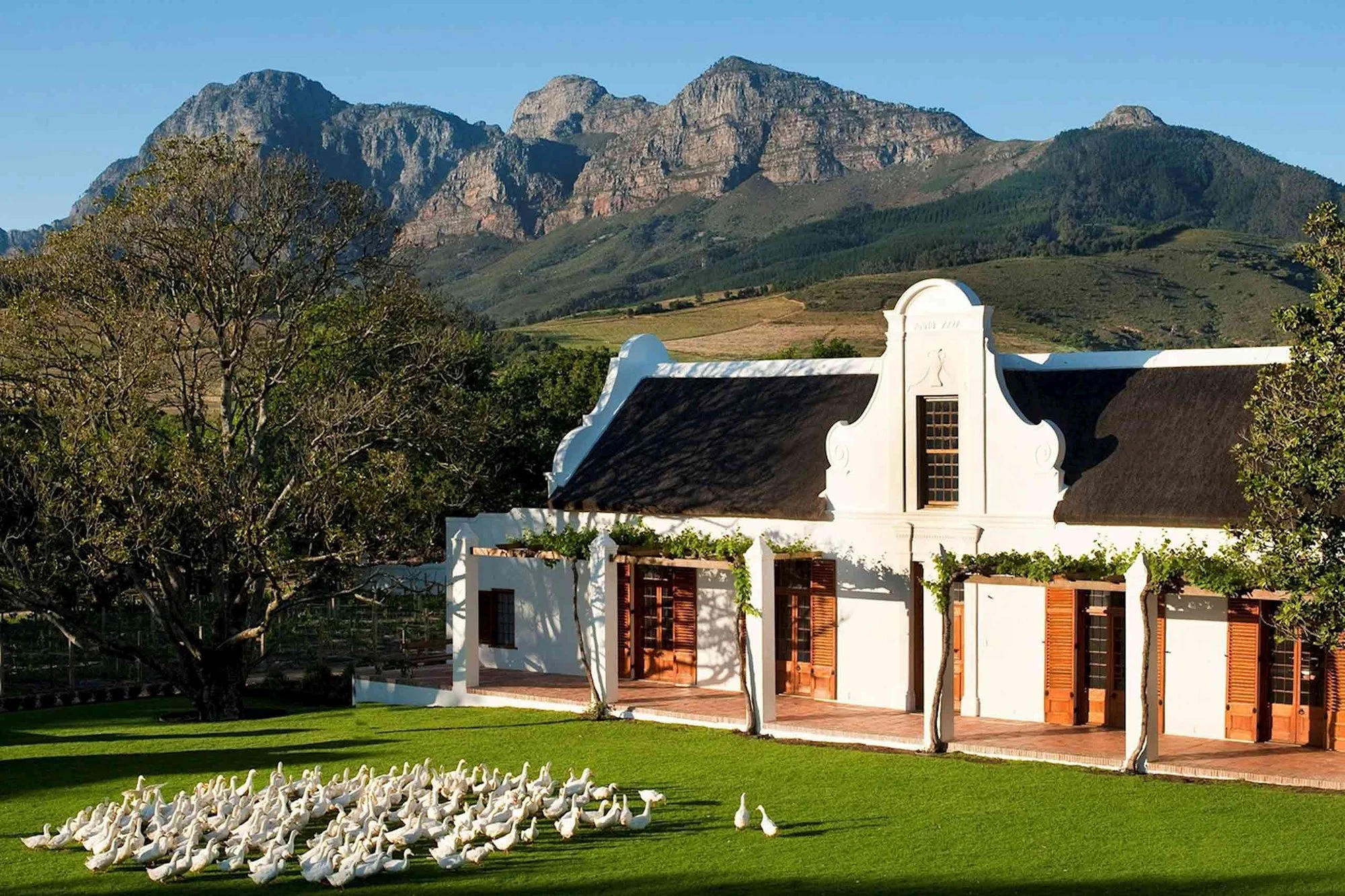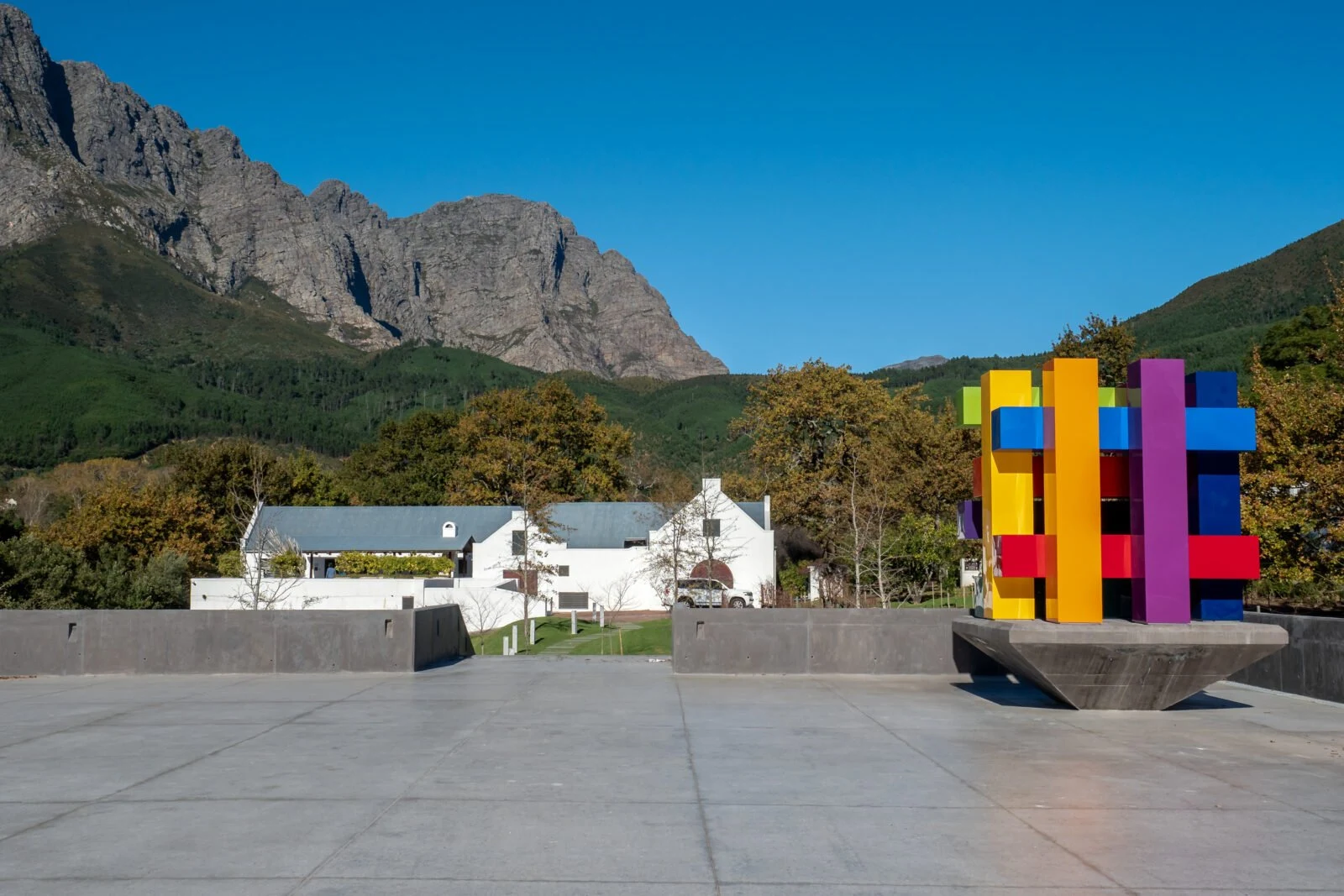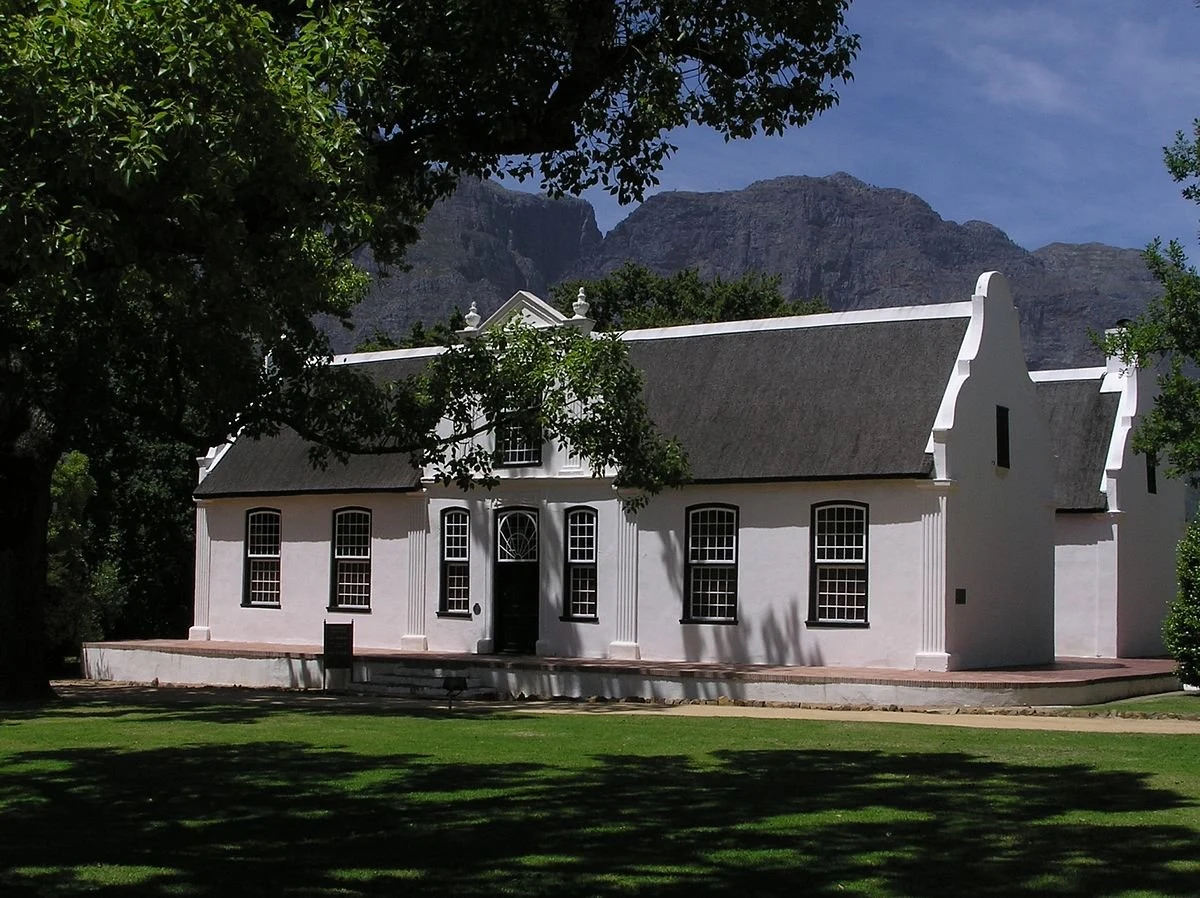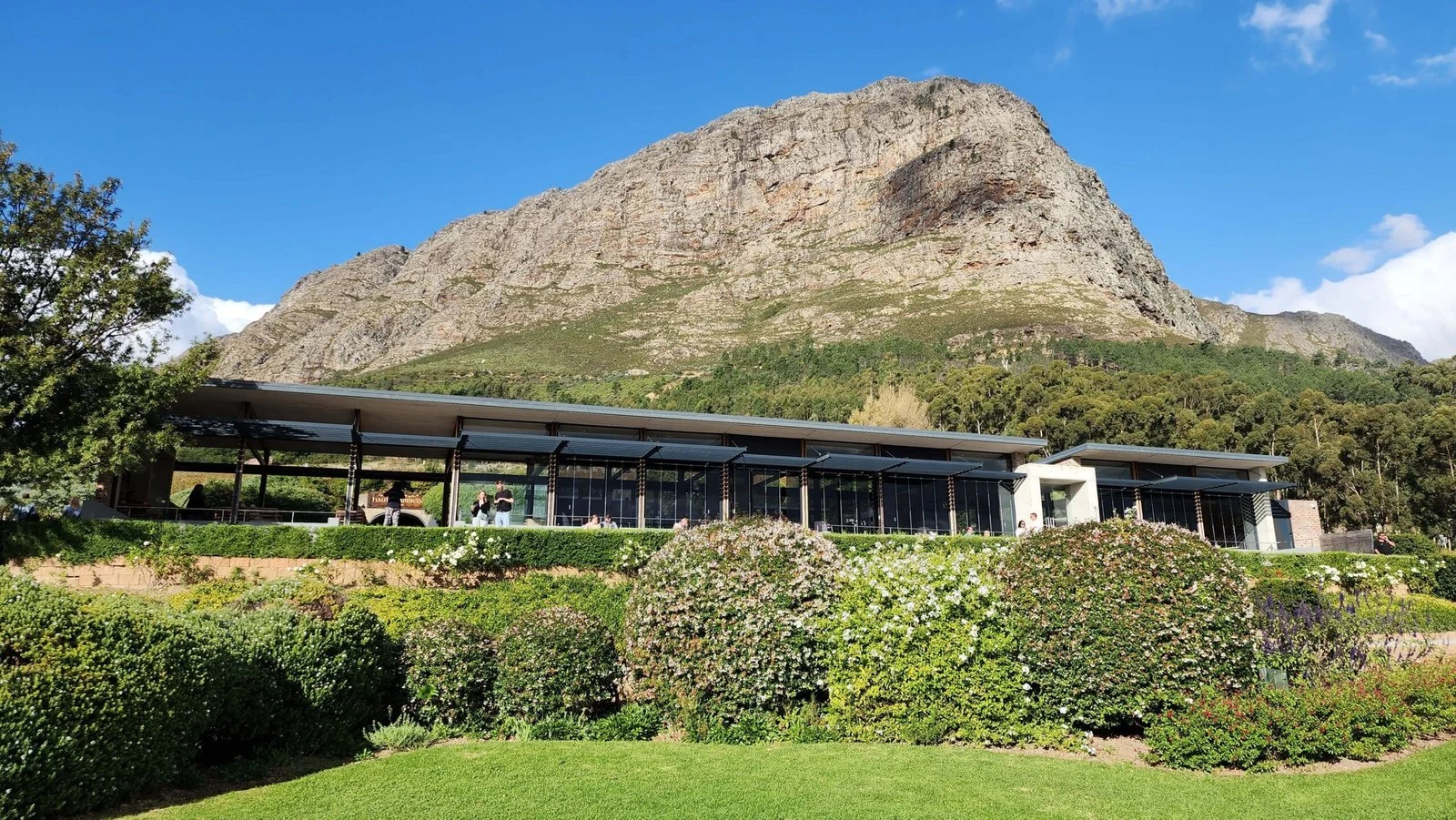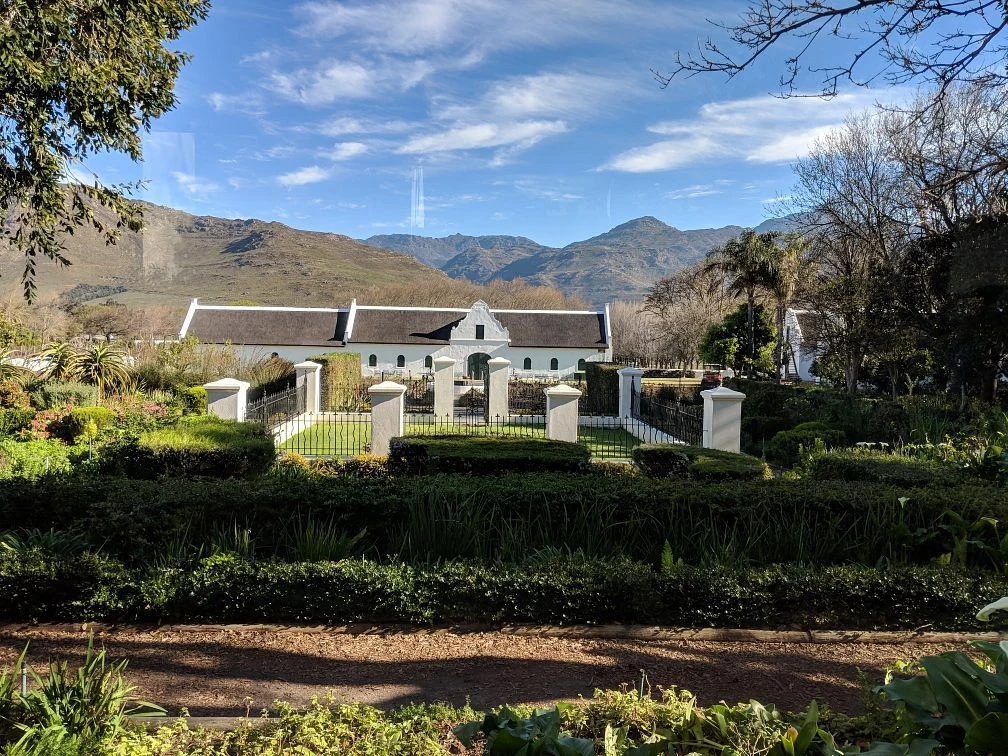
Vrede en Lust Wine Estate sits at the intersection of the R45 and Simondium-Klapmuts roads, where Franschhoek's valley floor meets the Paarl border. A Pearl 2 Star Prestige award (2025) places it in the upper tier of Cape Winelands producers. The estate offers a grounded alternative to the valley's more theatrical wine tourism operations, with a focus on estate production and a setting shaped by the region's three-century-old Huguenot agricultural tradition.
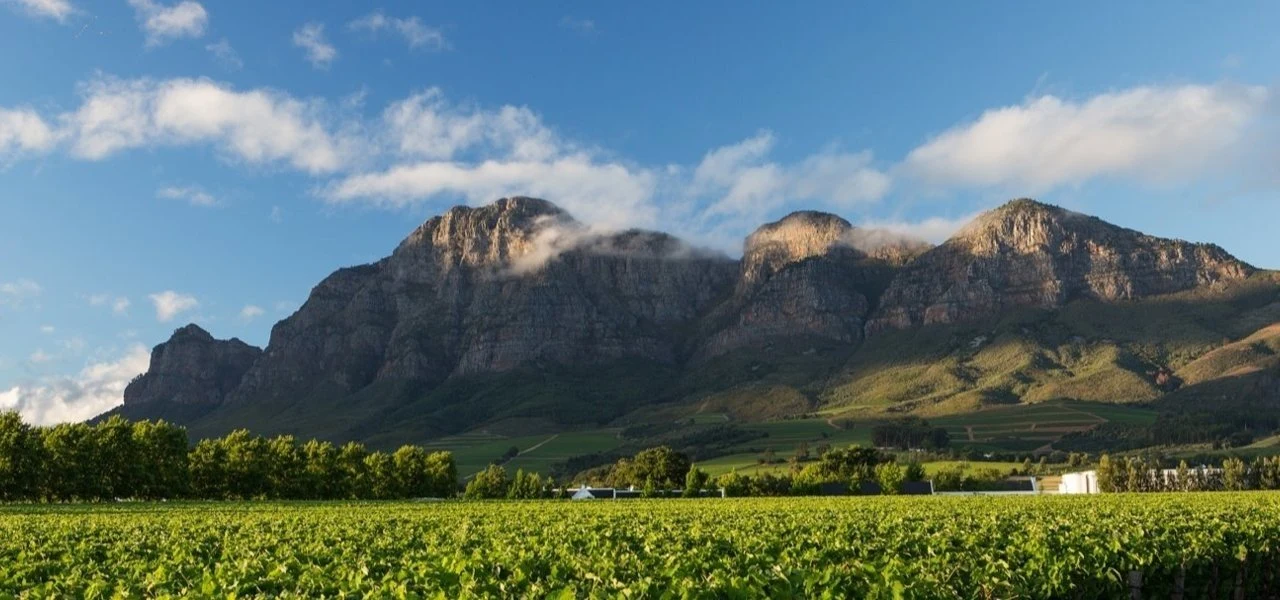
<h2>Where the Valley Floor Meets Huguenot History</h2><p>Approaching Vrede en Lust from the R45, the Franschhoek mountains shift behind you and the landscape opens into the flatter agricultural belt that marks the boundary between the valley proper and the Simondium corridor. This edge-of-valley position matters. The Cape Winelands' estates often occupy these transitional zones, where soil and air drainage shape fruit and style. Vrede en Lust, which translates loosely as 'peace and pleasure' in Dutch, carries that dual identity in its name: the productive seriousness of a working farm and the leisured tradition that Franschhoek has cultivated since the first Huguenot settlers arrived from France in the late seventeenth century.</p><p>That Huguenot inheritance is not merely decorative in Franschhoek. The valley's wine culture grew directly from French Protestant refugees who arrived between 1688 and 1700, granted land by the Dutch East India Company in what was then an untested agricultural frontier. They brought with them viticultural knowledge from Bordeaux, Burgundy, and the Loire, and the farm names that survive today, including Vrede en Lust, reflect the Dutch and French bilingual world they built. Understanding that history matters when you are reading the Cape Winelands today, because it explains why Franschhoek's wine identity has always leaned toward European reference points rather than developing a fully autonomous style in the way that Stellenbosch or Swartland have more recently attempted.</p><h2>Pearl 2 Star Prestige: What the Award Signals</h2><p>The Pearl 2 Star Prestige designation, awarded to Vrede en Lust in 2025, reflects formal assessment across cellar quality, hospitality standards, and estate presentation. A 2 Star Prestige rating places the estate in the second tier of a multi-level recognition framework, indicating consistent performance across both production and visitor experience rather than exceptional achievement in a single dimension. In practical terms, the award places Vrede en Lust among estates assessed for quality and visitor experience.</p><p>For visitors calibrating expectations, that positioning is useful. Vrede en Lust is not positioned against the grand-scale operations of <a href="https://www.enprimeurclub.com/wineries/babylonstoren-franschhoek-winery">Babylonstoren</a> or the historic gravitas of <a href="https://www.enprimeurclub.com/wineries/boschendal-franschhoek-winery">Boschendal</a>. It sits closer in character to estates like <a href="https://www.enprimeurclub.com/wineries/haute-cabriere-franschhoek-winery">Haute Cabrière</a>, where the wine program is the primary draw and the visitor experience is structured around that focus. Within the Franschhoek valley, that is a coherent niche: some visitors want the full-day farm-and-spa circuit, others want a cellar-led tasting that anchors the afternoon.</p><h2>Franschhoek's Wider Wine Geography</h2><p>Franschhoek's wine map rewards attention to location. The valley runs roughly south to north, with the highest-altitude vineyards producing the most structured white wines and Pinot Noir, while the valley floor and its eastern and western flanks carry warmer, more fruit-forward profiles suited to Cabernet Sauvignon, Merlot, and the Rhône varieties that have become increasingly important in the Cape. Vrede en Lust's position near the R45-Simondium junction places it in the lower, warmer section of the appellation, which typically favours riper red varieties and fuller-bodied white styles over the austere minerality that defines the leading high-altitude Franschhoek Chardonnay.</p><p>That locational context connects the estate to a broader Western Cape story. Across the Paarl boundary, <a href="https://www.enprimeurclub.com/wineries/val-de-vie-estate-paarl-winery">Val de Vie Estate</a> operates in similarly warm, lower-lying conditions and has developed a recognisable red-wine identity from that position. Further south, <a href="https://www.enprimeurclub.com/wineries/vergelegen-wine-estate-somerset-west-winery">Vergelegen Wine Estate in Somerset West</a> demonstrates what cooler, oceanic-influenced sites can produce when managed over decades. The Cape Winelands' diversity of climate and terroir across relatively short distances is one of the region's defining characteristics, and Vrede en Lust sits as one data point in that geography rather than an isolated case. Producers like <a href="https://www.enprimeurclub.com/wineries/creation-wines-hermanus-winery">Creation Wines in Hermanus</a> and <a href="https://www.enprimeurclub.com/wineries/constantia-glen-cape-town-winery">Constantia Glen in Cape Town</a> illustrate how different the Cape's western-influenced, cool-climate wines can be from the valley-floor style that Vrede en Lust's location suggests.</p><h2>The Franschhoek Estate Tradition</h2><p>Franschhoek's wine estates have always operated as integrated agricultural units rather than pure production facilities. The tradition of combining cellar work with hospitality, food, and accommodation stretches back to the earliest years of Cape wine tourism in the late twentieth century, and has deepened considerably since South Africa's reintegration into global wine markets after 1994. That opening created both commercial opportunity and a pressure to differentiate: with international buyers and visitors arriving in volume for the first time, estates needed to articulate what made Cape wine distinct rather than simply comparable to European benchmarks.</p><p>The most coherent answer the Franschhoek valley has developed is one of place: the combination of mountain-enclosed topography, Huguenot cultural memory, and a range of variety and style that no single European appellation can replicate. Estates that lean into that distinctiveness, anchoring their visitor offer in the specific history and geography of the valley, tend to build more durable identities than those that position primarily on price or critical scores. <a href="https://www.enprimeurclub.com/wineries/la-motte-wine-estate-franschhoek-winery">La Motte Wine Estate</a> has developed that argument through its arts and cultural program. <a href="https://www.enprimeurclub.com/wineries/anthonij-rupert-wyne-l-ormarins-franschhoek-winery">Anthonij Rupert Wyne (L'Ormarins)</a> pursues it through precision viticulture and high-end portfolio positioning. Vrede en Lust works within the same tradition at a different scale.</p><h2>Planning a Visit</h2><p>The estate sits at the intersection of the R45 and Simondium-Klapmuts roads, which makes it accessible from both the Franschhoek side and from Paarl or Stellenbosch via the Simondium route. That dual access is practically useful: visitors touring across multiple appellations in a single day can include Vrede en Lust as part of a Franschhoek-to-Paarl circuit without significant backtracking. For broader regional context, <a href="https://www.enprimeurclub.com/wineries/graham-beck-wines-robertson-winery">Graham Beck Wines in Robertson</a>, <a href="https://www.enprimeurclub.com/wineries/neethlingshof-estate-stellenbosch-winery">Neethlingshof Estate in Stellenbosch</a>, and <a href="https://www.enprimeurclub.com/wineries/oude-molen-distillery-grabouw-winery">Oude Molen Distillery in Grabouw</a> each offer day-trip extensions that map the Western Cape's production diversity beyond a single valley.</p><p>Vrede en Lust's Pearl 2 Star Prestige standing (2025) indicates a hospitality standard that meets formal assessment criteria. Franschhoek's high season runs from November through April, when the valley draws the most international visitors and waiting times at popular estates can extend significantly. Shoulder months, particularly September, October, and May, offer shorter waits and more direct access to cellar staff. Reservations are recommended.</p>
Vrede en Lust Wine Estate is located at Intersection R45 and Simondium-Klapmuts Roads, Franschhoek Wine Route, Simondium, 7670, Franschhoek.
Vrede en Lust Wine Estate has received recognition including: Pearl 2 Star Prestige (2025).
Specific wine recommendations are not confirmed in current data, but the Pearl 2 Star Prestige designation awarded in 2025 signals production quality assessed across multiple categories, from viticulture to finished wine. That award framework is a reasonable guide to where the estate's strengths lie. Asking staff on arrival which wines earned the strongest scores in the Pearl assessment is the most direct way to orient a tasting.
The estate sits at the intersection of the R45 and Simondium-Klapmuts roads, positioning it at the agricultural transition zone between Franschhoek and Paarl, two of the Cape Winelands' most historically significant valleys. Layered onto that geography is the Pearl 2 Star Prestige award (2025), which places Vrede en Lust among formally assessed estates rather than those relying on reputation alone. The combination of accessible location and documented production standing makes it a logical anchor point on the Franschhoek Wine Route.
No confirmed booking requirements or capacity limits are on record for the estate. In Franschhoek broadly, peak-season weekends from December through February can compress availability at popular estates, so contacting Vrede en Lust directly before a visit is advisable. The R45 and Simondium-Klapmuts Roads address makes it straightforward to reach from both Franschhoek town and Paarl, which reduces the logistical friction common at more remote valley estates.
Intersection R45 and Simondium-Klapmuts Roads, Franschhoek Wine Route, Simondium, 7670
Franschhoek