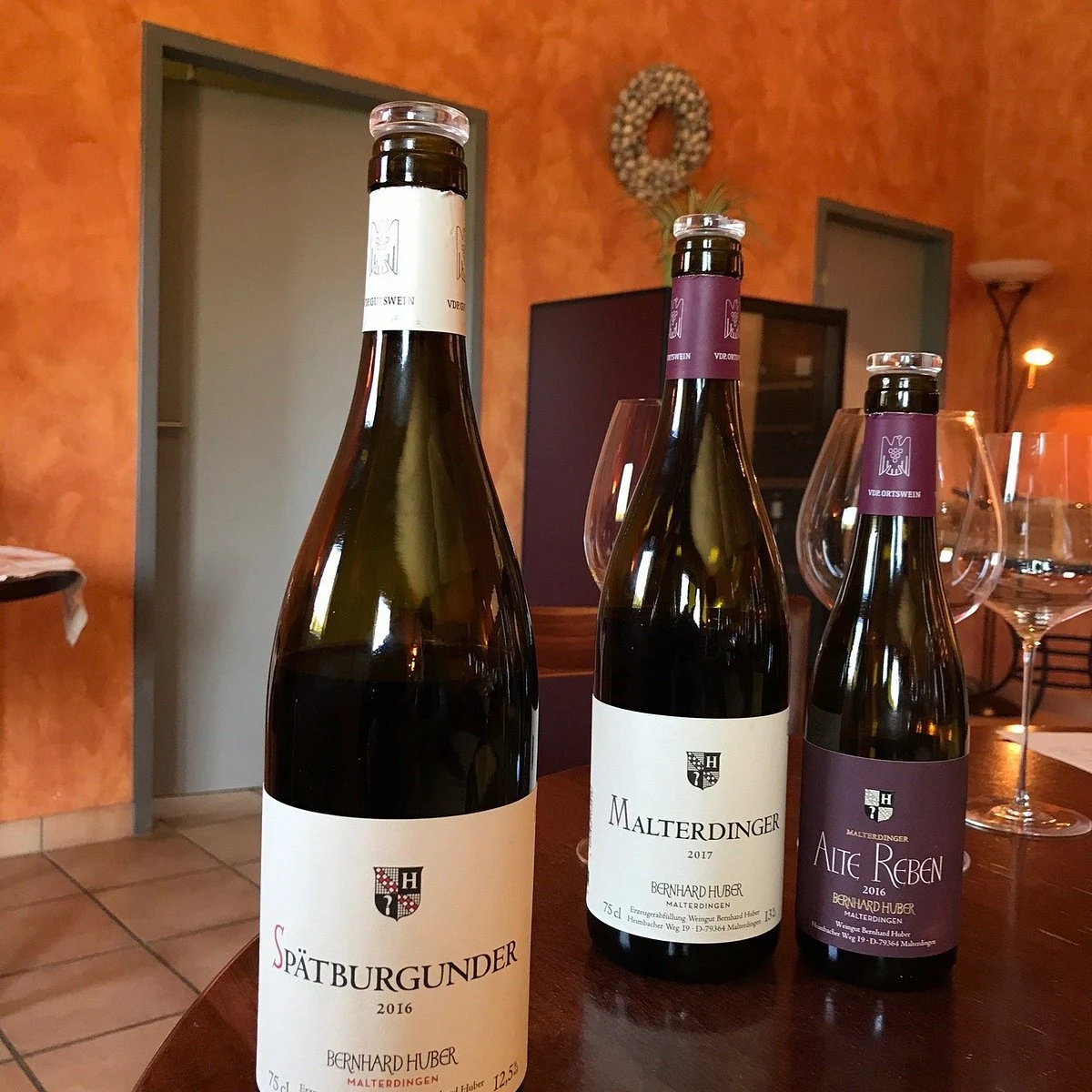
Baden Pinot on limestone slopes
- Falstaff Winery - 5 Stars · 2026
- Pearl 2 Star Prestige · 2025
Pinot Noir held to a quiet line
Julian Huber checks Pinot Noir and Chardonnay against the estate’s line of restraint as winemaker at Weingut Bernhard Huber in Malterdingen. Since 2014, he has co-run the estate with Barbara Huber while making the wines, a role that keeps the cellar and the vineyard in the same field of attention. The work here does not separate administration from the bench. Timing, patience, and a steady hand belong to the same discipline as pruning decisions, cellar movement, and the final shape of a bottling.
The estate’s center of gravity is Baden Spätburgunder, with Chardonnay close beside it. Julian’s known register includes 2013 Spätburgunder Alte Reben and Malterdinger Rosé trocken, wines that sit within the house language without asking for volume. His task is continuity rather than reinvention: keep the identity coherent from one vintage to the next, let Pinot Noir and Chardonnay carry the argument, and avoid making the gesture louder than the fruit. At Weingut Bernhard Huber, that restraint is not decorative. It is the method.
Weathered limestone and estate scale
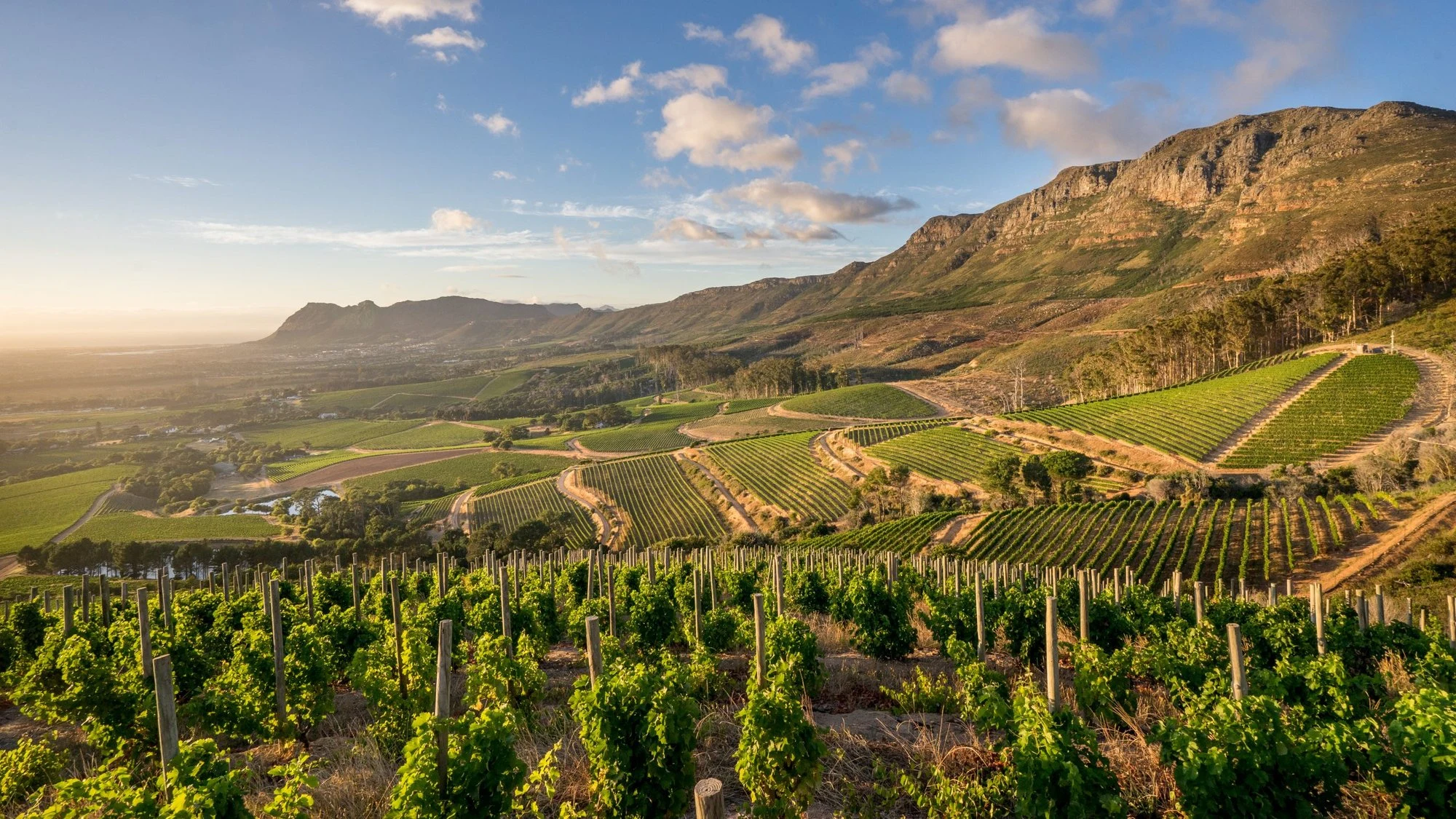
The estate farms 28 hectares in Baden, with steep parcels named Bienenberg, Schlossberg, Sommerhalde, and Wildenstein. The soils are weathered limestone, and the slopes face south, giving the place a Burgundian inflection without asking the wines to pretend they come from elsewhere. Cistercian monks planted vines here 700 years ago, and that long agricultural memory sits behind the current cellar without becoming costume.
The house works organically and produces 160,000 bottles annually. Its range moves through Spätburgunder, Chardonnay, Weissburgunder, Grauer Burgunder, Muskateller, and Müller-Thurgau, with still red, still white, and sparkling wines in the frame. The important point is not breadth for its own sake, but pressure: each variety has to pass through the same expectation of balance, with the estate’s limestone and south-facing parcels doing more of the speaking than cellar force. The philosophy often attached to the place is less is more. In practice, that means fewer visible fingerprints.
The cellar kept quiet
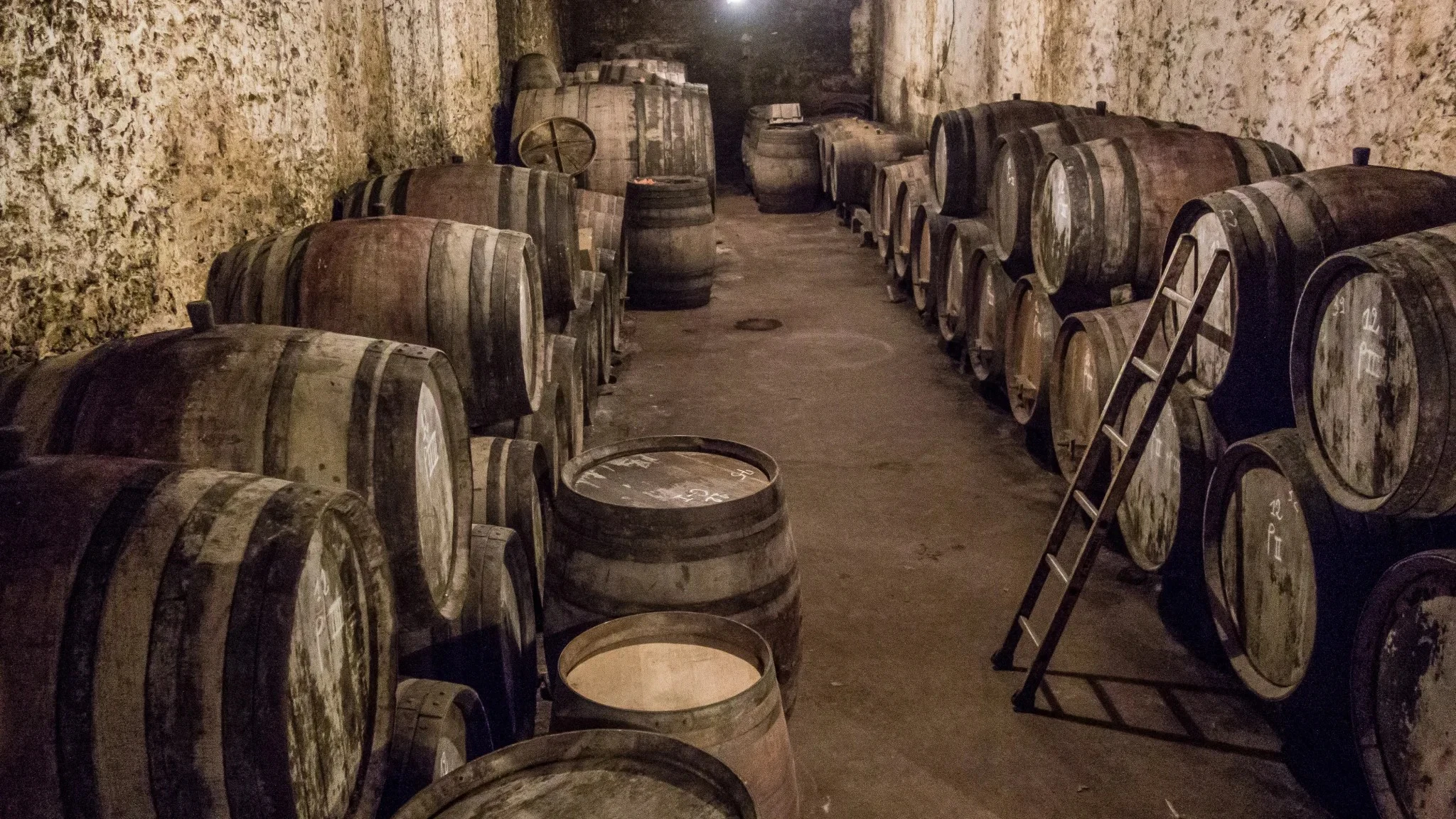
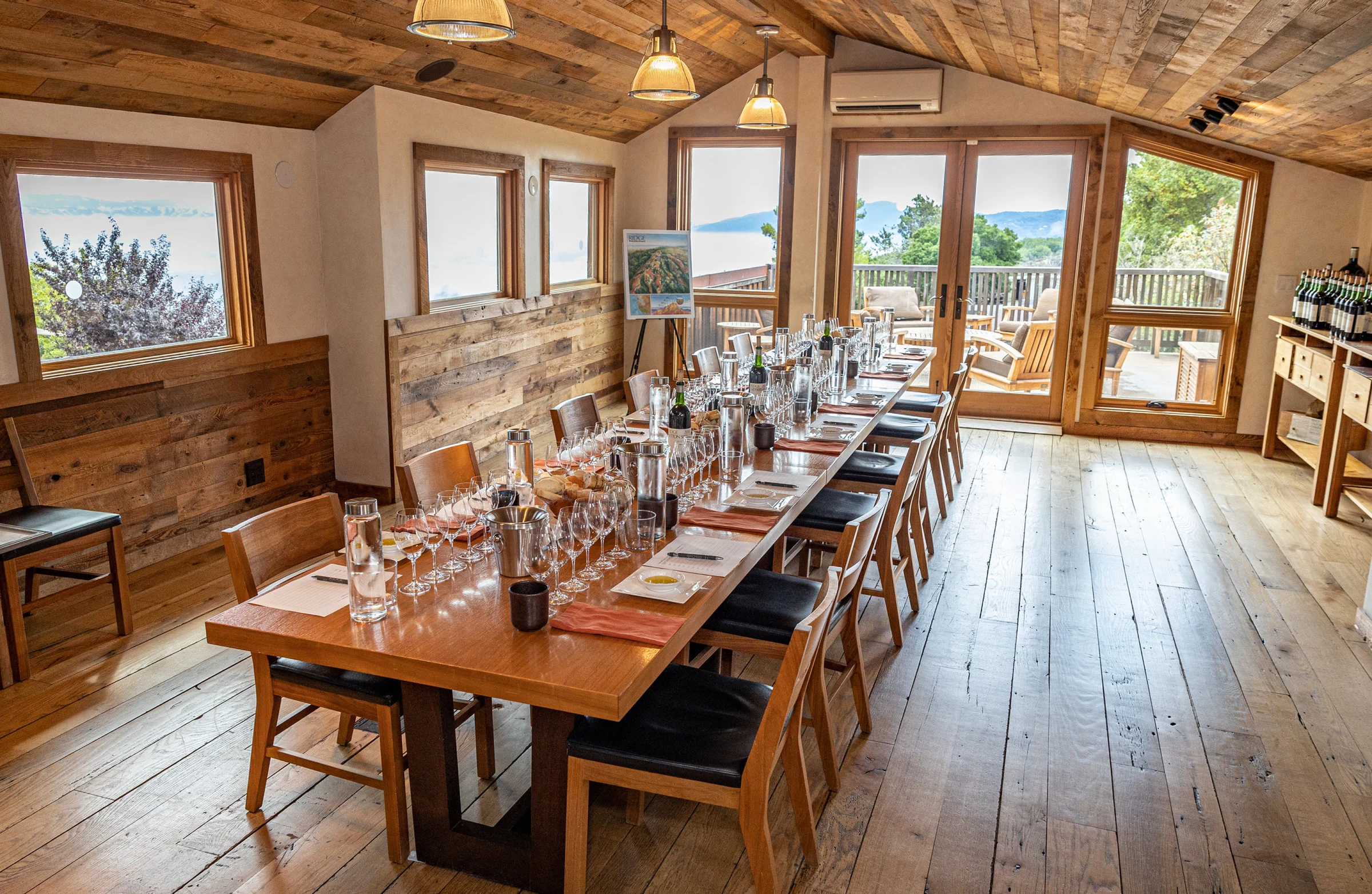
The estate atmosphere is refined and minimal, built around attention rather than display. In the cellar, the room asks for a lowered voice. Private tastings, barrel room tastings, and vineyard walks all return to the same subject: how Malterdingen fruit behaves when the maker refuses to crowd it. The experience is not arranged around spectacle. It is closer to bench-side work, with the vineyard names and the barrel room giving the conversation its structure.
That quietness suits the wines. Bienenberg, Schlossberg, Sommerhalde, and Wildenstein are not ornamental names on a label; they are the ground under the program. The tasting room and cellar keep the focus there, on limestone, slope, and the measured decisions that move fruit toward bottle.
Two awards, no change in posture
The estate holds awards. Awards can mark attention, but they do not change the daily work that gives the wines their shape. Julian Huber’s next vintage still returns to Pinot Noir, Chardonnay, and the same Malterdingen limestone under Bienenberg.
Questions
Frequently asked
What is Weingut Bernhard Huber known for?
Weingut Bernhard Huber is known for Baden Spätburgunder, with Chardonnay close beside it. The estate also works with Weissburgunder, Grauer Burgunder, Muskateller, and Müller-Thurgau, alongside still red, still white, and sparkling wines.
Who runs the estate?
Julian Huber has co-run Weingut Bernhard Huber with Barbara Huber since 2014. He works as the winemaker, with a focus on keeping the cellar and vineyard in the same field of attention.
What does the estate grow and where?
The estate farms 28 hectares in Baden, in steep parcels including Bienenberg, Schlossberg, Sommerhalde, and Wildenstein. The soils are weathered limestone, and the slopes face south.
What kind of visits does the winery offer?
Visits at Weingut Bernhard Huber include private tastings, barrel room tastings, and vineyard walks. The setting is described as refined and minimal, with the focus kept on the wines, the limestone, and the vineyard.
Does the estate take reservations?
The winery is appointment only. It also has on-site parking and a smart casual dress code.
The field
How it compares
| Place | Notes | Awards |
|---|---|---|
| Weingut Bernhard Huber | Malterdingen, $$$ | · |
| Château Rayas | Châteauneuf-du-Pape | · |
| Klein Constantia | Cape Town | World's 50 Best |
| Ridge Vineyards | Cupertino | World's 50 Best |
| Taittinger | Reims | World's 50 Best |
| Weinmanufaktur Mario J. Burkhart | Malterdingen | · |
| Zalwander | Malterdingen | · |