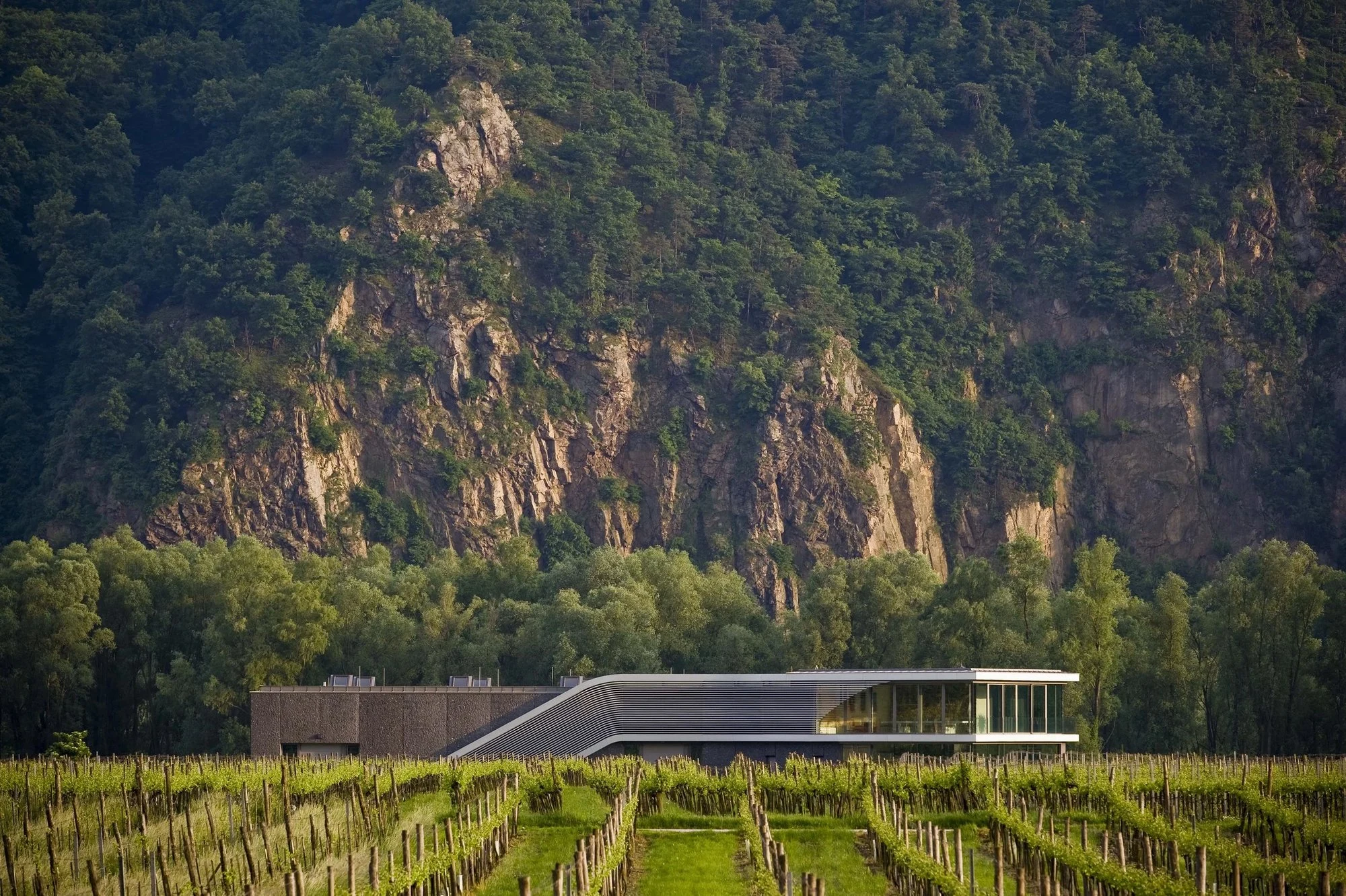
Weingut F. X. Pichler sits at the upper tier of Wachau wine production, holding a Pearl 2 Star Prestige award in 2025 and drawing visitors to its address at Oberloiben 57 in Dürnstein. The estate is among the most referenced names in Austrian Grüner Veltliner and Riesling production, positioned alongside [Weingut Emmerich Knoll](https://www.enprimeurclub.com/wineries/weingut-emmerich-knoll-durnstein-winery) as a benchmark for the region's top-tier output.
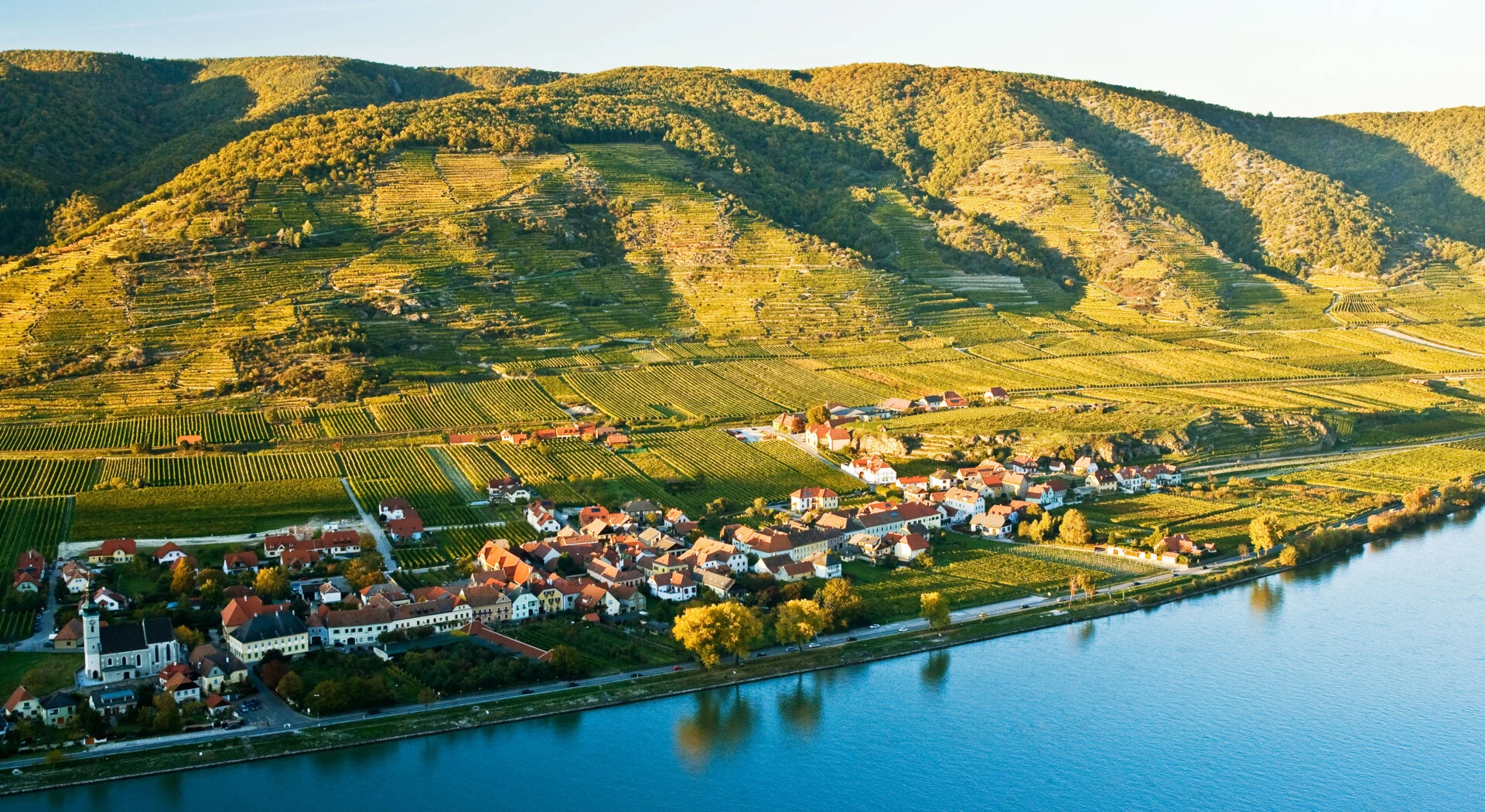
<h2>Where the Wachau's Reputation Concentrates</h2><p>The road that traces the Danube through the Wachau valley passes vineyards so steep they require hand harvesting, villages that predate the Austrian state by centuries, and a handful of estates whose names have become shorthand for what serious Austrian white wine can achieve. Oberloiben sits within this corridor. The approach to Weingut F. X. Pichler along this stretch frames the visit before a single glass is poured: loess-terraced slopes above, the river below, and a density of established vine age that few European wine regions can match.</p><p>The Wachau operates under its own classification system, the Vinea Wachau, which divides wines into Steinfeder, Federspiel, and Smaragd tiers, with Smaragd representing the highest ripeness and the longest aging potential. Estates like F. X. Pichler, <a href="https://www.enprimeurclub.com/wineries/weingut-emmerich-knoll-durnstein-winery">Weingut Emmerich Knoll</a>, and <a href="https://www.enprimeurclub.com/wineries/weingut-alzinger-durnstein-winery">Weingut Alzinger</a> have shaped international understanding of what that classification means in the glass. The valley's combination of continental climate, granite and gneiss soils, and the thermal regulation of the Danube creates a narrow window for Grüner Veltliner and Riesling that argues against comparison with nearly any other European white wine zone.</p><h2>The 2025 Pearl 2 Star Prestige Recognition</h2><p>In 2025, Weingut F. X. Pichler received a Pearl 2 Star Prestige award, a designation that places it within the upper bracket of formally assessed Austrian producers. Within the Wachau specifically, this tier of recognition aligns with a small cohort of estates whose wines command allocation-style access and attract collectors alongside casual visitors. The award functions as a trust signal for first-time visitors trying to calibrate how F. X. Pichler sits relative to its neighbours: it is not an entry-level estate where the Danube scenery is doing most of the work. The wines carry the recognition, and the tasting format reflects that.</p><p>For context across Austrian wine regions, the recognition landscape extends beyond the Wachau. <a href="https://www.enprimeurclub.com/wineries/weingut-brundlmayer-langenlois-winery">Weingut Bründlmayer in Langenlois</a> and <a href="https://www.enprimeurclub.com/wineries/weingut-wohlmuth-kitzeck-winery">Weingut Wohlmuth in Kitzeck</a> represent comparable prestige-tier estates in the Kamptal and Südsteiermark respectively, while <a href="https://www.enprimeurclub.com/wineries/weingut-kracher-illmitz-winery">Weingut Kracher in Illmitz</a> holds a parallel standing in Burgenland's sweet wine production. F. X. Pichler's positioning, however, is firmly Wachau: the wines are inseparable from this specific geography, and any visit to the estate should be understood as an encounter with that geography as much as with the producer.</p><h2>The Tasting Experience at Oberloiben</h2><p>Wachau tastings at this level operate differently from the open-cellar drop-in format common in more tourist-oriented wine regions. The estates concentrated between Dürnstein and Krems tend to receive visitors with appointment protocols that reflect the scale of operation and the seriousness of the inquiry. A visit to F. X. Pichler at Oberloiben 57 rewards advance planning, and arriving without contact is unlikely to yield a structured tasting session during harvest periods or at weekends in high season.</p><p>The format, when experienced properly, follows the logic of the Smaragd classification itself: patience, structure, and attention to how wine changes in the glass over time. Grüner Veltliner at this level carries a mineral tension that loosens over twenty minutes of air exposure, and Rieslings from the valley's primary rock sites develop aromatic complexity that rewards a tasting pace slower than most restaurant pours allow. The tasting room setting in Wachau estates at this calibre tends toward restraint in design: the wines and the view carry the occasion.</p><p>Visitors comparing the tasting experience across Dürnstein's leading producers will find meaningful differentiation. <a href="https://www.enprimeurclub.com/wineries/domane-wachau-durnstein-winery">Domäne Wachau</a> operates at a cooperative scale that makes access direct but changes the intimacy of the encounter. <a href="https://www.enprimeurclub.com/wineries/weingut-alzinger-durnstein-winery">Weingut Alzinger</a> and <a href="https://www.enprimeurclub.com/wineries/weingut-emmerich-knoll-durnstein-winery">Weingut Emmerich Knoll</a> sit closer to F. X. Pichler in terms of scale and prestige, making them natural companions for a multi-estate day in the valley, though each requires individual contact. A visit structured around these three addresses covers the upper register of what Wachau Riesling and Grüner Veltliner can achieve in a single afternoon.</p><h2>Wachau's Position in Austrian Wine</h2><p>Austria's wine identity spent decades fighting misassociation after the diethylene glycol scandal of 1985, which effectively forced a structural reset of quality standards and international credibility. What emerged was a tighter, more rigorous production culture, particularly in the DAC (Districtus Austriae Controllatus) system that now governs regional classification. The Wachau, operating through Vinea Wachau rather than DAC, maintained its own standards throughout, and estates like F. X. Pichler became central to the international rehabilitation of Austrian white wine as a serious category.</p><p>That history matters when visiting today. The wines being poured at Oberloiben 57 carry the weight of a regional identity rebuilt over forty years, and the estate's 2025 recognition reflects sustained performance rather than recent repositioning. Within the broader Austrian producer landscape, including <a href="https://www.enprimeurclub.com/wineries/weingut-pittnauer-gols-winery">Weingut Pittnauer in Gols</a>, <a href="https://www.enprimeurclub.com/wineries/weingut-heinrich-hartl-oberwaltersdorf-winery">Weingut Heinrich Hartl in Oberwaltersdorf</a>, and <a href="https://www.enprimeurclub.com/wineries/weingut-scheiblhofer-distillery-andau-winery">Weingut Scheiblhofer Distillery in Andau</a>, F. X. Pichler represents the white wine benchmark against which other Austrian white producers are often measured internationally.</p><h2>Planning a Visit</h2><p>Dürnstein sits approximately 80 kilometres west of Vienna along the B3 federal road that follows the Danube. The village is served by the Wachau railway line from Krems, with Dürnstein-Oberloiben as the nearest station to the estate address at Oberloiben 57. Driving is the most practical option for visitors combining multiple estate visits in a single day, though the valley's narrow roads require patience in summer months when cycling tourism peaks. The season runs from spring through autumn, with harvest in September and October generating both activity at the estates and some access restrictions during pressing. Contacting the estate in advance of any planned visit is advisable regardless of season.</p><p>Visitors with an interest in Austrian spirits production alongside wine can extend their itinerary to include <a href="https://www.enprimeurclub.com/wineries/1310-spirit-of-the-country-distillery-sierning-winery">1310 Spirit of the Country Distillery in Sierning</a> or the <a href="https://www.enprimeurclub.com/wineries/1404-manufacturing-distillery-sankt-peter-freienstein-winery">1404 Manufacturing Distillery in Sankt Peter-Freienstein</a>, both of which represent the country's growing premium spirits scene alongside its established wine culture. For those mapping the visit within a broader European wine itinerary, <a href="https://www.enprimeurclub.com/wineries/aberlour-aberlour-winery">Aberlour in Aberlour</a> and <a href="https://www.enprimeurclub.com/wineries/accendo-cellars">Accendo Cellars in St. Helena</a> offer useful reference points for the prestige-tier, small-production format that F. X. Pichler represents within its own regional context. The <a href="https://www.enprimeurclub.com/wineries/1516-brewing-company-distillery-vienna-winery">1516 Brewing Company in Vienna</a> adds a different production category for visitors spending time in the capital before or after the valley.</p>
At this level of recognition — the estate holds a 2025 Pearl 2 Star Prestige award — visits operate closer to a structured appointment than a casual drop-in. Wachau estates of this calibre concentrate their hospitality around focused tasting sessions rather than open-cellar walk-ins, so expect a considered, attentive atmosphere at Oberloiben 57.
Weingut F. X. Pichler is located at Oberloiben 57, 3601 Dürnstein, Austria, Dürnstein.
Weingut F. X. Pichler has received recognition including: Pearl 2 Star Prestige (2025).
The Wachau's viticultural identity is built on Grüner Veltliner and Riesling grown on steep, hand-harvested terraces along the Danube, and F. X. Pichler has long been one of the region's reference points for both varieties. The 2025 Pearl 2 Star Prestige designation reflects consistent quality across the range, so prioritise the estate's higher-tier bottlings to understand what earns that recognition.
The estate's 2025 Pearl 2 Star Prestige award places it in the upper bracket of formally assessed Austrian wine producers, in a valley whose reputation for dry white wines has been rebuilt with deliberate rigour since 1985. The Oberloiben address sits at the heart of the Wachau's most prized vineyard land, roughly 80 kilometres west of Vienna along the Danube.
Prestige-tier Wachau estates consistently require advance contact rather than accepting walk-in visitors, and F. X. Pichler follows that convention. Direct contact through the estate at Oberloiben 57, Dürnstein is the appropriate route; no booking portal details are currently listed.
Oberloiben 57, 3601 Dürnstein, Austria
Dürnstein