Weingut Feiler-Artinger holds a Pearl 2 Star Prestige rating (2025) and sits at Hauptstraße 3 in the UNESCO-listed free town of Rust on Austria's Neusiedlersee, one of the country's most storied addresses for Ausbruch and dry white production. The estate occupies a tier shared by a small group of Burgenland producers whose reputations extend well beyond the domestic market.
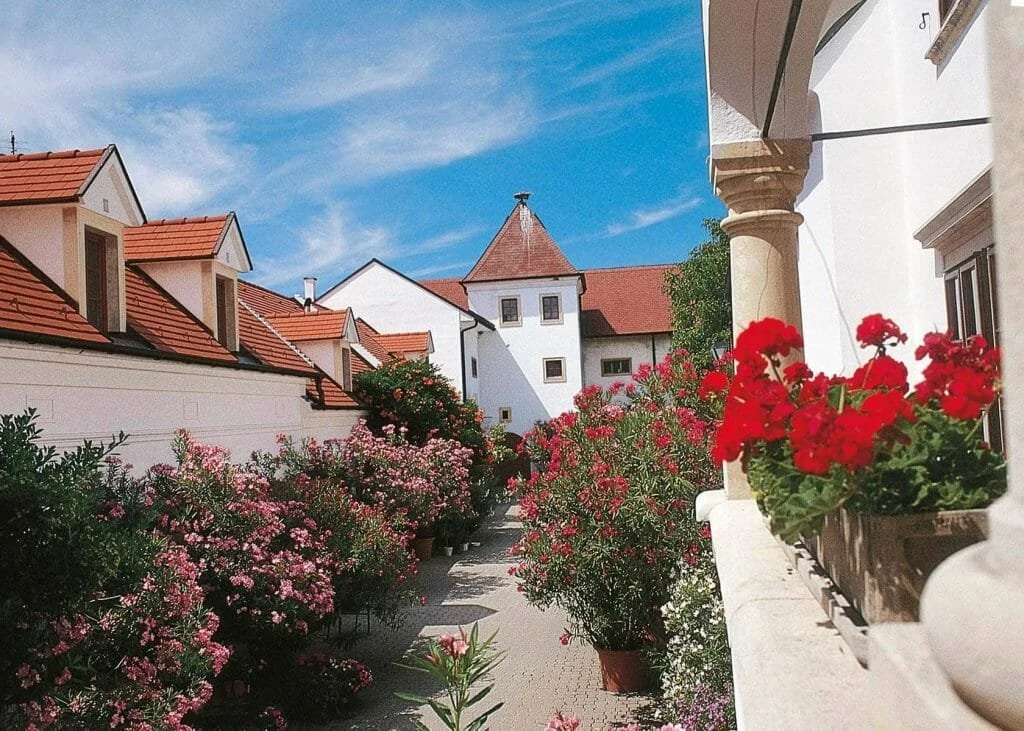
<h2>Rust, the Neusiedlersee, and the Producers Who Define the Tier</h2><p>The free town of Rust sits on the western shore of the Neusiedlersee in Burgenland, Austria's easternmost wine region, where a shallow inland sea moderates temperature in ways that produce conditions found almost nowhere else in central Europe. The lake's surface promotes morning mist and warm, humid afternoons that historically made Rust the natural home of Ausbruch, the region's ancient botrytised wine style that predates Trockenbeerenauslese as a legally defined category. That heritage still shapes how serious producers in the town are evaluated, and it is against that backdrop that Weingut Feiler-Artinger, at Hauptstraße 3, has built a reputation that earned it a Pearl 2 Star Prestige rating in 2025.</p><p>The Pearl 2 Star Prestige designation places Feiler-Artinger inside a small group of Austrian producers operating at the upper end of a tiered recognition system. For context, several Burgenland estates hold comparable or adjacent ratings, among them <a href="https://www.enprimeurclub.com/wineries/weingut-ernst-triebaumer-rust-winery">Weingut Ernst Triebaumer</a> and <a href="https://www.enprimeurclub.com/wineries/weingut-wenzel-rust-winery">Weingut Wenzel</a>, both also based in Rust. The concentration of recognised producers in a single small town is itself a signal: Rust's combination of microclimate, old vine sites, and long institutional memory creates conditions that reward serious viticulture at a density unusual even by Austrian standards.</p><h2>The Winemaking Philosophy Behind the Prestige Rating</h2><p>Austrian wine at the premium tier has, over the past two decades, moved toward a philosophy that privileges site expression over winemaker intervention. The leading producers in the Neusiedlersee zone treat the lake's climatic influence not as a convenience for botrytis production but as a year-round variable that shapes their dry white and red wines as much as their sweet ones. At Feiler-Artinger, the estate's address in Rust and the 2025 prestige recognition together imply a commitment to this dual register: the ability to produce both the town's traditional Ausbruch and dry wines capable of standing in their own comparable set.</p><p>Burgenland's geography encourages a particular kind of winemaking discipline. The pannonic heat from the Hungarian plain, filtered by the Neusiedlersee's moderating effect, gives growers a longer, slower ripening window than Austria's cooler alpine-influenced regions. Producers who work this correctly produce reds, often from Blaufränkisch, with structural depth rather than extracted weight, and whites with phenolic texture that suits ageing. The estates earning top-tier recognition in this region tend to be those who resist the temptation to over-extract in the warm years and who understand that the Neusiedlersee's real gift is not heat accumulation but diurnal range and moisture balance. <a href="https://www.enprimeurclub.com/wineries/weingut-kracher-illmitz-winery">Weingut Kracher in Illmitz</a>, on the lake's eastern shore, provides one well-documented reference point for how Burgenland sweet wine ambition translates to international standing; <a href="https://www.enprimeurclub.com/wineries/weingut-pittnauer-gols-winery">Weingut Pittnauer in Gols</a> offers a comparable frame for the dry red tradition.</p><h2>Rust in the Context of Austrian Wine Geography</h2><p>To understand Feiler-Artinger's position, it helps to map Rust against the rest of Austrian wine country. The country's most internationally visible wine regions are the Wachau, Kamptal, and Kremstal in Lower Austria, where producers like <a href="https://www.enprimeurclub.com/wineries/weingut-emmerich-knoll-durnstein-winery">Weingut Emmerich Knoll in Dürnstein</a> and <a href="https://www.enprimeurclub.com/wineries/weingut-brundlmayer-langenlois-winery">Weingut Bründlmayer in Langenlois</a> have driven global recognition for Riesling and Grüner Veltliner. Burgenland operates on a different axis: its reputation rests on Blaufränkisch, sweet Ausbruch, and increasingly on the dry whites and reds that emerge from its complex mosaic of soil types around the Neusiedlersee.</p><p>Rust sits at the prestige end of that Burgenland axis. The town holds the rare legal right to label its botrytised wines as Ausbruch, a category requiring higher must weights than Beerenauslese but lower than Trockenbeerenauslese, and with a minimum of 30 percent botrytised grapes blended with fresh must. Few towns in the world have a sweet wine tradition this specifically codified, and the estates that work within it carry both the burden and the benefit of that specificity. In this context, earning a Pearl 2 Star Prestige in 2025 is not a generic quality signal; it is recognition within a tradition that already filters out casual producers by its own demands.</p><p>Producers across Styria and Lower Austria working at adjacent prestige tiers, such as <a href="https://www.enprimeurclub.com/wineries/weingut-wohlmuth-kitzeck-winery">Weingut Wohlmuth in Kitzeck</a> and <a href="https://www.enprimeurclub.com/wineries/weingut-heinrich-hartl-oberwaltersdorf-winery">Weingut Heinrich Hartl in Oberwaltersdorf</a>, make a useful comparative frame, but the Rust tradition remains distinct in its combination of sweet wine heritage and serious dry wine production within the same estate portfolio. That combination is what separates the leading Rust houses from producers in other Austrian regions.</p><h2>Visiting Rust: What to Know Before You Go</h2><p>Rust is a small town, and its centre is compact enough to walk from the main square to most producer addresses. Hauptstraße 3 is on the estate's primary street address, accessible from the town's historic core where the distinctive stork nests on the chimneys have become as much a part of Rust's identity as the Ausbruch cellars below. The town is a short drive from Eisenstadt, the Burgenland capital, and within range of Vienna for visitors treating Burgenland as a day trip or weekend extension. That said, the region rewards staying longer: the combination of wine estates, the lake shore, and the broader Rust restaurant and winery scene supports two to three days comfortably.</p><p>For producers at the Pearl 2 Star Prestige level, tastings typically require advance contact. Austria's leading estates do not maintain walk-in tasting room schedules comparable to New World producers; appointments are the norm, and</p><p>The broader Austrian wine calendar concentrates visits in spring and autumn. Harvest in Burgenland typically runs from September into November, with botrytis selection often extending later depending on lake conditions. Visiting in October places you at the intersection of dry wine harvest and the beginning of late-harvest assessment, which is the point at which the region's dual identity is most visible.</p><p> International reference points, from <a href="https://www.enprimeurclub.com/wineries/aberlour-aberlour-winery">Aberlour in Aberlour</a> to <a href="https://www.enprimeurclub.com/wineries/accendo-cellars">Accendo Cellars in St. Helena</a>, illustrate how prestige-tier producers in other traditions translate heritage into contemporary standing, a comparison that ultimately reinforces what Feiler-Artinger's 2025 rating represents in its own context.</p>
Weingut Feiler-Artinger is located at Hauptstraße 3, 7071 Rust, Rust.
Weingut Feiler-Artinger has received recognition including: Pearl 2 Star Prestige (2025).
Feiler-Artinger's Pearl 2 Star Prestige rating (2025) signals the estate's strength at the top tier of its range. Rust's position on the Neusiedlersee makes it one of Austria's most distinctive sites for both late-harvest whites and structured reds, so both categories merit attention. Contact the estate directly at Hauptstraße 3, Rust to confirm current releases available for tasting.
The estate's Pearl 2 Star Prestige (2025) places it among the higher-rated producers in the EP Club's Burgenland coverage. Rust's microclimate, shaped by the shallow Neusiedlersee, produces conditions suited to both botrytis-affected sweet wines and concentrated dry reds, and Feiler-Artinger has built its reputation working within that geography. That dual capability across styles is relatively uncommon even within the Rust appellation.
The estate is located at Hauptstraße 3 in Rust, a compact town where most producer addresses are walkable from the main square. Austrian estate cellars at this prestige tier often operate by appointment rather than walk-in, particularly during harvest periods.
The Pearl 2 Star Prestige (2025) is EP Club's recognition tier for estates demonstrating sustained quality and site-specific character, placing Feiler-Artinger in the upper bracket of rated producers in Rust and the broader Burgenland region. Within the Rust appellation, which holds a distinct legal status as a free town and is one of Austria's most historically significant wine communities, a rating at this level carries weight relative to a small pool of local estates. It positions Feiler-Artinger as a reference producer for anyone mapping the Neusiedlersee's western shore.
First-time visitors to Rust will find Feiler-Artinger a logical anchor point: its Pearl 2 Star Prestige (2025) provides an immediate benchmark for the region's quality ceiling. Repeat visitors tend to return to track vertical development across vintages, which is where estates at this rating level typically reward deeper attention. Either way, the address at Hauptstraße 3 puts it at the centre of Rust's wine quarter.
Hauptstraße 3, 7071 Rust
Rust