Weingut Künstler is a Hochheim am Main estate holding a Pearl 3 Star Prestige rating for 2025, placing it among Germany's most recognised Rheingau producers. Hochheim's position at the eastern edge of the Rheingau, where the Main meets conditions more akin to the Rhine's limestone and loam soils, gives Künstler a distinct site advantage for Riesling of pronounced minerality and structural precision.
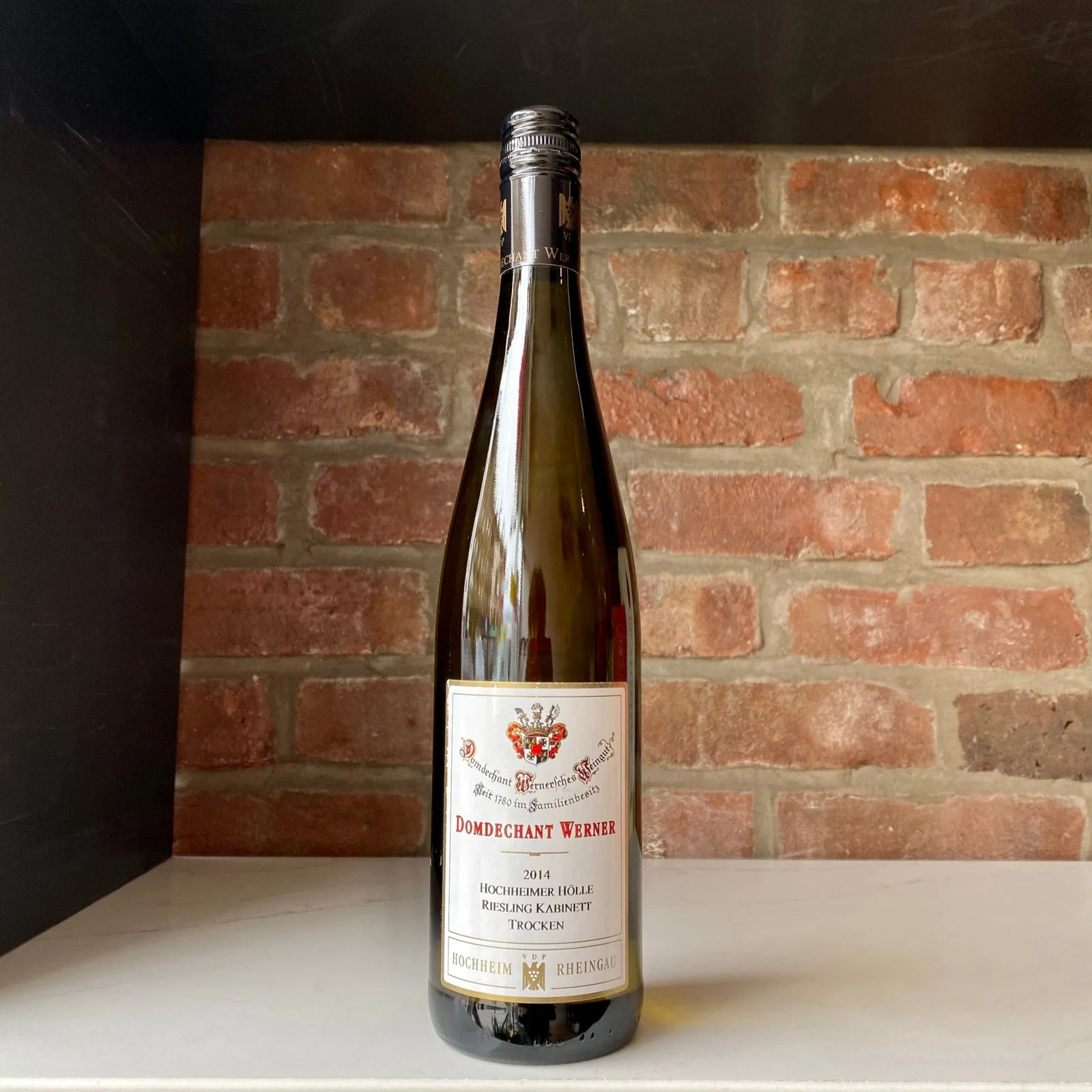
<h2>Where the Main Shapes the Wine</h2><p>Hochheim am Main sits at the eastern reach of the Rheingau, geographically separated from the main arc of the appellation that runs westward along the Rhine toward Rüdesheim and Assmannshausen. That separation is more than cartographic. The soils here shift, the river orientation changes, and the mesoclimate produces Rieslings with a character that has historically been categorised apart from the softer fruit profiles further west. Queen Victoria's affection for Hochheimer wines in the nineteenth century gave the English language the colloquial term "hock" for German white wine. The estate addresses that legacy not through nostalgia but through the quality of its current output.</p><p>Weingut Künstler carries a Pearl 3 Star Prestige rating for 2025, which places it alongside a small cohort of German estates whose work is judged to meet an exacting standard across consistency, site expression, and overall quality. In the Rheingau context, that peer group includes names like <a href="https://www.enprimeurclub.com/wineries/weingut-georg-breuer-rudesheim-am-rhein-winery">Weingut Georg Breuer in Rüdesheim am Rhein</a> and <a href="https://www.enprimeurclub.com/wineries/domdechant-werner-sches-weingut-hochheim-am-main-winery">Domdechant Werner'sches Weingut</a>, the latter also based in Hochheim and working from some of the same historically significant parcels.</p><h2>The Rheingau Prestige Tier in 2025</h2><p>Germany's wine quality conversation has shifted considerably over the past two decades. The VDP classification system, which restructured the country's leading estates around a Burgundy-influenced hierarchy of Gutswein, Ortswein, Erste Lage, and Grosse Lage, gave consumers and critics a clearer framework for reading German wine quality. Estates at the top of that framework now price and allocate in ways that align more closely with Burgundy premier and grand cru logic than with the old Prädikat system of sweetness levels.</p><p>The Pearl 3 Star Prestige designation reinforces Künstler's position in that upper tier. At this level, estates across Germany are judged against a demanding standard that extends beyond any single vintage. Comparable achievers across other German regions include <a href="https://www.enprimeurclub.com/wineries/weingut-a-christmann-neustadt-an-der-weinstrasse-winery">Weingut A. Christmann in Neustadt an der Weinstraße</a> in the Pfalz and <a href="https://www.enprimeurclub.com/wineries/weingut-bassermann-jordan-deidesheim-winery">Weingut Bassermann-Jordan in Deidesheim</a>, both working with the same VDP framework and a similar emphasis on site-driven wine. In the Mosel, estates like <a href="https://www.enprimeurclub.com/wineries/weingut-fritz-haag-brauneberg-winery">Weingut Fritz Haag in Brauneberg</a> and <a href="https://www.enprimeurclub.com/wineries/weingut-grans-fassian-leiwen-winery">Weingut Grans-Fassian in Leiwen</a> occupy an analogous position within their own appellation's hierarchy. The through-line across all of them is a commitment to expressing specific vineyard character over generalised regional type.</p><h2>Approach and Winemaking Philosophy</h2><p>The wines that define estates at Künstler's level in the Rheingau tend to share a set of characteristics: a preference for extended lees contact in Riesling to build texture without relying on residual sugar, careful management of must clarity, and a harvesting discipline that prioritises physiological ripeness over chaptalisable yields. Hochheim's particular terroir, with its mix of loam, clay, and sandy limestone, gives Riesling here a firmer, more savory frame than the slate-driven wines of the Mittelrhein or the Mosel. Trocken styles from the leading Hochheim parcels, including the famous Domdechaney and Kirchenstück sites, read as genuinely dry without the austerity that can make lower-tier Rheingau trocken difficult at the table.</p><p>Estates working at the Pearl 3 Star level, whether in Hochheim, the Nahe, or the Pfalz, tend to approach Grosse Gewächs releases with a holding strategy: these wines are typically released two years after harvest and benefit from further cellaring. The 2025 rating signals that Künstler's output has met that standard across multiple recent vintages, not simply in an exceptional year. That consistency is the harder credential to earn.</p><p>For comparison within a biodynamic and natural viticulture context, the approach taken by <a href="https://www.enprimeurclub.com/wineries/weingut-battenfeld-spanier-hohen-sulzen-winery">Weingut Battenfeld-Spanier in Hohen-Sülzen</a> and <a href="https://www.enprimeurclub.com/wineries/weingut-clemens-busch-punderich-winery">Weingut Clemens Busch in Pünderich</a> represents one direction that leading German estates have taken. Künstler operates within a different tradition: the Rheingau's classical expression, where site specificity and structural precision are the primary measures of quality rather than farming philosophy as such.</p><h2>Hochheim in the Broader Rheingau Picture</h2><p>Visitors approaching Hochheim from Frankfurt or Wiesbaden arrive at a town that functions as a working wine community rather than a tourist destination in the conventional sense. The estate is located on Wiesbadener Strasse, which places it at the edge of the town proper, accessible from the main road connecting Hochheim to Wiesbaden. The historic core of Hochheim, with its vineyard-adjacent church ruins and panoramic views across the Main floodplain, gives the town a physical connection to its wine history that is more immediately legible than in many Rheingau villages.</p><p>For context on the broader region's historical depth, the Cistercian estate at <a href="https://www.enprimeurclub.com/wineries/kloster-eberbach-eltville-winery">Kloster Eberbach in Eltville</a> provides one of the most legible narratives of Rheingau wine history in a single visit. Hochheim, by contrast, makes its case through the quality of what is currently in the bottle rather than through monastic grandeur. The two approaches to the Rheingau's heritage are complementary rather than competing.</p><p>Those building a broader picture of German fine wine production across regions can extend comparisons to <a href="https://www.enprimeurclub.com/wineries/weingut-allendorf-oestrich-winkel-winery">Weingut Allendorf in Oestrich-Winkel</a> within the Rheingau itself, or move to Franconia with <a href="https://www.enprimeurclub.com/wineries/weingut-burgerspital-zum-heiligen-geist-wurzburg-winery">Weingut Bürgerspital zum Heiligen Geist in Würzburg</a>, where a radically different soil and climate profile produces Silvaner-led wines with an equally serious quality argument. And for those whose reference points extend to other premium wine categories entirely, the single malt production context at <a href="https://www.enprimeurclub.com/wineries/aberlour-aberlour-winery">Aberlour in Aberlour</a> or the Napa Cabernet approach of <a href="https://www.enprimeurclub.com/wineries/accendo-cellars">Accendo Cellars in St. Helena</a> offer a different set of coordinates for thinking about terroir-driven production at the prestige tier.</p><h2>Planning a Visit</h2><p>Hochheim is approximately 30 minutes by S-Bahn from Frankfurt's main station on the S1 line, which makes the town one of the more accessible Rheingau wine destinations for visitors based in Frankfurt. Wiesbaden is closer still. Contact the estate directly on Wiesbadener Str. 1A, 65239 Hochheim am Main for visit arrangements. Reservations are recommended. The Rheingau harvest window runs from late September through October for most Riesling parcels, with Spätlese and Auslese material extending into November in good years. Spring and early summer, when the vines are in growth and the region is less trafficked than during harvest festivals, often produce the most focused tasting appointments.</p>
Weingut Künstler is located at Wiesbadener Str. 1A, 65239 Hochheim am Main, Hochheim am Main.
Weingut Künstler has received recognition including: Pearl 3 Star Prestige (2025).
The 2025 Pearl 3 Star Prestige rating is the clearest guide: at that tier in the Rheingau, the wines worth prioritising are Hochheim's site-specific Rieslings, where the Main's influence produces a mineral register distinct from the main Rheingau arc further west. Ask for single-vineyard bottlings if available during your visit, as these are where estates at Künstler's level typically concentrate their finest fruit.
The 2025 Pearl 3 Star Prestige award places Künstler at the top of Hochheim's producer hierarchy and among the Rheingau's leading estates by current critical measure. Hochheim itself adds context: geographically separated from the main Rheingau appellation and accessible in roughly 30 minutes by S-Bahn from Frankfurt on the S1 line, the town functions as a working wine community rather than a visitor circuit, which means the wines carry the argument on their own terms.
Wiesbadener Str. 1A, 65239 Hochheim am Main
Hochheim am Main
Domdechant Werner’sches Weingut