
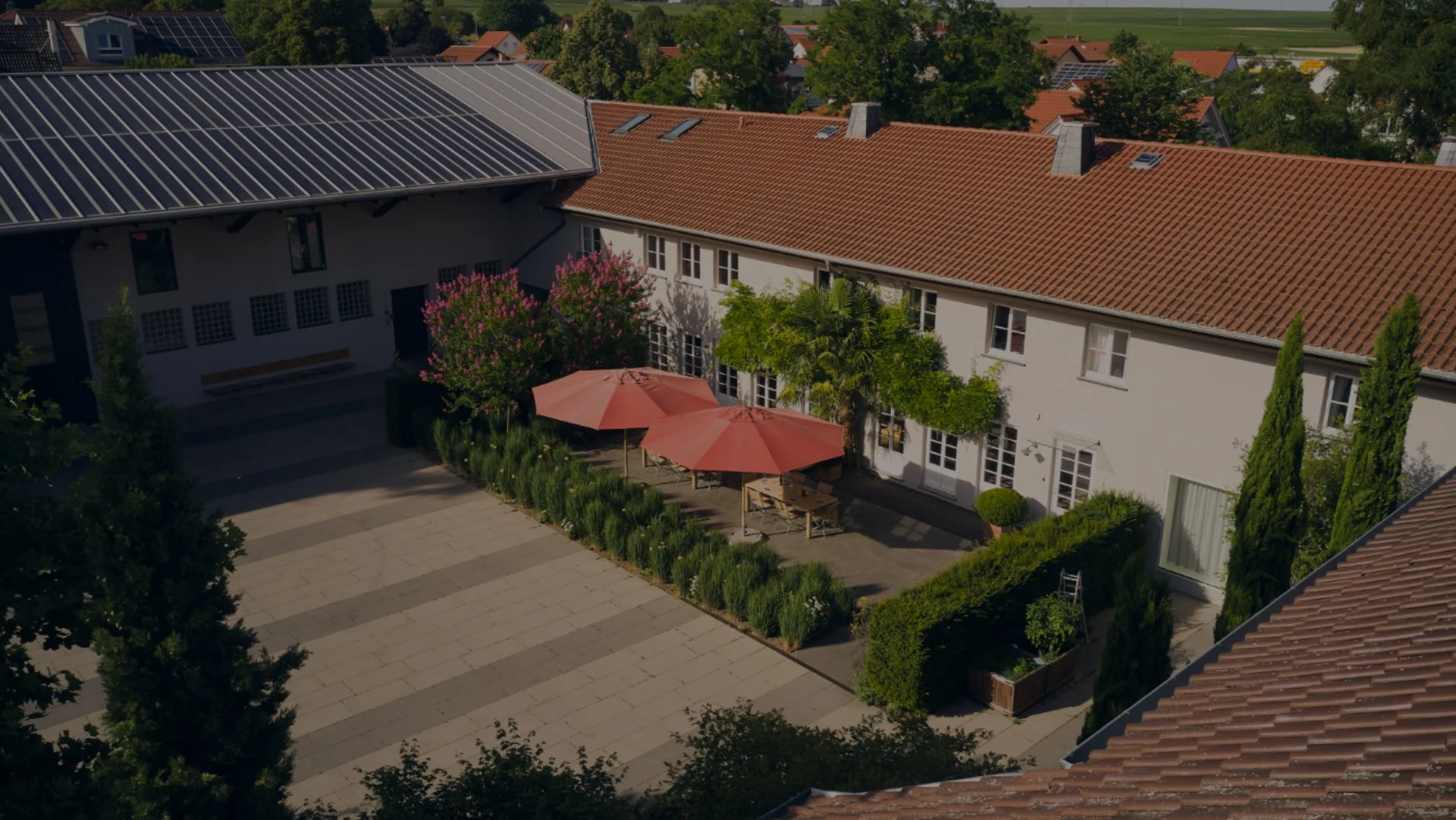
Weingut Wittmann operates from Mainzer Strasse in Westhofen, at the heart of Rheinhessen's limestone-rich terroir belt. Recognised with a Pearl 3 Star Prestige award in 2025, the estate sits among Germany's most credentialled Riesling and Silvaner producers, where soil expression rather than intervention drives the winemaking conversation. For anyone tracing the Rheinhessen revival, Wittmann is a fixed reference point.
<h2>Limestone, Loess, and the Westhofen Argument</h2><p>Rheinhessen spent decades in the shadow of the Mosel and the Pfalz. The region's reputation, built on oceans of cheap Liebfraumilch, took the better part of two generations to shake. What replaced it, a tight cluster of estates in the Wonnegau sub-zone, working calcaire and loess soils with a seriousness that has attracted international critical attention, is now the more compelling story in German wine. Weingut Wittmann, based at Mainzer Str. 19 in Westhofen, sits at the centre of that story.</p><p>The village of Westhofen is not a destination in the way that Bernkastel or Rüdesheim command immediate name recognition among wine tourists. It is a working agricultural community, and arriving there without a specific winery in mind is unusual. Most visitors come because they already know where they are going. That self-selecting quality shapes the atmosphere of the estates here: no tourist infrastructure, no wine routes with gift shops at every turn, just producers dealing with serious buyers and collectors who have done their homework.</p><h2>What the Ground Does Here</h2><p>The geological argument for Westhofen rests on its limestone. Rheinhessen is broadly loess country, wind-deposited silt that produces generous, early-ripening fruit, but the Wonnegau pocket around Westhofen sits on Muschelkalk, a Triassic-era limestone that introduces a mineral tension more commonly associated with Burgundy or the Mosel's Devonian slate. The combination of that substrate with Rheinhessen's continental climate, which is warmer and drier than the Mosel valley, produces wines that carry both concentration and a chalky, nervy edge.</p><p>That tension between richness and mineral grip is what Rheinhessen's serious estates are trying to express, and it explains why producers in this zone have attracted comparisons to Alsace or the Chablis end of Burgundy rather than to the honeyed richness more commonly associated with German Riesling from warmer sites. In the broader context of German wine, the Wonnegau Rieslings from estates like Wittmann represent a distinct style argument: that the south of Rheinhessen can deliver the same calibre of site-driven expression as the classic Mosel or Rhine Terrassen regions, and do it on its own geological terms.</p><p>For comparison, <a href="https://www.enprimeurclub.com/wineries/weingut-battenfeld-spanier-hohen-sulzen-winery">Weingut Battenfeld-Spanier in Hohen-Sülzen</a> operates on similar Wonnegau limestone and sits in the same peer conversation, as does <a href="https://www.enprimeurclub.com/wineries/weingut-a-christmann-neustadt-an-der-weinstrasse-winery">Weingut A. Christmann in Neustadt an der Weinstraße</a> slightly to the south in the Pfalz, where a comparable commitment to site transparency has built an equivalent reputation.</p><h2>Recognition and Where Wittmann Sits Among Peers</h2><p>Wittmann holds a Pearl 3 Star Prestige rating for 2025, which places it in the upper tier of assessed German producers. That rating carries weight because it situates the estate relative to its German peers. In the context of Rheinhessen specifically, the 3 Star Prestige designation signals a producer operating at the level where allocation lists, international export distribution, and collector demand become the relevant frames of reference rather than casual cellar-door comparison.</p><p> Westhofen's leading sites, including Westhofener Morstein, Brunnenhäuschen, and Kirchspiel, appear on leading producer labels precisely because the VDP framework has given them a legible identity in international markets.</p><p>Estates elsewhere in Germany with comparable prestige-tier positioning include <a href="https://www.enprimeurclub.com/wineries/kloster-eberbach-eltville-winery">Kloster Eberbach in Eltville</a>, <a href="https://www.enprimeurclub.com/wineries/weingut-georg-breuer-rudesheim-am-rhein-winery">Weingut Georg Breuer in Rüdesheim am Rhein</a>, and <a href="https://www.enprimeurclub.com/wineries/weingut-bassermann-jordan-deidesheim-winery">Weingut Bassermann-Jordan in Deidesheim</a>, each working within the VDP framework on their respective regional terroirs. The Mosel also fields significant comparison points: <a href="https://www.enprimeurclub.com/wineries/weingut-fritz-haag-brauneberg-winery">Weingut Fritz Haag in Brauneberg</a>, <a href="https://www.enprimeurclub.com/wineries/weingut-clemens-busch-punderich-winery">Weingut Clemens Busch in Pünderich</a>, <a href="https://www.enprimeurclub.com/wineries/weingut-grans-fassian-leiwen-winery">Weingut Grans-Fassian in Leiwen</a>, and <a href="https://www.enprimeurclub.com/wineries/weingut-heymann-lowenstein-winningen-winery">Weingut Heymann-Löwenstein in Winningen</a> each hold their own prestige-tier position along a river whose fame gives them a different kind of market use, though the gap between the Mosel's inherited reputation and Rheinhessen's earned one has narrowed sharply.</p><h2>The Rheinhessen Revival in Broader Context</h2><p>The transformation of Rheinhessen's reputation is one of the more instructive case studies in modern European wine. A region historically associated with volume production has, through the work of a defined group of estates concentrated in the Wonnegau, repositioned itself as a source of age-worthy, terroir-specific wines that command international collector attention. That shift did not happen through marketing; it happened through consistent quality from individual producers who chose difficult, low-yielding sites over the more productive loess plains that dominate the region's northern and central zones.</p><p></p><p>For broader perspective on German estates working in this premium, certification-conscious tier, <a href="https://www.enprimeurclub.com/wineries/weingut-dr-burklin-wolf-wachenheim-an-der-weinstrasse-winery">Weingut Dr. Bürklin-Wolf in Wachenheim an der Weinstraße</a>, <a href="https://www.enprimeurclub.com/wineries/weingut-allendorf-oestrich-winkel-winery">Weingut Allendorf in Oestrich-Winkel</a>, and <a href="https://www.enprimeurclub.com/wineries/weingut-burgerspital-zum-heiligen-geist-wurzburg-winery">Weingut Bürgerspital zum Heiligen Geist in Würzburg</a> each represent their own regional tradition while sharing the common thread of taking site and farming method as the primary production argument.</p><h2>Planning a Visit</h2><p>Westhofen sits in the southern part of Rheinhessen, roughly forty kilometres southwest of Mainz. Visits are by appointment only at Mainzer Str. 19.</p>
Wittmann operates as a working estate in Westhofen, a village in southern Rheinhessen — not a visitor showcase. The address on Mainzer Strasse places it squarely in the agricultural fabric of the appellation, and the ethos follows: serious, production-focused, with quality evidenced by a Pearl 3 Star Prestige rating for 2025 rather than hospitality theatrics.
Weingut Wittmann is located at Mainzer Str. 19, 67593 Westhofen, Westhofen.
Weingut Wittmann has received recognition including: Pearl 3 Star Prestige (2025).
Wittmann built its reputation on Riesling and Silvaner from Westhofen's limestone-rich soils, a geological anomaly in a region otherwise dominated by loess. The estate's Grosse Gewächse from sites like Westhofen Kirchspiel and Morstein are the reference points that drove Rheinhessen's critical rehabilitation over the past two decades.
Wittmann's Pearl 3 Star Prestige rating for 2025 from EP Club places it among the upper tier of assessed German producers — a credential that reflects consistent quality across vintages, not a single strong year. For anyone mapping Germany's serious wine estates, Westhofen and Wittmann represent the geological and historical centre of Rheinhessen's transformation from bulk-wine country to a region taken seriously by collectors.
Wittmann is a production estate at Mainzer Str. 19, Westhofen, not a drop-in tasting room. Contacting the estate directly before visiting is advisable, as most German Weingüter at this level receive visitors by appointment rather than on an open-door basis.
Westhofen sits on a limestone shelf that separates it from the loess-heavy soils covering most of Rheinhessen — a distinction that produces wines with more mineral tension and longer ageing potential than the region's broader output. This geological specificity is part of what underpins Wittmann's Pearl 3 Star Prestige rating for 2025, and it explains why the estate is routinely grouped with peers from the Mosel and Pfalz rather than with Rheinhessen's volume producers.
Mainzer Str. 19, 67593 Westhofen
Westhofen