- Falstaff Winery - 4 Stars · 2026
- Pearl 2 Star Prestige · 2025
Where the Rhine Sets the Terms
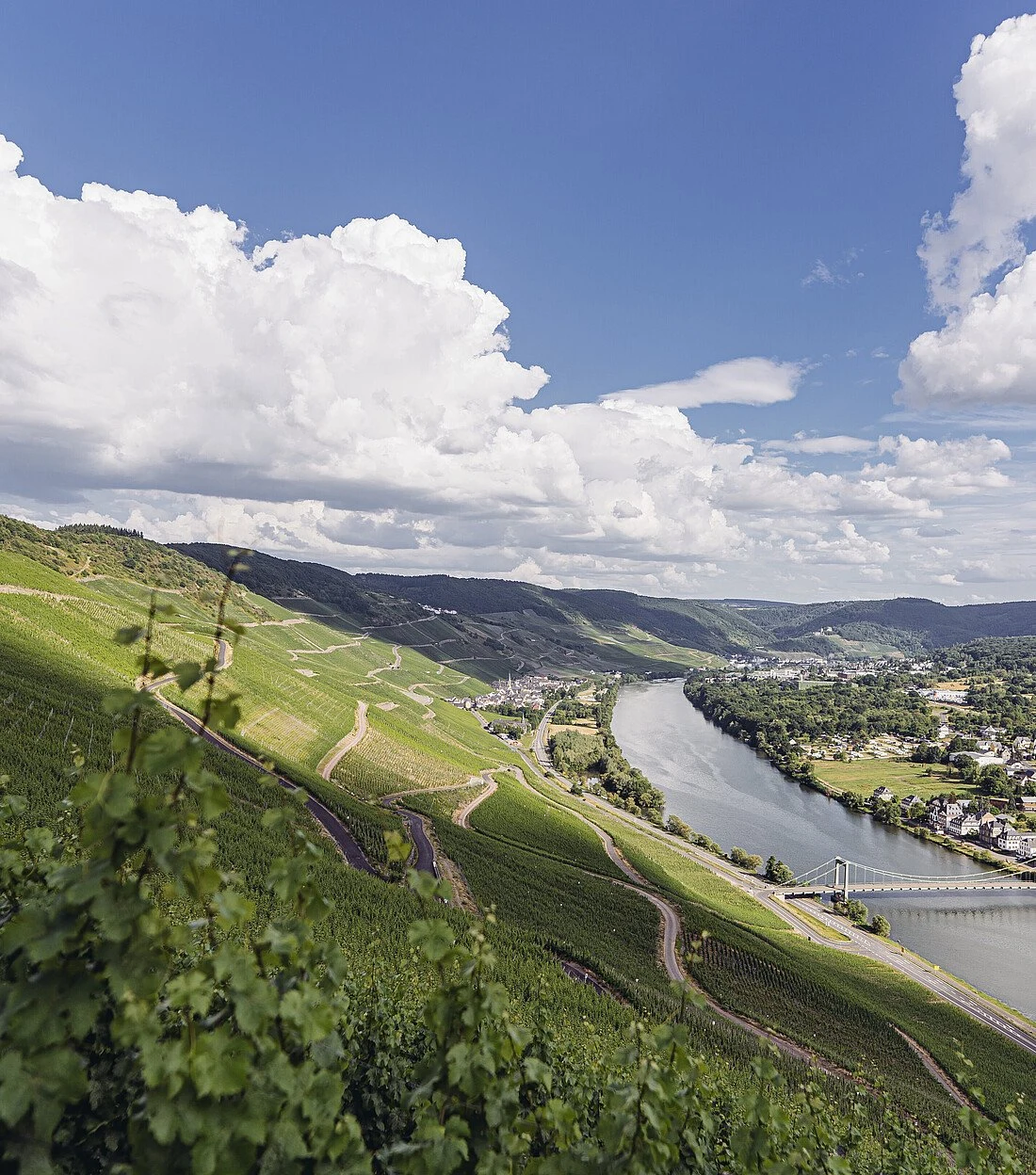
Stand at Friedensplatz in Oestrich-Winkel on a clear morning and the logic of Rheingau winemaking becomes immediately legible. The river runs wide and reflective to the south, the Taunus ridge rises to the north, and the topography between them creates one of the most consistently discussed Riesling corridors in Germany. Weingüter Wegeler occupies a position on that square, at Friedenspl. 9, in Oestrich-Winkel. The address is not incidental. In a region where physical proximity to historic vineyard parcels has shaped producer identity more reliably than branding or renovation, location functions as credential.
The Rheingau's argument for Riesling is geological and climatic in equal measure. South-facing slopes above the Rhine capture long afternoon light while the river moderates temperature fluctuations, extending the growing season into autumn and allowing physiological ripeness to develop gradually. This is the condition that separates Rheingau Riesling from warmer German expressions: the wines carry tension alongside weight, acid alongside fruit concentration. Weingüter Wegeler operates within this tradition at a tier where site specificity and precision are the expected standard, not a point of differentiation.
The Sunday letter
Find new places through the people who run them.
Our Sunday email brings you the chefs, winemakers and hoteliers behind our newest stories. See a sample before you subscribe.
See a sample of the Sunday emailOne email a week. Unsubscribe from any issue.
The Estate Within Its Competitive Set
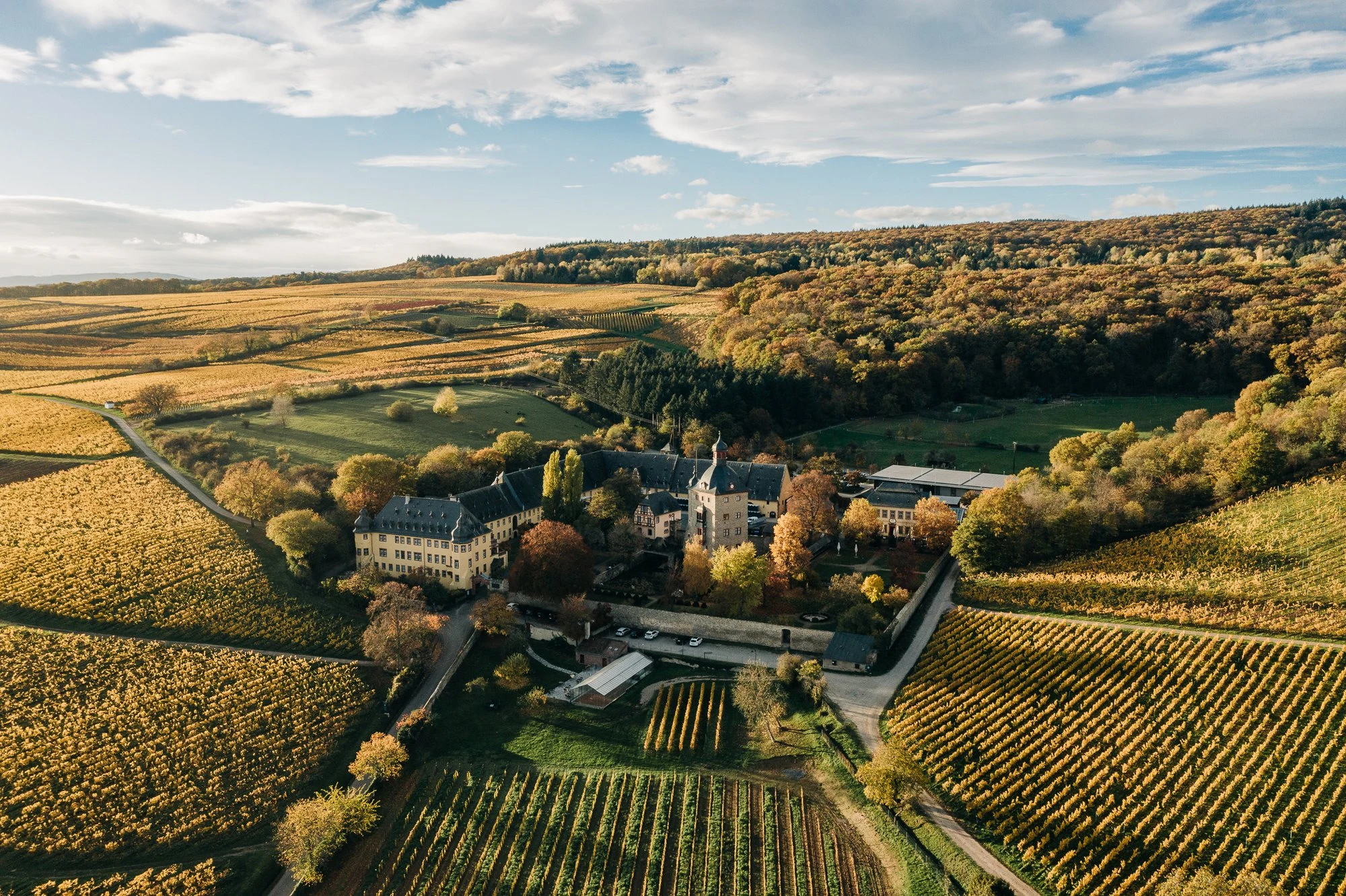
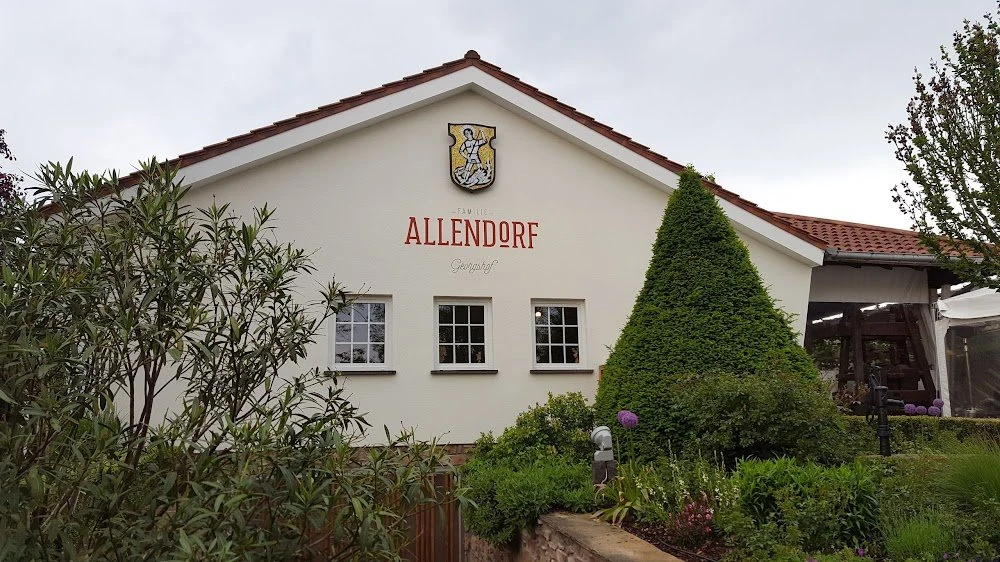
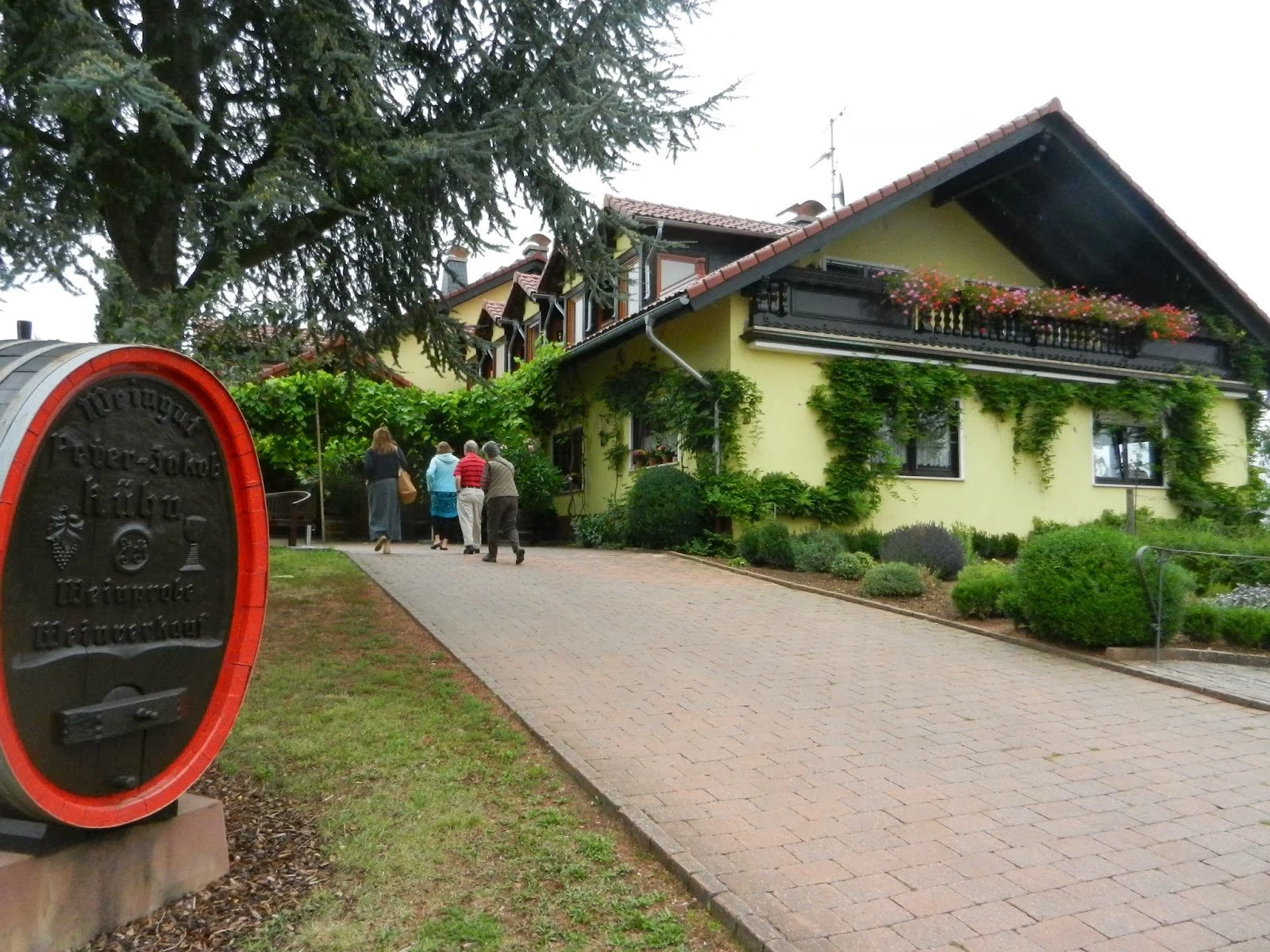
Oestrich-Winkel contains a concentration of serious Riesling producers that makes the town one of the more demanding addresses for an estate to hold its own. Schloss Vollrads brings centuries of documented history and a recognisable castle silhouette to the conversation. Weingut Allendorf covers a broad range across the town's appellations. Weingut Josef Spreitzer and Weingut Peter Jakob Kühn have drawn international attention for single-site Rieslings that reward close attention. In this company, the recognition awarded to Weingüter Wegeler in 2025 places the estate clearly within the premium tier, where the standard of comparison is the region's most recognised names rather than the broader German market.
What separates the leading estates in Oestrich-Winkel from producers of comparable technical competence elsewhere in Germany is largely a question of site access. The Rheingau's classified parcels, including the Geisberg, Hasensprung, and Doosberg among others across the region, carry distinct soil profiles and aspect variations that produce measurably different expressions from one parcel to the next. Estates with documented access to these parcels work within a framework of terroir accountability that has no equivalent in newer wine regions. Weingüter Wegeler positions the estate as a serious contributor to that conversation.
Vineyard and Landscape: Reading the Rheingau
The relationship between vine and place in the Rheingau is one of the more visually direct in European winemaking. Visitors approaching the region from Frankfurt along the B42 encounter a gradual shift from suburban density to a sequence of small towns separated by vineyard blocks that run almost uninterrupted to the riverbank in places. The vines are old in many cases, trained on individual stakes in the traditional manner, and the canopy management reflects the need to balance sun exposure with the region's reliable autumn rainfall. This is not a landscape that performs spectacle; it performs legibility. Every slope angle and row orientation reflects a practical decision about ripeness and drainage accumulated over centuries.
The Rüdesheimer Berg, the Erbacher Marcobrunn, the Johannisberger Klaus: these are the Rheingau's reference parcels, and each carries a name that predates modern wine classification by decades or centuries. The broader German wine law framework introduced in the twentieth century sits awkwardly over a regional tradition that had already developed its own internal hierarchy long before legal categories formalised it. Estates like Weingüter Wegeler operate with the awareness that their most serious buyers understand this pre-existing system and evaluate wines accordingly, regardless of official classification. That recognition is directed at exactly that informed buyer segment.
Town of Oestrich-Winkel itself rewards unhurried exploration. The Winkel section contains some of the oldest continuously inhabited buildings in the region, and the vineyard terraces above the main road give a clear view across the river to the Rheinhessen plain on the far bank. The contrast is instructive: where the Rheingau slopes are steep, well-drained, and south-oriented, the Rheinhessen terrain across the water is flatter and historically associated with higher-volume production. The Rhine here is not just a scenic element but a genuine climatic and geological boundary.
Planning a Visit to the Rheingau
Oestrich-Winkel sits roughly 65 kilometres west of Frankfurt, accessible by regional rail on the Rheingau line that runs along the north bank of the Rhine from Wiesbaden to Rüdesheim. The journey from Frankfurt Hauptbahnhof via Wiesbaden takes approximately 90 minutes on slower regional services; driving cuts that to under an hour in light traffic. The town itself is compact and walkable, with Friedensplatz and its surrounding streets forming the practical centre for most winery visits. Given the concentration of producers within a short radius, visitors often plan multi-estate itineraries rather than single-destination trips.
The broader Rheingau circuit can reasonably include Kloster Eberbach in Eltville, one of the region's most architecturally significant wine destinations, and the range of producers spread between Hochheim and Lorchhausen. Serious wine travellers comparing German white wine regions may extend their itinerary to include the Mosel, where Weingut Fritz Haag in Brauneberg and Weingut Clemens Busch in Pünderich represent a different expression of German Riesling shaped by slate soils and steeper gradients. For Pfalz comparisons, Weingut A. Christmann in Neustadt an der Weinstraße, Weingut Bassermann-Jordan in Deidesheim, and Weingut Dr. Bürklin-Wolf in Wachenheim an der Weinstraße offer useful triangulation points, as does Weingut Battenfeld-Spanier in Hohen-Sülzen for biodynamic Rheinhessen. Franconia's civic wine tradition has a different register again, visible at Weingut Bürgerspital zum Heiligen Geist in Würzburg.
Autumn is the practical peak for Rheingau visits: harvest activity runs from late September through October depending on the vintage, and the combination of vine colour change and active cellar work gives visitors a more grounded sense of production than any other time of year. Spring tastings, typically from April onwards, allow access to the preceding vintage's early releases and give a clearer read on how the season's wines are developing. Contact the estate directly at Friedenspl. 9, 65375 Oestrich-Winkel for visit enquiries.
Questions
Frequently asked
Who works at Weingüter Wegeler?
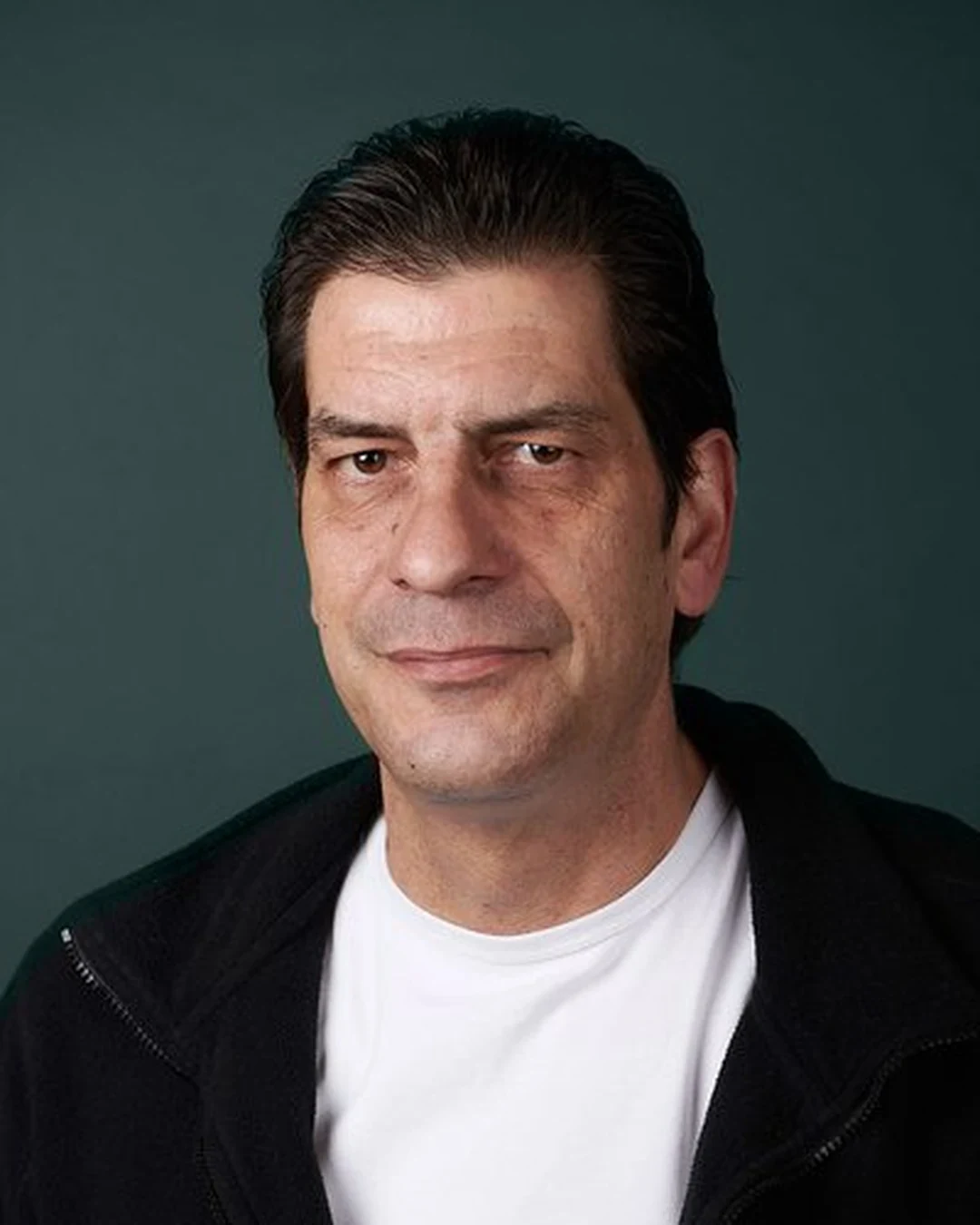
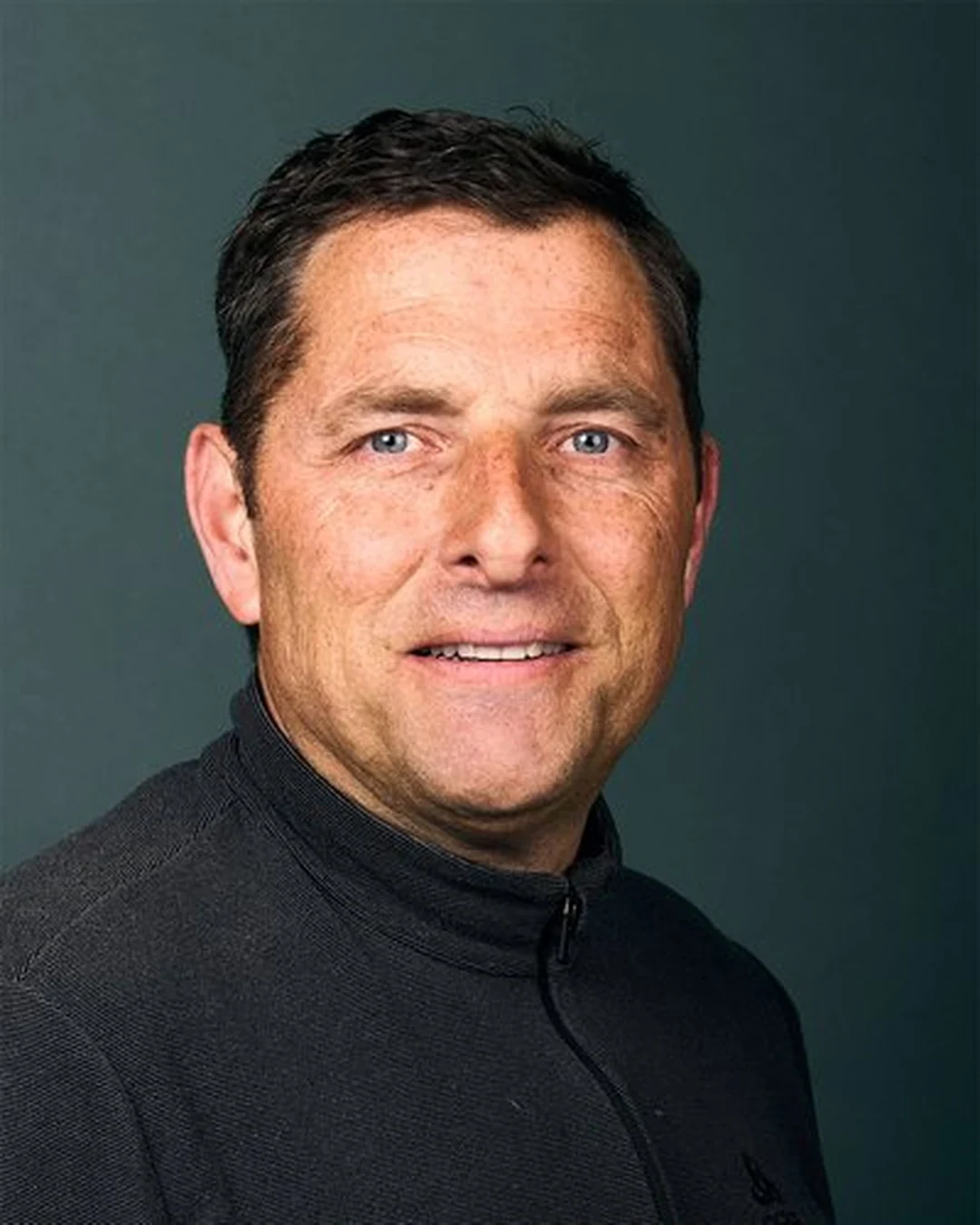
Made By profiles Andreas Holderrieth (Winemaker), Michael Burgdorf (Winemaker) and Norbert Breit (Winemaker) at Weingüter Wegeler.
How expensive is Weingüter Wegeler?
Weingüter Wegeler is listed at a price level of $$$.
The field
How it compares
| Place | Notes | Awards |
|---|---|---|
| Weingüter Wegeler | Oestrich-Winkel, $$$ | · |
| Schloss Vollrads | Oestrich-Winkel | World's 50 Best |
| Weingut Allendorf | Oestrich-Winkel | · |
| Weingut Alois Dahn | Oestrich-Winkel | · |
| Weingut Josef Spreitzer | Oestrich-Winkel | · |
| Weingut Peter Jakob Kühn | Oestrich-Winkel | · |
| Weingut Villa Gutenberg - Familie Nägler | Oestrich-Winkel | · |
In residence

Similar places

The Sunday letter
Get the next Made By story in your inbox.
We send one email every Sunday morning with the places and people we covered that week.
See a sample of the Sunday emailOne email a week. Unsubscribe from any issue.