William Frachot
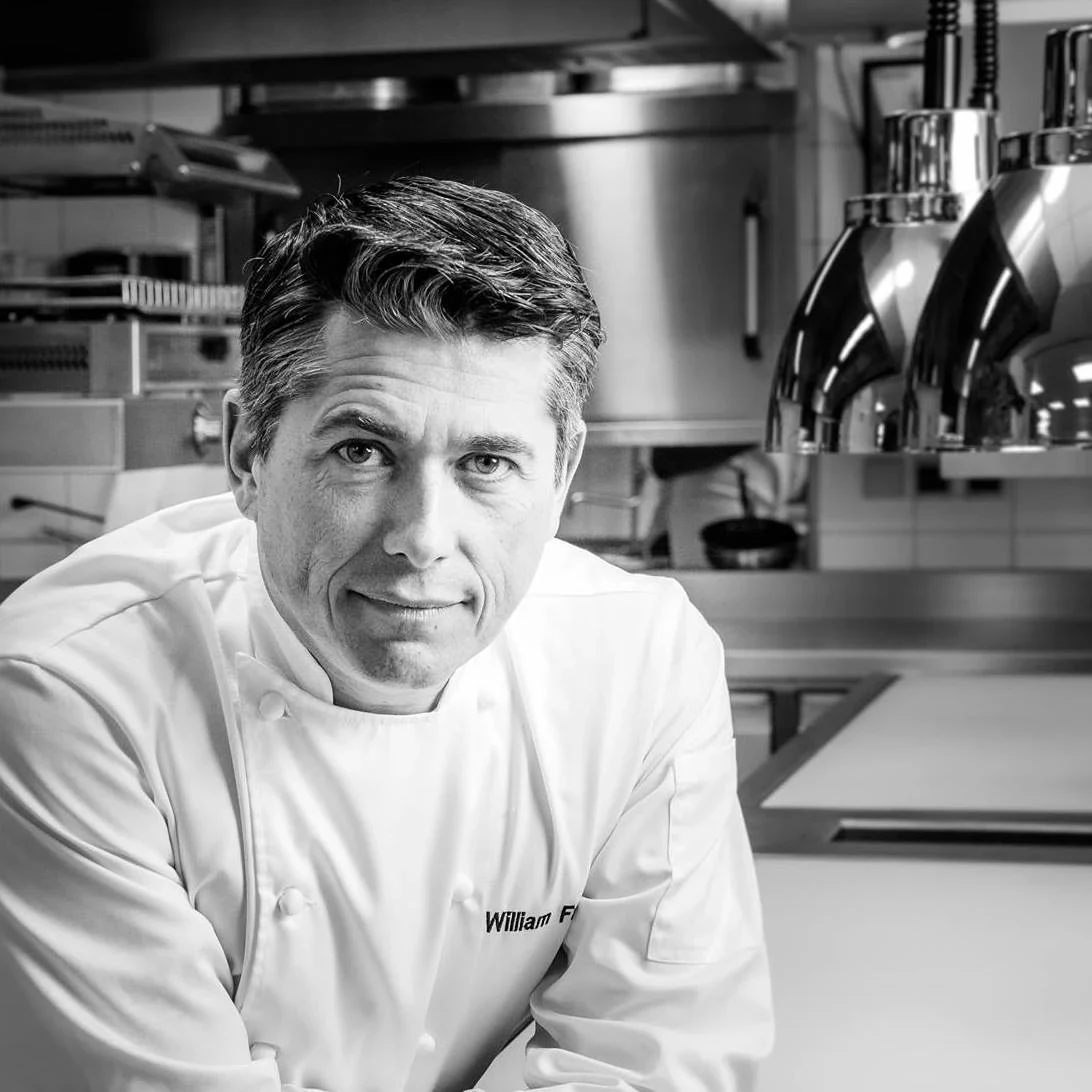
In Residence
William Frachot
Chef
- 01CuisineContemporary Burgundian Fine Dining
- 02CityDijon, France
- 03RecognitionTwo Michelin Stars
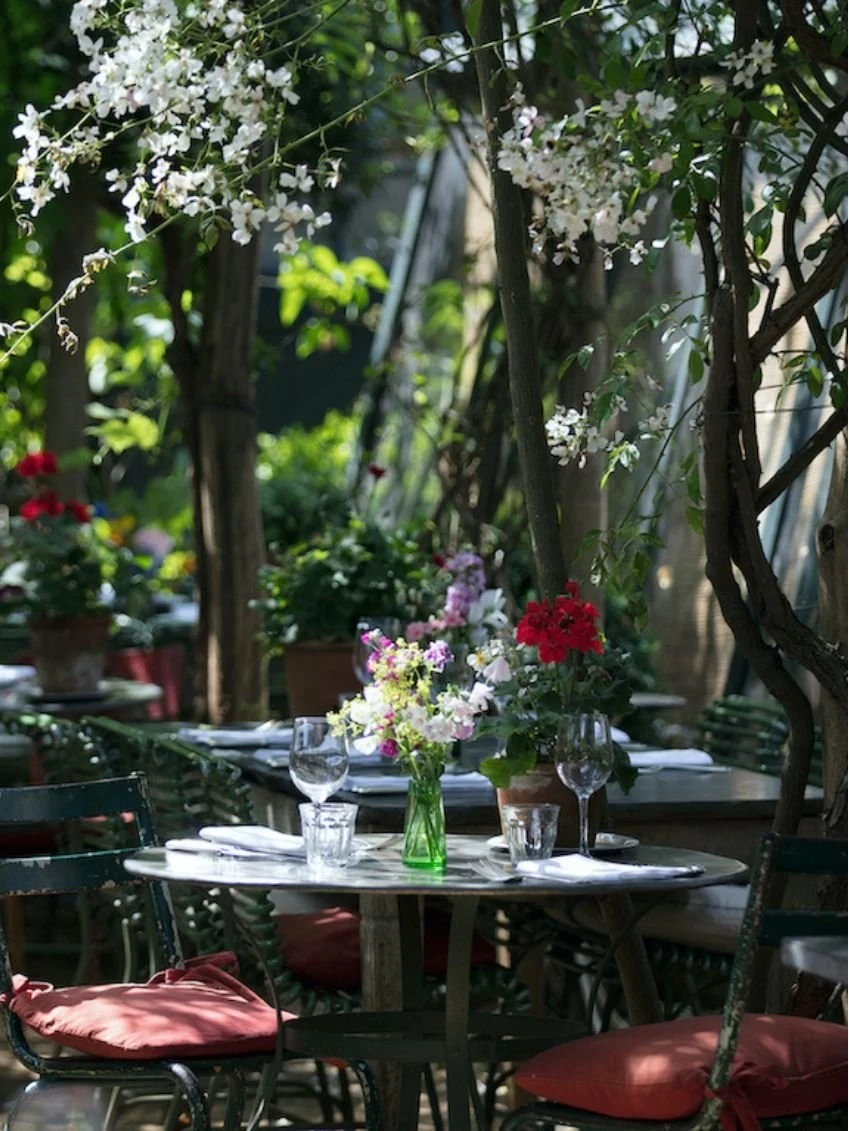
- 2 Michelin Stars · Michelin Guide
- Les Grandes Tables du Monde Member · 2026
- La Liste Top Restaurants: 85pts · 2026
- Michelin 2 Stars · 2026
- Falstaff Restaurant - 95 Falstaff Points · 2026
- Gault & Millau Remarkable Restaurant: 16.5pts · 2025
- We're Smart World 1 Radish · 2025
- La Liste Top Restaurants: 86pts · 2025
- Michelin 2 Stars · 2025
- Opinionated About Dining Classical in Europe Ranked #167 · 2024
- Michelin 2 Stars · 2024
- Opinionated About Dining Classical in Europe Highly Recommended · 2023
Dijon's Fine-Dining Tier and Where Frachot Sits Within It
Burgundy's capital has never lacked serious cooking, the region's produce calendar and wine culture create conditions that attract ambitious kitchens almost by default. But Dijon's two-star bracket is a narrow one, and the restaurants that occupy it tend to define themselves against a shared regional grammar: classical sauces, local poultry, the allium and mustard notes that run through Burgundian cuisine at every price point. Within that grammar, different kitchens make different choices about how far to stray from the source material.
William Frachot, a two-Michelin-star restaurant at 5 Rue Michelet in Dijon, serves Contemporary Burgundian Fine Dining. Les Grandes Tables du Monde added its recognition in 2025, and La Liste scores the restaurant at 86 points in the most recent edition. That cluster of awards places it in consistent company with Loiseau des Ducs and Origine at the upper end of Dijon's creative-French spectrum, while CIBO and L'Aspérule operate in adjacent tiers below.
The Sunday letter
Find new places through the people who run them.
Our Sunday email brings you the chefs, winemakers and hoteliers behind our newest stories. See a sample before you subscribe.
See a sample of the Sunday emailOne email a week. Unsubscribe from any issue.
What distinguishes the address in competitive terms is a dual identity that most two-star kitchens avoid: a Burgundian classicism that regulars rely on, alongside a vegetable program substantial enough to earn mention in the We're Smart Green Guide. These are not easy things to hold in the same room, and the fact that Frachot sustains both without the menu appearing schizophrenic says something about editorial conviction in the kitchen.
The Room, the Rhythm, the Service Architecture
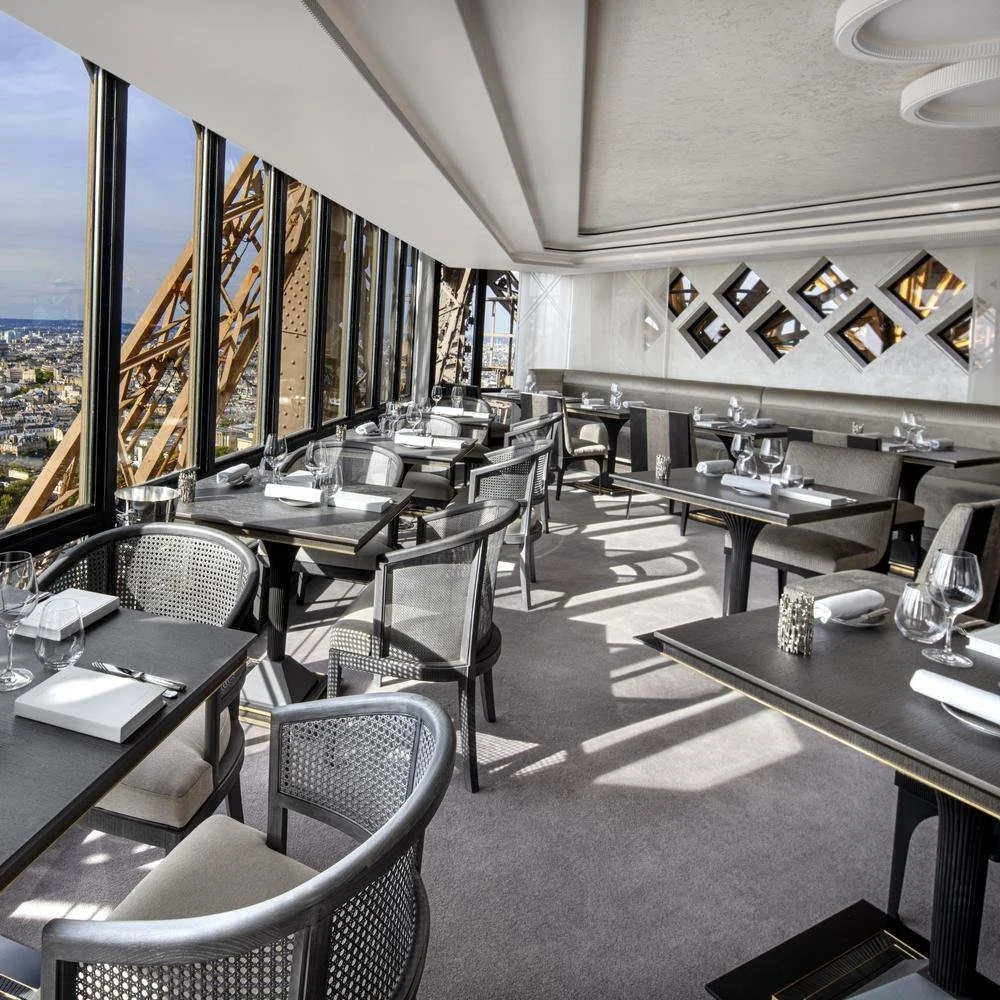
Grand hotel dining rooms in provincial French cities carry their own set of expectations, formality that can tip into stiffness, service hierarchies that favour ritual over warmth. The Chapeau Rouge address is not immune to that gravitational pull, but the consistent thread running through guest accounts and critical commentary is that the front-of-house temperature runs warmer than the setting might suggest.
That warmth has practical implications for how an evening here unfolds. In the two-star bracket, particularly at houses like Alléno Paris au Pavillon Ledoyen or Mirazur where service choreography is a statement in itself, the front-of-house tends to perform. At Frachot, the performance is lower-register: the team conveys fluency rather than theatre. La Liste's own commentary on the restaurant points directly to the chef's relationships with local winegrowers and producers as a tangible asset, which means the sommelier's role carries more than decorative weight. Burgundy's vineyard geography is complex enough that a knowledgeable wine service is not a luxury but a functional requirement for getting the most from a meal here.
The kitchen and floor coordination, what gets called team dynamic in professional kitchens, shows most clearly in the treatment of the vegetable courses. Dishes built without animal protein require more precise timing and more confident description at the table; they don't sell themselves on the familiarity of a protein cut. That the restaurant has sustained recognition for its vegetable work, rather than treating it as a dietary accommodation, suggests that the floor communicates that work as confidently as the kitchen executes it.
Burgundian Cooking, Read Against Its Regional Peers
The broader French two-star field has moved in different directions over the past decade. Some houses have chased global techniques, fermentation programs, hyper-local foraging narratives, while others have doubled down on classical French structure as a form of counter-positioning. Frachot sits closer to the classical end of that spectrum, but with genuine seasonal variation and a plant-forward strand that prevents the menu from reading as a period piece.
La Liste's note that guests come specifically for the chef's own vision of Burgundy cuisine and its classics is a meaningful signal: this is a kitchen where the regional reference is not ambient decoration but the actual point. That positions it differently from kitchens like Flocons de Sel in Megève or La Grenouillère in Paris, where the regional identity is more loosely worn, and closer in spirit to Bras in Laguiole, where the surrounding landscape reads directly onto the plate.
The vegetable dimension adds a layer that most classical Burgundian kitchens don't carry. The We're Smart Green Guide citation is not an organic certification or a dietary accommodation notice, it reflects a kitchen that takes plant-based cooking seriously as a culinary category. In the context of Dijon's dining scene, where Azerole represents a more fusion-inflected approach and traditional addresses lean heavily on meat and fish, Frachot's position as a two-star house with a credible vegetable program is structurally unusual.
Against the broader canon of French fine dining, Troisgros, Paul Bocuse, La Villa Madie, Frachot occupies a mid-tier of ambition: not attempting to rewrite the national conversation, but operating with enough distinction and consistency to hold two stars across consecutive years and accumulate a comparable set of international recognition that most regional kitchens never reach.
Planning the Visit
The restaurant operates Tuesday through Saturday, with lunch service running from 12:00 to 13:30 (13:15 on Saturday) and dinner from 19:30 to 21:00. Monday and Sunday are closed. At the €€€€ price tier, comparable to CIBO and Origine in Dijon's leading bracket, visitors should expect a full tasting format at dinner and a more compressed proposition at lunch. The Friday lunch or Saturday lunch slots are worth noting for those combining the restaurant with a broader Burgundy wine itinerary; the tight lunch window (90 minutes from first seating) keeps the afternoon viable for winery visits along the Côte de Nuits or Côte de Beaune.
The Hôtel Chapeau Rouge address means the option to stay on-site exists, removing the question of transport from the wine decision.
Google reviewer scores sit at 4.6 across 198 reviews, a figure that reflects a consistent base of satisfied guests rather than a polarising kitchen. At the two-star level, that kind of spread typically indicates reliability over sensation: a restaurant that delivers on expectation more often than it surprises, which is its own form of discipline.
What Regulars Order at William Frachot
What do regulars order at William Frachot?
Based on available critical commentary and award citations, the dishes that draw repeat visitors most reliably are those rooted in Frachot's interpretation of Burgundian classics, the regional cooking that La Liste identifies as the specific reason guests return. Alongside those, the vegetable-forward courses across all seasons have developed their own following, recognised formally by the We're Smart Green Guide. The chef's relationships with local winegrowers suggest that pairing decisions made with the sommelier's input add material value to those courses in particular. For the wine side, Burgundy's own appellations are the natural starting point, and the proximity of the Côte d'Or means the cellar likely runs deep in regional reference. The service culture here, per consistent accounts, is responsive rather than scripted.
Questions
Frequently asked
What recognition does William Frachot hold?
William Frachot holds 2 Michelin stars.
Who works at William Frachot?
Made By profiles William Frachot (Chef) at William Frachot.
How expensive is William Frachot?
William Frachot is listed at a price level of $$$$.
Where is William Frachot and what does it serve?
William Frachot is in Historic Dijon Center, Dijon, serving Contemporary Burgundian Fine Dining.
The field
How it compares
| Place | Awards | Cuisine | Notes |
|---|---|---|---|
| William Frachot | Michelin 2 Stars | Contemporary Burgundian Fine Dining | Historic Dijon Center, $$$$ |
| CIBO | Michelin 1 Star | Modern French Gastronomique | Dijon |
| DZ'envies | · | Modern Burgundian Bistro | Dijon |
| Kitchen Table | Michelin 2 Stars | Modern British Fine Dining | London |
| L'Aspérule | Michelin 1 Star | Japanese-inflected French Fine Dining | Dijon |
| Sublime | · | Modern Italian-French Fusion | Dijon |
| The Fat Duck | Michelin 3 Stars, World's 50 Best | Modern British Molecular Gastronomy | Bray |
In residence
Similar places
Modern French Gastronomique
CIBO
Dijon, France
★
Modern Burgundian Bistro
DZ'envies
Dijon, France
Modern British Fine Dining
Kitchen Table
London, United Kingdom
★★
Japanese-inflected French Fine Dining
L'Aspérule
Dijon, France
★
Modern Italian-French Fusion
Sublime
Dijon, France
Modern British Molecular Gastronomy
The Fat Duck
Bray, United Kingdom
★★★ · 50 Best
The Sunday letter
Get the next Made By story in your inbox.
We send one email every Sunday morning with the places and people we covered that week.
See a sample of the Sunday emailOne email a week. Unsubscribe from any issue.