Wing Lei
- 01CuisineModern Cantonese Fine Dining
- 02CityMacau, Macau
- 03RecognitionTwo Michelin Stars
Cantonese timing under crystal light
- 2 Michelin Stars · Michelin Guide
- Wine Spectator · Tier 2
- Michelin 2 Stars · 2026
- La Liste Top Restaurants: 91pts · 2026
- SCMP 100 Top Tables Restaurants · 2026
- Forbes 5-Star · 2026
- Wine Spectator Best of Award of Excellence · 2026
- La Liste Top Restaurants: 91.5pts · 2025
- Wine Spectator Best of Award of Excellence · 2025
- Michelin 2 Stars · 2025
- Opinionated About Dining Top Restaurants in North America Ranked #133 · 2025
- Michelin 2 Stars · 2024
- Opinionated About Dining Top Restaurants in North America Ranked #196 · 2024
- Opinionated About Dining Top Restaurants in Asia Ranked #68 · 2023
Season as mise en place
Freshness works as a rule at Wing Lei in Macau, where Cantonese cooking answers first to condition. The house sits on the ground floor of Wynn Macau, and it is distinct from two restaurants that share its name: Wing Lei Palace at Wynn Palace, a related but separate venue, and Wing Lei at Wynn Las Vegas, which opened in 2005 and is led by a different team. That distinction matters, because the three are easily confused and the cooking here belongs to this room. Sourcing is stated in specifics rather than slogans: South China Sea grouper, 30-year Xinhui tangerine peel, Pata Negra Iberian pork and premium abalone, with the kitchen choosing the freshest seasonal material. The discipline is timing rather than force, and the transparency shows in dish descriptions that name the origin of an aged peel or a Hua Diao wine.
Heat held to silk
The menu at Wing Lei moves through Cantonese forms that depend on control rather than force: dim sum, barbecued specialties, abalone, soups, seasonal dishes, à la carte courses and tasting menus. The kitchen’s signatures show where the method tightens. Steamed egg white with grouper fillet, 30-Year-Aged Tangerine Peel and Vintage Hua Diao asks for heat that sets without toughening, so the fish and egg white keep their silk. Barbecued Ibérico Pata Negra pork takes Chinese rose wine, Chu Hou paste and maple syrup into a finish built on contrast, the lacquer giving way to tender meat. Red rice and gold dragon king rice rolls bring the counterpoint of crispness inside a soft wrapper. The house also names aged wagyu with garlic and fried mochi with custard among its signatures. Across those dishes, the Cantonese vocabulary stays legible: steam, roast, fold, season, serve before the ingredient loses its point.
A dragon above the room
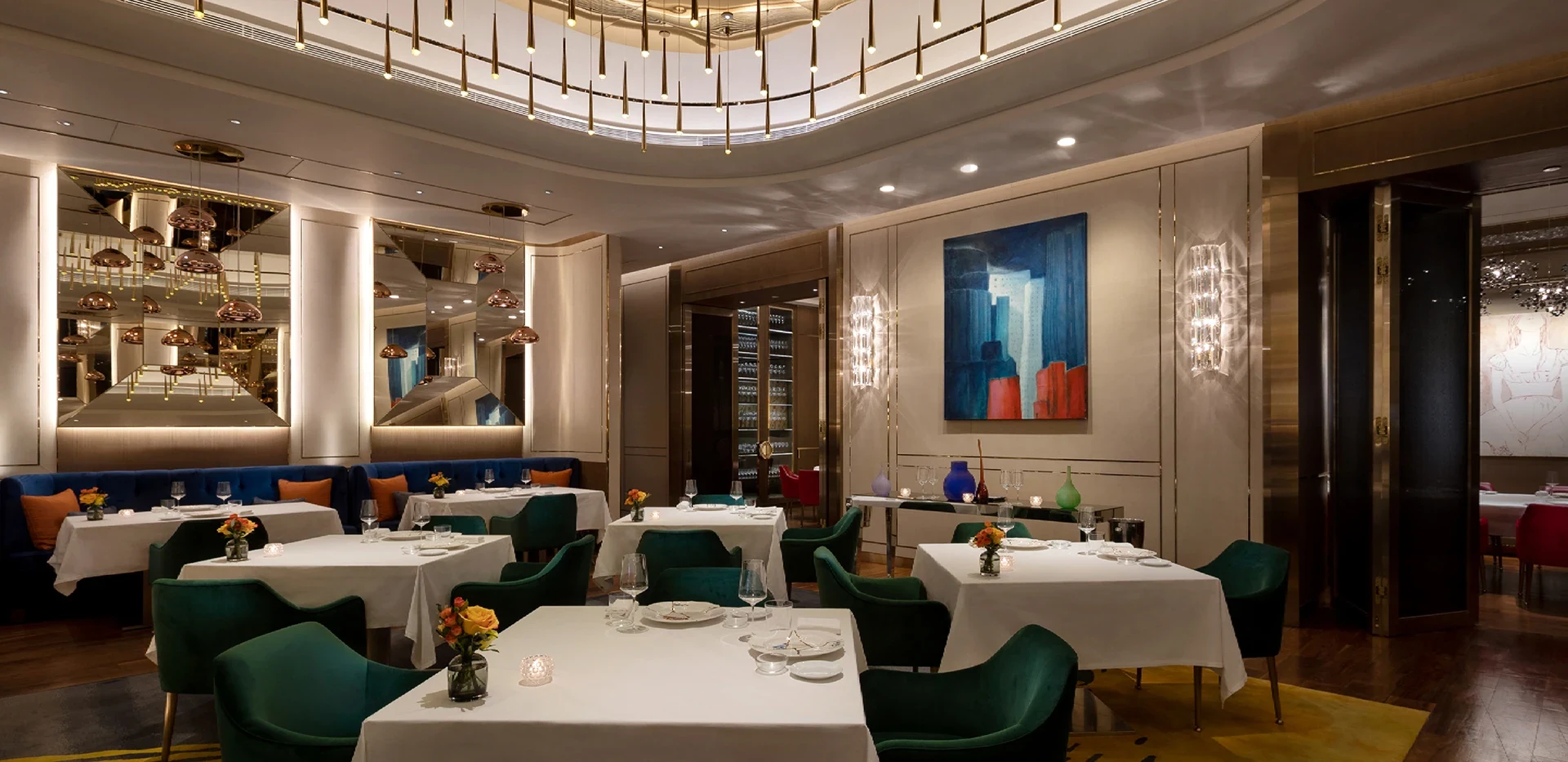
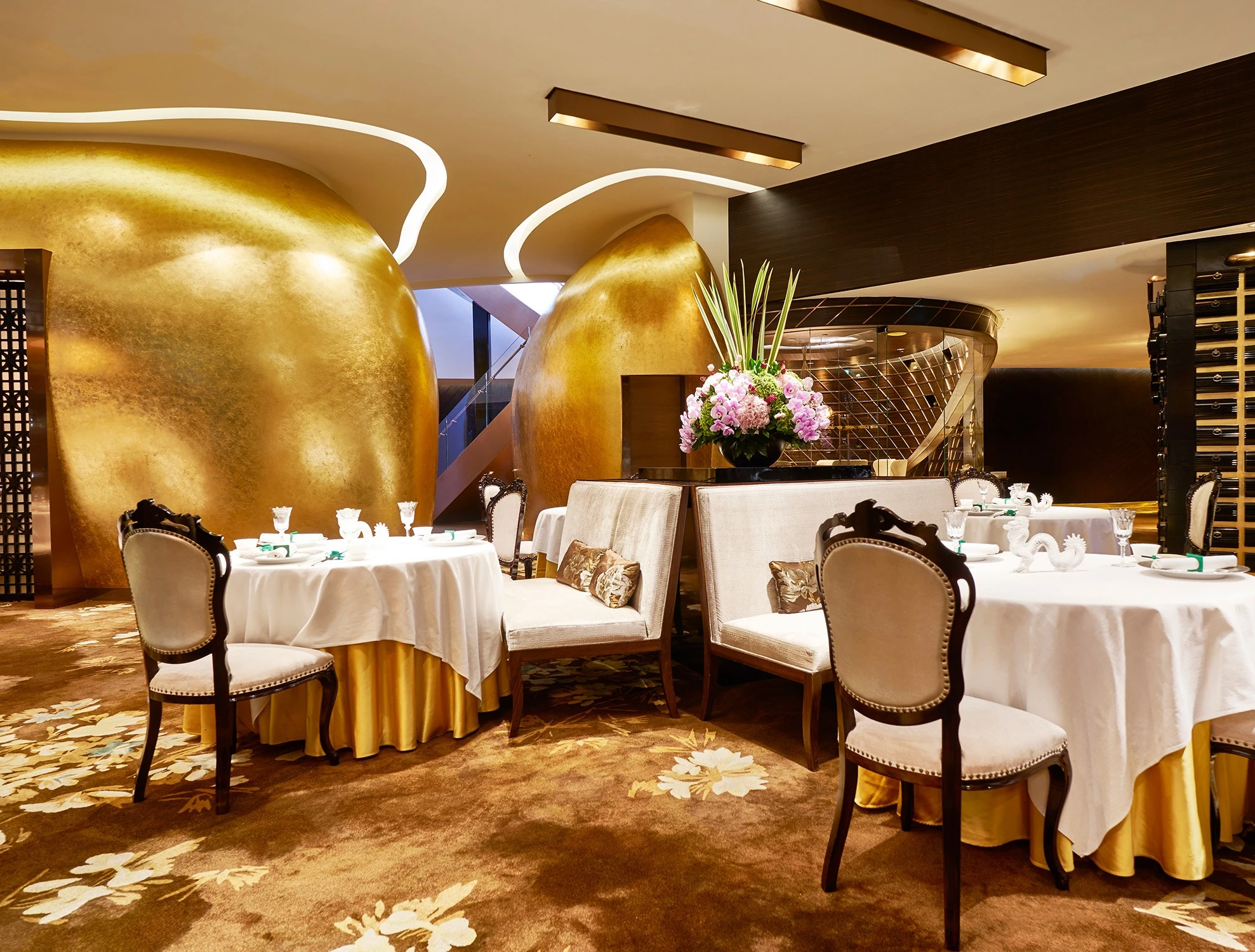
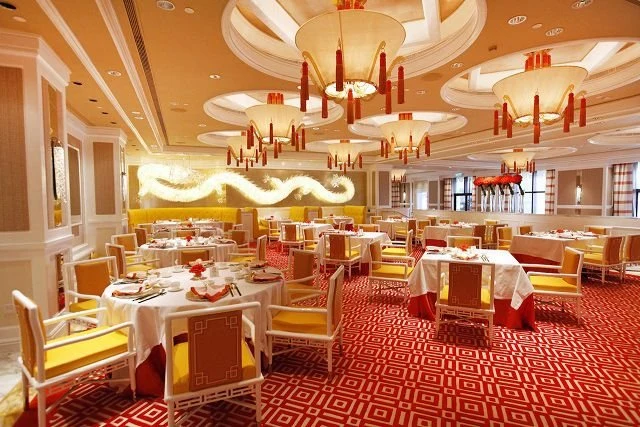
The room does not pretend to be a workshop. It is palatial, red-toned and formal, with a frosted crystal flying dragon made from 90,000 Swarovski crystals holding the eye above the tables. That could overwhelm the cooking if the pass worked in the same register. Instead the best details are smaller: the sheen on a rice roll, the clean cut of grouper, the pace of banquet service when several textures have to land warm and distinct. Nine private dining rooms sit around the main room, but the craft still returns to the plate in front of each guest. Conversation can hold. The room lets ceremony happen without asking the food to shout over it.
Sixteen years of pressure
Wing Lei has held two Michelin stars for sixteen consecutive years, a form of pressure that belongs to repetition as much as ambition. Awards do not cook the grouper. They do, however, mark a house where the same gestures must survive another service: egg white set cleanly, tangerine peel kept in proportion, rice rolls brought through the pass with their texture intact. The dish is Steamed Egg White, 30-Year-Aged Tangerine Peel, plus Vintage Hua Diao.
Questions
Frequently asked
What kind of restaurant is Wing Lei?
Wing Lei is a modern Cantonese fine dining restaurant at Wynn Macau in NAPE, on the ground floor of the hotel.
What is Wing Lei known for?
The kitchen works with Cantonese dishes built around seasonal condition and control, with signatures including aged wagyu with garlic, fried mochi with custard, and red rice and gold dragon king rice rolls.
What recognition does Wing Lei hold?
Wing Lei has held two Michelin stars for sixteen consecutive years.
Is a reservation needed at Wing Lei?
Reservations are essential.
What is the dress code?
The dress code is smart casual.
The field
How it compares
| Place | Awards | Cuisine | Notes |
|---|---|---|---|
| Wing Lei | Michelin 2 Stars | Modern Cantonese Fine Dining | NAPE, $$$$ |
| 8 1/2 Otto e Mezzo Bombana (Macau) | Michelin 1 Star | Modern Sicilian Italian Fine Dining | Macau |
| Alain Ducasse at Morpheus | Michelin 2 Stars | Contemporary French Fine Dining | Macau |
| Chef Tam's Seasons | Michelin 2 Stars, World's 50 Best | Modern Cantonese Fine Dining | Macau |
| Jade Dragon | Michelin 3 Stars, World's 50 Best | Three Michelin-Star Cantonese Fine Dining | Macau |
| Palace Garden | Michelin 1 Star | Modern Cantonese Fine Dining | Macau |
| Robuchon au Dôme | Michelin 3 Stars | Contemporary French Fine Dining | Macau |
Similar places
Modern Sicilian Italian Fine Dining
8 1/2 Otto e Mezzo Bombana (Macau)
Macau, Macau
★
Contemporary French Fine Dining
Alain Ducasse at Morpheus
Macau, Macau
★★
Modern Cantonese Fine Dining
Chef Tam's Seasons
Macau, Macau
★★ · 50 Best
Three Michelin-Star Cantonese Fine Dining
Jade Dragon
Macau, Macau
★★★ · 50 Best
Modern Cantonese Fine Dining
Palace Garden
Macau, Macau
★
Contemporary French Fine Dining
Robuchon au Dôme
Macau, Macau
★★★