Wirtshaus Steirereck am POGUSCH
- 01CuisineRegional Austrian Country Cooking
- 02CityTurnau, Austria
Whole salmonids by the fire
- Michelin Bib Gourmand · Michelin Guide
- Michelin Bib Gourmand · 2026
- Falstaff Restaurant - 93 Falstaff Points · 2026
- Opinionated About Dining Casual in Europe Recommended · 2026
- Michelin Bib Gourmand · 2025
- Opinionated About Dining Casual in Europe Ranked #734 · 2025
- Michelin Bib Gourmand · 2024
- Opinionated About Dining Casual in Europe Recommended · 2023
Whole fish by the fireplace
Whole salmonids warm by the fireplace over a full day before service the next morning. Heinz Reitbauer was Chef de Cuisine at Wirtshaus Steirereck am POGUSCH in Turnau from 1996 to 2005, after formal hotel training, apprenticeship at Restaurant Steirereck in Vienna, and kitchen time with Karl and Rudi Obauer in Werfen. From 1989 to 1992, he widened that frame through stages at Alain Chapel in Mionnay, Anton Mosimann in London, Joël Robuchon in Paris, and Laurent in Paris. Pogusch became the rural station in that lineage, a Styrian counterpoint to the city restaurant, with the discipline of the pass brought into a farm setting rather than softened by it.
His parents, originally from Styria, opened the family tavern in Vienna in 1970, and Reitbauer has spoken of summers on the alpine pasture as a second home. At Pogusch, that memory took working form: country cooking built from garden, field, forest, lake, stable, and fire. The house connects the Vienna restaurant, the rural estate, and the dairy-side operation as one practice, but the hand at Pogusch has always had its own tempo. The plate starts close to the soil.
Five hundred varieties under glass
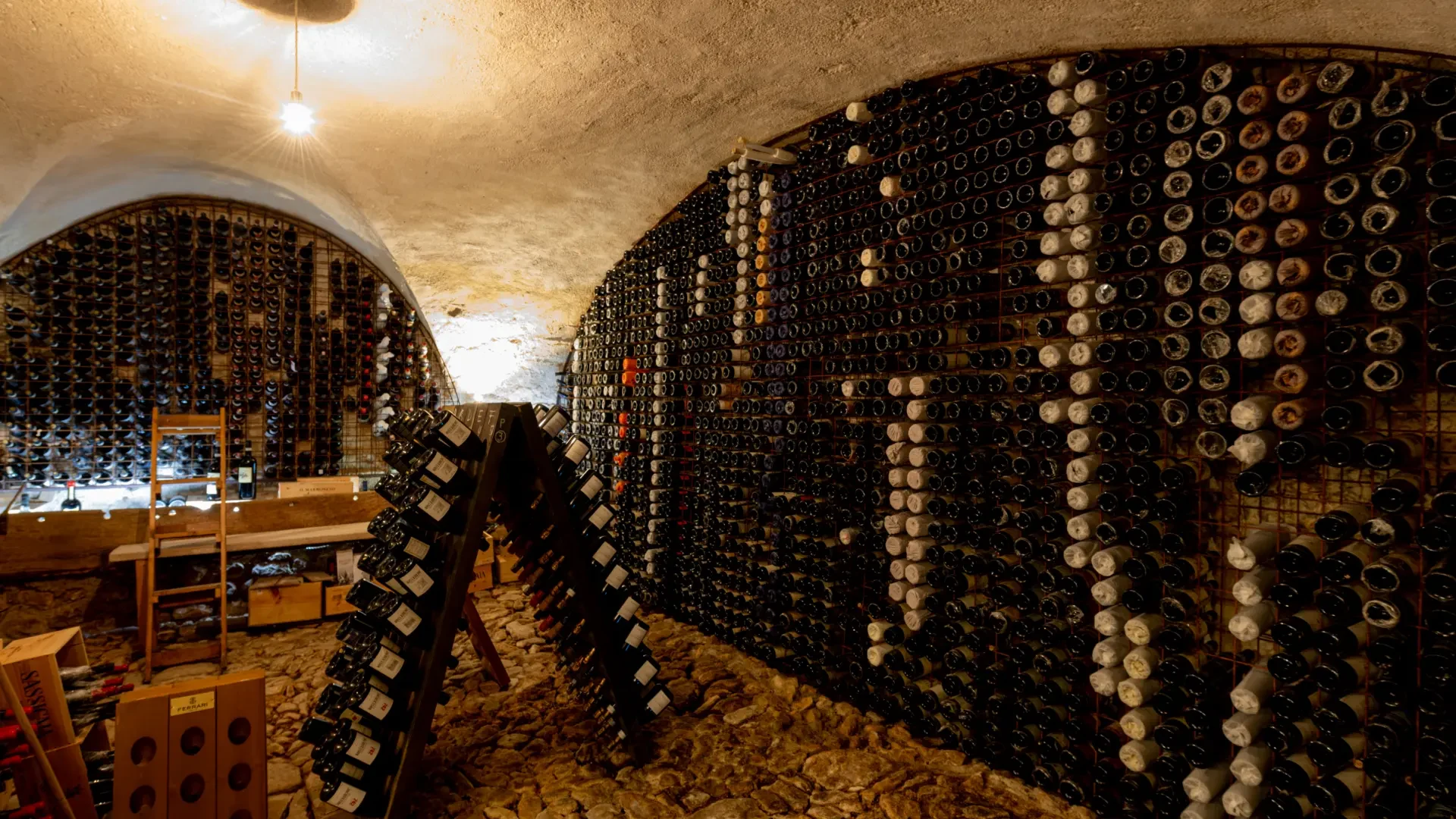
The kitchen draws from a farm that raises sheep, goats, pigs, and chickens for eggs, and grows over 500 varieties of edible plants, citrus, and orchard fruit in greenhouses and gardens. That scale matters because the menu can move by theme rather than by procurement. Garden, field, and forest set one rhythm; offal from farm slaughter sets another; freshwater fish from Hochschwab lakes brings a different temperature to the pass. Steirisches Kalb, Fedelkoch, and Pogusch Bouillon sit in that pattern, not as museum pieces, but as dishes whose force depends on the estate around them.
The Schankkuchl gives the method a more open shape, with cooking by fire or steam at a communal table. In the main room, the work stays regional and seasonal, carrying the Bib Gourmand plainness of value and the Green Star pressure of consequence. The house also produces renewable electricity, with one-third generated onsite, and uses spring water and low-temperature heating. Those details are not decoration here. They decide what the kitchen can ask of the land, and how often.
The room keeps the farm in view
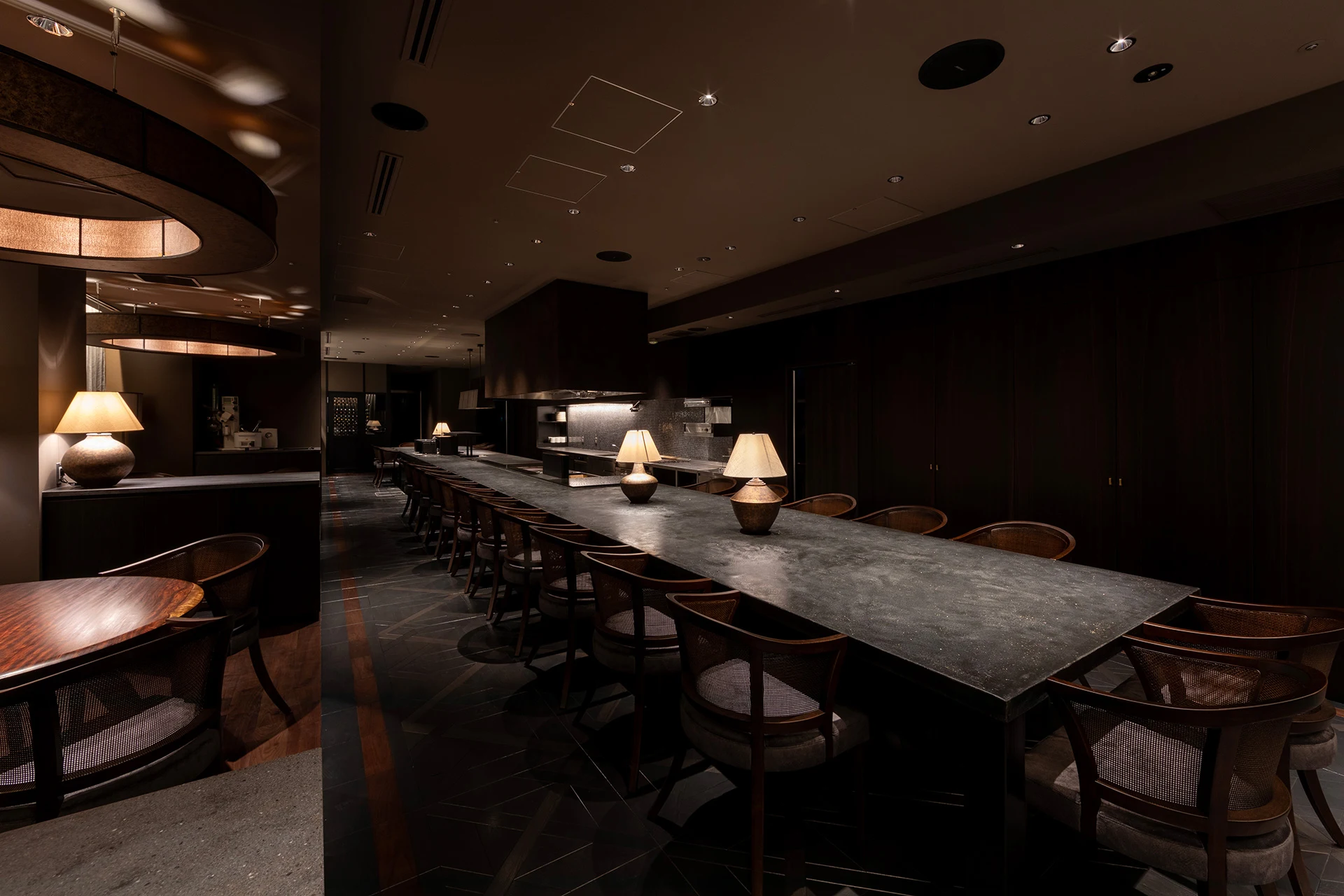
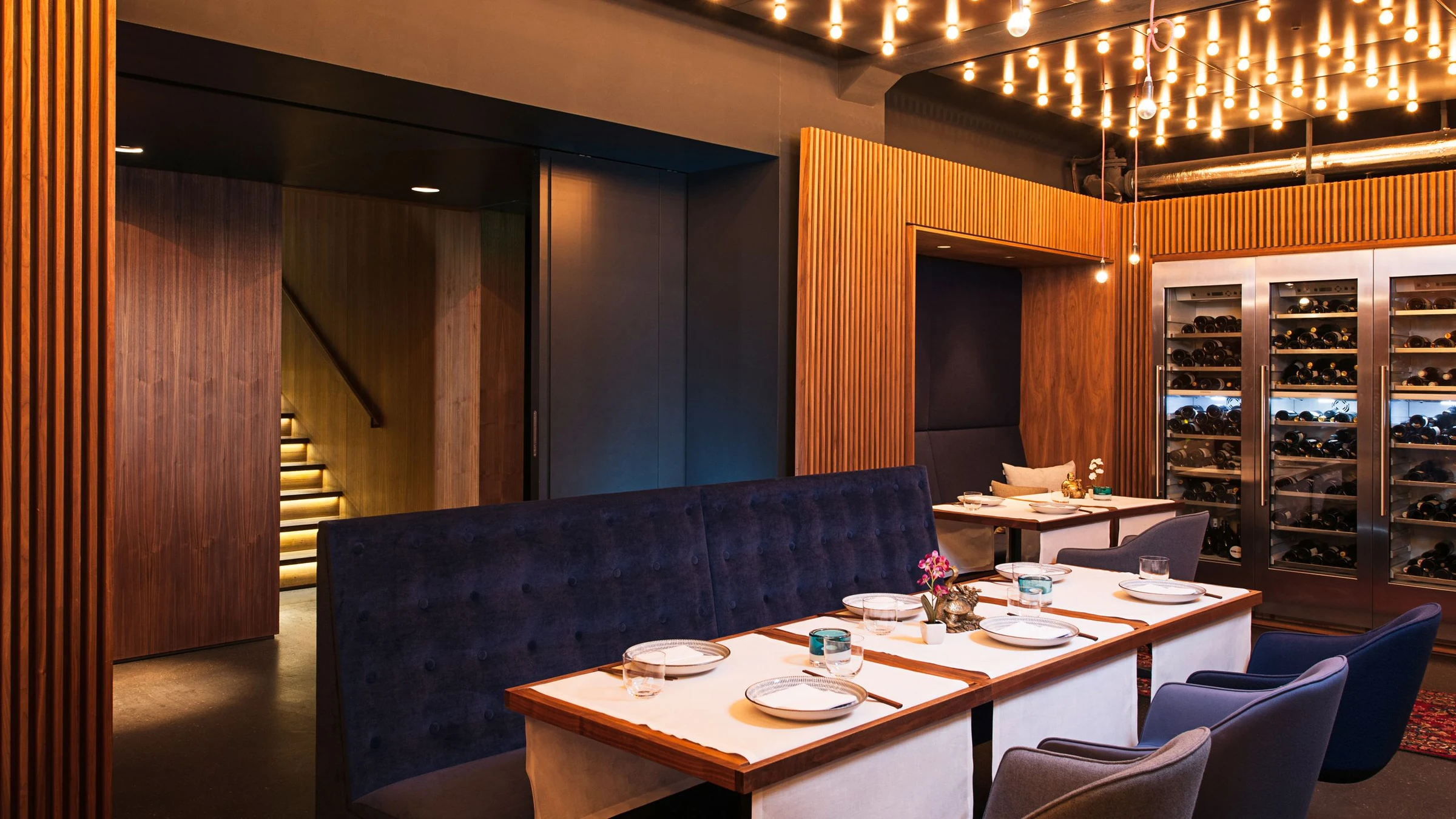
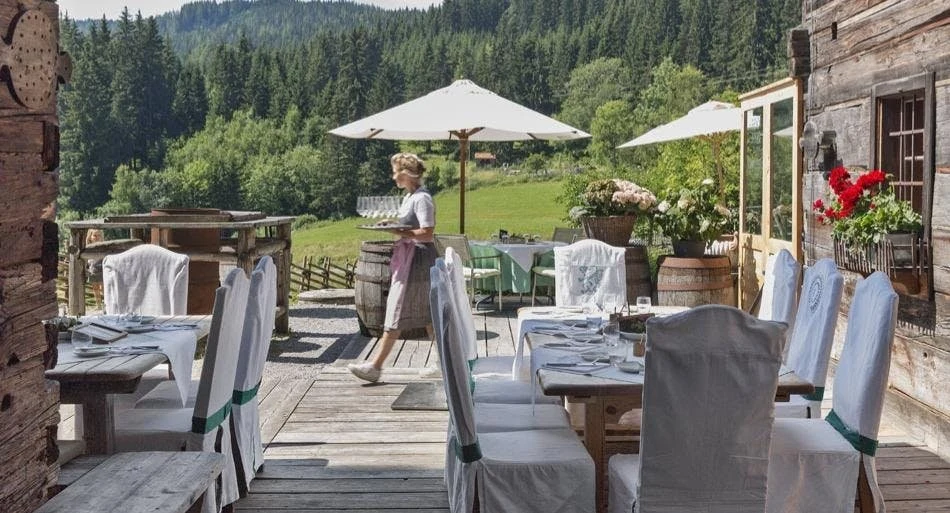
The room moves between rustic timber, lighter modern spaces, and a terrace that looks toward the mountains. Service stays warm and close to the table, but the room does not try to hide the estate that feeds it. The counter, the pass, the open fire, the gardens, the animals, and the glasshouse all sit within the same field of attention. A guest can feel the kitchen working at country speed, where prep begins before the meal and the scent of wood smoke belongs to the method.
The Glashaus holds rare plant varieties gathered over years, and it doubles as a place to stay, which says something about Pogusch. The boundary between growing, cooking, drinking, and sleeping has been deliberately thinned. If the close of a meal needs one object to carry the place, it is Pogusch Bouillon, drawn from this estate rather than from a recipe alone.
Questions
Frequently asked
What kind of cooking does Wirtshaus Steirereck am POGUSCH serve?
It serves regional Austrian country cooking, with a menu shaped by the farm, gardens, forest, lake, stable, and fire at Pogusch.
What is the restaurant known for?
The kitchen is known for dishes such as Steirisches Kalb, Fedelkoch, and Pogusch Bouillon, alongside whole fish warmed by the fireplace before service the next morning.
Does the restaurant have any recognition?
Wirtshaus Steirereck am POGUSCH holds a Michelin Bib Gourmand.
Is it necessary to book ahead?
Reservations are recommended.
What should guests expect in the room and on arrival?
The restaurant has rustic timber, lighter modern spaces, and a terrace with mountain views, and there is on-site parking.
The field
How it compares
| Place | Cuisine | Notes | Awards |
|---|---|---|---|
| Wirtshaus Steirereck am POGUSCH | Regional Austrian Country Cooking | Pogusch, $$$ | · |
| Florilège | Modern French-Japanese Plant-Based Fine Dining | Tokyo | Michelin 2 Stars, World's 50 Best |
| Hueber der Wirt in Bründl | Regional Austrian Country Cooking | Sankt Georgen an der Leys | · |
| Lasarte | Modern Basque-Mediterranean Fine Dining | Barcelona | Michelin 3 Stars |
| Osteria Francescana | Avant-Garde Italian Contemporary | Modena | Michelin 3 Stars, World's 50 Best |
| Reale | Modern Italian Fine Dining | Castel di Sangro | Michelin 3 Stars, World's 50 Best |
| Restaurant Tim Raue | Asian-German Fine Dining | Berlin | Michelin 2 Stars, World's 50 Best |
Similar places
Modern French-Japanese Plant-Based Fine Dining
Florilège
Tokyo, Japan
★★ · 50 Best
Regional Austrian Country Cooking
Hueber der Wirt in Bründl
Sankt Georgen an der Leys, Austria
Modern Basque-Mediterranean Fine Dining
Lasarte
Barcelona, Spain
★★★
Avant-Garde Italian Contemporary
Osteria Francescana
Modena, Italy
★★★ · 50 Best
Modern Italian Fine Dining
Reale
Castel di Sangro, Italy
★★★ · 50 Best
Asian-German Fine Dining
Restaurant Tim Raue
Berlin, Germany
★★ · 50 Best