WÜRSTBAR
- 01CityJersey City, United States
From the people index
Recommended by
One trusted voice points here.

Jersey City's German-American Bar Tradition, Revisited
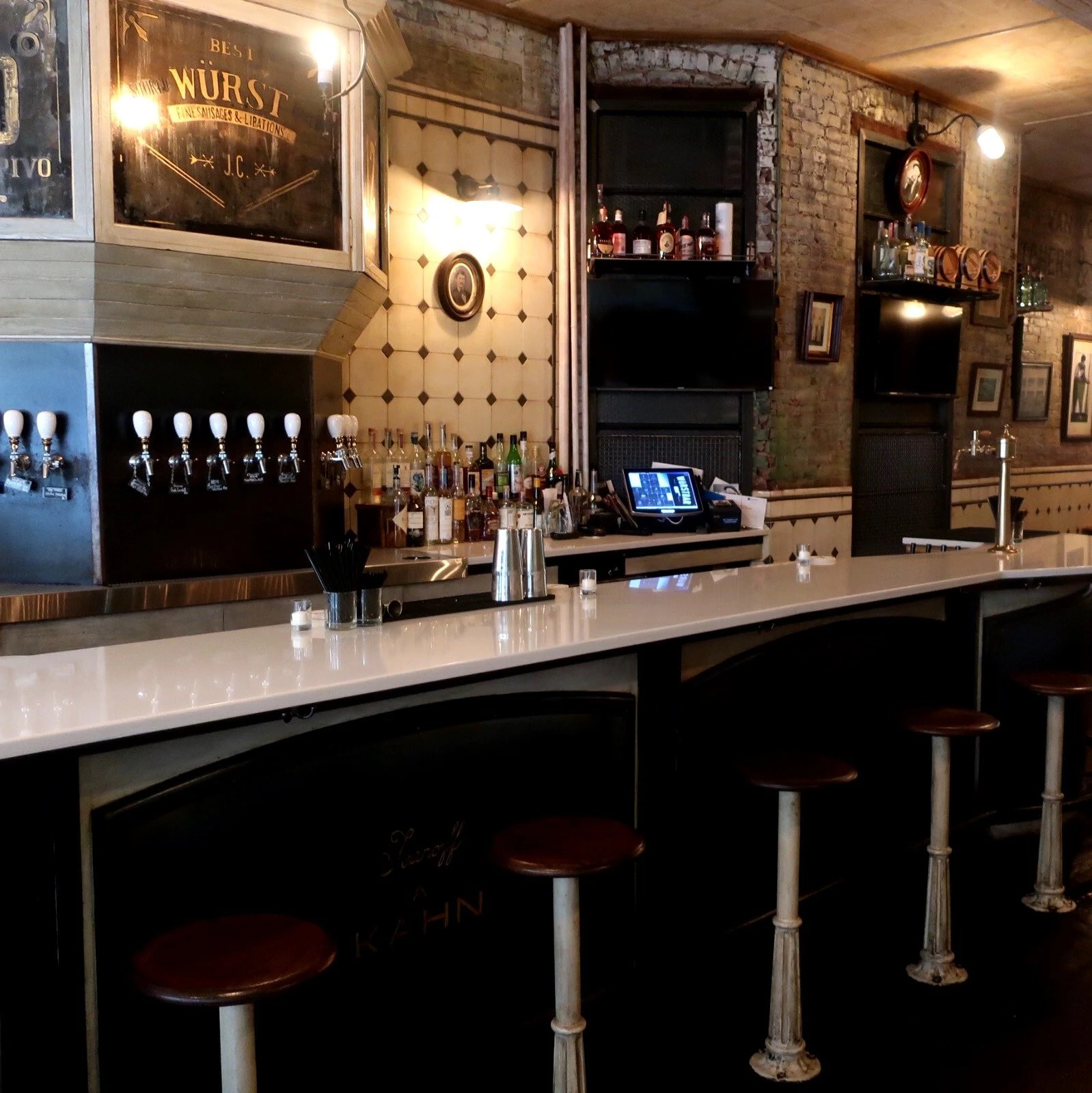
The wurst bar as a format has deep roots in German-speaking Europe, where standing counters serving grilled sausage and cold beer predate the concept of the gastropub by several centuries. In American cities, the format arrived with nineteenth-century German immigration and never fully disappeared, it just migrated from bierhallen to dive bars to the kind of stripped-back specialist spots that began multiplying in the 2010s as dining culture shifted toward informality and craft. WÜRSTBAR on Jersey Avenue sits inside that American reinvention of the tradition, operating in downtown Jersey City.
Jersey City's downtown dining corridor runs roughly along Grove Street and its surrounding blocks. That demographic shift is visible in the bar and restaurant mix: local breweries like 902 Brewing Co. and Departed Soles Brewing Company have carved out neighbourhood regulars, while waterfront spots like Battello reach for a more occasion-driven crowd. WÜRSTBAR occupies a different register: a food-led bar format where the menu concept does most of the positioning work.
The Sunday email
Read about the people behind bars like WÜRSTBAR in the Sunday email.
Every Sunday we send a lead story and up to four more about the chefs, winemakers, sommeliers and hoteliers behind the restaurants, bars, wineries and hotels we cover.
Recent stories
Free. One email a week, and you can unsubscribe from any issue.
The Wurst Format as a Category
Sausage-and-beer venues in the United States tend to split into two operational models. The first is the large-scale bierhall revival, with communal tables, imported lagers, and menus that double as an event programme. The second is the smaller, more casual format where the food is narrow in scope and high in execution quality, a counter or a handful of tables, a rotating tap list, and a focused menu where the sausage itself carries the weight of the experience. WÜRSTBAR, by name and address, signals the latter.
That narrower format has precedents worth noting. Across American cities, the specialist food-and-drink bar has become a reliable neighbourhood anchor precisely because it is not trying to be a full-service restaurant. The economics allow for lower price points, the concept invites repeat visits, and the informality lowers the barrier for solo diners or groups without a plan. A spot like Chickie's in Jersey City occupies adjacent territory in the casual bar-and-food market, though with a different menu emphasis. The wurst format is more specific in its cultural reference point, and that specificity is both its draw and its constraint.
Cultural Roots of the Wurst Counter
The German wurst tradition is less about a single dish than about an entire philosophy of eating alongside drinking. Bratwurst, bockwurst, currywurst, weisswurst, each has regional affiliations, preparation conventions, and accompaniments that carry genuine culinary logic. Currywurst, for instance, is a Berlin street food phenomenon with its own museum; it is not merely a sausage with sauce but a post-war urban food culture condensed into a single item. Bratwurst preparation varies by region: Nuremberg's small, herb-forward links differ from the thicker Franconian versions, and the cooking vessel matters as much as the seasoning.
When American versions of these formats work well, it is usually because the operator has taken the cultural shorthand seriously rather than treating it as costume. The leading sausage-and-beer spots in cities like Chicago, Milwaukee, and New York have demonstrated that diners will travel for a well-sourced, properly cooked wurst alongside a thoughtfully curated draft list. The cultural reference, when handled with knowledge, creates coherence across menu, space, and price point that purely trend-driven concepts struggle to sustain.
Where WÜRSTBAR Sits in the Broader American Bar Scene
Across the United States, bar programmes have been moving toward coherence between drink and food concepts. Cocktail-led programmes at venues like Kumiko in Chicago, Jewel of the South in New Orleans, and Bar Leather Apron in Honolulu have made the case that beverage-first hospitality can support a full editorial identity. Beer-and-food formats operate in a parallel register: the drink and the food are expected to have a coherent cultural logic, not merely to coexist on the same menu. ABV in San Francisco, Julep in Houston, and Superbueno in New York City each demonstrate how concept discipline creates durable neighbourhood relevance. The Parlour in Frankfurt on the Main offers a European point of comparison for how the bar-and-food format translates across Atlantic contexts.
For a wurst bar, the beer programme is not secondary. German brewing tradition, and its American craft interpretation, offers genuine range: pilsners, hefeweizens, dunkel lagers, and märzens each interact differently with cured and grilled sausages. A venue that takes both sides of the pairing seriously creates a more interesting experience than one that treats beer as a beverage category and wurst as a food category, each operating independently.
Questions
Frequently asked
How expensive is WÜRSTBAR?
WÜRSTBAR is listed at a price level of $$.
The field
How it compares
| Place | Notes | Awards | Cuisine |
|---|---|---|---|
| WÜRSTBAR | Van Vorst Park, $$ | · | · |
| Alice Cheongdam | Seoul | 50 Best | · |
| Attaboy | New York City | 50 Best | · |
| Double Chicken Please | New York City | 50 Best | american |
| Native | Singapore | 50 Best | · |
| Selva | Oaxaca | 50 Best | · |
| Smuggler's Cove | San Francisco | 50 Best | · |
Similar places
The Sunday email
Read about the people behind bars like WÜRSTBAR in the Sunday email.
Every Sunday we send a lead story and up to four more about the chefs, winemakers, sommeliers and hoteliers behind the restaurants, bars, wineries and hotels we cover.
Recent stories
Free. One email a week, and you can unsubscribe from any issue.