Omoro Yamashita, Chef at Yamashita Udon in Tokyo, Japan, works udon through timing, fresh noodles and a named house bowl.
- Opinionated About Dining Casual in Japan Ranked #98 · 2026
Timing carried from stage to pass
Omoro Yamashita folds timing into the pass as Chef at Yamashita Udon in Tokyo, Japan, where udon gives his rhythm a tighter frame. The former comedian’s move into the kitchen is not treated here as theatre by other means. It reads more plainly than that: repetition, cue, response, and a bowl that has to land while it is hot. Since 2021, his public profile has been tied to Yamashita Honki Udon, a format with a direct commercial tempo and a signature dish clear enough to travel by name. Omoro Yamashita works in a category that leaves little cover for vagueness. Udon asks for alignment: noodle, broth, topping, temperature, and the hand that sends it across the counter. His best-known reference point, 白い明太クリームチーズうどん, makes that alignment visible before the first bite. Dashi-soy sauce, mentaiko, butter, and cheese move the bowl away from a narrow idea of tradition, but the dish still depends on the old discipline. The noodle has to carry the sauce. The sauce has to leave room for wheat.
Noodles made for a composed bowl
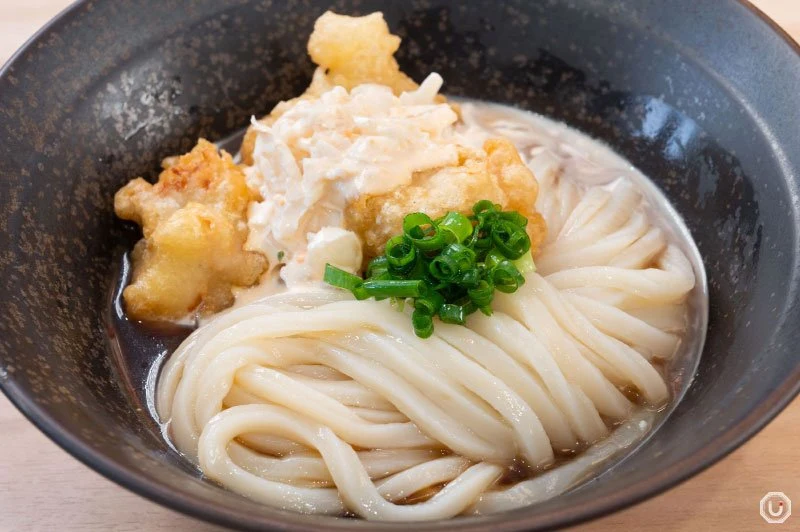
The work at Yamashita Udon begins with a familiar udon demand: fresh noodles made in-house and aged overnight. That rest matters. It gives the dough time to settle before the next day’s cooking, and it is one reason the noodle can meet heavier toppings without turning slack. The soups are typically built on kombu and katsuo, a base with enough clarity to hold both hot and cold preparations. From there, the program widens. Tempura comes through with selected flour; curry carbonara udon pulls the format into a richer register; chicken tempura tartar bukkake udon stays closer to the counter meal, with crunch, sauce, and cold noodle structure doing the work. One review of the tempura dipping udon set notes a choice between dipping sauces and a small bowl of sesame seeds with a wooden pestle, a bench-side gesture that lets the diner finish the seasoning by hand. That is the detail. Even in a format built for pace, the bowl keeps a point of contact between maker and eater.
Kagurazaka at the counter
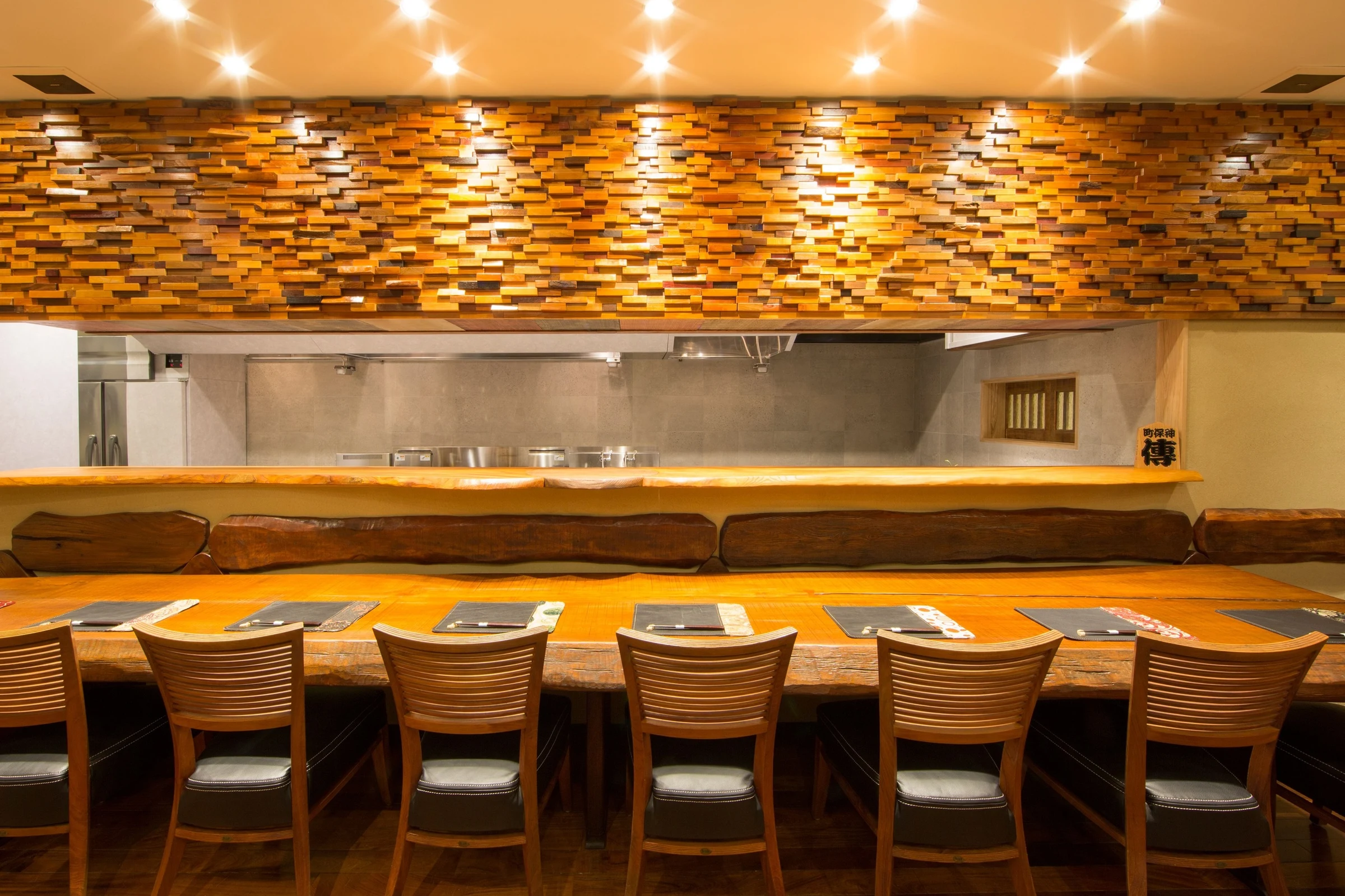
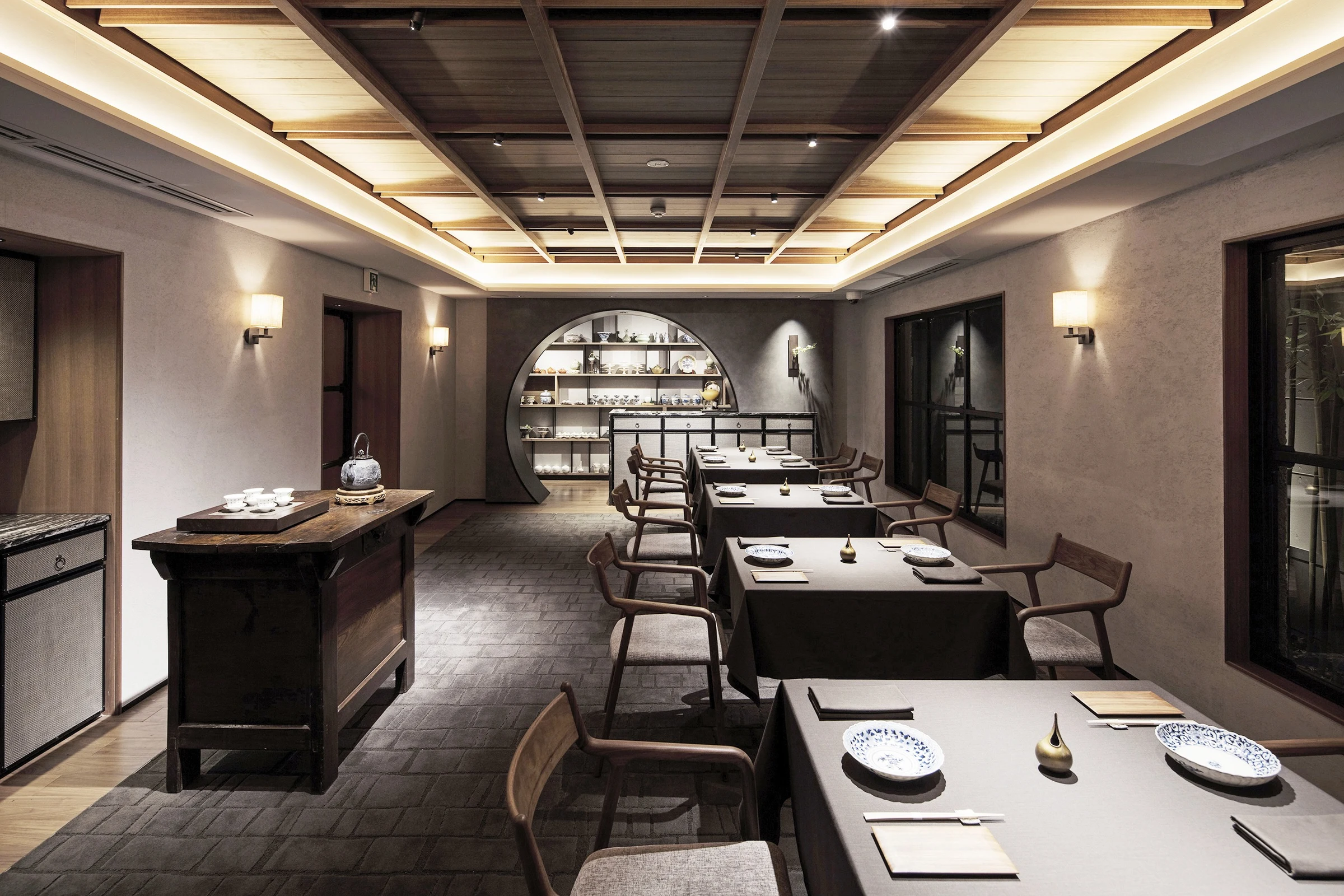
The room sits on the first floor in Kagurazaka, Shinjuku City, close enough to Iidabashi Station that the street traffic finds it easily. Inside, the atmosphere is more cafe-like than austere noodle shop, with a modern interior and enough table seating to soften the pace of a busy udon counter. The craft still gathers at the pass. Bowls leave with their surfaces already composed: pale cheese powder over mentaiko cream, curry broth carrying heat and weight, tempura kept crisp long enough to matter. The setting does not ask for ceremony. It asks for turnover, consistency, and a menu that can be read quickly without feeling thin. Yamashita’s background in public timing suits that kind of room. The audience changes seat by seat, but the cue remains the same.
A concise house signature
What gives this place its shape is not a long lineage claim or a broad survey of regional udon. It is the decision to let one named specialty carry recognition, then keep the surrounding program legible enough to support it. Yamashita has spoken publicly in a register that is practical and a little sideways, including the line, “I can be called in as a lecturer.” The kitchen version of that directness is a bowl built to be remembered by name. Yamashita Udon’s bowl is 白い明太クリームチーズうどん.
Questions
Frequently asked
Who is behind Yamashita Udon?
Omoro Yamashita is the chef at Yamashita Udon in Tokyo. His public profile has been tied to Yamashita Honki Udon since 2021.
What is the house dish here?
The best-known bowl is 白い明太クリームチーズうどん. It brings together dashi-soy sauce, mentaiko, butter, and cheese.
How is the udon made?
The noodles are made fresh in-house and aged overnight before cooking. The soups are typically built on kombu and katsuo.
What kind of place is it?
Yamashita Udon sits on the first floor in Kagurazaka, Shinjuku City, and the room is described as more cafe-like than austere. The focus is on a counter format with table seating and quick turnover.
The field
How it compares
| Place | Cuisine | Awards | Notes |
|---|---|---|---|
| Yamashita Udon | Udon | · | · |
| Den | Modern Japanese Kaiseki | Michelin 2 Stars, World's 50 Best | Tokyo |
| Florilège | Modern French-Japanese Plant-Based Fine Dining | Michelin 2 Stars, World's 50 Best | Tokyo |
| Narisawa | Modern Japanese Satoyama Fine Dining | Michelin 2 Stars, World's 50 Best | Tokyo |
| Quintessence | Modern French Fine Dining | Michelin 3 Stars | Tokyo |
| Sazenka | Modern Chinese Fine Dining | Michelin 3 Stars, World's 50 Best | Tokyo |
| Sézanne | French | Michelin 3 Stars, World's 50 Best | Tokyo |
In residence
Similar places
Modern Japanese Kaiseki
Den
Tokyo, Japan
★★ · 50 Best
Modern French-Japanese Plant-Based Fine Dining
Florilège
Tokyo, Japan
★★ · 50 Best
Modern Japanese Satoyama Fine Dining
Narisawa
Tokyo, Japan
★★ · 50 Best
Modern French Fine Dining
Quintessence
Tokyo, Japan
★★★
Modern Chinese Fine Dining
Sazenka
Tokyo, Japan
★★★ · 50 Best
French
Sézanne
Tokyo, Japan
★★★ · 50 Best