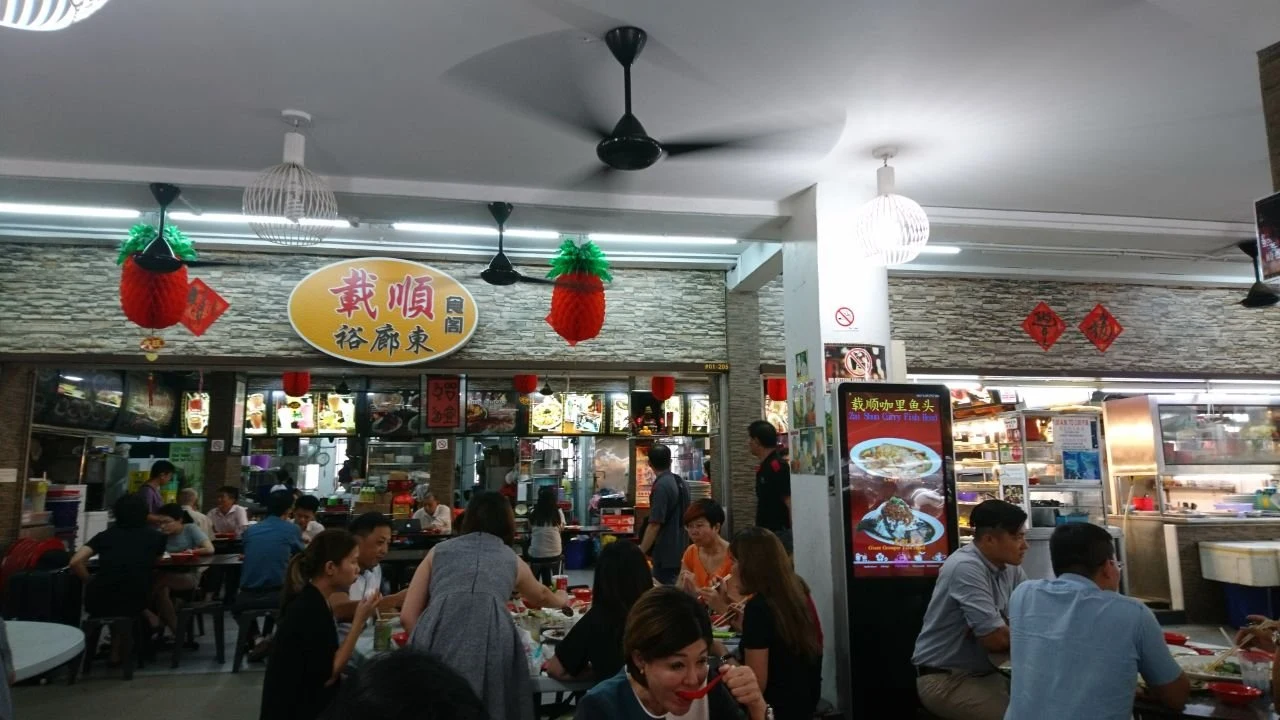
Zai Shun Curry Fish Head
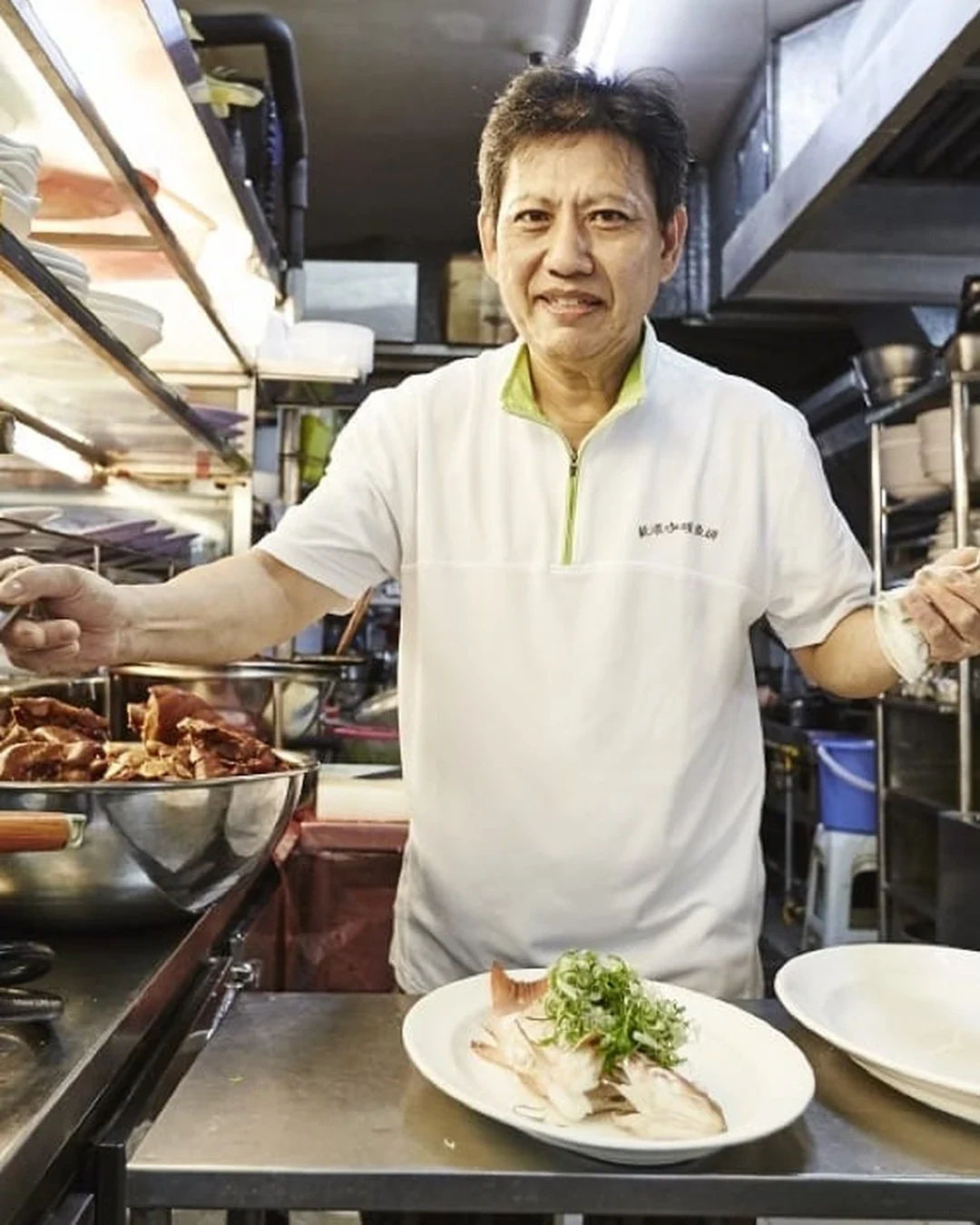
In Residence
Ong Cheng Kee
Chef
- 01CuisineSingaporean Curry Fish Head & Steamed Fish
- 02CitySingapore, Singapore
- Michelin Bib Gourmand · Michelin Guide
- Michelin Guide Bib Gourmand · 2026
- Michelin Bib Gourmand · 2025
- Michelin Bib Gourmand · 2024
Singapore's Fish Head Curry Tradition and Where Zai Shun Sits Within It
Fish head curry occupies a particular place in Singapore's food history. The dish arrived via the Indian-Chinese communities of the mid-twentieth century, when Indian cooks adapted their curry technique to the whole fish heads prized in Chinese cooking, a pairing that produced something neither cuisine had alone. Over the following decades, the preparation spread across hawker centres and coffee shops, with each cook calibrating the spice level, the coconut content, and the choice of fish according to a local clientele. Today that tradition has two broad expressions in Singapore: the richer, coconut-forward version that draws from South Indian templates, and a sharper, more tamarind-driven variant associated with Chinese-run stalls. Zai Shun works the second register, under chef Ong Cheng Kee, at a stall in Jurong East's Block 253 that has been drawing queues long enough to earn Michelin's Bib Gourmand recognition in 2025.
The Bib Gourmand designation matters here as a calibrating signal. Michelin uses it specifically for meals offering high quality at moderate prices, it sits below the star tier but above mere popularity. For a hawker stall in an outer residential estate, the recognition places Zai Shun in a comparable set that includes some of Singapore's most serious single-dish operations, among them Hill Street Tai Hwa Pork Noodle and 545 Whampoa Prawn Noodles, each of which has built a devoted following around a single preparation executed at a consistently high level. That is the tradition Zai Shun belongs to.
The Sunday letter
Find new places through the people who run them.
Our Sunday email brings you the chefs, winemakers and hoteliers behind our newest stories. See a sample before you subscribe.
See a sample of the Sunday emailOne email a week. Unsubscribe from any issue.
The Ingredient Logic Behind a Fish Head Curry
The editorial angle on any serious fish head curry operation starts with sourcing, because the dish is almost entirely dependent on it. Fish head curry does not benefit from technique masking inferior product the way a long braise or a reduction might. The fish head, typically snapper in Chinese-style preparations, must arrive fresh enough to hold its texture through the curry's heat without turning granular or losing the collagen-rich gelatin around the cheeks and collar. Those are the parts that give the dish its appeal: the cheek meat is firm but yielding, the collar is fatty and unctuous, and the eye socket delivers a texture that divides diners but that regulars specifically seek out.
Its curry is described as velvety, a word that signals the sourcing and timing are correct. That result is not incidental. At a hawker stall operating on street food margins, maintaining ingredient quality requires tight supply relationships and disciplined turnover, you cannot hold fish heads in the way a fine-dining kitchen might hold aged proteins. The operation works because the volume is high enough to ensure freshness but focused enough to avoid compromise.
The same sourcing logic applies to the spice base. The balance of dried chilies, fresh aromatics, fenugreek, and curry leaf that underpins the heat profile is built in-house and adjusted over time. Zai Shun's version is described as hot and spicy, not a mild, crowd-pleasing approximation, which suggests the spice level has not been softened for a broader audience. That kind of discipline is more common in hawker operations run by a single cook than in larger restaurant chains, where the formula tends to drift toward the median preference of a wider customer base.
Beyond the Signature: Stir-Fries as a Secondary Signal
A stall that draws queues for one dish and also delivers across a broader menu is worth noting, because the two outcomes require different things. A single great dish can rest on sourcing and a practised repetition. A broader menu of fish dishes and stir-fries requires command of technique across multiple preparations, heat management, seasoning, timing, not just mastery of a single recipe.
The additional fish dishes and stir-fries are equally strong, which positions the stall as a cooking operation rather than a one-dish specialist. That matters for the visitor decision. A queue at a one-dish stall is a queue for that dish alone; a queue at a stall with a broader reliable menu is a queue for a meal. Diners who arrive for the curry and order a stir-fried vegetable or a secondary fish preparation alongside it are not taking a risk. The signal is there.
This pattern appears at several of Singapore's strongest hawker operations. 91 Fried Kway Teow Mee and A Noodle Story are examples from the noodle category where the lead dish is the draw but the surrounding menu reflects a broader kitchen competence. The same logic applies here.
Jurong East and the Geography of Singapore's Hawker Scene
Singapore's hawker culture is not geographically concentrated the way its fine-dining scene is. While the city's higher price-point restaurants cluster in the CBD, Marina Bay, and Dempsey Hill, the most serious single-dish hawker operations are distributed across the island's residential heartlands. Jurong East, in the west of the island, is a planned residential and commercial zone developed from the 1970s onward and is not on the standard tourist itinerary. The journey from central Singapore takes roughly thirty to forty minutes by MRT on the East-West line, making it a deliberate trip rather than an incidental stop.
That geography is itself a quality signal. Stalls in outer residential estates do not survive on tourist traffic. Their customer base is local and regular, which means the quality has to hold up to repeat visits by people who know exactly what a good version of the dish should taste like. The 1,699 Google reviews at a 4.4 average for a stall in a non-tourist neighbourhood reflect consistent delivery to a demanding local audience. For comparison, several of Singapore's Bib Gourmand stalls in more central locations carry lower average ratings despite heavier foot traffic.
Getting there practically: Block 253, Jurong East Street 24, unit #01-205. The Jurong East MRT station on the East-West line provides the most direct approach. Zai Shun shares a competitive context with hawker operations like Adam Rd Noo Cheng Big Prawn Noodle, which similarly requires a deliberate journey to a residential location and rewards the effort with consistent output.
Placing Zai Shun in the Broader Regional Street Food Frame
Singapore's Bib Gourmand list is one of the densest in Southeast Asia, but the recognition reflects something the city has built deliberately over decades: a food infrastructure that preserves and elevates hawker cooking rather than treating it as a preliminary stage before a restaurant career. The culture this creates is different from the street food scenes in, say, George Town or Bangkok, where the award infrastructure is thinner and the operations are more informal. Singapore's hawker system is codified, with stall licences, regulated premises, and a formal award cycle that gives operations like Zai Shun a legibility that their counterparts in other cities often lack.
That regional context matters for the reader deciding how to allocate limited meal slots across a Southeast Asia trip. Street food operations that have received formal recognition in Singapore sit in a different tier of confidence than comparable stalls in cities where the award infrastructure does not exist. For reference points in adjacent markets, see 888 Hokkien Mee in George Town, Air Itam Sister Curry Mee, or A Pong Mae Sunee in Phuket, each representing a serious single-dish operation in a market with different institutional frameworks. Zai Shun's Bib Gourmand designation puts it on the verifiable side of that comparison.
Questions
Frequently asked
What recognition does Zai Shun Curry Fish Head hold?
Zai Shun Curry Fish Head holds a Michelin Bib Gourmand.
Who works at Zai Shun Curry Fish Head?
Made By profiles Ong Cheng Kee (Chef) at Zai Shun Curry Fish Head.
How expensive is Zai Shun Curry Fish Head?
Zai Shun Curry Fish Head is listed at a price level of $$.
Where is Zai Shun Curry Fish Head and what does it serve?
Zai Shun Curry Fish Head is in YUHUA EAST, Singapore, serving Singaporean Curry Fish Head & Steamed Fish.
The field
How it compares
| Place | Cuisine | Notes | Awards |
|---|---|---|---|
| Zai Shun Curry Fish Head | Singaporean Curry Fish Head & Steamed Fish | YUHUA EAST, $$ | · |
| Born | Contemporary Fusion Fine Dining | Singapore | Michelin 1 Star, World's 50 Best |
| Burnt Ends | Modern Australian Barbecue | Singapore | Michelin 1 Star, World's 50 Best |
| Jaan by Kirk Westaway | Modern British Fine Dining | Singapore | Michelin 2 Stars, World's 50 Best |
| Les Amis | Classic French Haute Cuisine | Singapore | Michelin 3 Stars, World's 50 Best |
| Odette | Modern French Fine Dining | Singapore | Michelin 3 Stars, World's 50 Best |
| Zén | Neo-Nordic with Japanese Influences | Singapore | Michelin 3 Stars, World's 50 Best |
In residence
Similar places
Contemporary Fusion Fine Dining
Born
Singapore, Singapore
★ · 50 Best
Modern Australian Barbecue
Burnt Ends
Singapore, Singapore
★ · 50 Best
Modern British Fine Dining
Jaan by Kirk Westaway
Singapore, Singapore
★★ · 50 Best
Classic French Haute Cuisine
Les Amis
Singapore, Singapore
★★★ · 50 Best
Modern French Fine Dining
Odette
Singapore, Singapore
★★★ · 50 Best
Neo-Nordic with Japanese Influences
Zén
Singapore, Singapore
★★★ · 50 Best
The Sunday letter
Get the next Made By story in your inbox.
We send one email every Sunday morning with the places and people we covered that week.
See a sample of the Sunday emailOne email a week. Unsubscribe from any issue.