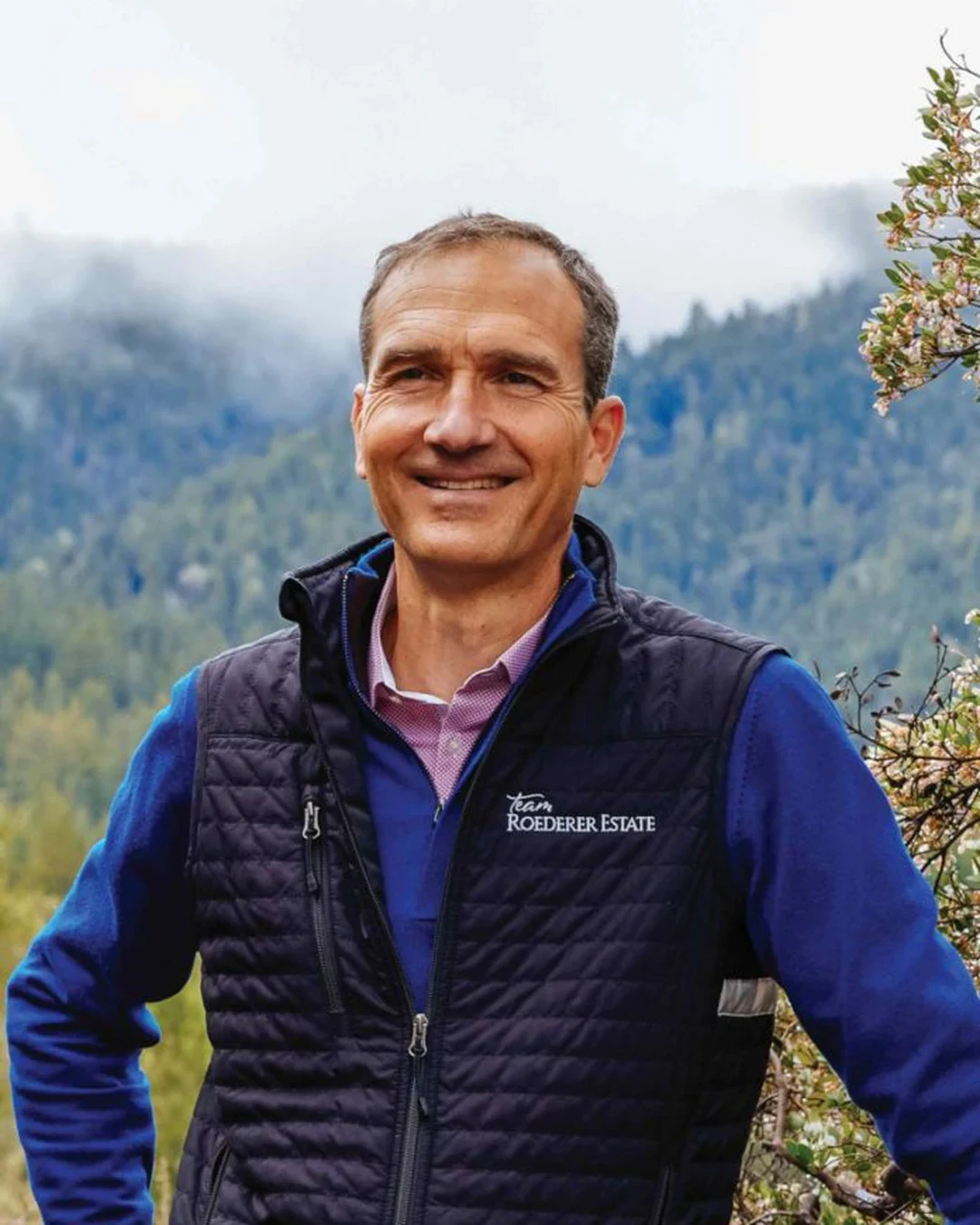
Portrait of Arnaud Weyrich
i. Biography
Work in sparkling wine is slow accountability: origin, process, selection, and time have to line up before the bottle can show the decision. In Arnaud Weyrich’s case, that discipline runs through Roederer Estate in California, quality control for private-label beverages at a large retail company, and technical leadership for Champagne Louis Roederer in Reims, France.
The Sunday letter
Read Made By's new profiles every Sunday.
Meet the chefs, winemakers and sommeliers behind the places we cover. See a sample below before you subscribe.
See a sample of the Sunday emailOne email a week. Unsubscribe from any issue.
The Climb
French oenological training supplied the technical base. At Ecole Supérieure d’Oenologie, Montpellier (1993), Arnaud Weyrich entered the trade through structured study before moving into cellar work. An internship at Roederer Estate in Anderson Valley, California (from 1993) put that training against the practical demands of sparkling wine production, where vineyard source, cellar handling, and delayed outcome are part of the same calculation. Quality control work sharpened a different part of the craft: repeatability. As quality control manager for private-label beverages at a large retail company in France, Weyrich worked in a register defined by standards, evaluation, and consistency. For an artisan working later in estate sparkling wine, that kind of discipline matters; it builds habits of measurement and correction before preference enters the discussion. Anderson Valley became the place where those habits were applied again inside the Roederer system. Weyrich returned to Roederer Estate in Anderson Valley, California as assistant winemaker (from 2000), bringing cellar experience and quality-control discipline back to estate production. He then moved to Champagne Louis Roederer in Reims, France as Chief Technical Officer in charge of development (until 2002), placing technical development within the Champagne Louis Roederer framework and linking the California estate to the house’s French production culture. Production leadership at Roederer Estate has required continuity more than reinvention. Since 2002, Arnaud has been winemaker and Vice President of production of Roederer Estate, bringing French oenological training, Anderson Valley experience, quality control, development work, and cellar judgment into one operating role. The work depends on selection, aging, and the consistency of decisions repeated across vintages.
Today
Each year, I select a portion of the finest wines for aging in large French oak casks (1,400 to 1,900 gallons each)." Annual selection is one of the key cellar acts at Roederer Estate. In Weyrich’s description, only a portion of the finest wines is chosen for aging in large French oak casks (1,400 to 1,900 gallons each). The practice is specific without being showy: taste, separate, assign the right lots to the right aging path, and let time do work that cannot be forced. Estate fruit sets the boundary for the production. As winemaker and Vice President of production of Roederer Estate, Arnaud works from grapes grown exclusively on the estate, then applies technical oversight and production discipline to sparkling wines built through selection and aging. The recurring questions are practical ones: which lots to protect, which to develop, and which wines merit extended attention in cask.
Career - Winemaker and Vice President of Production — Roederer Estate, Anderson Valley, California (2002–present) - Intern — Roederer Estate, Anderson Valley, California (from 1993) - Quality control manager for private-label beverages — large retail company, France - Assistant winemaker — Roederer Estate, Anderson Valley, California (from 2000) - Chief Technical Officer in charge of Development — Champagne Louis Roederer, Reims, France (until 2002) Education: Ecole Supérieure d’Oenologie, Montpellier
Signature
The signature wines named for this work are L’Ermitage, L'Ermitage, Anderson Valley Brut, L'Ermitage Rosé, and Roederer Estate Brut Anderson Valley NV. They sit inside the Roederer Estate method: estate-grown grapes, careful selection, and cellar practices that rely on patience rather than speed.
In Their Words “Every bot
The Sunday letter
Get the next Made By profile in your inbox.
We send one email every Sunday morning with the people we profiled that week.
See a sample of the Sunday emailOne email a week. Unsubscribe from any issue.