
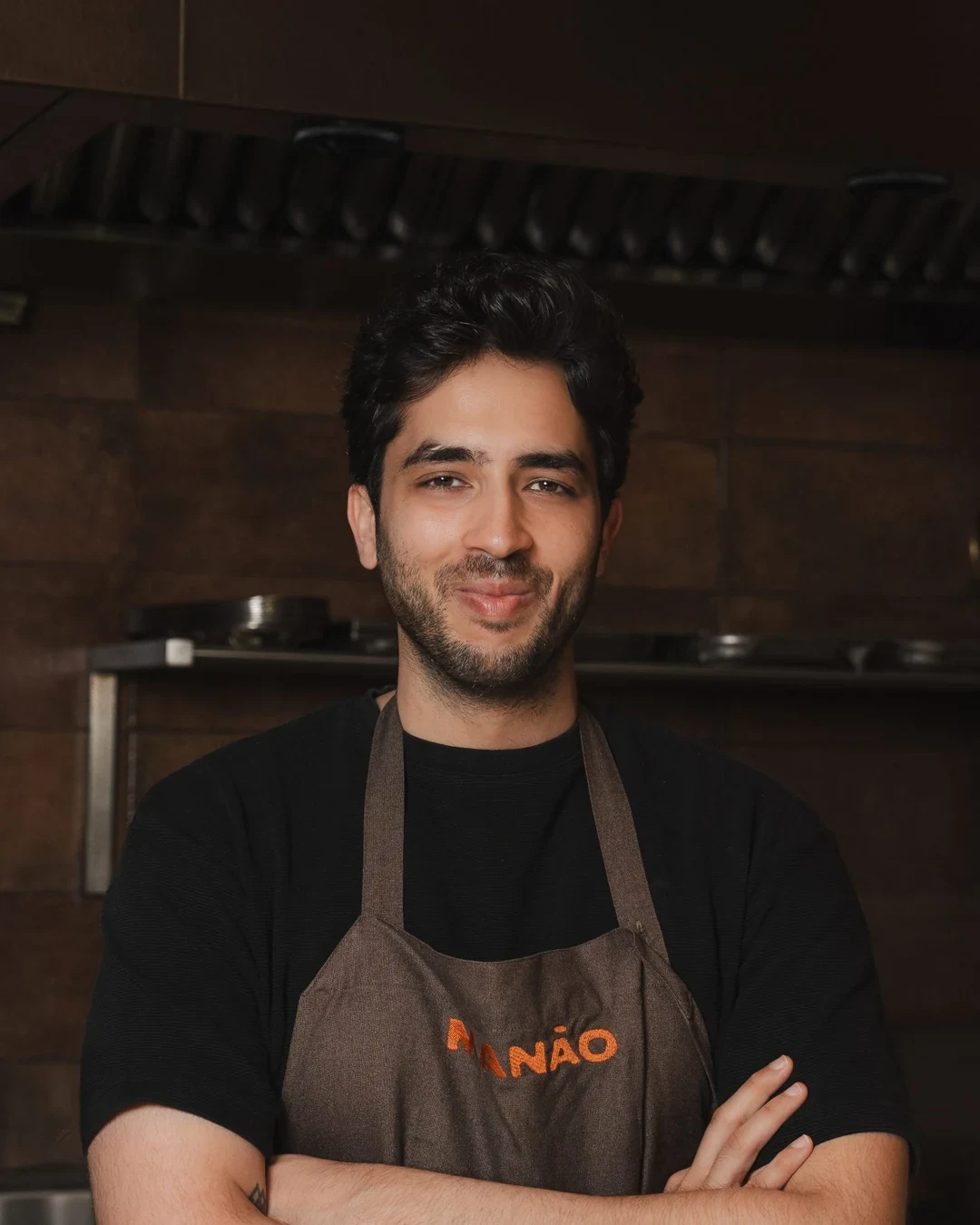
Portrait of Billy Kong
i. Biography
Billy Kong works in Japanese cooking with a focus on repetition, timing, and control. At Saru Sushi in San Francisco, he treats sushi preparation as a living practice that depends on discipline more than display. Rice is held at the right temperature, seasoning is calibrated, marinades are timed, and handrolls are served before the nori loses crispness. The method values knowing when to intervene, when to wait, and when the simplest move is the correct one. Kong’s training across San Francisco, Kanazawa, and Kyoto gave the work its Japanese frame. Bakery work and food delivery formed a practical base before he moved into sushi. He worked as a sushi chef at a variety of sushi bars, then at Sushi Sam in San Mateo, California, building skill through repetition and exposure. That path shaped a kitchen identity grounded in fish, rice, knife work, seasoning, and precision. His current work centers on Saru Sushi Bar, where he is chef-owner and operator, and on Saru Handroll Bar, where he is also chef-owner and operator. He is operator of Ken and culinary projects leader of Bentoville. Across those roles, the working vocabulary stays consistent: Japanese cooking, seafood, handrolls, sauces, rice, and the control needed to make service feel clean rather than forced. At Saru Sushi Bar, Kong’s approach is visible in meticulous rice preparation, calibrated seasoning, and sauces made in house rather than treated as convenience items. Classic preparation includes ponzu, miso, fish, and unagi sauces made under his direction. The sauces function as structure rather than garnish, with acidity, sweetness, salt, and depth measured against the fish and rice. Kong has said that unagi takes 10 to 13 hours to prepare the Japanese way, and that fish marinates for two hours in an in-house miso sauce. Those timeframes reflect a style that does not compress work without changing the result. Seafood sets the range of the menu. Kong concentrates on seafood and carries more fish than other restaurants, using that breadth for preparations such as Hamachi truffle, made with yellowtail, truffle oil, ponzu, garlic chips, and scallions. The dish places the fish at the center, with richness, acidity, aroma, and crunch arranged around it. The N.V. Roll shows the same attention to balance in another form, combining deep-fried prawn, eel, snow crab, masago, avocado, and sweet soy glaze. Its success depends on layered texture, controlled sweetness, rice, temperature, and a structure that holds. The same care extends into private omakase parties, where sushi-making sits closer to the guest and the timing is immediate. Kong also applies the same precision at Bentoville, where dishes are workshopped, tasted, and signed off by him in a performance-based dining format. Across all of this work, he keeps returning to the same center: seafood, rice, seasoning, handrolls, and the discipline required to let Japanese cooking remain clear. He has said, “I want a warm, cozy restaurant.”
The Sunday letter
Read Made By's new profiles every Sunday.
Meet the chefs, winemakers and sommeliers behind the places we cover. See a sample below before you subscribe.
See a sample of the Sunday emailOne email a week. Unsubscribe from any issue.


The Sunday letter
Get the next Made By profile in your inbox.
We send one email every Sunday morning with the people we profiled that week.
See a sample of the Sunday emailOne email a week. Unsubscribe from any issue.