Other
Gerard Jané
Chef
- Discipline
- Other

i. Biography
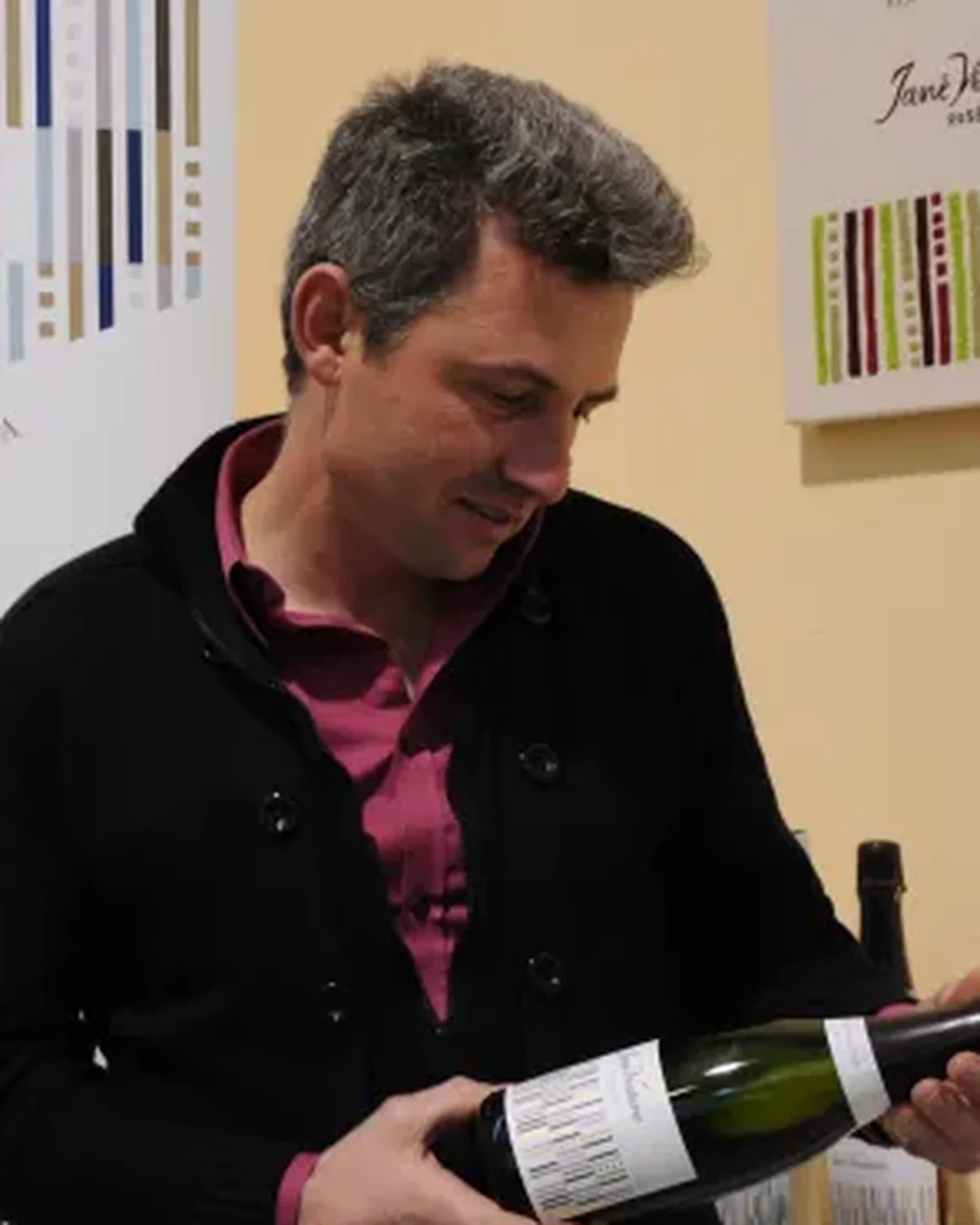
The Essentials Recovery and restraint define the cellar here: Gerard Jané has built his work around a patient return to the region’s old red and white varieties, alongside the care of old vines of Cabernet Sauvignon, Merlot and Syrah. Macabeu sits at the center as his main white variety, valued not just for what it contributes in the glass, but for the role it plays in the cellar’s larger purpose. It is a way of staying close to the grapes he wants to preserve and of keeping the land legible in the final wine. “The aim of our cellar is to show the feeling that links us to our land,” he has said, and that line sets out the method plainly: preserve what belongs, keep the region visible, and avoid anything that obscures it. The result is a style that treats memory as part of the work, with clarity preferred over embellishment.
Signature
Signature here means bottles that express continuity, site and old vines without excess. Gerard’s signature dishes include Do Gran Reserva Vintage and Finca Els Camps Macabeu 2010 and two names that point to different but related forms of precision. Do Gran Reserva Vintage speaks to patience and measured time, while Finca Els Camps Macabeu 2010 places vineyard identity and Macabeu’s role at the front of the bottle. Together, they describe a cellar shaped by distinction rather than display, where the emphasis falls on continuity, site and restrained expression. In that sense, signature is not about showiness; it is about identity, carefully distilled and made clear.
In Their Words “We export 50% of our production, but we still have problems selling even in Barcelona, and we only sell 10% of our wine in the rest of Spain.” The numbers describe a producer working outward while still confronting resistance at home. For Gerard Jané, the issue is not only making wine with character, but finding a market willing to read that character in Barcelona and beyond. Export accounts for half the production, yet the domestic picture remains difficult, and that tension gives the work a sharper edge. The cellar’s identity may be clear on its own terms; the harder task is making that clarity legible to drinkers. “We are trying to shake off this image of being a volume producer with no soul.” This line is less about image management than about positioning a cellar by craft rather than assumption. The challenge it names is a familiar one: being judged by scale instead of by what the vineyards, varieties and bottlings are trying to preserve. Gerard Jané’s answer is in the structure of the work itself: old varieties kept in play, old vines respected, Macabeu held at the center, and a cellar committed to showing the feeling that links it to the land. That is where the argument for the wine is made, bottle by bottle.
Profile updated July 2026
FAQ
Asked of Gerard
What is Gerard Jané's current role?
As of 2026, Gerard Jané is Winemaker and general manager.
What is Gerard Jané known for?
He wants to recuperate the region’s old red and white varieties, and works with old vines of international grapes like Cabernet Sauvignon, Merlot and Syrah; his main white variety is Macabeu.