Owner
Giuseppe Gonzalez
- Discipline
- Owner
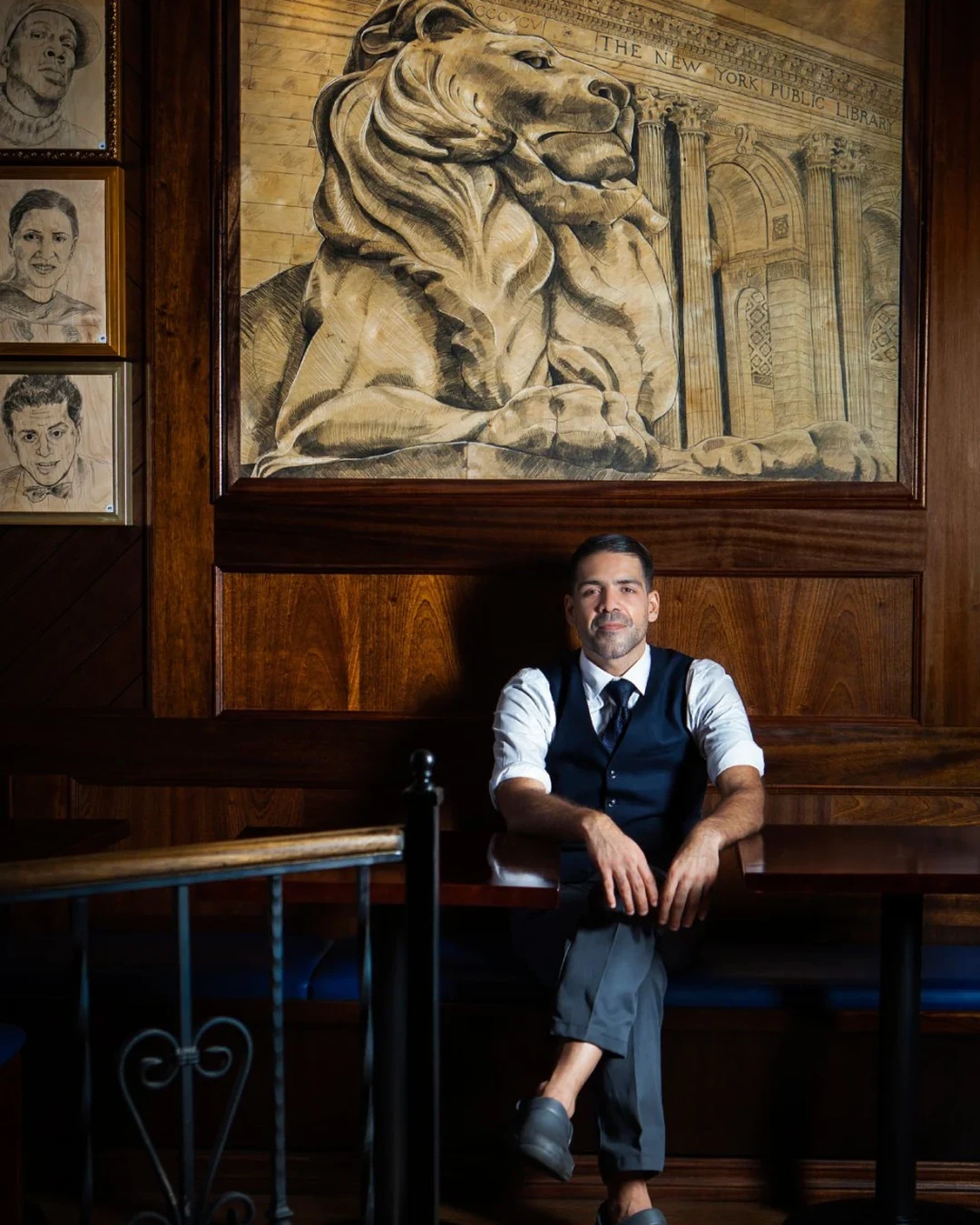
i. Biography
Bar ownership, in the working sense, is a production role before it is a title. When Giuseppe Gonzalez says, “I am the owner of Suffolk Arms,” the useful claim is not status; it is proximity to the room. The work stays close to glassware, floor traffic, guest reading, remembered recipes, and the maintenance labor that keeps a bar operational. His practice has been built around cocktail history without treating history as display material: the past is used in service, under pressure, for people sitting at the bar.
The Path
New York cocktail training often happens by repetition across rooms, stations, and service styles. After Cornell University, Giuseppe Gonzalez worked through a run of defining New York City bar addresses: bartender at Flatiron Lounge in New York City, Clover Club in New York City, Dutch Kills in New York City, Pegu Club in New York City, and PKNY in New York City. Taken together, those rooms mark an education in classic structure, volume, timing, and the practical negotiation between inherited technique and present demand. Owner-bartender work makes authorship answerable to service. At Suffolk Arms in New York City (from 2016), Gonzalez held a role where the identity of the bar and the nightly labor of the bar were not separate categories.
The Work Today
Current bar work, for Gonzalez, remains split between ownership and the act of making drinks. His current role is owner of Suffolk Arms in New York. That matters in trade terms: menus, concepts, and legacy are tested against actual guests, service interruptions, substitutions, timing, and the repeated small corrections that define a night behind the bar. Drinks history is his specialty, but the useful application is structural rather than archival. In Gonzalez’s work, history functions as a grammar for how a drink is built: spirit, flavor, balance, memory, and context held in relation without freezing the drink in place. Coquito, the spiced rum-and-coconut drink from Puerto Rico, is one drink attached to his repertoire, and it fits that method: rooted in tradition, still made for the person in front of the bartender. The trade reality of ownership is stated plainly in his own definition: “I am the owner of Suffolk Arms. So that makes my occupation a hybrid of bartender, general manager, barback, host, server, line cook and dishwasher.” The joke works because the list is accurate. In this model, ownership does not remove the maker from labor; it multiplies the stations a person may need to cover.
In Their Words “I will say that I am ready to make less Trinidad Sours this year.”
Career - Bartender — Flatiron Lounge, New York City - Bartender — Clover Club, New York City - Bartender — Dutch Kills, New York City - Bartender — Pegu Club, New York City - Bartender — PKNY, New York City - Owner-bartender — Suffolk Arms, New York City (from 2016) - Bartender — Herbs & Rye, Las Vegas Education: Cornell University
Acclaim
A drink’s reputation is also measured in repetition. Gonzalez’s line, “I will say that I am ready to make less Trinidad Sours this year,” keeps the Trinidad Sour in the real economy of a bar: demand, repetition, muscle memory, and the fatigue that can come with a cocktail’s reach. Influence is not abstract when the order keeps printing. The recognition around his work rests on cocktail thinking as much as execution: drinks-history specialization, attention to vodka as a subject worthy of its own chapter, modern classics placed beside off-centered originals, and an omakase-inspired drink shaped by a guest’s spirit and flavor preference. The through-line is serviceable scholarship: enough historical literacy to know the thread, enough bar sense to keep the drink moving.
FAQ Where did Giuseppe Gonzalez train or study? Giuseppe Gonzalez trained at Cornell University. What is Giuseppe Gonzalez known for? Drinks history.


