Second-generation chef-owner
Hideaki Matsuo
- Discipline
- Second-generation chef-owner
i. Biography
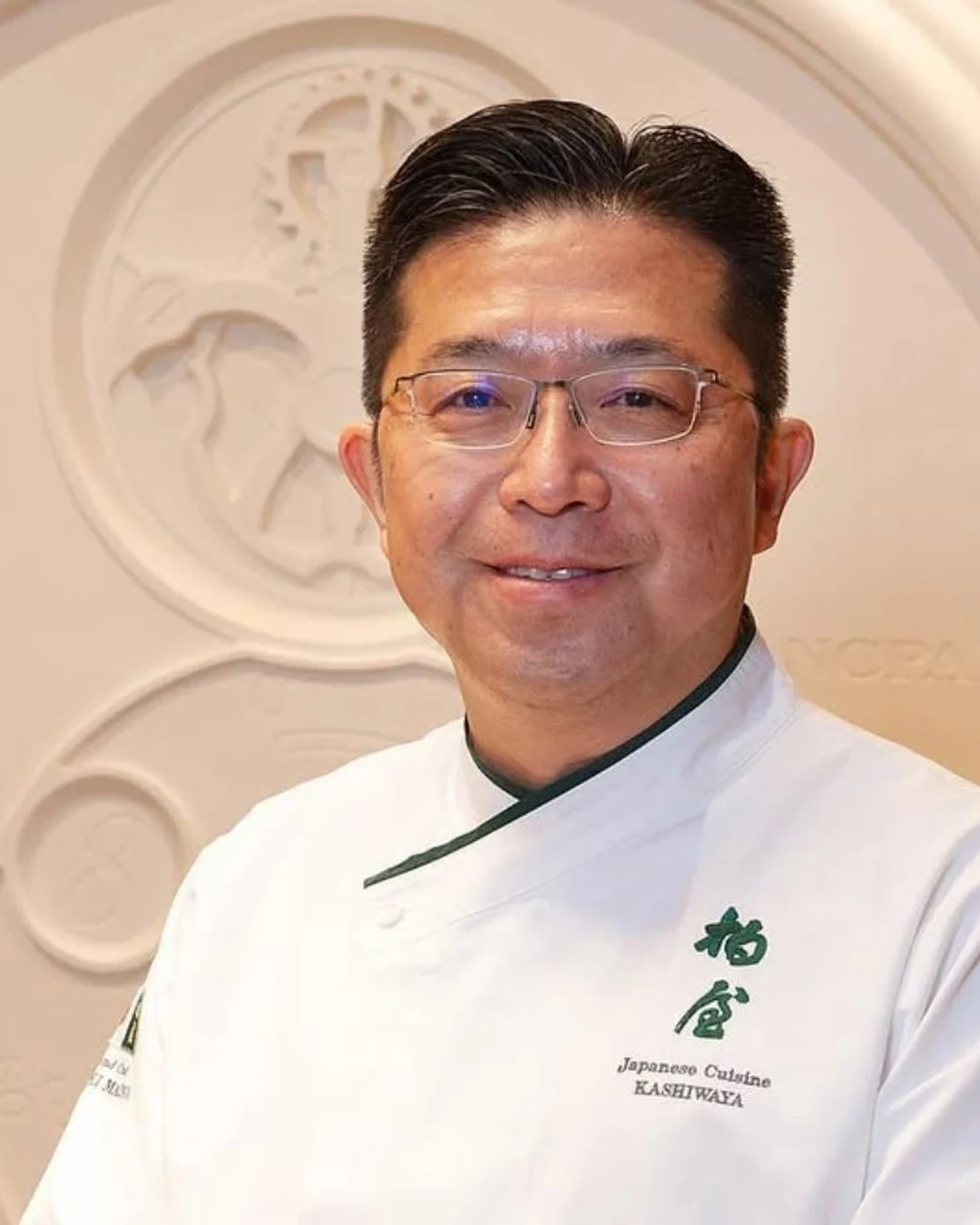
From Osaka, Japan, the kaiseki practice at Kashiwaya is built on inheritance, service discipline, and the formal intelligence of ritual. Hideaki Matsuo carries that practice as second-generation chef-owner in a ryotei shaped by tea ceremony, where hospitality is measured through flavor, gesture, season, silence, and timing. His work has been associated with the house since 1990, after studies at Kwansei Gakuin University, and now sits within a Michelin-recognized dining room.
The Route
Kaiseki training depends on repetition before expression: knife work, heat control, seasoning restraint, and the ability to let an ingredient speak without excess. Hideaki Matsuo trained at Kwansei Gakuin University before entering that kitchen education, including apprenticeship under chef Hidetaro Nakamura at Shofukuro in Shiga prefecture, near Kyoto, Japan. A ryotei kitchen has its own grammar, and the early years of service teach more than production. As kitchen staff at the family house (1990–1993), Hideaki Matsuo worked inside a language informed by the ryotei tradition and the sensibility of tea ceremony. In that setting, cuisine and dining room are not separate trades: season, vessel, pacing, atmosphere, and guest care all carry the work. Continuity in such a house is a technical responsibility, not a decorative one. As master chef since 1993, Hideaki Matsuo has carried the restaurant’s inherited language with precision. The opening of the first overseas branch in Central, Hong Kong (from 2015), placed that Japanese seasonal structure and composed kaiseki format into another dining context while keeping it tied to the original house.
The Work Today
Second-generation stewardship joins ownership, kitchen command, and service culture in one role. Hideaki Matsuo is second-generation chef-owner and master chef of the restaurant. It is also a member of Relais & Châteaux. Seasonal kaiseki at Kashiwaya Osaka Senriyama in Suita, Osaka, Japan, is organized around ancient seasonal festivals with creative touches aimed at the future of Japanese cuisine. Under Hideaki Matsuo, the tasting menu is treated less as a run of separate plates than as a paced seasonal passage. Ingredients are selected for what they signal about the time of year; presentation and texture carry the mood of a particular moment. Season is not background here. It is part of the meal’s structure. Restraint is a working tool in this cuisine. In Hideaki Matsuo’s cooking, a bowl of soup can carry season through clarity and temperature; a grilled fish can register through fragrance, salinity, and marine memory. The detail is controlled, and the plate is expected to open through temperature, aroma, and texture rather than through force. The listed specialties show that method in concrete form. Amadai is made with grilled tile fish marinated in a salt-shrimp shiokara dip, bringing delicacy, savor, and the marine character of fermentation into one preparation. Puffer roe boiled in sake, floating on a turnip soup, pairs a specific ingredient with a quiet seasonal vessel. The balance is spare: richness held in clarity, ceremony contained within a single course.
Career - Master chef — Kashiwaya, Osaka, Japan (1993–present) - Apprentice under chef Hidetaro Nakamura — Shofukuro, Shiga prefecture, near Kyoto, Japan - Kitchen staff — Kashiwaya, Osaka, Japan (1990–1993) - Opened first overseas branch — Kashiwaya, Central, Hong Kong (from 2015) Education: Kwansei Gakuin University
Signature
Amadai and Puffer roe boiled in sake define the listed signature work through precise handling, seasonal placement, and confidence in the ingredient. In Hideaki Matsuo’s cooking, the signature is not built through volume or display, but through measured technique and a plate that lets the chosen element carry the weight.
Recognition
Recognition for the Kashiwaya kitchen includes Three Michelin stars for Kashiwaya in the Michelin Guide Kyoto Osaka Kobe edition (2010) and Silver and Bronze Prize,


